Squat And Tip Toes
Squat And Tip Toes is a bodyweight movement that combines two jobs most people train separately: a partial squat and a heel raise. You stand with your feet about hip-width apart, sink into a comfortable quarter or half squat, and then, while holding that squat position, press up onto the balls of your feet and lower your heels back down. The arms reach straight forward in front of the body, which serves a real purpose rather than just looking formal — it shifts your weight slightly toward the midfoot and gives you a counterbalance, making it much easier to keep your chest tall and stay stable on your toes.
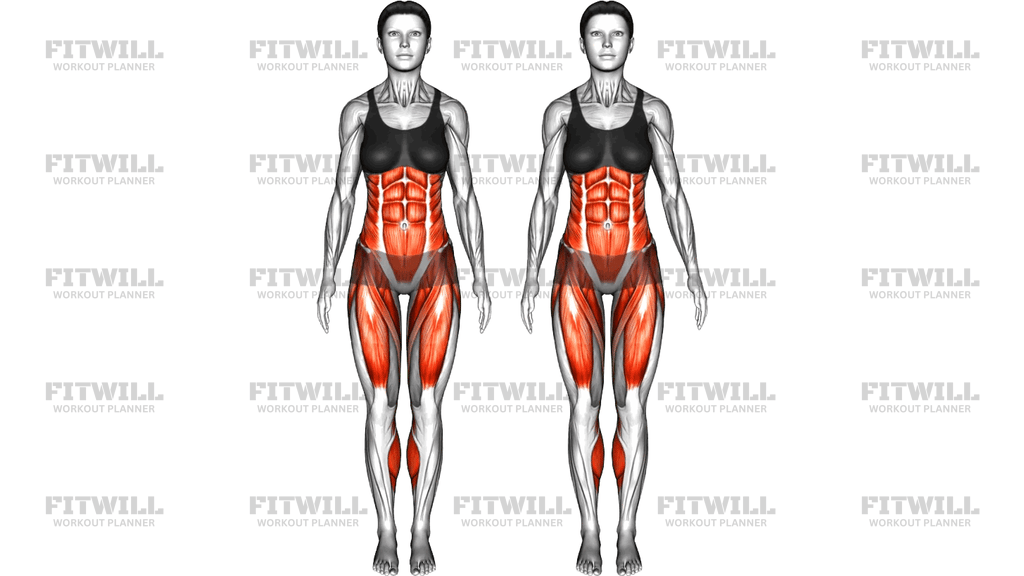
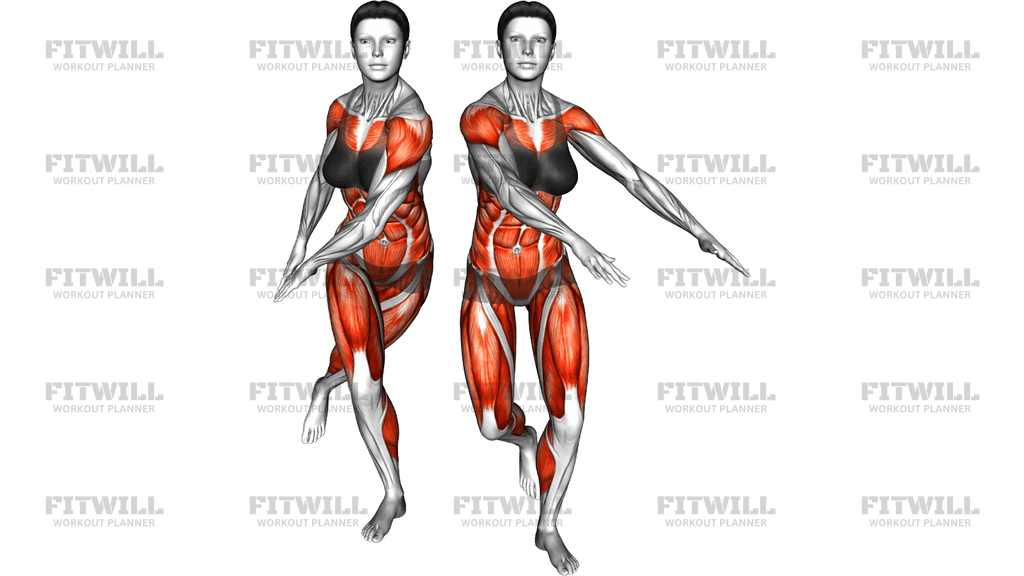
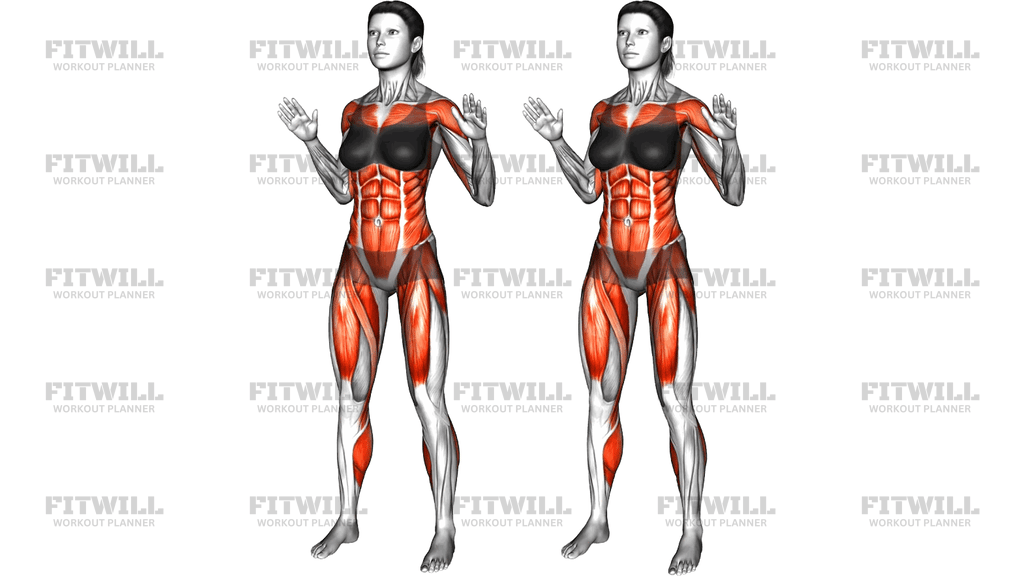
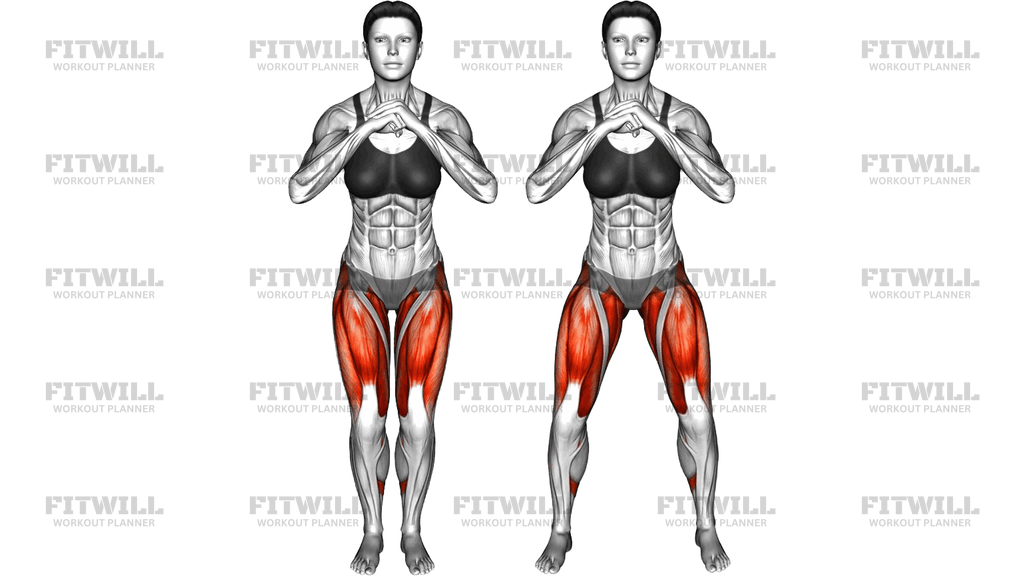
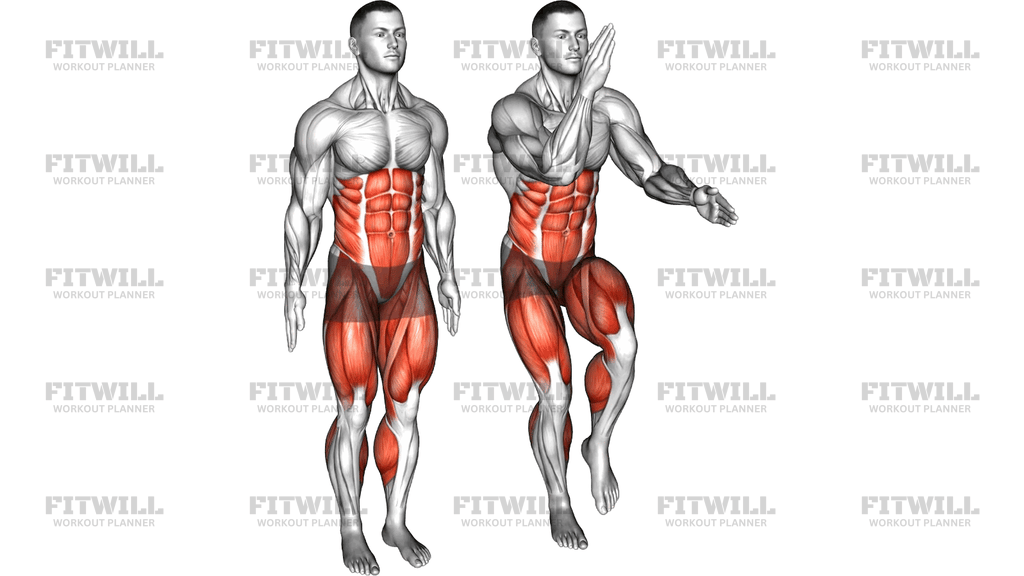
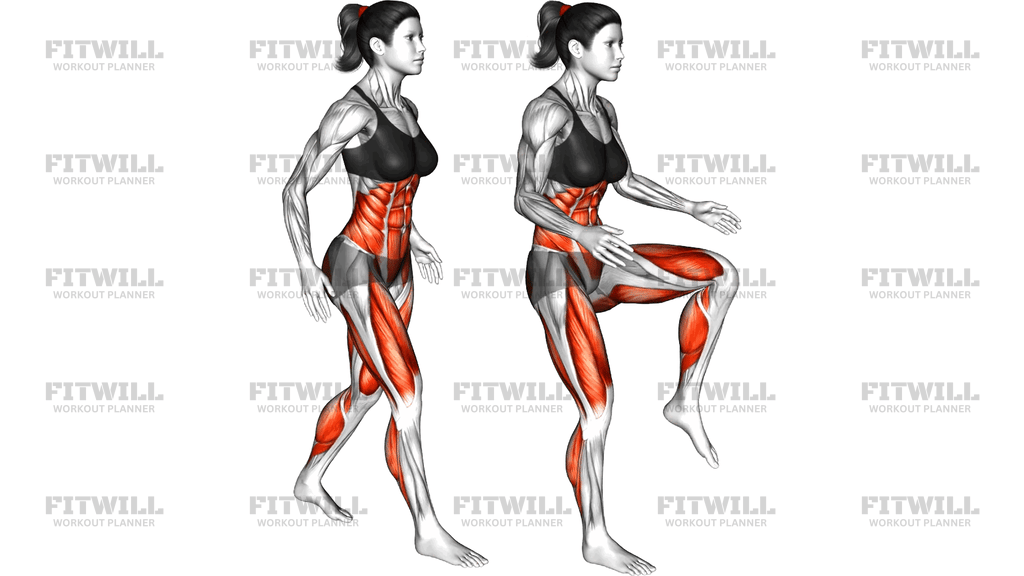
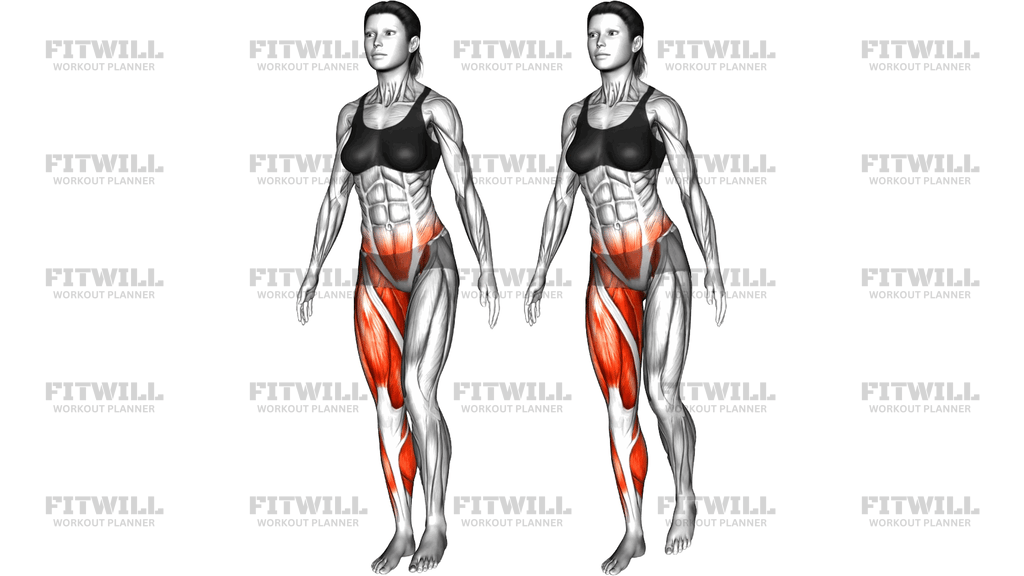
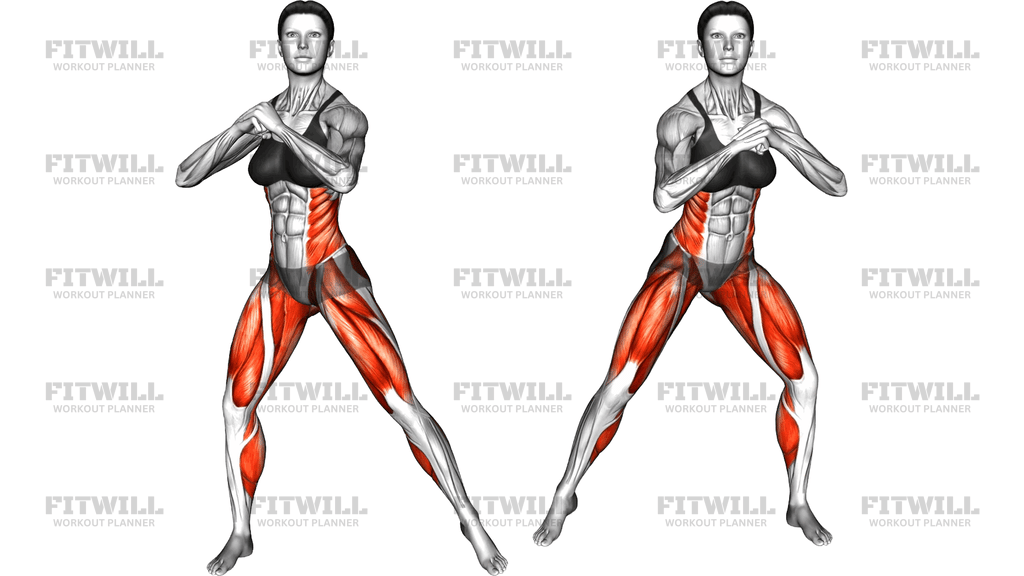
The highlighted work in this movement sits in the thighs and lower legs. The quadriceps hold your squat depth through isometric tension while the calves — both the gastrocnemius and the soleus — drive the heel raise. Because your heel is already lifted off the floor and your base of support is narrower in that position, the ankle stabilizers and the small muscles around the foot get far more work than they would in a normal squat. Glutes assist with holding the squat position, and the core stays engaged to keep your torso from drifting forward when you rise onto your toes.
This is a particularly good exercise for people who want to build ankle strength and calf endurance without equipment. Runners, basketball and volleyball players, and anyone returning from an ankle sprain often benefit from the combination of a bent-knee position and heel raising, since it trains the soleus in a manner closer to how it works during sprinting and jumping than a straight-leg calf raise does. It also doubles as a balance drill: the transition from a flat foot to the toes in a squat challenges your proprioception in a way that is noticeable within a few repetitions.
Setup matters more than it looks. Your feet should stay flat and parallel at hip width until you deliberately lift the heels — if your stance is too narrow, the tiptoe phase becomes a balancing act instead of a strength exercise. Keep your knees tracking over your toes and your weight distributed across the ball of the foot rather than dumped onto the tips of the toes. The squat depth only needs to be a comfortable quarter squat; going deep while on your heels and then trying to raise them usually collapses the posture.
Execution is slow and deliberate. Sink into the squat, pause, then press evenly through the balls of both feet until the heels are as high as they will go, hold for a beat at the top, and lower the heels under control while keeping the squat depth unchanged. The most common failure is bouncing: people let momentum from the heel drop or the squat do the work. Moving slowly is what makes this exercise effective despite needing no load.
You can use Squat And Tip Toes as a warm-up for leg days, as a finishing burnout for quads and calves, or as a standalone low-impact strength drill in home workouts and rehab-style programs. Because it requires no equipment and very little space, it travels well — hotel rooms, parks, and small apartments all work. If balance is a challenge at first, a light fingertip touch on a wall or chair is a fair adjustment, not a shortcut.
[ Workout Log & Planner ]
Put your next workout in Fitwill
Keep your plan and training log ready when you are.


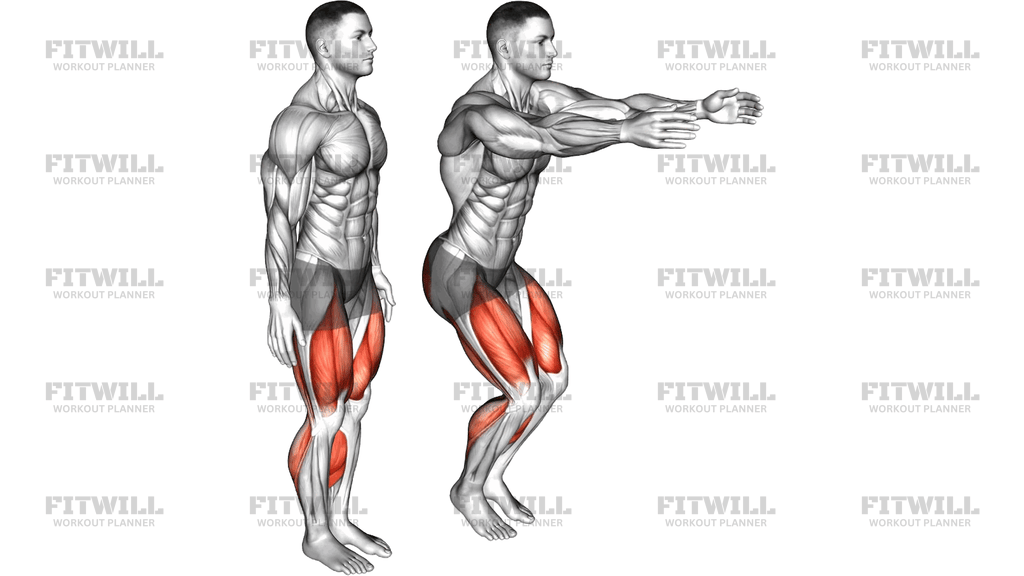
Instructions
- Stand upright with your feet hip-width apart, toes pointing forward, and let your arms hang naturally at your sides.
- Extend both arms straight out in front of your chest at roughly shoulder height, palms facing down or slightly inward, to set your counterbalance.
- Brace your core lightly and sit back into a quarter squat, bending your knees until your thighs reach a depth you can hold steadily, keeping your chest tall and your knees tracking over your toes.
- Keep this squat depth fixed for the entire set — do not stand up or sink lower between repetitions.
- From the squat, press evenly through the balls of both feet and lift your heels as high as possible, rising onto your tiptoes while your arms stay extended forward.
- Pause at the top of the heel raise for one to two seconds, feeling the contraction through your calves and the balance demand in your ankles and feet.
- Lower your heels slowly and under control until they touch the floor, resisting the urge to drop them quickly.
- Breathe in as you lower into the squat phase, and exhale as you press up onto your toes.
- Complete your repetitions while holding the squat, or reset to a full standing position between reps if your form starts to slip.
- If stability is difficult at first, stand close to a wall or chair and let your fingertips rest lightly on it for balance without leaning into it.
Tips & Tricks
- The most common mistake is changing squat depth during the set. If your hips rise as you go onto your toes, the quads stop doing their holding work — pick a shallower depth you can maintain for all reps.
- Avoid rolling onto the very tips of your toes. Weight should sit across the ball of the foot and the base of the toes, not behind the toes, or your ankles will wobble and your calves will lose tension.
- Keep your knees from caving inward during the heel raise. Thinking about gently spreading the floor with your feet keeps the knees stacked over the toes while balance is hardest.
- Do not let your extended arms drop as you rise onto your toes. If the arms fall, your torso usually leans forward and the movement turns into a strain on the lower back instead of the legs.
- Slow lowering of the heels is where much of the benefit lives. A one-to-two second descent builds more calf and tendon resilience than a fast bounce.
- Bend the knees enough that the calves work in a stretched, bent-knee position — a nearly straight leg turns this into a standard calf raise and reduces the soleus emphasis.
- If your toes cramp, spread your toes wide before each set and shorten the time on your toes; cramped toes usually mean the weight is too far forward.
- Start with bodyweight and higher repetitions, around 10 to 15, before adding a dumbbell or kettlebell held at your chest. The balance demand is the limiting factor early on, not strength.
- Warm up the ankles with a few plain heel raises before starting if your ankles feel stiff, especially in the morning or before running sessions.
Frequently Asked Questions
What muscles does Squat And Tip Toes work?
The quadriceps work isometrically to hold the squat position, while the calves, including the gastrocnemius and soleus, drive the heel raise. The glutes, ankle stabilizers, and core support the position throughout.
Why should I hold the squat while raising my heels instead of doing the two parts separately?
Holding the squat keeps constant tension on the quads and trains the calves in a bent-knee position, which places more demand on the soleus. It also adds a balance challenge that a standing calf raise does not provide.
How deep should the squat be in Squat And Tip Toes?
A quarter squat is enough — lower only until your thighs are comfortable holding the position. Deep squats make the heel raise unstable and usually cause your posture to collapse.
Is Squat And Tip Toes suitable for beginners?
Yes, it is a low-load bodyweight exercise that beginners can learn quickly. Newer lifters may want to hold a wall or chair lightly for balance during the first few sessions.
Why do my arms reach forward during this exercise?
Extending the arms in front of your chest counterbalances your hips sitting back, which helps you stay upright and balanced when your heels leave the floor. Letting the arms drop is one of the most common form breakdowns.
Is this exercise good for ankle stability?
It is one of its main benefits. Rising onto the balls of the feet from a squat challenges the small stabilizing muscles around the ankle and foot under a bent-knee load, which carries over well to running and jumping.
Can I add weight to Squat And Tip Toes?
Yes, once you can complete 15 or more controlled repetitions, holding a dumbbell or kettlebell at your chest adds load while keeping the same movement pattern. Only add weight when your balance is solid.
How is this different from a regular calf raise?
A regular calf raise is done with straight legs, which emphasizes the gastrocnemius. The bent-knee squat position shifts more work toward the soleus and adds continuous quad tension and a balance component.
How many sets and reps should I do?
Two to four sets of 10 to 15 repetitions works well for strength and endurance. Rest about 45 to 60 seconds between sets, or longer if your balance fatigues before your muscles do.
Are there any safety concerns with Squat And Tip Toes?
The main risks are losing balance and rolling the ankle, so use a wall or chair for light support if needed and stay on a flat, non-slip surface. Stop if you feel sharp pain in the knee, ankle, or Achilles area.