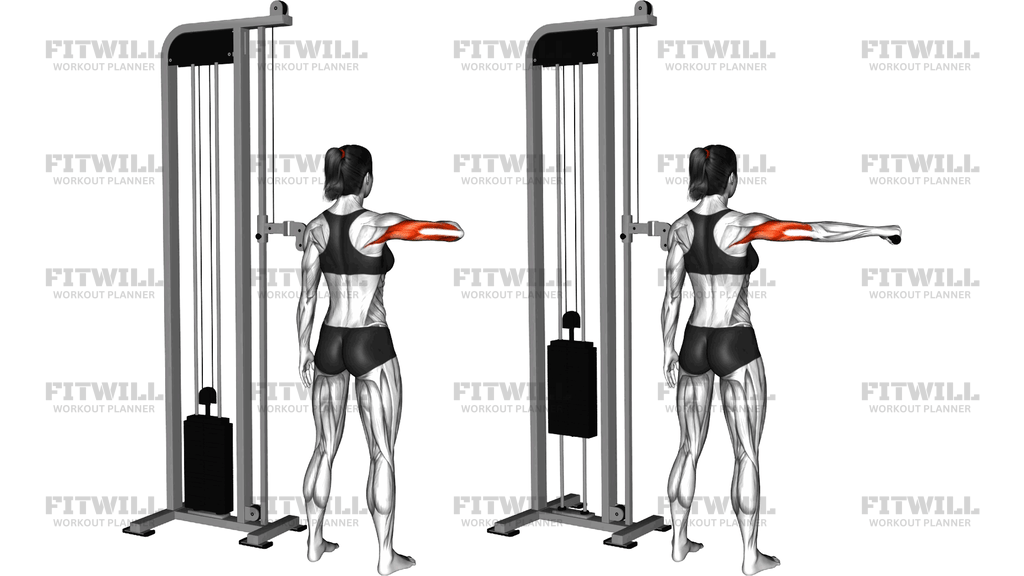
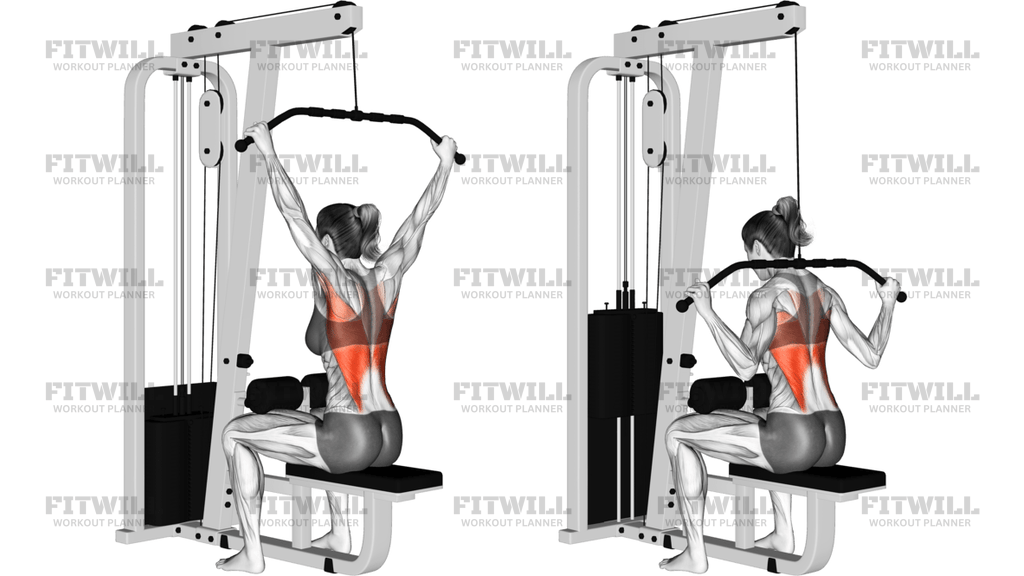
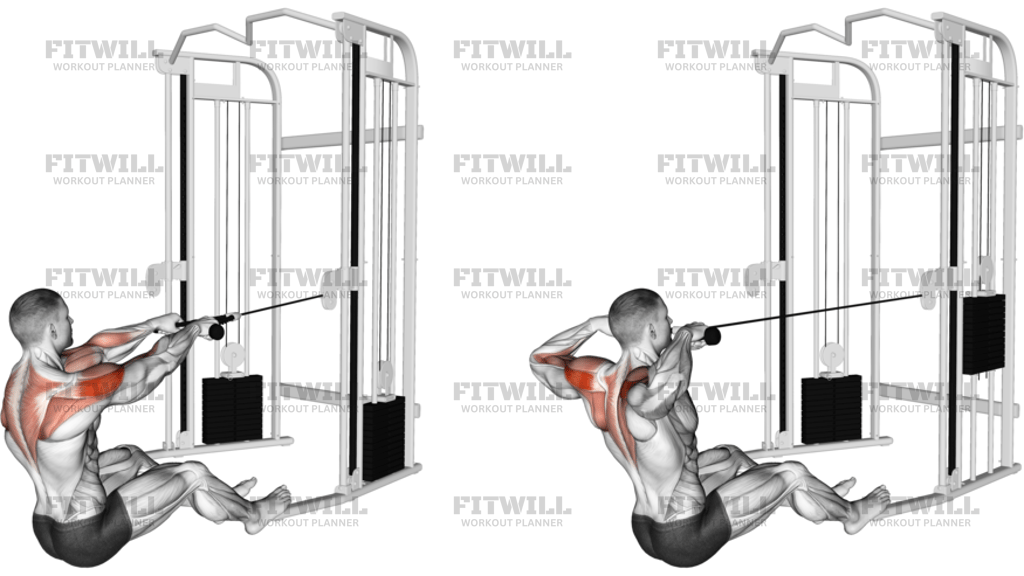
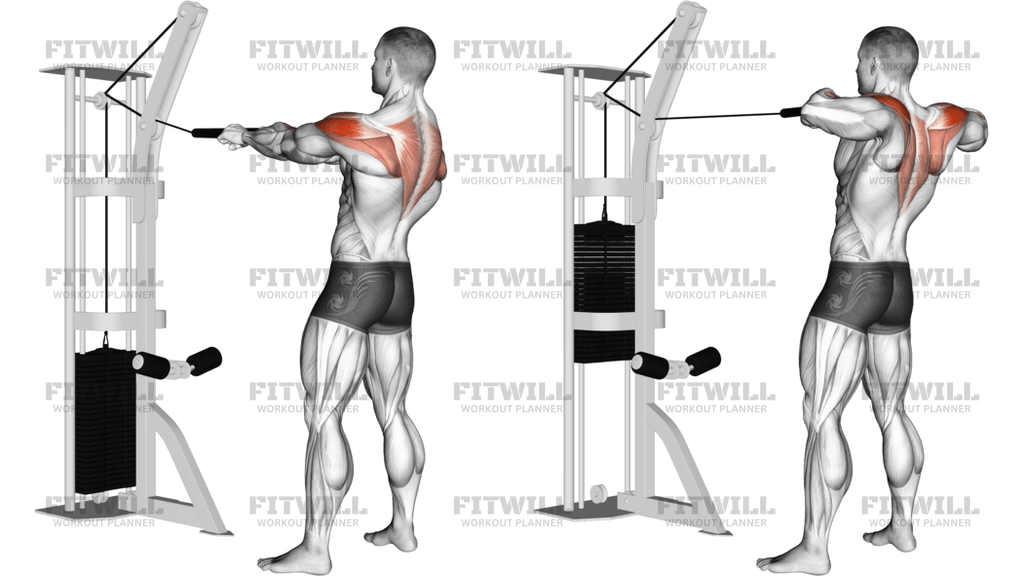
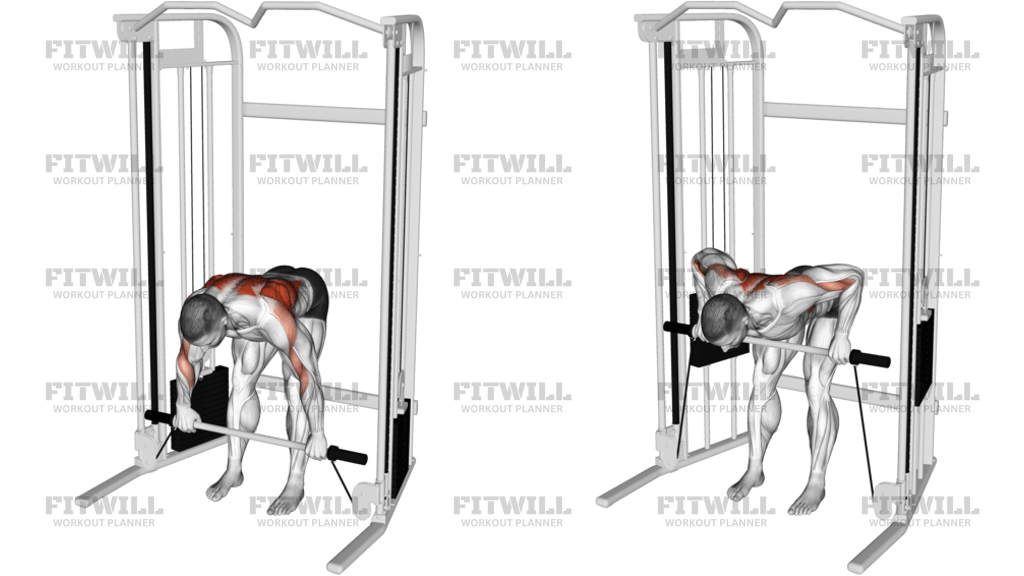
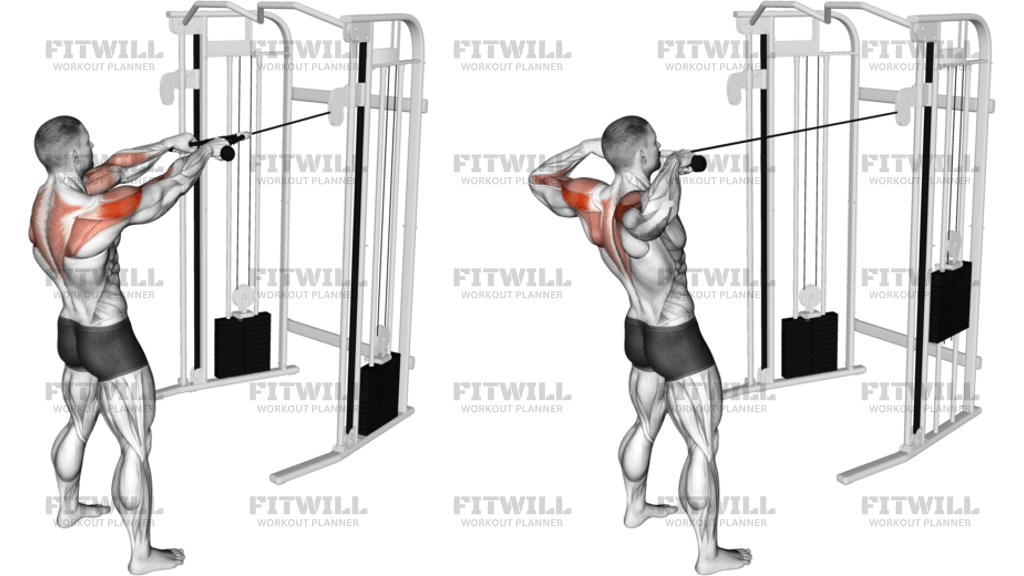
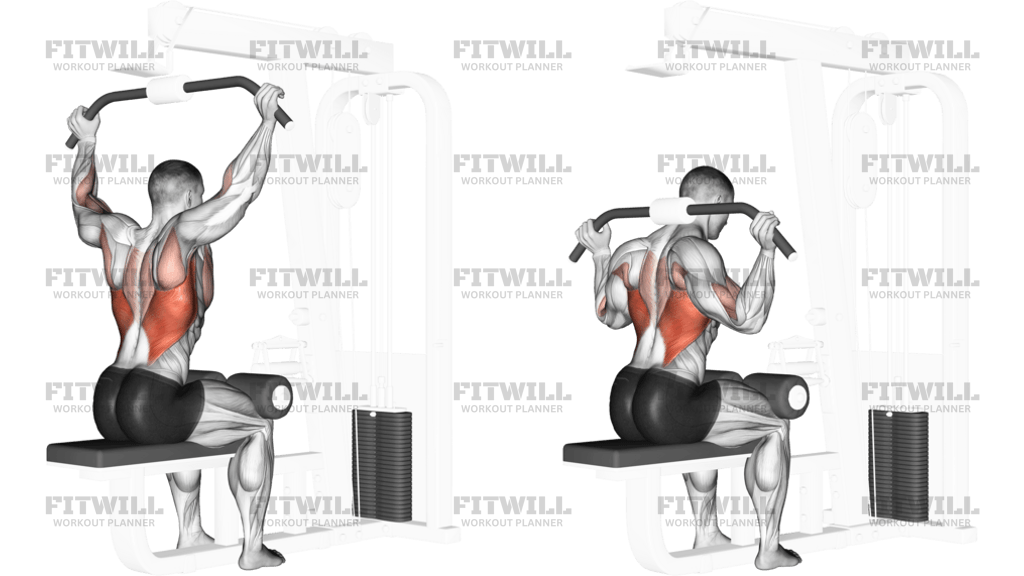
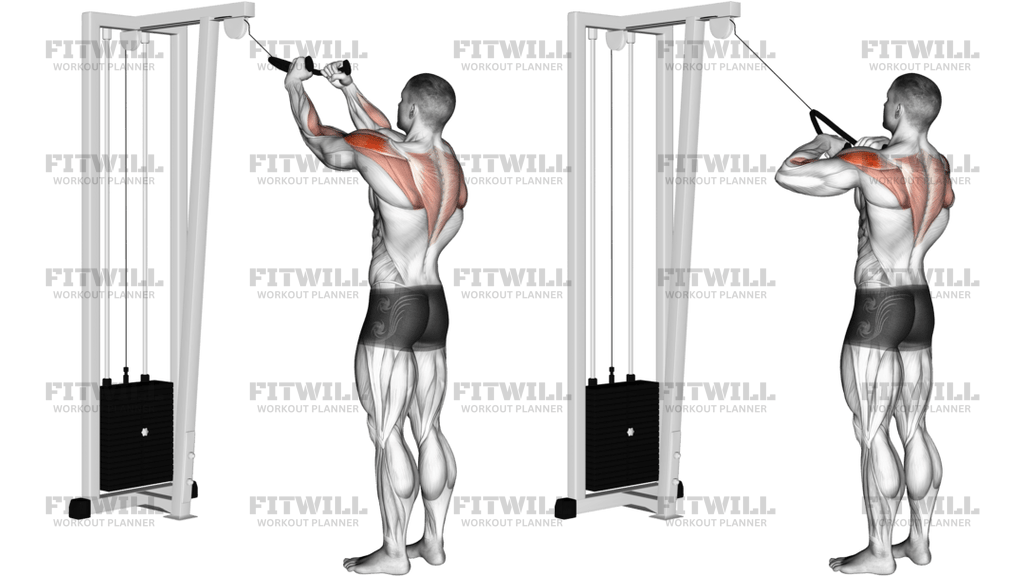
Cable Standing Supinated Face Pull (With Rope)
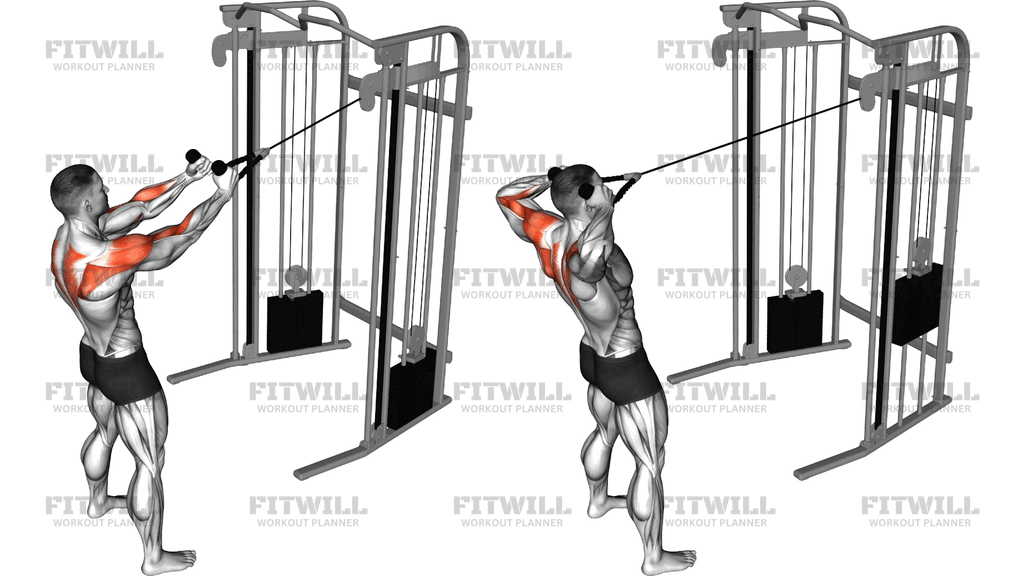
The Cable Standing Supinated Face Pull (With Rope) is a standing cable exercise performed with a rope attachment set at or near the top pulley. You take an underhand, or supinated, grip on the rope ends and pull the cable toward your face, letting your elbows travel out wide and slightly above shoulder height. Compared with the standard overhand face pull, the supinated grip shifts some of the pulling work toward the biceps and changes the path of elbow travel, which many lifters find lets them squeeze the shoulder blades together more completely at the finish.
The main work is done by the rear deltoids and the mid and lower traps, with the rhomboids drawing the shoulder blades back and the rotator cuff muscles stabilizing the shoulder joint as the rope approaches your face. Because you are standing rather than seated, your legs, glutes, and core also work to keep your torso from swaying as the cable loads and unloads.
This movement is especially useful for people who spend long hours at a desk and develop a forward-rounded shoulder posture, as well as bench pressers and overhead athletes who need strong, resilient rear shoulders to balance out heavy pressing. It fits well as an accessory lift on upper body days, usually for moderate weights and higher repetitions, since the muscles involved respond better to controlled volume than to maximal loads.
Setup matters here because the cable position and your distance from the machine determine the resistance curve. Standing too close removes tension at the start of each rep, while standing too far drags you forward onto your toes. Set the pulley slightly above head height and step back until your arms are fully extended with steady tension before you begin pulling.
To execute it well, keep your chest tall and ribs down, pull the rope ends toward your ears or the bridge of your nose, and let your elbows drive back and out rather than flaring downward. Finish each rep with a deliberate squeeze between the shoulder blades, then return the rope with control instead of letting the stack pull your arms forward. If your torso rocks or your lower back arches to move the weight, the load is too heavy for the target muscles to do the work.
You will see this exercise programmed as a warm-up primer before pressing, as a finishing movement after rows or pulldowns, and in rehab-adjacent shoulder health work. Keep the reps smooth, the range honest, and the tension on the upper back rather than the lower back, and it becomes one of the most repeatable shoulder exercises you can slot into any week.
[ Workout Log & Planner ]
Put your next workout in Fitwill
Keep your plan and training log ready when you are.


Instructions
- Set the rope attachment on the top pulley of a cable machine and position the pulley slightly above head height.
- Grip the rope ends with a supinated, palms-up grip, thumbs pointing back toward your body, and step back until your arms are fully extended and the weight stack is lifted off its rest.
- Stand with feet roughly hip-width apart, knees soft, and hold a tall posture with your chest up and shoulders level.
- Brace your core lightly to lock your ribcage down so the pull comes from your upper body, not from trunk sway.
- Pull the rope ends back toward your face at nose or forehead level, keeping your elbows high and wider than your wrists throughout the pull.
- At the end position, your hands should be just outside your ears with the rope's slack facing outward, and your shoulder blades pulled fully together and slightly down.
- Pause for a beat in the contracted position and consciously squeeze the rear shoulders and upper back.
- Return the rope forward under control, letting your arms extend fully without letting the weight stack slam down or your shoulders roll forward.
- Exhale as you pull toward your face and inhale as you extend your arms back to the start.
- Complete your set, then step toward the machine and let the stack settle before releasing the rope.
Tips & Tricks
- If your elbows drop below shoulder height during the pull, the weight is usually too heavy and your lats are taking over; reduce the load and keep the elbows high and wide.
- Avoid turning it into a standing row: the target for the rope is your face, not your chest, so check that your hands finish near your ears.
- The supinated grip invites extra biceps involvement, which is fine, but if your arms are doing all the work, focus on initiating each rep by moving the shoulder blades first.
- Do not let your hips drift forward or your lower back arch as you pull; if the stack pulls your whole body forward on the return, step closer or lighten the weight.
- Keep tension at full arm extension by maintaining a slight backward lean from the ankles rather than standing directly under the pulley with slack cable.
- Point the rope ends slightly outward as they approach your face, which follows the natural line of the pull and keeps your wrists comfortable in the underhand grip.
- Higher reps in the 12-20 range with a brief pause per rep generally produce better upper back results than grinding heavy singles on this movement.
- If your shoulders pinch as the rope comes in, stop the pull slightly short of full range rather than forcing the hands behind the head plane.
Frequently Asked Questions
Which muscles does the Cable Standing Supinated Face Pull (With Rope) work?
The rear deltoids, middle and lower traps, and rhomboids do most of the work, while the rotator cuff stabilizes the shoulder. Because the grip is supinated, the biceps also contribute more than they would in an overhand face pull.
Why use a supinated grip instead of the usual overhand grip on the rope?
The palms-up position encourages the elbows to travel higher and closer to the body's midline, which many lifters find produces a stronger squeeze of the shoulder blades at the end of the pull. It also adds some biceps work to the movement.
How high should I set the pulley for the Cable Standing Supinated Face Pull (With Rope)?
Set it at or slightly above head height so the cable angle pulls slightly downward toward your face at the finish. Too low and the movement drifts toward a high row; too high and it becomes awkward to stand under the pulley.
Is this exercise suitable for beginners?
Yes, it is actually a good beginner upper back exercise because the cable provides smooth, adjustable resistance and the standing position is easy to learn. Start with a light weight, focus on elbow height and blade squeeze, and build reps before adding load.
How far should I stand from the cable machine?
Step back far enough that your arms are fully extended with constant tension on the cable at the start of every rep. If the stack bottoms out between reps, you are too close; if the cable drags you forward, you are too far.
What is the most common mistake with this movement?
Pulling to the chest instead of the face, which turns it into a standing row and shifts work away from the rear shoulders. Another frequent error is leaning back with the torso to move heavier weight, so keep your brace solid and let the upper back do the pulling.
What can I substitute if my gym has no rope attachment?
You can use two single handles or stirrup grips on the top pulley with a similar underhand or neutral grip, or perform the same face pull pattern with a resistance band anchored above head height. The key is keeping the pull path toward your face with high elbows.
How many sets and reps should I do?
Two to four sets of 12-20 controlled reps works well, either as a warm-up before pressing or as a finisher after rows. The rear shoulders and upper back tend to respond better to moderate loads and quality contractions than to heavy weights.
Is it safe to pull the rope all the way behind my head?
You do not need to. Bring the rope to nose or forehead level with elbows just past your torso line, and stop short if you feel any pinching at the front of the shoulder. A slightly shorter range with a strong squeeze is more effective and more comfortable than forcing extra range.
Can the Cable Standing Supinated Face Pull (With Rope) help with rounded shoulders from desk work?
It can be a useful part of the picture because it strengthens the rear shoulder and mid-back muscles that hold the shoulder blades in a better position. Pair it with regular movement breaks and mobility work rather than relying on any single exercise.