Dumbbell Prone W Raise
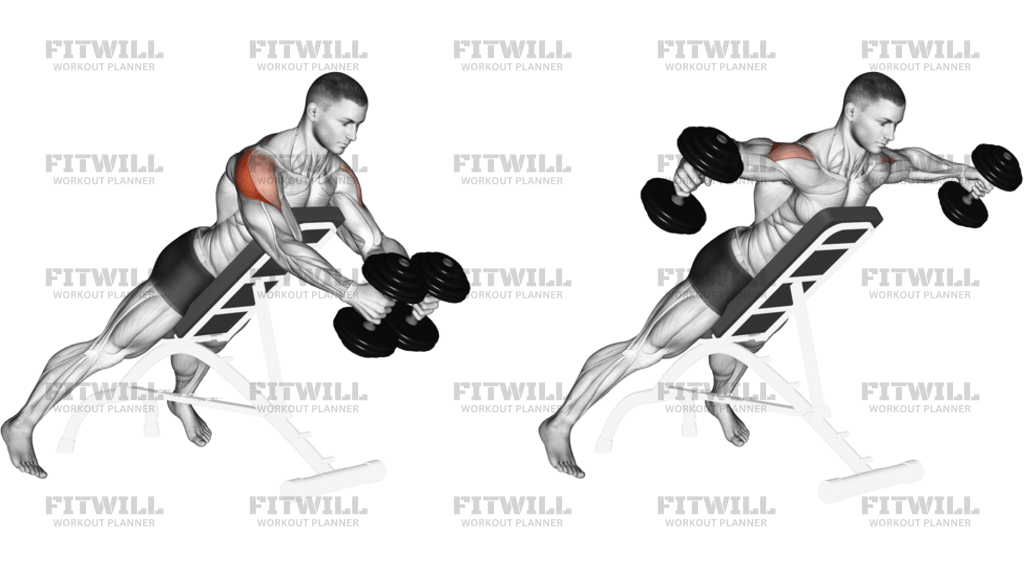
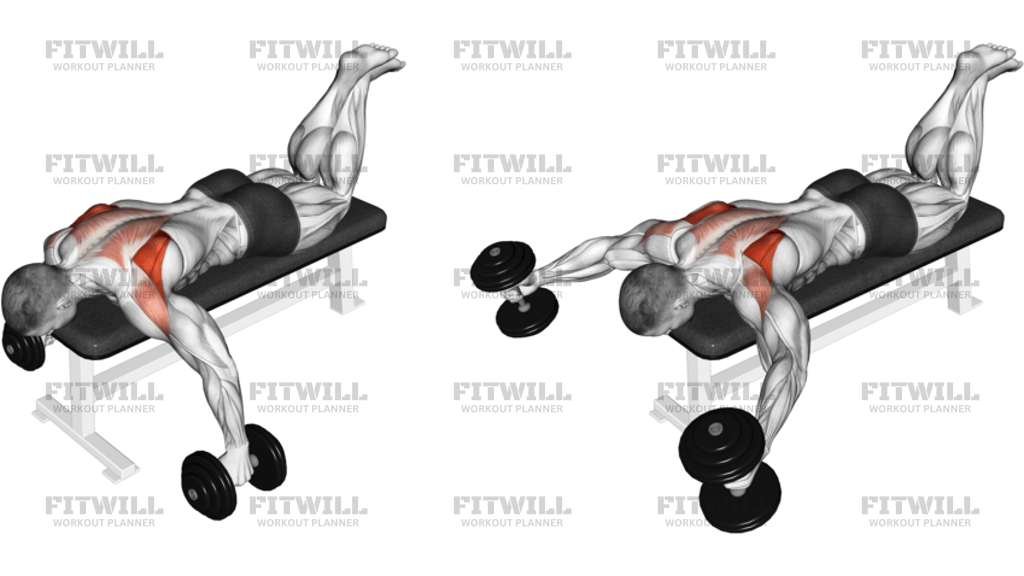
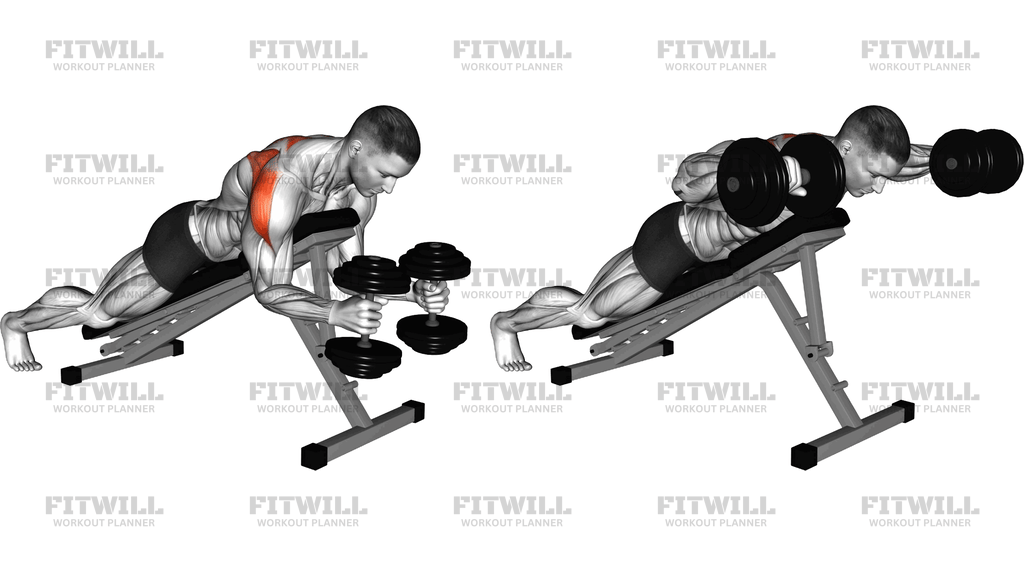
The Dumbbell Prone W Raise is a chest-supported shoulder exercise performed lying face down on an incline bench. With a dumbbell in each hand, you bend the elbows and raise the upper arms out to the sides while rotating the shoulders so the dumbbells travel up and out until your arms form a W shape beside your head. Because the bench supports your torso, your lower back and hips stay out of the movement, which forces the rear shoulders and upper back to do the work instead of letting momentum take over.
This movement earns its place in most programs because the rear delts and external rotators are the most undertrained areas of the shoulder. Pressing and vertical pulling dominate most people's training, and the result is often shoulders that look front-heavy and feel unstable at the joint. The W position is especially valuable because it combines horizontal abduction with external rotation, hitting the posterior deltoid together with the infraspinatus and teres muscles that stabilize the humerus.
The incline bench setup is what separates this from a standing or floor-based version. Lying chest-down on the angled pad locks your torso in place, so if the weight swings up, it is only because your shoulders moved it there. That makes the exercise honest and self-correcting: choose a load you can lift with pure shoulder action or the rep quality collapses immediately. It also makes the exercise a good fit for people with lower back sensitivity who cannot tolerate bent-over positions.
To execute it well, keep your chest glued to the pad and your neck in a neutral line with your spine. Start with the dumbbells hanging below your shoulders, then drive the elbows up and slightly back while turning the palms forward. The finish position has your upper arms roughly level with your torso and the dumbbells wide of your head, forming the two points of the W. Pause briefly at the top, then lower under control to the full hang before the next rep.
This raise is commonly used as an accessory movement after pressing work, as part of a shoulder-health warm-up on upper body days, or in higher-rep blocks aimed at building rear delt and upper back detail. Because the resistance is light relative to pressing movements, it works best for sets of ten to fifteen reps where you can hold the top position on every rep. Keep the load modest, keep the tempo deliberate, and treat it as a precision exercise rather than a strength lift.
[ Workout Log & Planner ]
Put your next workout in Fitwill
Keep your plan and training log ready when you are.


Instructions
- Set an adjustable bench to a low-to-moderate incline, roughly 30 to 45 degrees, and place a dumbbell of moderate weight on the floor at each side of the bench.
- Lie face down on the bench so your chest and the front of your shoulders rest on the pad, letting your head extend past the top edge, with your toes or the balls of your feet braced on the floor for balance.
- Grip the dumbbells with a neutral grip, palms facing each other, and let your arms hang straight down below your shoulders.
- Draw your shoulder blades gently back and down, brace your abdominal muscles, and keep your forehead slightly lifted so your neck stays in line with your spine.
- Exhale and raise the dumbbells by driving your elbows up and out to the sides, keeping the elbows bent at roughly 90 degrees throughout the lift.
- As the elbows rise, rotate your shoulders outward so your palms turn forward and the dumbbells travel up and out until your upper arms and torso form a W shape.
- Pause for a second at the top with your upper arms near shoulder height, squeezing your rear shoulders and the muscles between your shoulder blades.
- Inhale and lower the dumbbells slowly back to the starting hang position, reversing the rotation so your palms face each other again at the bottom.
- Reset your shoulder blade position, confirm your chest is still fully on the pad, and begin the next repetition.
- Complete all reps with the same tempo, keeping the dumbbells from swinging at the bottom of each rep.
Tips & Tricks
- The most common mistake is turning this into a row by pulling the dumbbells toward the bench with the lats. Keep the elbows wide and focus on the outward, rotating path that creates the W.
- If your chest peels off the pad as the dumbbells rise, the weight is too heavy or you are overextending at the top. Drop the load a few pounds and finish each rep with your torso still in contact with the bench.
- Shrugging your shoulders toward your ears at the top shifts work to the upper traps. Actively reach the top of your head forward and keep the space between your ears and shoulders.
- The elbow angle should stay near 90 degrees for the whole rep. Straightening the arms mid-lift changes it into a reverse fly and removes most of the external rotation benefit.
- Use a controlled two-second lowering phase. Because the rear shoulders are small muscles, the lowering portion is where much of the useful tension happens.
- A thumb-up bias at the start of the rotation is generally more comfortable for most shoulders than a thumb-down position. If you feel pinching at the front of the shoulder, adjust the rotation path before changing weights.
- Rest your forehead lightly forward rather than craning your neck up to look ahead. Lifting the chin compresses the back of the neck and does nothing for the raise.
- Choose dumbbells you can pause with at the top for a full second. If you cannot hold the W, the load has outrun your rotator cuff strength.
- Pair this with a pressing exercise in the same session rather than saving it for the very end when fatigue makes the rotation hard to control.
Frequently Asked Questions
What muscles does the Dumbbell Prone W Raise work?
The primary movers are the rear deltoids, with strong assistance from the rotator cuff muscles that produce external rotation, mainly the infraspinatus and teres minor. The rhomboids and mid-traps also work to control the shoulder blades as the arms rise.
Why use an incline bench instead of doing the W raise bent over?
The chest-supported position removes the lower back from the equation and prevents body English, so the shoulder muscles receive the full demand. It is also a better option for anyone whose lower back fatigues before their rear delts in bent-over positions.
What angle should the bench be set to?
A low-to-moderate incline of about 30 to 45 degrees works well. A steeper angle shifts your torso more upright and makes the movement resemble a seated rear delt raise rather than a true prone raise.
Is the Dumbbell Prone W Raise good for beginners?
Yes, provided the weight starts very light. Beginners often benefit more from this exercise than experienced lifters because the chest-supported setup makes poor form obvious and teaches them how to move the arms without shrugging or arching.
How heavy should the dumbbells be?
Far lighter than you would use for rows or presses. Pick a weight you can lift for ten to fifteen reps while pausing at the top of the W without your chest leaving the pad; for most people that is a small fraction of their pressing dumbbells.
How is the W raise different from a reverse fly?
In a reverse fly the arms stay nearly straight and the hands travel on a wide arc. In the W raise the elbows stay bent near 90 degrees and the shoulders rotate outward, which adds external rotation and places more demand on the rotator cuff alongside the rear delts.
Where should I feel the Dumbbell Prone W Raise?
You should feel a squeeze across the back of the shoulders and between the shoulder blades. Feeling it mainly in the neck, lower back, or front of the shoulders means the setup or load needs adjusting.
What can I use if I do not have an incline bench?
You can perform the same W pattern lying prone on a flat bench with your head and arms free at the top edge, or standing bent forward at the hips with your chest braced against an incline support. The flat-bench version slightly changes the resistance angle but keeps the same movement pattern.
How many sets and reps should I do?
Two to four sets of ten to fifteen controlled reps is a practical range. Because the target muscles are small and the exercise is about quality of movement, add load only when you can own the top position on every rep.
Is the Dumbbell Prone W Raise safe for the shoulder joint?
Performed with light loads and a controlled range, it is a low-stress way to train the rear shoulder and rotator cuff. If you have a current shoulder injury or feel sharp pain or pinching during the rotation, reduce the range or consult a qualified professional before continuing.