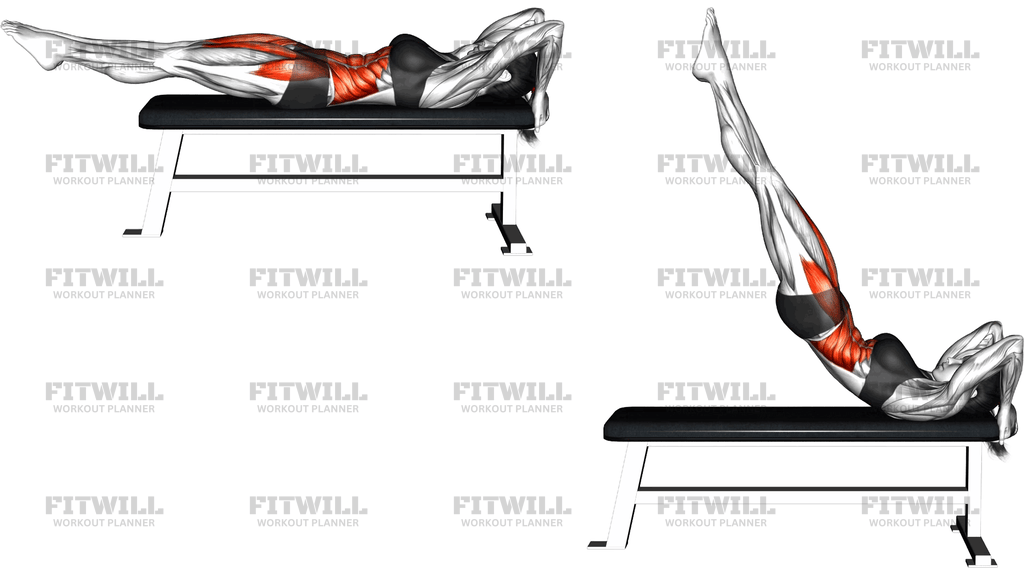
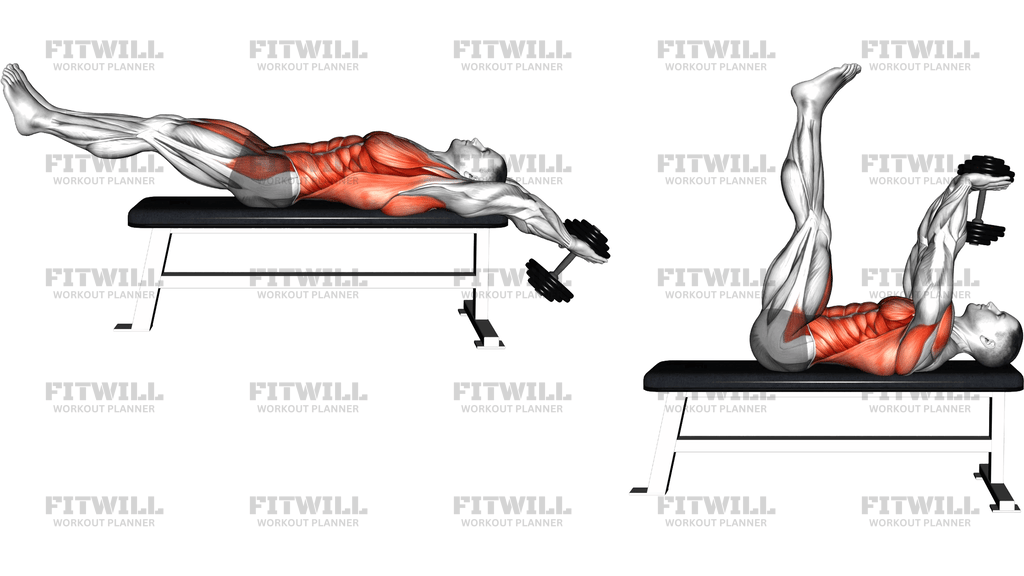
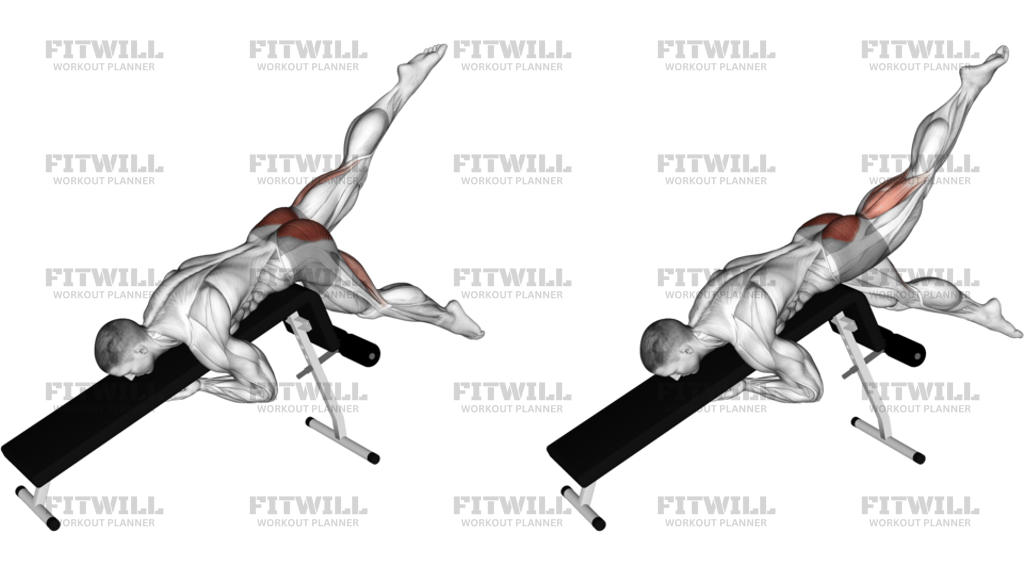
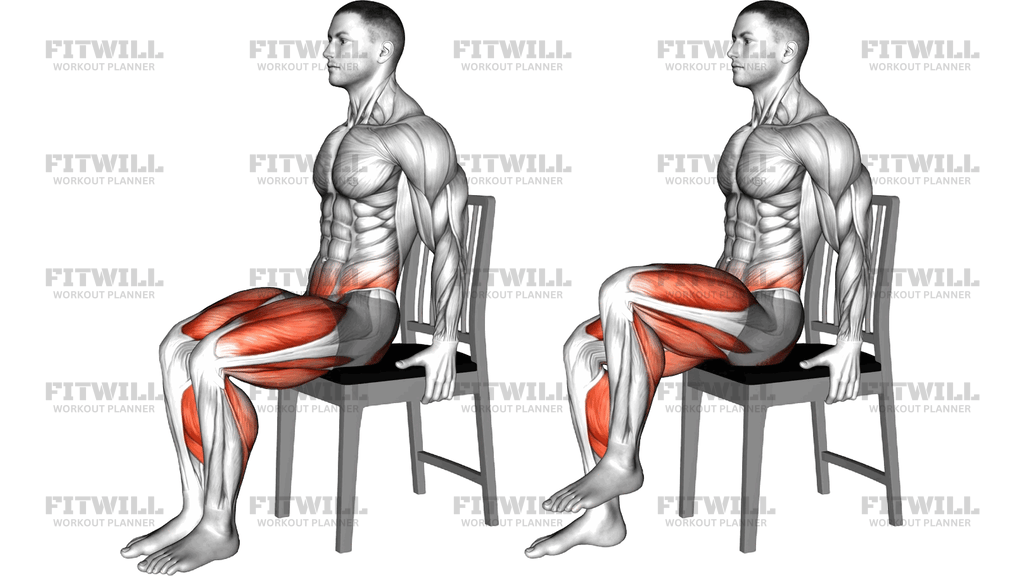
Seated In Out Leg Raise Over Bench
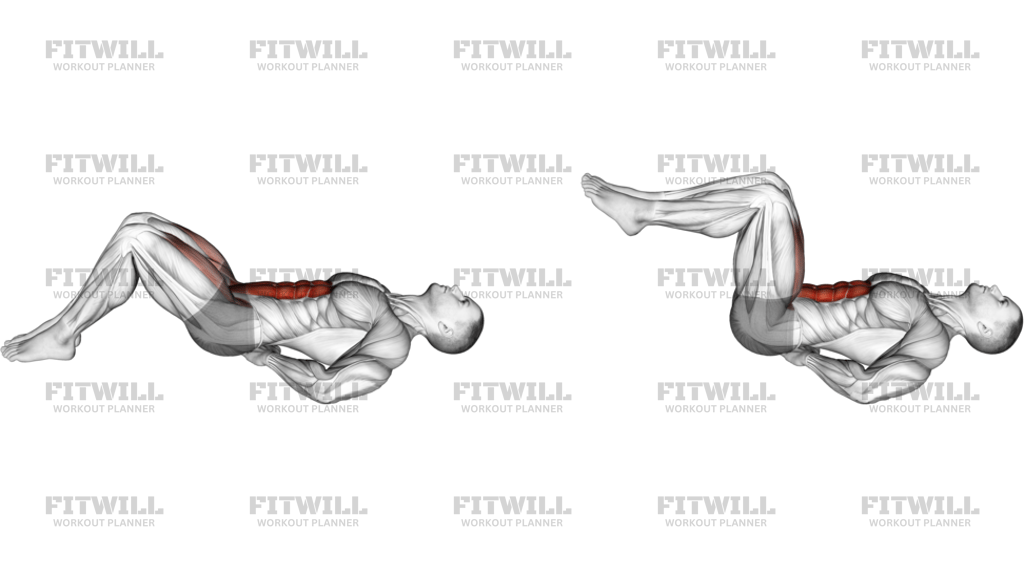
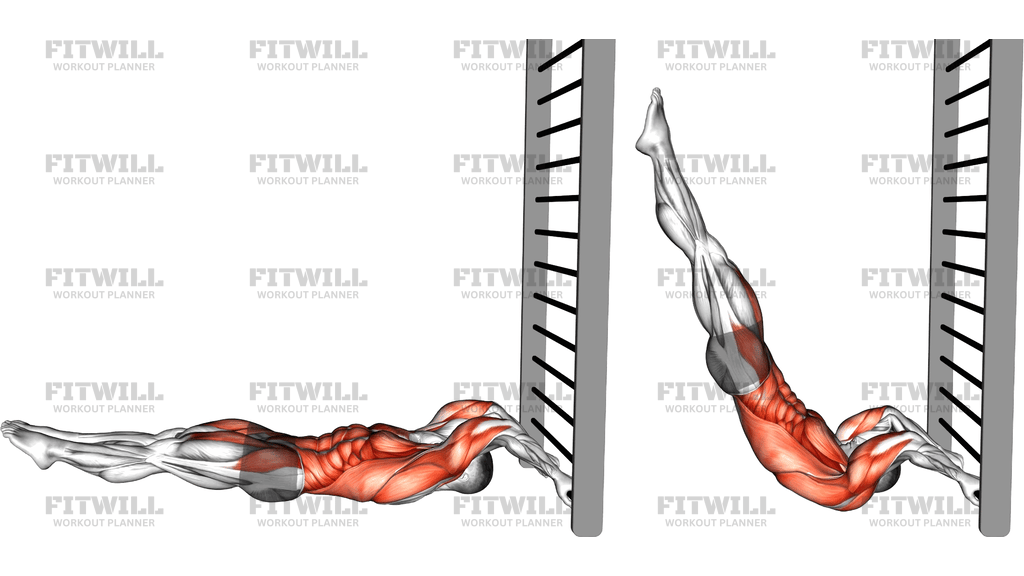
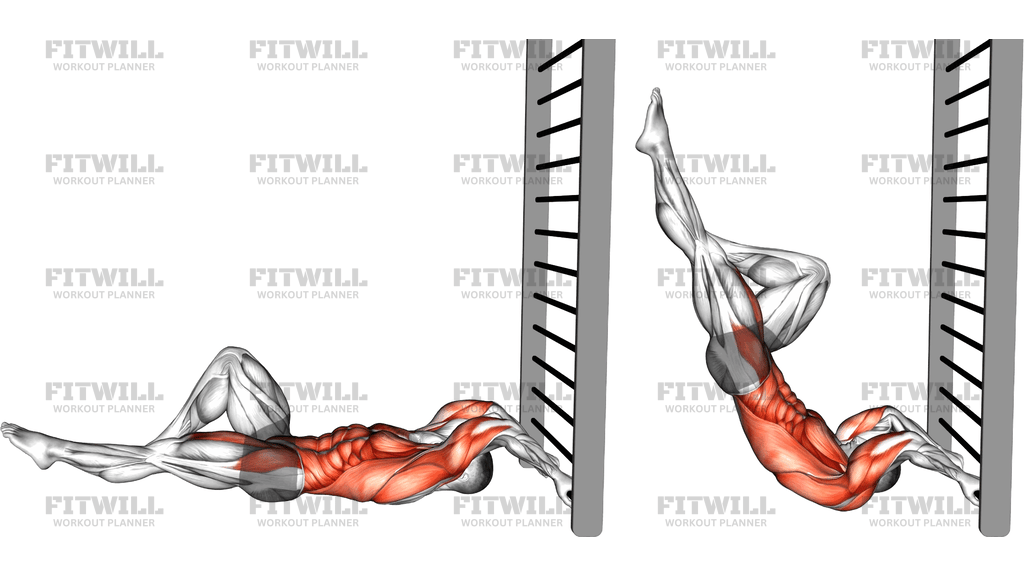
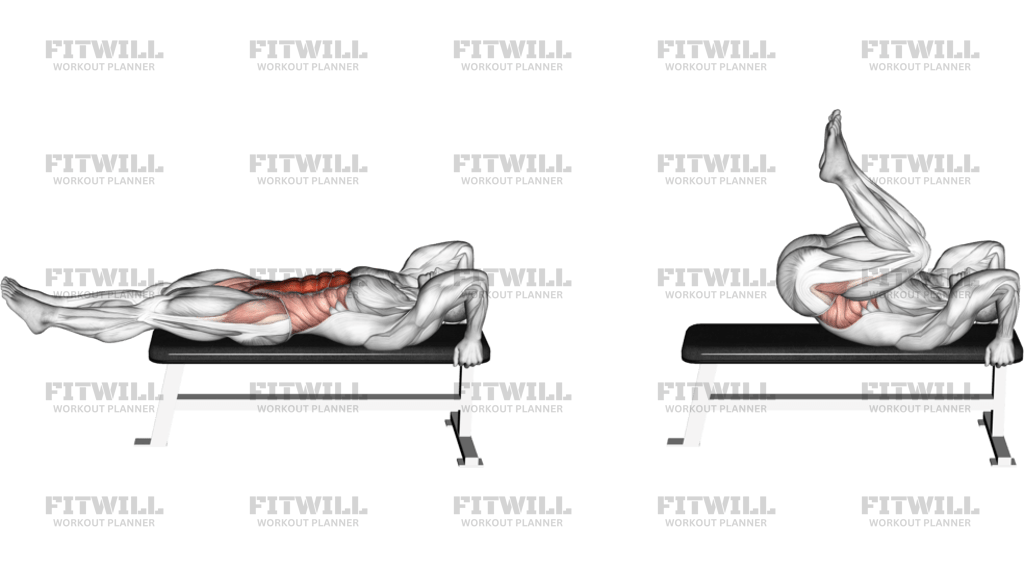
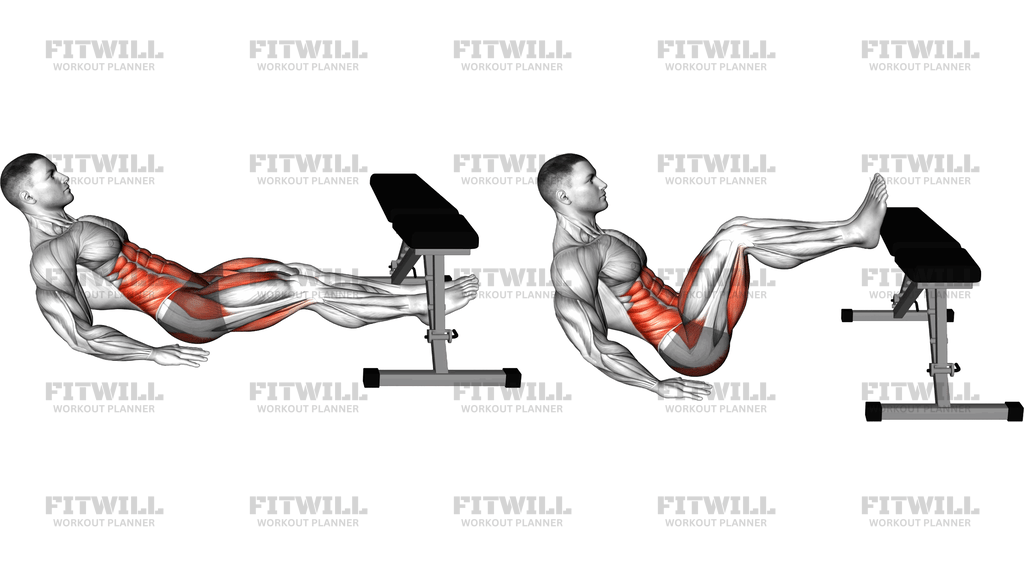
Seated In Out Leg Raise Over Bench is a bodyweight core drill that combines two lower-abdominal actions into one continuous rhythm: pulling the knees in toward the chest, then extending the legs back out long. You set up beside a flat bench with your hands on the floor at your sides and your heels resting on the edge of the bench. From there, each repetition alternates between a tucked position, where the knees draw in over your hips, and a stretched position, where the legs reach back out until the heels return to the bench. The bench gives your heels a fixed reference point, which makes the in-and-out timing easy to feel and repeat consistently.
The main work comes from the lower portion of the rectus abdominis, which has to pull the pelvis toward the ribcage every time the knees come in. The hip flexors, especially the iliopsoas and rectus femoris, assist by lifting and lowering the legs, while the deep core stabilizes the spine so your lower back does not arch and take over the movement. Because the legs stay near the bench rather than hanging free, the leverage is slightly more forgiving than hanging leg raises, but the extended position still demands real control.
This exercise suits anyone who has outgrown basic lying leg raises and wants a harder version without needing a pull-up bar or captain's chair. It is common in home and hotel-gym workouts because a single bench and a patch of floor are all you need. It also works well as a finisher at the end of a leg or core session, when a few controlled sets of in-and-out raises will fatigue the abdominals without loading the spine or grip.
Setup matters more than it looks. The bench height should let your heels rest on it comfortably with your legs nearly straight while you lie back. Your hands belong flat on the floor beside your hips, pressing lightly to anchor your torso. If the bench is too tall or too far away, your hips either overextend at the start or your heels catch the pad mid-rep, both of which throw off the rhythm.
To execute well, keep the tempo smooth: knees in until they bend fully toward your chest, then extend back out until the heels just touch the bench again. Avoid slamming the legs down at the bottom or yanking the knees up with momentum. Breathe out as the knees come in, breathe in as the legs reach out, and stop the set the moment your lower back starts lifting off the floor.
A few practical safety points: move deliberately rather than fast, especially if you are new to leg raise variations. If you feel the work shifting into your hip crease or lower back instead of your abs, reduce the range by not extending the legs quite so far. And if floor lying is uncomfortable, a folded mat under the hips makes the whole setup easier to hold.
[ Workout Log & Planner ]
Put your next workout in Fitwill
Keep your plan and training log ready when you are.


Instructions
- Place a flat bench beside you and lie on your back on the floor so your heels can rest on the edge of the bench pad with your legs nearly straight.
- Set your arms alongside your body with palms flat on the floor, fingers pointing toward the bench, and press them lightly into the ground for support.
- Brace your abdominal wall and gently flatten your lower back against the floor before the legs move at all.
- From the extended position with heels on the bench, draw both knees in toward your chest at the same time, letting them bend fully as they pass over your hips.
- Pause briefly with the knees tucked close to your torso, feeling your lower abdominals shorten.
- Extend the legs back out in one smooth motion until your heels return to rest on the edge of the bench, keeping them from dropping below bench height.
- Keep the return controlled; the heels should settle onto the bench rather than crash onto it.
- Exhale as the knees pull in and inhale as the legs extend back out over the bench.
- Complete the planned repetitions at an even tempo, then rest with both feet on the bench and your lower back relaxed before the next set.
- If your form slips and your lower back arches off the floor, end the set rather than pushing through with a compromised position.
Tips & Tricks
- The most common mistake is letting the heels slide off or bump the bench mid-rep; reposition your body once so the extended-leg position lands the heels squarely on the pad edge.
- If your knees flare apart as they tuck in, imagine squeezing a light object between them — the legs should move together as one unit.
- Do not let your hips roll up off the floor as the knees come in; a small amount of pelvic tilt is fine, but the hands and upper back should stay planted.
- Tempo beats speed here: a two-count in and a two-count out keeps the abdominals under tension longer than fast, bouncy reps.
- If you cannot keep your lower back on the floor at full extension, shorten the range slightly and build up over several sessions instead of forcing the long position.
- Rounding the shoulders forward and craning the neck steals work from the abs — keep the head resting heavily on the floor throughout.
- Because the hip flexors do a lot of the lifting, concentrate on curling the pelvis toward the ribs on the tuck rather than just folding at the knees.
- Wear pants that let your heels glide; bare heels catching on the bench pad disrupts the smooth in-and-out rhythm.
- Place the exercise late in a workout after the hip flexors are not needed for heavy compound lifts, since this drill fatigues them quickly.
Frequently Asked Questions
Which muscles does the Seated In Out Leg Raise Over Bench work?
The lower abdominals are the primary movers, with strong assistance from the hip flexors such as the iliopsoas and rectus femoris. The deep core muscles stabilize your spine throughout each repetition.
Why are the heels resting on a bench instead of hovering above the floor?
The bench gives the extended position a fixed endpoint, so every rep finishes at the same range and the heels cannot drift. It also slightly reduces the lever length stress compared with holding the legs fully free, making the pattern easier to control.
Is the Seated In Out Leg Raise Over Bench suitable for beginners?
It can be, but most beginners do better starting with plain lying leg raises or single-knee tucks first. If you can keep your lower back on the floor through the full in-and-out range for 10 or more reps, this version is a reasonable next step.
How tall should the bench be for this exercise?
The pad should sit at roughly the height where your heels rest on it with your legs nearly straight while lying back, similar to a standard flat bench. If it is much taller, your hips get pulled out of position when the legs extend.
My lower back arches when I extend my legs out. How do I fix it?
Stop the extension earlier, before the arch starts, and rebuild the range gradually as your core gets stronger. Also make sure you are bracing and pressing your lower back into the floor before each rep begins.
Can I do this exercise without a bench?
Yes — the same in-and-out pattern works with your heels hovering a few inches above the floor, though you lose the fixed reference point. A sturdy chair, ottoman, or box of similar height is a workable substitute.
How many repetitions should I perform?
Start with 2 to 3 sets of 8 to 12 controlled reps, prioritizing a smooth tempo over a high count. Because the abdominals respond well to tension and control, higher-quality moderate-rep sets beat fast, loose ones.
Should I lift my hips off the floor as the knees come in?
A small posterior pelvic tilt is natural and actually increases abdominal involvement, but your hips should not roll up toward the ribs. If your tailbone lifts high off the floor, you are using momentum and losing tension.
Is this exercise safe for people with lower back discomfort?
Many people tolerate it well because the floor supports the spine, but leg raise variations do load the front of the trunk and hip flexors. Move slowly, keep the range where you can keep your back flat, and stop if discomfort appears rather than working through it.