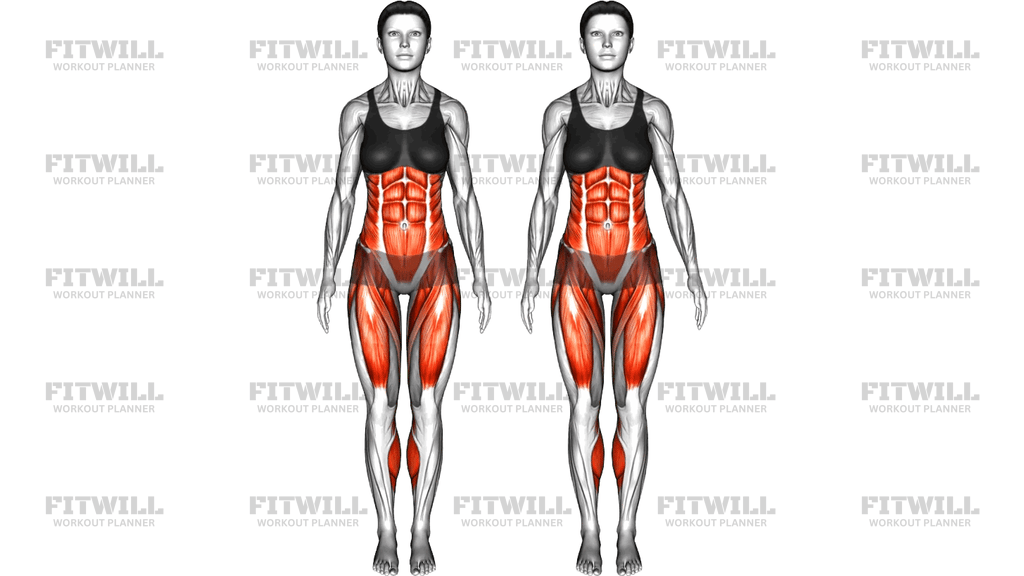
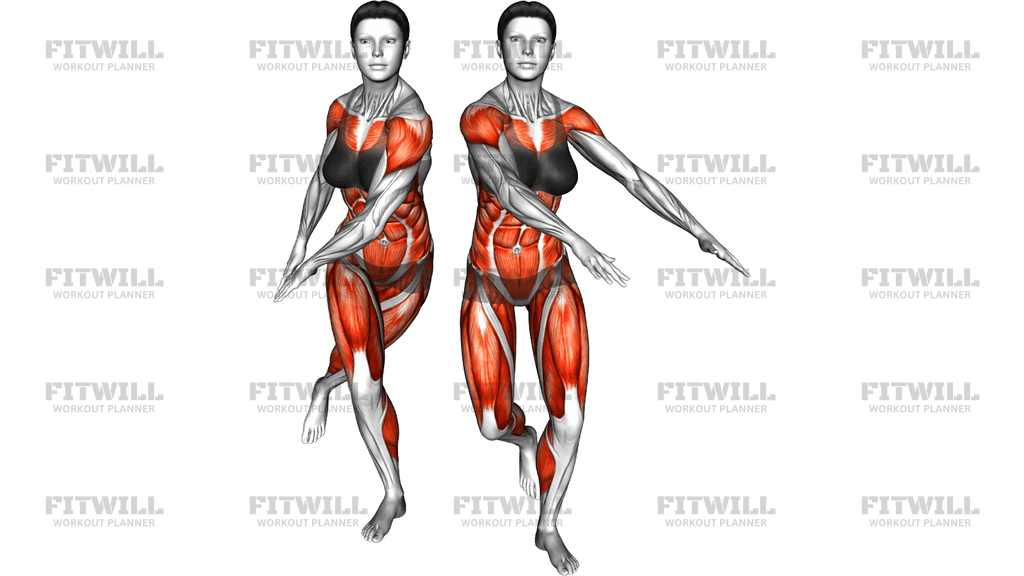
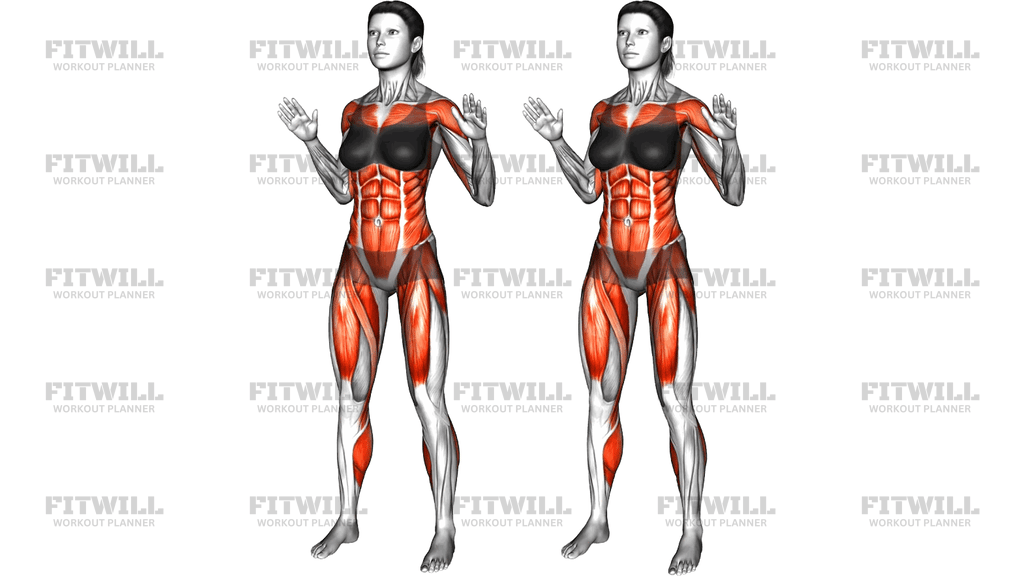
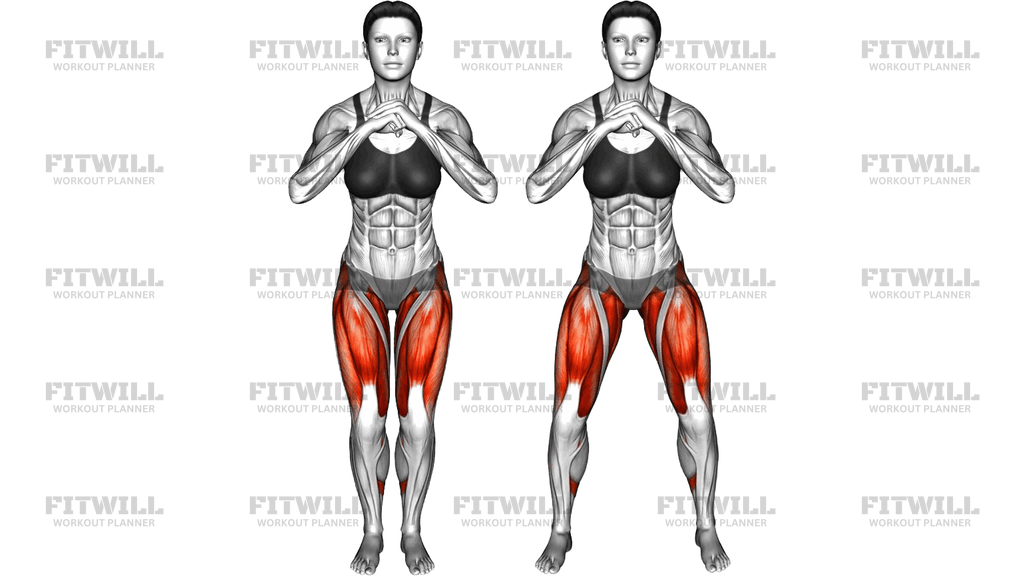
Squat To Jumping Jack
The Squat To Jumping Jack is a body weight conditioning movement that links two familiar patterns into one continuous flow. You drop into a body weight squat, drive back up to standing, and immediately open into a full jumping jack with the arms sweeping overhead and the feet jumping wide before returning together. The result is a leg-dominant exercise that doubles as a cardio stimulus, because the repeated squat-to-jump transitions keep your heart rate elevated for the entire set.
This combination works well for anyone who wants more from a warm-up or a home workout than a plain squat can offer. The squat portion loads the quads and glutes through a controlled range, while the jumping jack adds calf work, shoulder movement, and a short burst of impact. Because the pattern cycles quickly between a slower strength shape and a faster rhythmic one, it also challenges coordination and timing, which makes it a practical choice for circuit training, HIEM-style intervals, or active recovery days.
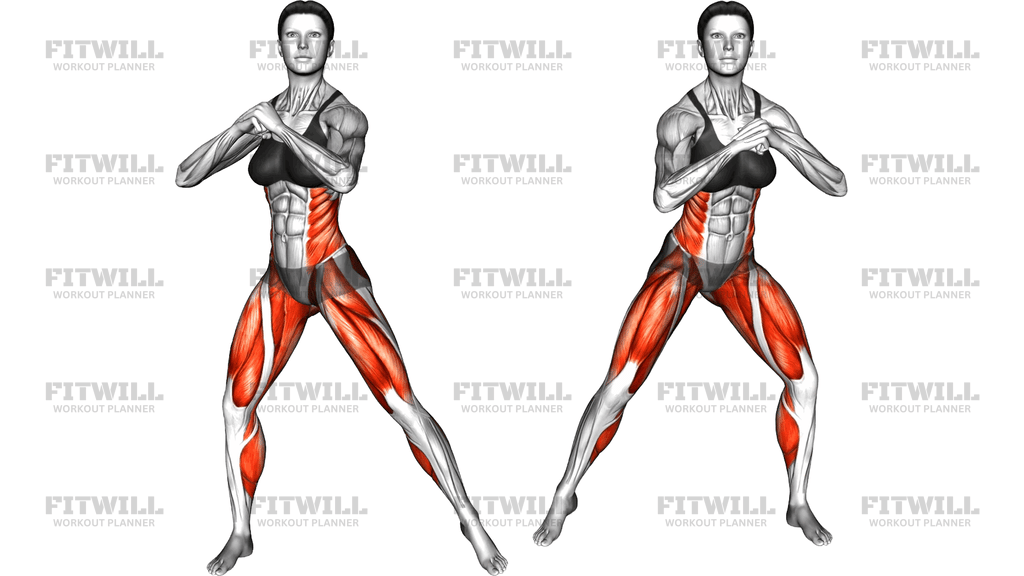
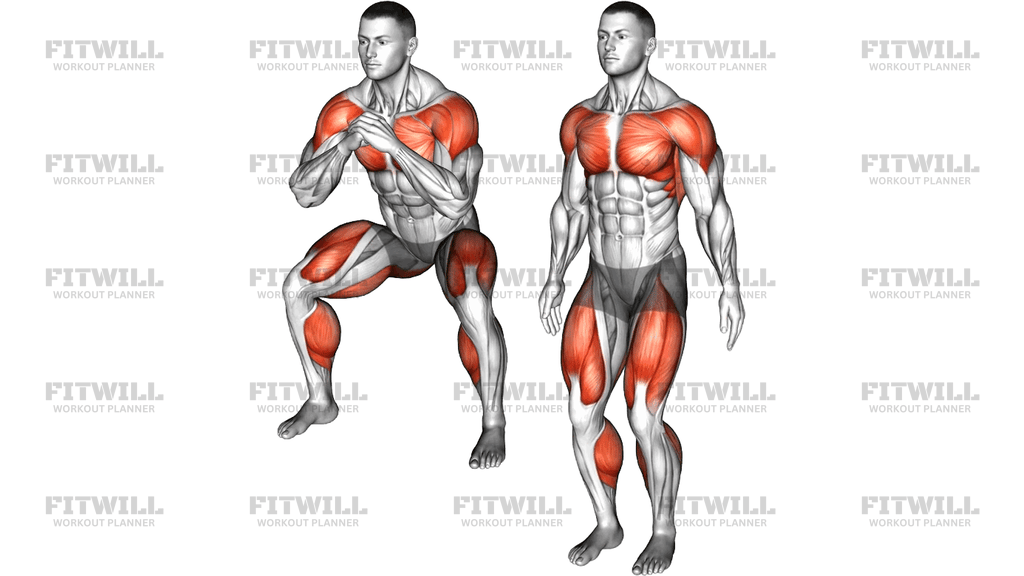
The setup matters more than it might seem. Feet start roughly shoulder-width apart with hands clasped in front of the chest, which keeps your torso upright and your weight mid-foot as you descend. From that squat, the transition to the jumping jack should feel like one smooth exhale of effort: stand tall, jump the feet wide as the arms rise, then jump them back in. If your squat depth or foot position drifts, the landing gets sloppy and the flow breaks down, so consistent positioning is what keeps this movement safe on the knees and ankles.
To execute it well, think of the squat as the controlled half and the jumping jack as the rhythmic half. Sit back with the hips, keep the knees tracking over the toes, and only go as deep as you can maintain a flat back. On the way up, push the floor away instead of simply rising, then let that upward drive flow straight into the first jack. Land softly on the wide-jack position with slightly bent knees, bring the feet back together with another soft landing, and either repeat the cycle or continue with standard jumping jacks depending on how the exercise is programmed.
You will see this movement used in warm-up circuits, bootcamp formats, and no-equipment home sessions where floor space is limited. It needs nothing but a clear patch of ground and low ceilings are the only real constraint. If impact is a concern, the same flow can be done by stepping the feet out and in rather than jumping, which keeps most of the coordination and leg benefit while removing the landing stress. Either way, controlled landings and an upright torso are the two details that separate a smooth, effective set from a noisy, knee-jarring one.
[ Workout Log & Planner ]
Put your next workout in Fitwill
Keep your plan and training log ready when you are.


Instructions
- Stand with your feet about shoulder-width apart, toes pointing slightly out, and clasp your hands together in front of your chest with elbows bent.
- Brace your core lightly and shift your weight onto the middle of your feet so your whole foot stays in contact with the floor.
- Push your hips back and bend your knees to lower into a squat, keeping your chest up and your knees tracking in line with your toes.
- Descend until your thighs are at or near parallel, or to the deepest position where your back stays flat and your heels stay down.
- Exhale and drive through your heels to stand up forcefully, letting that upward push flow directly into the jumping jack.
- As you rise, jump your feet out wide to roughly one and a half times shoulder width while sweeping your clasped hands or open arms up overhead.
- Land softly on the wide position with your knees slightly bent to absorb the impact, then immediately jump your feet back together as your arms come down to the start.
- Breathe in on the way down into the squat and breathe out on the upward drive and jump.
- Reset your foot position and hand clasp after each rep so every repetition starts from the same clean stance.
- Move at a steady rhythm you can hold for the whole set, prioritizing quiet landings over speed.
Tips & Tricks
- The most common mistake is rushing out of the squat bottom, which turns the stand-up into a lean forward. Finish the squat with your chest tall before the jump begins.
- If your heels lift during the squat, narrow your stance slightly or reduce depth; a heel raise shifts stress to the knee and makes the transition to the jack unstable.
- Loud, stiff-legged landings on the wide jack mean your knees are locked. Cue yourself to land with bent knees and imagine landing as quietly as possible.
- Keep the hands clasped at chest height during the squat rather than dropping them; this counterweight helps you sit back into the hips instead of pitching forward.
- Do not let the feet drift narrower each rep. Mark your starting stance mentally so the squat width and the jack width stay consistent from first rep to last.
- If your shoulders tire before your legs, the arms are probably swinging loosely. Move them deliberately overhead and down rather than flinging them.
- For low-impact sessions, replace the jumps with side steps out and in while still raising the arms; the timing and rhythm of the exercise stay intact.
- On soft or uneven ground, slow the pace and cut jump height. Landing control matters far more than how high you leave the floor.
- Stop the set when your landings get heavy or your squat depth shortens; those are the first signs of fatigue that lead to sloppy knees and ankles.
Frequently Asked Questions
What muscles does the Squat To Jumping Jack work?
The quads and glutes do most of the work during the squat and the drive upward, while the calves handle the repeated jumps and landings. The shoulders and core contribute as the arms travel overhead and your torso stays controlled through the transitions.
Is the Squat To Jumping Jack good for beginners?
Yes, provided the jumps are earned. Beginners can start by stepping the feet out and in instead of jumping, and by squatting to a comfortable partial depth, then progress to full jumps once landings feel controlled.
How deep should the squat be before jumping into the jack?
Aim for thighs at or near parallel, but only as deep as you can keep your heels down and your back flat. Depth that costs you position will show up immediately as an uncontrolled landing on the jack.
Why do my knees hurt when doing the Squat To Jumping Jack?
The usual culprits are stiff-legged landings, knees caving inward during the squat, or heels lifting off the floor. Land with soft, bent knees, keep the knees tracking over the toes, and slow the pace until the pattern feels clean.
How is the Squat To Jumping Jack different from doing squats and jumping jacks separately?
The combination forces a transition between a slow strength shape and a fast rhythmic one, which raises your heart rate more than either exercise alone and trains timing. Separately, each exercise can be loaded or paced more precisely, so the combo is best for conditioning rather than pure strength work.
Can I do the Squat To Jumping Jack every day?
It is low load, so frequent use is reasonable, but the repeated impacts still stress the calves and ankles. Mix in step-out versions on days between harder sessions if your lower legs feel heavy or sore.
What can I use instead of the jump if I have a neighbor below me or a low ceiling?
Step the feet wide while raising the arms, then step them back together. This keeps the squat, the arm path, and the rhythm of the Squat To Jumping Jack while removing the landing impact entirely.
How many reps should I do of the Squat To Jumping Jack?
For conditioning, work in sets of 10 to 20 continuous reps or timed intervals of 20 to 40 seconds. Cut the set short the moment your squat depth or landing quality drops, since fatigue shows up in form before it shows up in your breathing.
Should my arms stay clasped or open during the jumping jack portion?
Either works, as long as the arms travel deliberately overhead and back down. A hand clasp in front of the chest is helpful during the squat for balance, and you can open the arms as they rise to complete the jack.