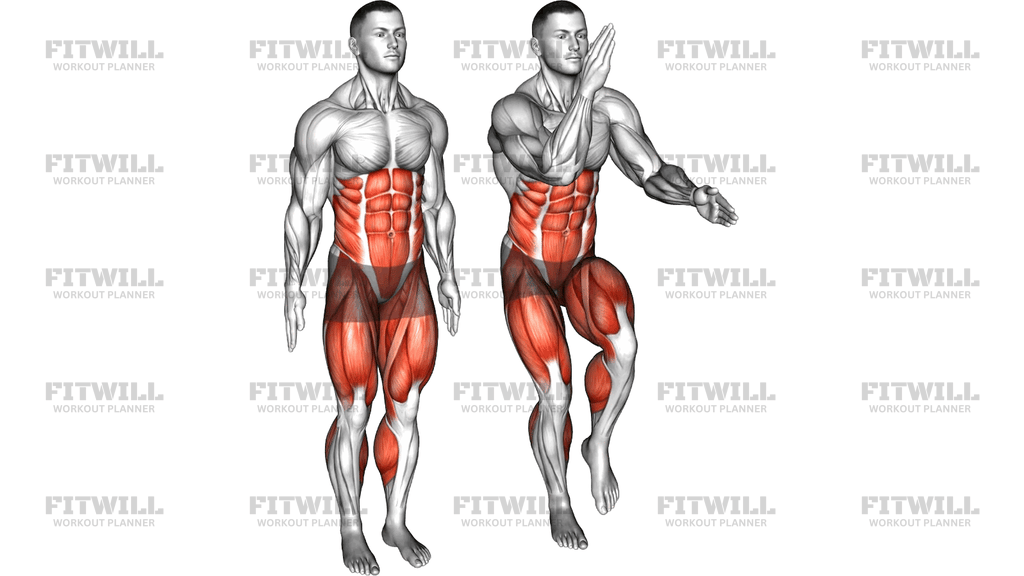
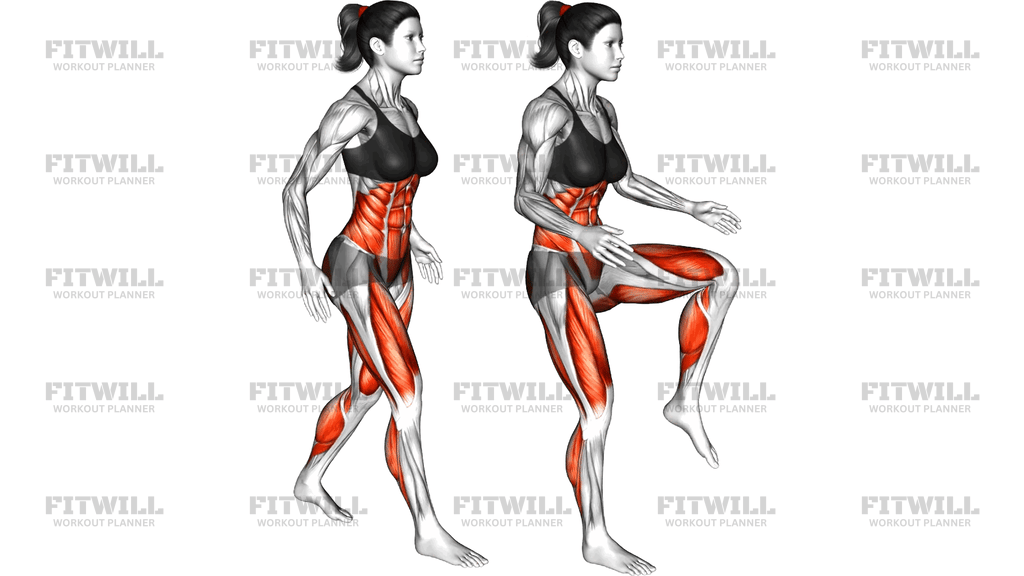
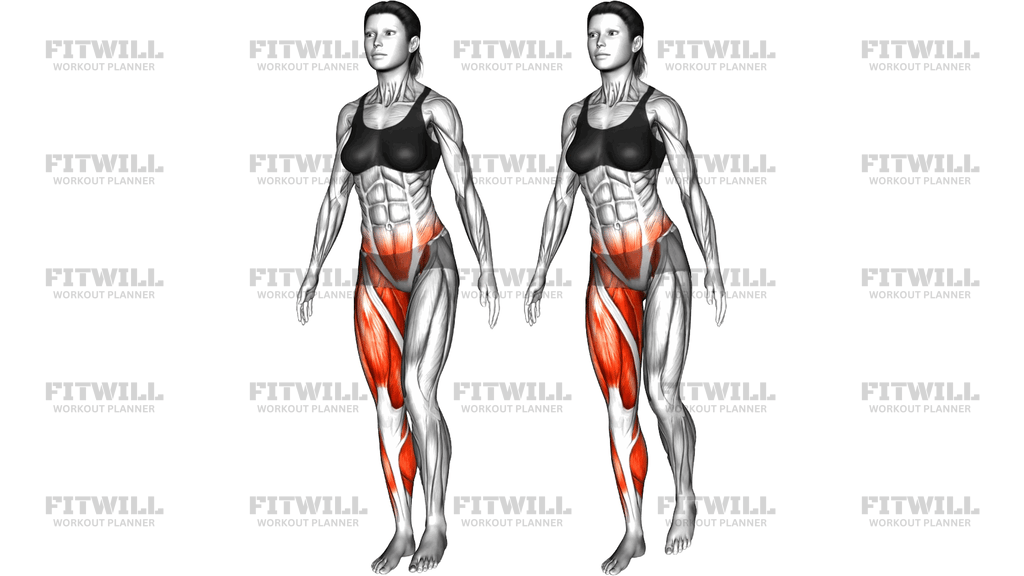
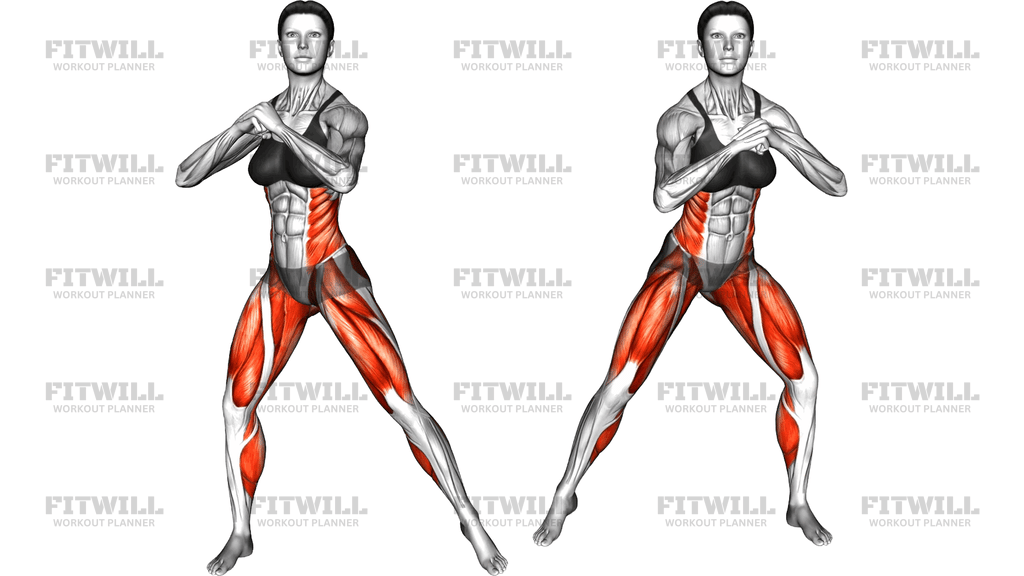
Side Squat Jack
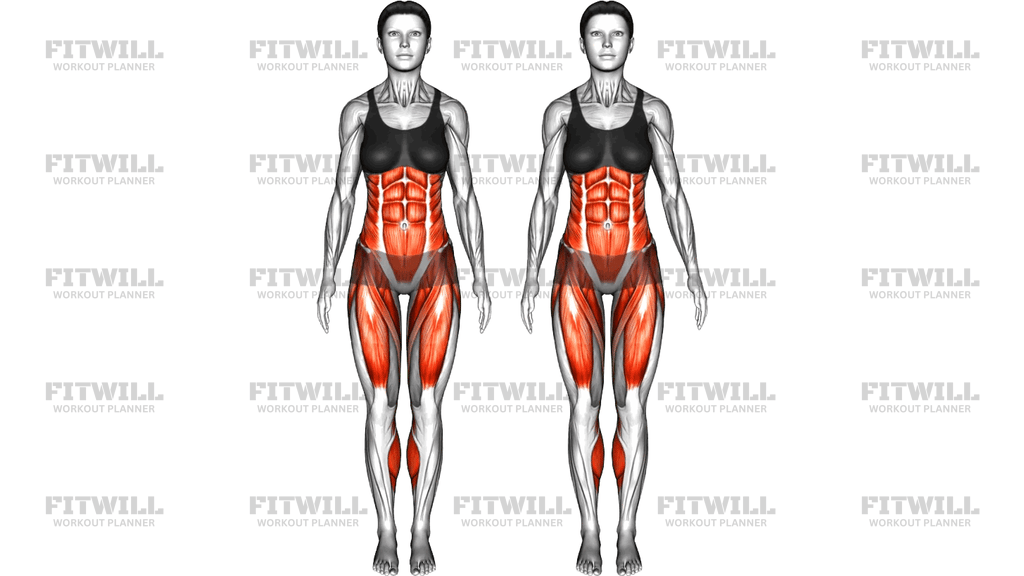
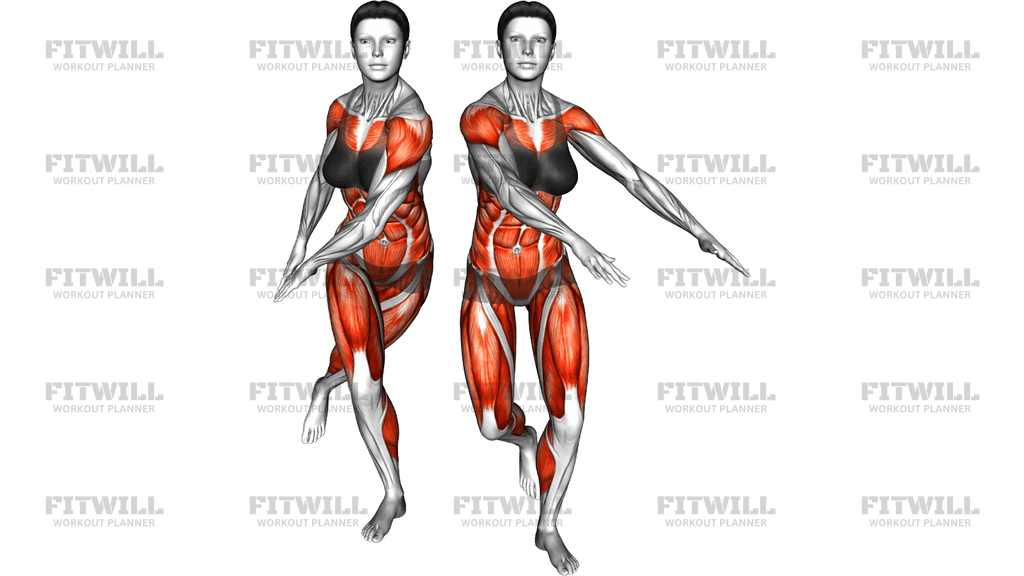
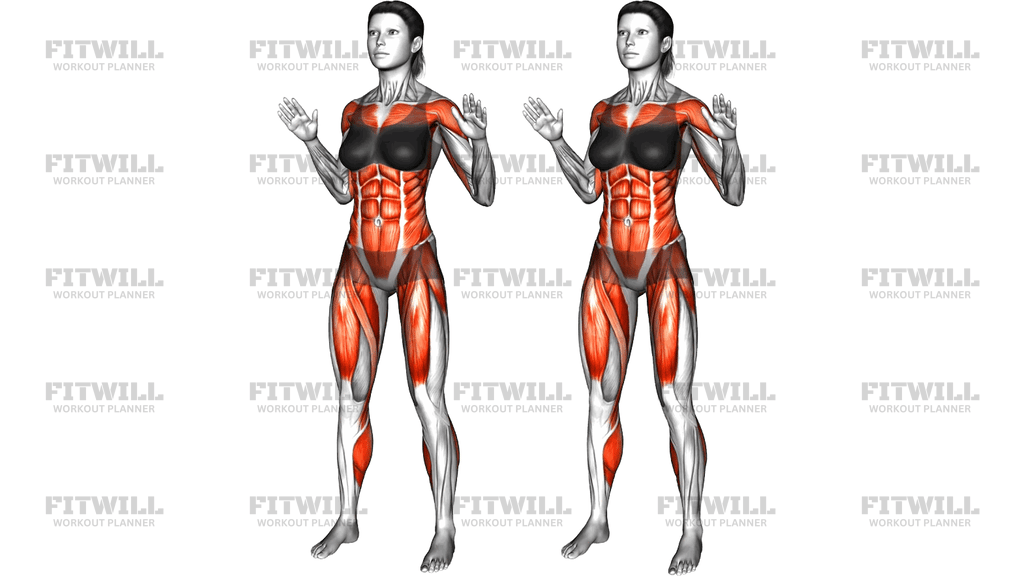
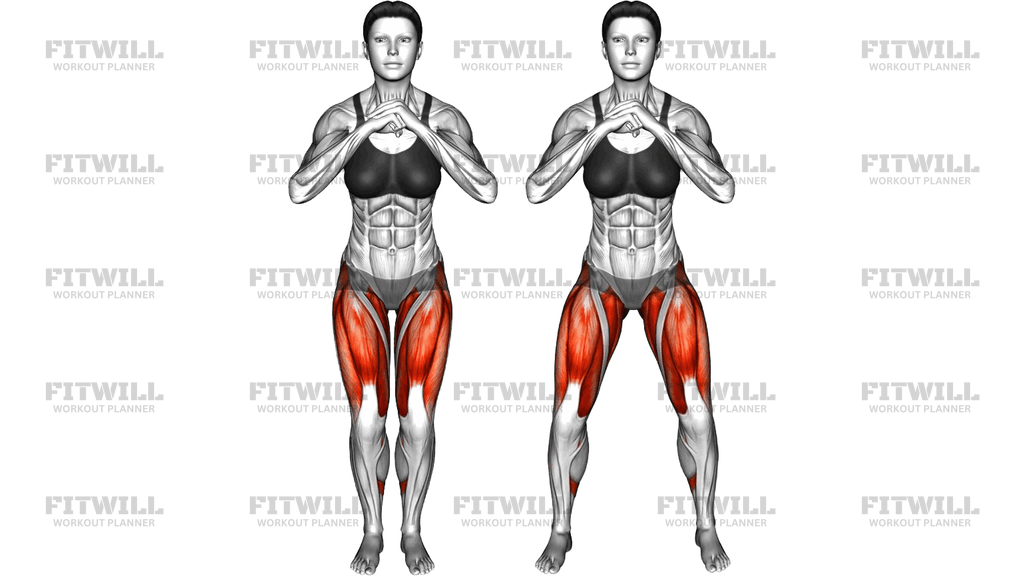
The Side Squat Jack blends two familiar patterns into one fluid move: the lateral foot action of a jumping jack and the knee-bend of a squat. From a tall standing position, you drive your feet out wide while lowering into a squat, raise both arms overhead, then pull everything back to a narrow stance with control. Because the arms and legs travel together, the exercise raises your heart rate quickly while the squat portion loads the thighs and hips.
The movement earns its place in warm-ups, circuit training, and home workouts where no equipment is available. The wide-leg squat position puts real work into the quads and inner thighs, which lengthen under load as the feet spread and shorten as you bring them back together. The glutes control the descent and power the return to standing, while the overhead arm reach keeps the shoulders and upper back involved instead of letting the upper body go dormant.
Setup matters more than speed here. Feet start close together, weight distributed across the whole foot, ribs stacked over the pelvis. If your chest leans far forward or your knees collapse inward as the feet go wide, you lose the clean squat pattern the exercise is built around. A slight forward hinge is fine; a rounded lower back or heels lifting off the floor is not.
To execute well, think of the motion as one beat out, one beat in. The feet land wide at the same moment the hips sit back into the squat, and the arms reach overhead in the same rhythm. On the return, squeeze the legs together and lower the arms with the same control rather than letting gravity snap them down. Moving deliberately through the squat portion gives far more training value than racing through repetitions with shallow, bouncy squats.
You can perform the Side Squat Jack with a low-impact step-out instead of a jump, which makes it approachable for beginners and suitable for early-morning sessions or shared spaces. More advanced trainees can add a hop on the wide-stance portion or hold the squat briefly before returning. Either way, keep the knees tracking over the toes and land softly to protect the joints.
A practical safety note: this movement is demanding on the knees and ankles if you rush the landing. Give yourself room to spread the feet fully, stay on a non-slip surface, and stop short of a depth where your heels lift or your form changes. Consistent, controlled reps beat a high count done poorly every time.
[ Workout Log & Planner ]
Put your next workout in Fitwill
Keep your plan and training log ready when you are.


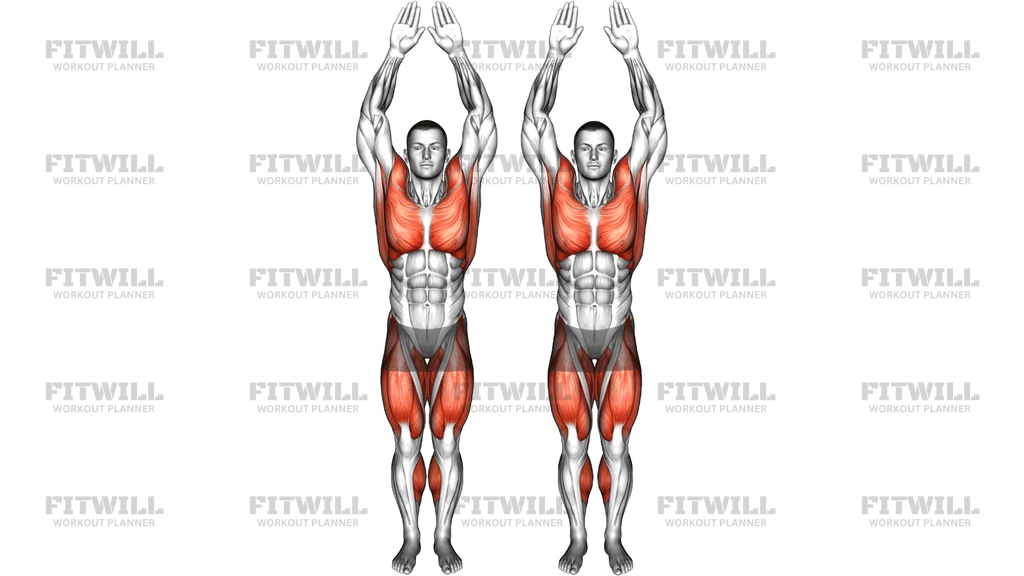
Instructions
- Stand tall with your feet together, arms hanging at your sides, and your weight spread evenly across both feet.
- Brace your core lightly and pull your shoulder blades down so your shoulders are not shrugged toward your ears.
- In one motion, jump or step both feet out wide, bend your knees, and push your hips back into a squat while raising both arms straight overhead.
- Land with your knees tracking over your toes and your heels firmly planted; aim for thighs roughly parallel to the floor or as deep as you can control.
- Pause for a split second in the wide squat with arms extended overhead, keeping your chest up and back flat.
- Press through your heels to straighten your legs and jump or step your feet back together while lowering your arms to your sides.
- Exhale as you drive out of the squat back to the narrow stance; inhale as you set up for the next repetition.
- Reset your posture between reps if needed — feet together, tall spine, shoulders down — before repeating for your target reps or time.
Tips & Tricks
- If your knees cave inward when the feet go wide, consciously press them out over your little toes during the squat portion.
- Heels lifting in the wide stance usually means the feet are spreading wider than your hips allow; narrow the stance slightly until both heels stay down.
- Avoid snapping your arms back down on the return — lowering them under control keeps the shoulders working and protects the shoulder joints.
- Keep your torso mostly upright; if your chest drops toward your thighs, you are folding at the hips instead of sitting back into the squat.
- For a low-impact version, step one foot out at a time into the squat instead of jumping, then step back in — the muscle work is nearly identical.
- Land softly on the balls of your feet and settle your heels down; loud, heavy landings are a sign you are crashing rather than absorbing.
- If balance wobbles at the bottom of the wide squat, slow the tempo and reduce the depth before widening your feet further.
- Do not hold your breath through the whole set; match your exhale to the effort of rising out of the squat.
- Warm up your hips and ankles first with a few bodyweight squats so the wide-stance portion feels smooth instead of pinched.
Frequently Asked Questions
Which muscles does the Side Squat Jack work the most?
The quads and inner thighs do the bulk of the work during the wide-stance squat, with the glutes powering the return to standing. The shoulders assist the overhead arm reach and the calves help with the jump or step-out.
Is the Side Squat Jack suitable for beginners?
Yes, as long as you use the step-out version instead of jumping. Step one foot wide into the squat, return to center, and build depth gradually before adding the jump.
How wide should my feet go during the Side Squat Jack?
Wide enough that you can squat with your heels flat and knees tracking over your toes — usually a bit wider than shoulder width. If a heel lifts or a knee collapses inward, the stance is too wide for you.
Why do my arms reach overhead in this exercise?
The overhead reach keeps the shoulders and upper back engaged and adds a cardiovascular demand by moving more of your body through space. It also matches the arm path of a classic jumping jack, which the movement is built from.
What is the most common mistake in the Side Squat Jack?
Rushing the squat — feet go wide but the knees barely bend, turning it into a shallow hop. Make sure you actually sit into the squat each rep, even if that means slowing down.
Can I do the Side Squat Jack if jumping bothers my knees?
Use the low-impact step-out variation, where you step the feet wide and back together without leaving the floor. Keep the squat depth within a range that feels controlled and pain-free.
How is the Side Squat Jack different from a regular jumping jack?
A jumping jack keeps the legs nearly straight and stays light on strength work. The Side Squat Jack adds a full squat each time the feet go wide, which loads the thighs and glutes far more heavily.
How should I breathe during the Side Squat Jack?
Inhale as the feet go wide and you lower into the squat, then exhale as you press up and bring the feet back together. Keeping a steady breath rhythm helps you sustain longer sets.
What can I substitute if I have no space to spread my feet?
Alternating side lunges or reverse lunges with an overhead arm reach train similar muscles in a narrow footprint. Both keep the squat pattern without needing room for a wide stance.