Mini Side Shuffles Slight Knee Raise
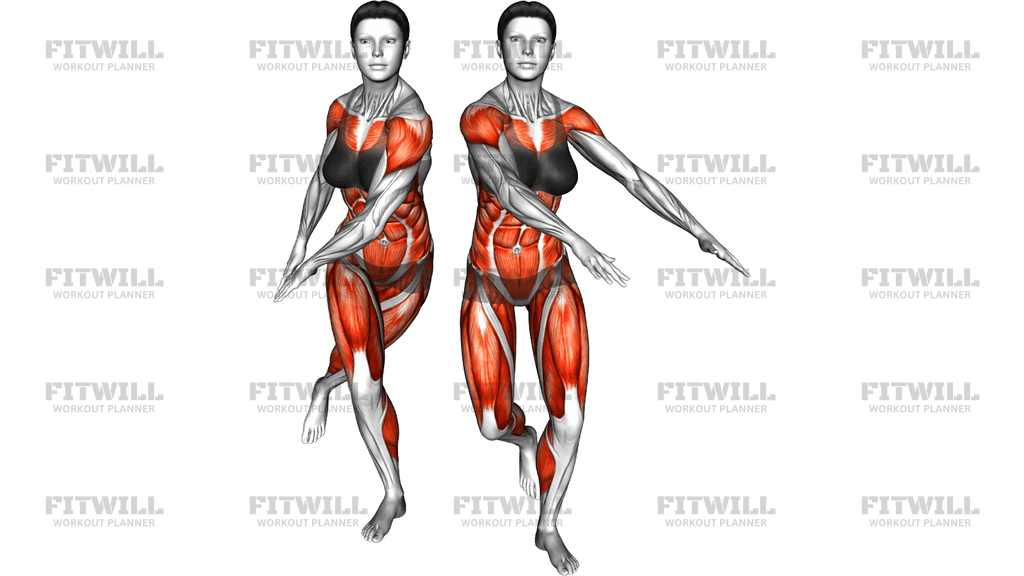
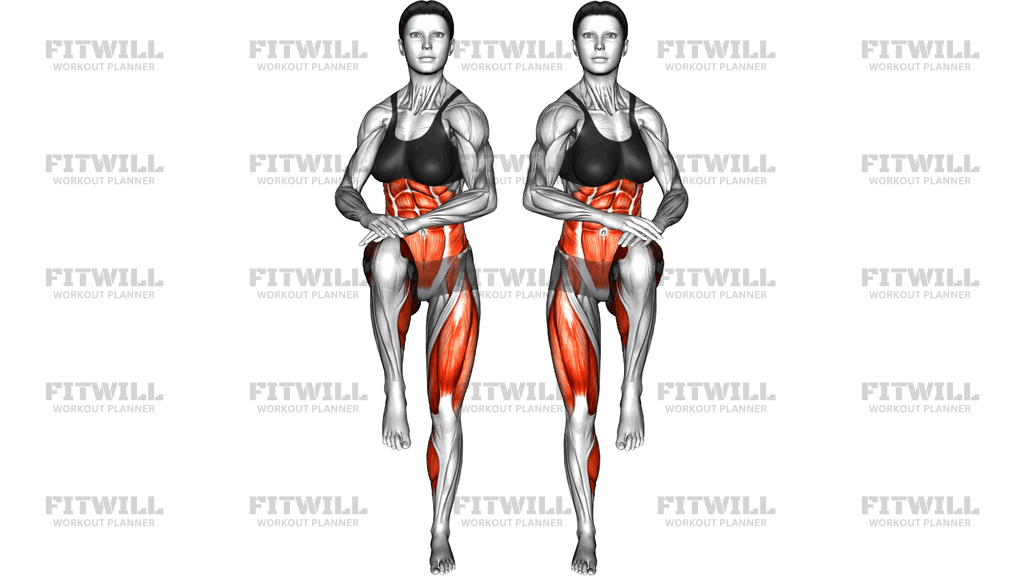
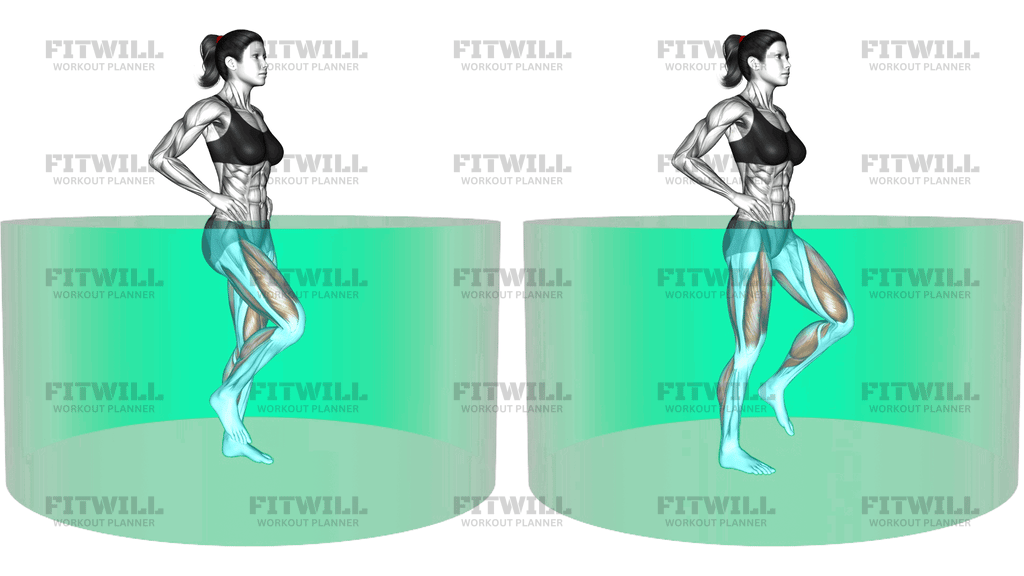
Mini Side Shuffles Slight Knee Raise is a body weight lateral movement that combines short, quick side steps with a small knee lift at the top of each shuffle. You stay in a shallow athletic stance, shuffle sideways for a few small steps, then raise the trailing knee slightly as you plant your feet, and repeat back in the other direction. The range is deliberately small — this is about rhythm, control, and hip activation rather than covering ground or generating power.
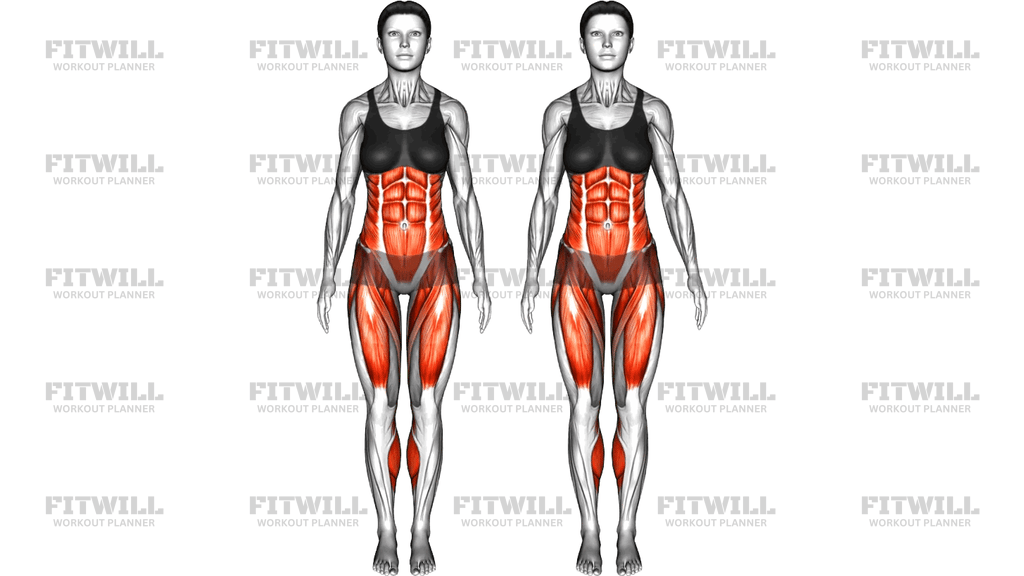
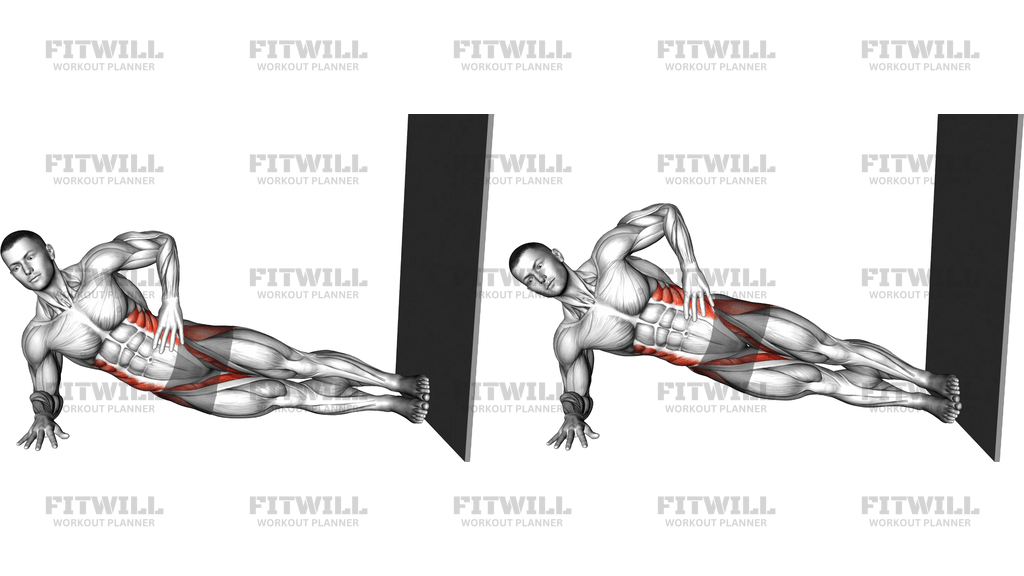
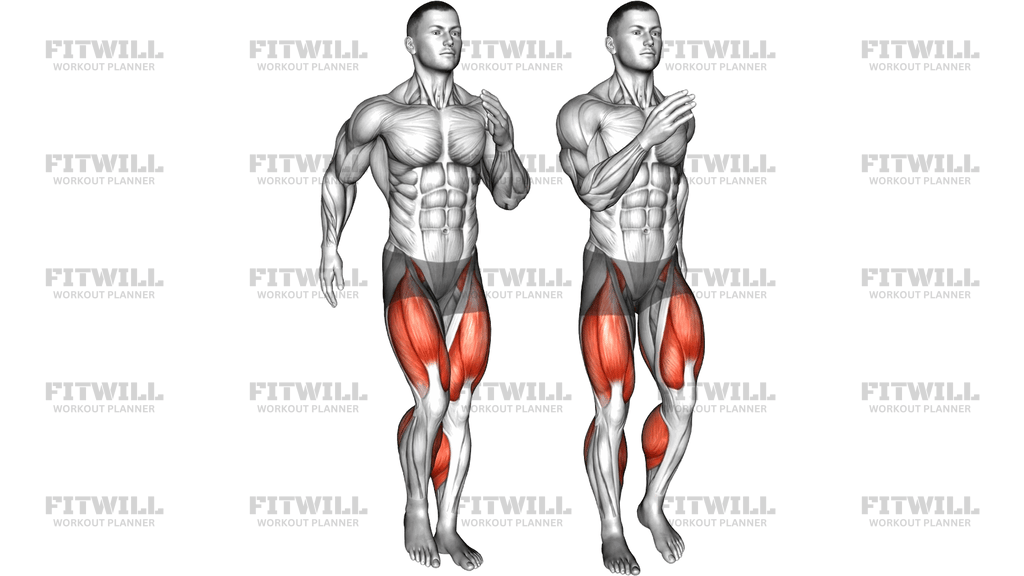
The main work happens in the outer hips and glutes, especially the gluteus medius, which controls every sideways step and stabilizes your pelvis each time you land on one leg. The quads and calves keep you bouncing lightly in that half-squat position, the inner thighs manage the width of your stance, and your core stays braced to keep your torso quiet while your legs move underneath you. Because you keep moving continuously, it also raises your heart rate quickly, which makes it a useful conditioning tool as well as a strength and stability drill.
This movement fits well into warm-ups, particularly before squats, lunges, running, or any sport that involves changing direction. It wakes up the lateral hip muscles that often sit dormant after long periods of sitting, and it grooves the habit of staying low with soft knees. It is also a good low-impact cardio option on its own — no jumping, no equipment, and a small footprint, so you can do it in a hallway, beside a desk, or in a small hotel room.
Setup matters more than it looks. A stance that is too narrow turns the shuffle into a stiff hop, while dropping too low turns it into a lateral lunge series and fatigues the quads before your hips get anything out of it. Aim for feet roughly shoulder-width apart, knees softly bent, chest tall, and your weight on the balls of your feet. Hands can hang loosely at your sides or stay in front of your chest for balance.
To execute it well, push off with the outside leg, take two or three short, quiet steps sideways, then lift the trailing knee to roughly hip height — or lower if that is what your hips allow today — before setting it down and shuffling back the other way. Keep your steps small and your torso upright; if you find yourself leaning heavily from side to side or slamming your feet down, slow the tempo down before speeding it up again. Breathe steadily throughout and let the knee raise be smooth rather than snappy.
The most common errors are letting the knees cave inward on the raised-leg side, straightening the standing leg between shuffles, and rushing so much that the knee raise becomes a vague leg flick. Keep a small bend in both knees the entire time, track the raised knee over the toes, and treat the slight knee raise as a deliberate pause in the rhythm rather than an afterthought.
[ Workout Log & Planner ]
Put your next workout in Fitwill
Keep your plan and training log ready when you are.


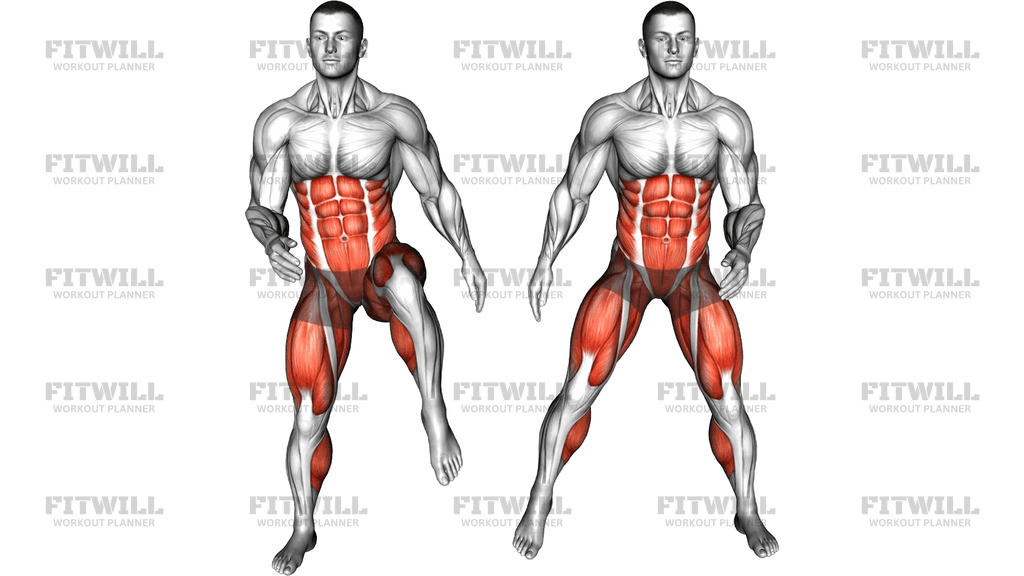
Instructions
- Stand with your feet about shoulder-width apart, toes pointing forward, and soften your knees into a shallow athletic stance.
- Shift your weight onto the balls of your feet and let your arms hang relaxed at your sides or hold them loosely in front of your chest for balance.
- Brace your core lightly and keep your chest tall with your shoulders back, avoiding any rounding forward.
- Push off your outside leg and take two or three small, quick steps sideways, staying low with both knees bent the whole time.
- On the final step, raise your trailing knee up to roughly hip height in front of you, keeping the knee tracking over your toes.
- Set the raised foot down with control, absorb the landing through bent knees, and settle back into your athletic stance.
- Shuffle back in the opposite direction and repeat the slight knee raise with the other leg, alternating sides each trip.
- Breathe in a steady rhythm through the nose and mouth, exhaling as you lift the knee, and avoid holding your breath.
- Continue for a set time or number of shuffles per side, then stand tall and reset your stance before the next set if your form starts to slip.
Tips & Tricks
- Keep your feet low to the floor during the shuffle steps — mini shuffles should sound quiet; loud, slapping steps usually mean you are hopping instead of stepping.
- If your standing knee keeps collapsing inward when the other knee lifts, consciously press the standing knee slightly outward over your pinky toe; this is the exact stability this drill is meant to build.
- Lower the knee raise height before lowering your stance depth — most people get better hip activation from a shallow squat with a clean knee lift than from a deep squat with a sloppy one.
- Keep your torso facing forward the whole time; twisting toward the direction you are shuffling steals work from the obliques' stabilizing role and turns it into a rotation drill.
- Count your shuffles per trip rather than going by feel — two or three small steps per direction keeps the movement compact, while five or more usually drifts into running sideways.
- If your calves burn before your hips do, you are bouncing on your toes too aggressively; sink a touch deeper into your knees so the glutes and quads share the load.
- Use this as the last dynamic drill before heavier lower body work — doing it cold is fine, but doing it after leg swings and light squats makes the knee raise feel noticeably smoother.
- On carpet or uneven ground, take the shuffles even smaller than usual; the slight knee raise demands a stable base, and a wobbly surface shortens the safe range.
Frequently Asked Questions
What muscles does Mini Side Shuffles Slight Knee Raise work?
The outer hips and glutes, particularly the gluteus medius, do most of the stabilizing work, while the quads and calves keep you in the shallow stance. The hip flexors lift the knee and your core holds the torso steady.
How high should I raise my knee during the Mini Side Shuffles Slight Knee Raise?
Roughly hip height is the target, but lifting to knee height or slightly above the ankle is a perfectly good starting point. Choose the highest lift you can do without leaning your torso back or letting the standing knee cave inward.
Is Mini Side Shuffles Slight Knee Raise good for beginners?
Yes, it is low impact and requires no equipment, so beginners can start with a shallow stance and a small knee lift. Focus on quiet, controlled steps before adding speed or height.
Should I do Mini Side Shuffles Slight Knee Raise before or after my workout?
It works best as a dynamic warm-up before squats, lunges, running, or sports that involve side-to-side movement. Doing it after heavy leg training is possible as light cardio, but your hip stabilizers will already be fatigued.
Why do my knees drift inward when I lift one leg?
That is a sign the gluteus medius on the standing leg is not yet strong enough to hold the pelvis level. Slow the tempo down, reduce the knee raise height, and consciously press the standing knee out over your pinky toe.
How many shuffles should I take in each direction?
Two or three small steps per direction keeps the drill compact and controlled. Going further usually turns it into sideways running and dilutes the knee raise.
Can I substitute Mini Side Shuffles Slight Knee Raise with lateral band walks?
Lateral band walks are a good substitute if you want more targeted outer-hip loading, but they lose the knee raise and the light cardio demand. If knee lifting is uncomfortable, lateral walks or standing hip abductions are the closer options.
How long should I perform Mini Side Shuffles Slight Knee Raise?
For a warm-up, 20 to 40 seconds of continuous alternating shuffles is usually enough. For conditioning, you can extend to 45 to 60 seconds as long as your knees stay soft and your steps stay quiet.
Is it safe to do this exercise every day?
Because it is low impact and uses only your body weight, daily practice is generally fine for most people. If you feel persistent pinching at the front of the raised hip or inner thigh, reduce the knee height and give the area a rest day.