Explosive Dynamic Plank
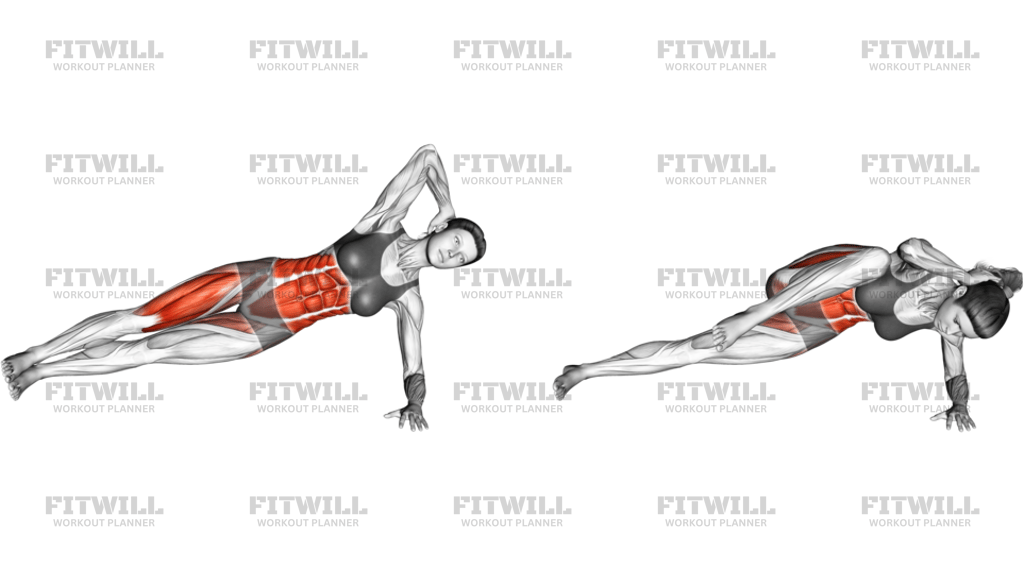
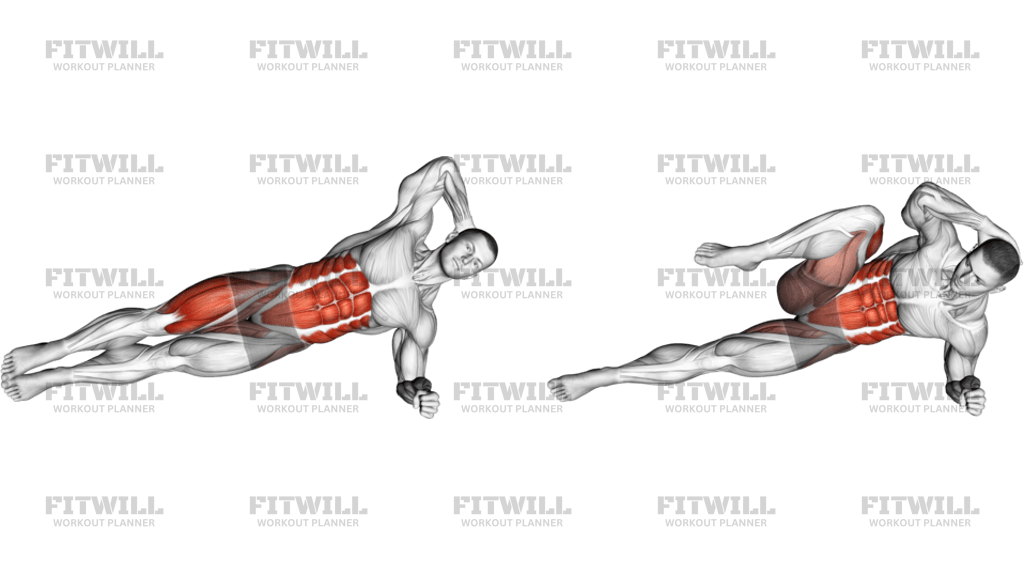
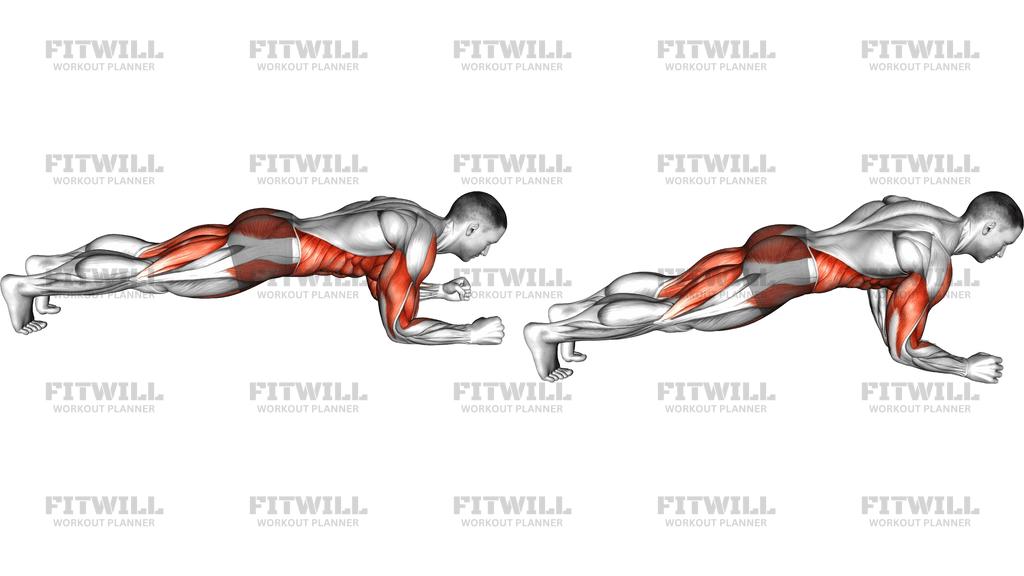
The Explosive Dynamic Plank is a fast-paced plank variation where you move between the forearm plank and the high plank (straight-arm) position in quick, controlled bursts, rather than holding one static shape. The exercise is performed on the floor, ideally over an exercise mat, with the forearms or hands flat and the fists clenched for wrist comfort. Every transition forces your trunk to resist twisting and sagging while your shoulders and triceps drive the weight shift, so you get the anti-rotation and brace benefits of a standard plank plus the pressing power and coordination of a dynamic movement.
This movement suits anyone who has already built a base of static plank strength and wants to progress it. It is a staple in athletic conditioning because it trains the core to stay rigid while force moves through the shoulders and arms — exactly what happens in sprinting, pushing, and changing direction. It is also an efficient conditioning tool: twenty to forty seconds of continuous transitions will raise your heart rate quickly while still loading the deep core.
The setup matters more than in a static plank because momentum magnifies every alignment error. Your elbows belong directly under your shoulders in the forearm position, feet roughly hip-width apart, and your body should form one straight line from head to heels. If your hips start high or your elbows drift wide, the explosive transitions will exaggerate those faults instead of correcting them. Squeezing the glutes and bracing the abdominals before you move is what keeps the hips level throughout.
To execute it well, think of driving one hand into the floor to press up, placing that elbow where the hand just was as you lower to the forearm position, and alternating sides in a steady rhythm. The tempo can be quick, but the torso should not rock from side to side. A useful cue is to imagine balancing a glass of water on your lower back: any excess hip rotation or sag means you are leaking force.
Common use cases include core finishers after strength training, warm-up activation for pressing days, and interval circuits where you need a full-body movement with no equipment. Work in time blocks of 15-30 seconds or sets of 10-16 total transitions. If your hips drop or your press begins to stall, stop the set rather than grinding out sloppy reps, and regress to slow alternating plank step-downs until the pattern is clean.
[ Workout Log & Planner ]
Put your next workout in Fitwill
Keep your plan and training log ready when you are.


Instructions
- Place an exercise mat on the floor and set up in a forearm plank with your elbows directly under your shoulders, forearms parallel or fists gently clenched, and feet about hip-width apart.
- Align your body in one straight line from head to heels, then squeeze your glutes and brace your abdominals as if bracing for a light punch to the stomach.
- Press your right hand firmly into the mat and drive up until the right arm is straight and locked out, keeping your shoulders square and hips level.
- Continue the pattern by pressing up through the left hand as well so you finish in a high plank, hands under shoulders, body still in a straight line.
- Lower one forearm to the mat, then the other, returning to the forearm plank with the elbow landing exactly where the hand was.
- Alternate which side leads each rep so both shoulders share the workload evenly.
- Exhale sharply as you press up, and inhale as you lower back to the forearms.
- Keep the movement path vertical — the hips should rise and fall minimally, with no side-to-side rocking between transitions.
- Reset your brace and glute squeeze at the forearm position before starting the next explosive press.
- Perform continuous transitions for 15-30 seconds or 10-16 total switches, then rest and shake out the shoulders before the next set.
Tips & Tricks
- If your hips twist during each press-up, widen your feet to shoulder-width — a broader base makes the anti-rotation demand more manageable until your control improves.
- A common mistake is letting the shoulders shrug toward the ears at the top of the high plank; push the floor away and keep the shoulder blades packed down.
- Moving too fast is the most frequent fault with the Explosive Dynamic Plank — speed without a locked brace just turns it into a rocking hip exercise. Cut your tempo in half before cutting a set short.
- Clench your fists and press through the knuckles in the forearm position if your wrists feel compressed; this keeps the forearms engaged and the wrists neutral.
- Check your elbow position every few reps. Elbows that creep forward or outward reduce leverage and strain the shoulders in the lowering phase.
- Squeeze the glutes deliberately at the bottom of each transition; this is what stops the lower back from arching as fatigue builds.
- Breathe in a fixed rhythm instead of holding your breath — breath-holding causes you to lose tension mid-transition, usually right when the hips sag.
- If pressing up stalls on one side, do a few extra reps leading with the weaker arm rather than letting the strong side dominate the rhythm.
- Stop the set when your hips drop below the shoulder line even briefly; sagging hips under explosive force put unnecessary stress on the lower back.
Frequently Asked Questions
What muscles does the Explosive Dynamic Plank work?
The primary work comes from the abdominals and deep core, which brace to keep the trunk rigid through every transition. The triceps and shoulders drive the pressing action, while the glutes, obliques, and lower back stabilize the hips and spine.
Is the Explosive Dynamic Plank suitable for beginners?
It is best treated as a progression from the static plank. If you can hold a solid forearm plank for 45-60 seconds without sagging hips, start with slow step-down transitions before adding speed.
Why do my hips rock side to side during the Explosive Dynamic Plank?
Rocking usually means the abdominals and glutes are not braced before each press, or you are moving faster than you can control. Widen your feet, slow the tempo, and focus on keeping both hips level throughout each transition.
How is the Explosive Dynamic Plank different from a regular plank?
A regular plank holds one static position and builds isometric endurance, while the Explosive Dynamic Plank repeatedly shifts your weight between the forearms and hands. This adds a pressing and coordination demand and challenges the core to resist rotation under movement.
Can I do the Explosive Dynamic Plank every day?
Because it loads the shoulders and triceps as well as the core, treating it like any other strength movement is wiser — two to four sessions per week with rest days in between works well for most people.
What can I use instead of the Explosive Dynamic Plank if pressing hurts my wrists or shoulders?
Slow alternating plank step-downs with a longer pause at each position keep the core demand with far less joint stress. Forearm plank shoulder taps are another solid substitution that avoids full pressing.
Should my feet be together or apart in the Explosive Dynamic Plank?
Start with feet about hip-width apart for a balance of stability and anti-rotation demand. Bringing them closer increases the difficulty, while widening them to shoulder-width makes the movement easier to control.
How many reps or how long should I perform the Explosive Dynamic Plank?
Aim for 15-30 seconds of continuous transitions or 10-16 total presses, resting 30-60 seconds between sets. Two to four sets is plenty when the form stays strict.
Is it a problem if my elbow lands in a different spot than my hand was?
Yes — if the elbow lands too far forward or wide, your shoulder loses alignment and has to strain on the way back down. Make a habit of placing the elbow precisely where the palm just left the floor.