Dumbbell Lying Rear Lateral Raise
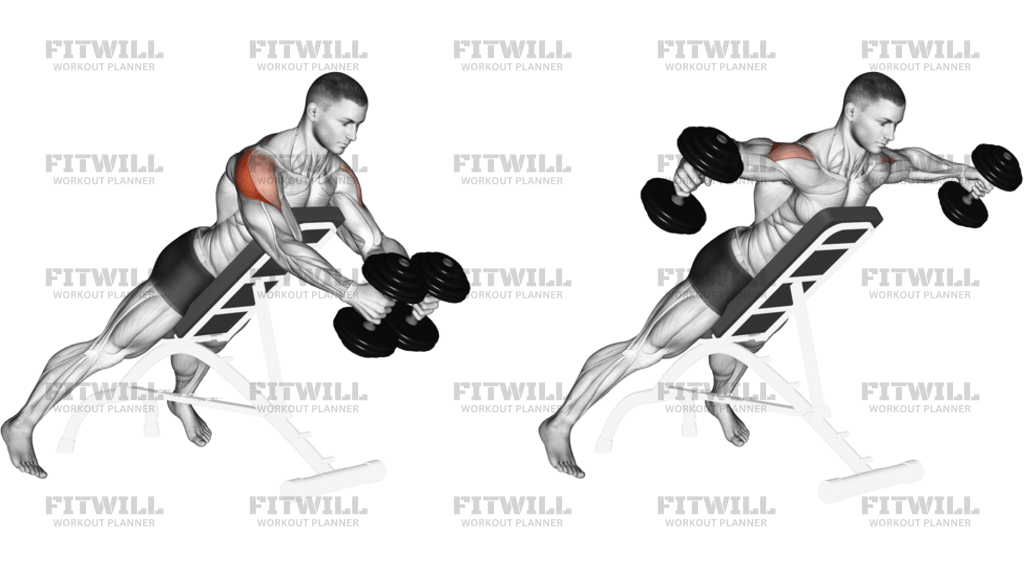
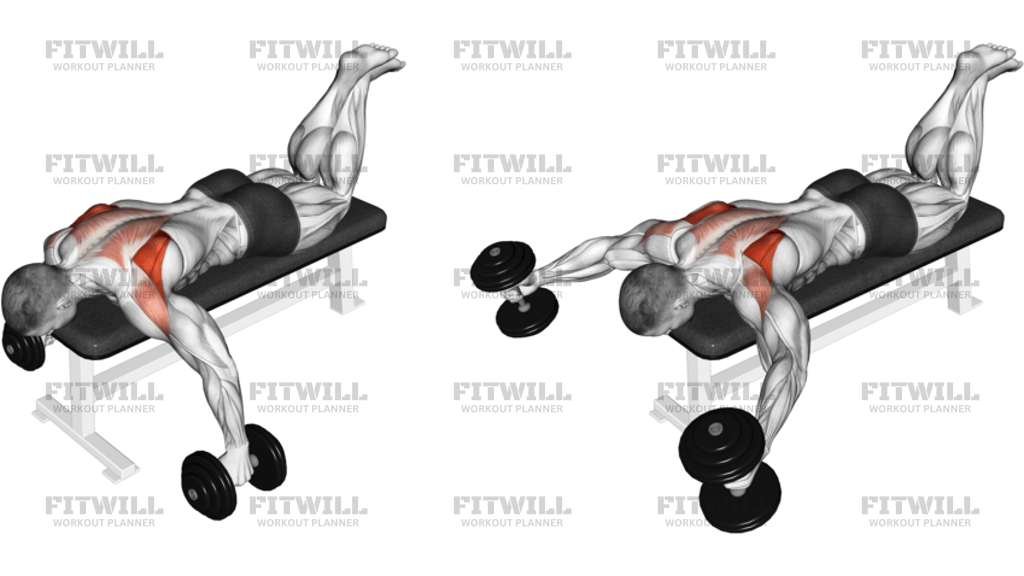
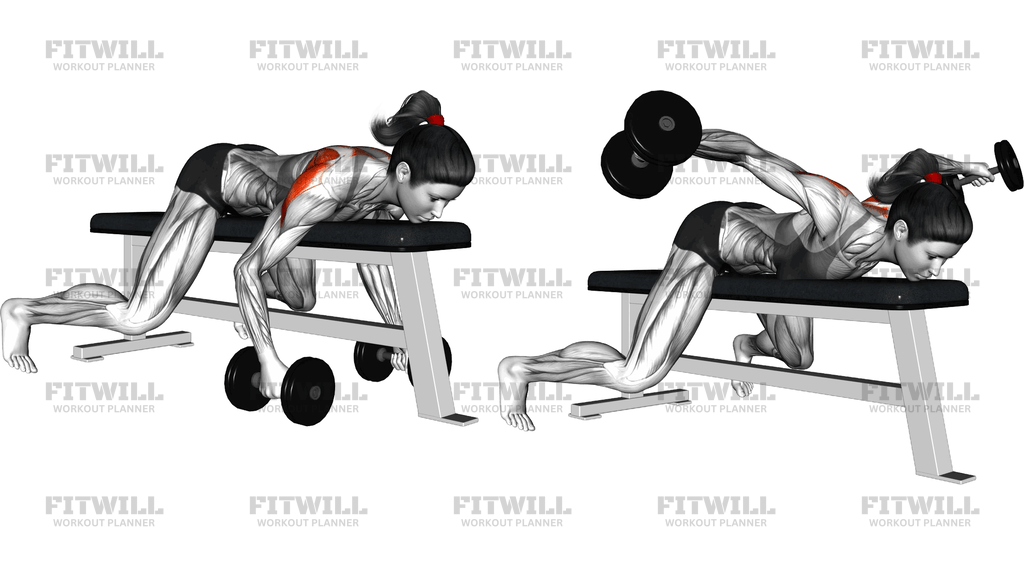
The Dumbbell Lying Rear Lateral Raise is a chest-supported shoulder isolation exercise performed face-down on a flat bench. You lie prone along the bench with a dumbbell in each hand, let your arms hang straight down toward the floor, then raise both arms out to the sides until they form a T with your torso. Because the bench supports your chest and head, there is no way to swing or cheat the weights up with body English, which makes this one of the cleanest ways to train the rear delts.
The rear delts are notoriously underdeveloped in people who focus on pressing movements. This exercise fills that gap. It also works the middle traps, rhomboids, and rotator cuff muscles as you squeeze the shoulder blades together at the top, which supports better shoulder function and posture balance for anyone who benches, presses, or spends long hours at a desk.
Setup matters here because your position on the bench determines everything about the movement path. Your chest should rest firmly on the pad with your head just past the top edge, and your arms should hang plumb beneath your shoulders. If you slide too far up so only your head is supported, you will strain your neck; if you sit too low, your hips and lower back take over. Position yourself so the dumbbells hang directly under your shoulders before the first rep.
To execute it well, keep a slight bend in the elbows and lead the raise with your elbows rather than your hands. Lift out and up until your upper arms are roughly level with your back, pause briefly to feel the rear delts working, then lower the dumbbells under control. The tempo should be slower on the way down than on the way up, since the lowering phase is where a lot of the muscle-building stimulus lives.
This movement suits lifters who want targeted rear delt work without the lower-back fatigue of standing bent-over raises, and it is a common fixture on shoulder days, upper-body days, and in physique-focused programs. Because the bench removes momentum and stabilizing demands, it is also a good choice for learning what a rear delt contraction actually feels like before progressing to harder variations.
[ Workout Log & Planner ]
Put your next workout in Fitwill
Keep your plan and training log ready when you are.


Instructions
- Set a flat bench in a clear area and place a pair of dumbbells on the floor within easy reach of the bench.
- Lie face down along the bench so your chest rests on the pad and your head extends just past the top edge, with one knee braced on the bench and the other leg extended back for stability.
- Pick up a dumbbell in each hand with a neutral grip, palms facing in, and let your arms hang straight down toward the floor under your shoulders.
- Gently brace your core and press your chest lightly into the bench so your torso stays still throughout the set.
- With a slight bend fixed in both elbows, raise the dumbbells out to the sides by pulling your elbows up and apart, keeping the bend unchanged.
- Continue lifting until your upper arms are roughly level with your torso and form a T shape, and squeeze your shoulder blades together at the top.
- Pause for a beat in the raised position to keep tension on the rear shoulders.
- Lower the dumbbells slowly back down along the same arc until your arms hang fully extended again.
- Exhale as you raise the weights and inhale as you lower them, keeping your breathing steady.
- Complete your reps, then carefully sit up and set the dumbbells on the floor before standing.
Tips & Tricks
- The most common mistake is raising the arms toward the head instead of out to the sides, which shifts work to the upper traps. Think about pushing the dumbbells away from each other in a wide arc, not lifting them up.
- If you feel the exercise in your neck, your head is probably lifting off the bench. Rest the side of your face or forehead against the pad and keep it there for every rep.
- Choose lighter dumbbells than you would use for a standing lateral raise. The rear delts are a small muscle and the lying position offers no momentum, so heavy weights force you to shrug.
- Keep the elbow bend constant from bottom to top. Straightening the arms mid-rep turns the movement into a different exercise and stresses the elbow joint.
- Avoid letting the dumbbells drift behind the line of your shoulders at the top. Going higher than parallel rarely adds rear delt work and usually just means you are rotating the torso.
- Grip the handles loosely. Squeezing the dumbbells hard recruits the forearms and front of the shoulder and can dull the feel in the rear delts.
- If your chest lifts off the pad as you fatigue, that is the signal to end the set. Once the torso starts moving, the exercise stops being a rear delt raise.
- A one-second pause at the top makes light weights feel meaningful and helps you confirm the rear shoulders, not momentum, are moving the load.
- Keep one knee on the bench and the other leg extended behind you, as this stance stops your hips from twisting as the arms travel up.
Frequently Asked Questions
Which muscles does the Dumbbell Lying Rear Lateral Raise work?
The posterior deltoid at the back of the shoulder is the primary mover. The middle traps, rhomboids, and rotator cuff muscles assist as you pull the arms back and squeeze the shoulder blades together.
Why lie face down on a bench instead of doing this bent over while standing?
The bench supports your chest and head, which removes momentum and spares your lower back. Standing bent-over raises are easy to cheat with body swing, while the lying position forces the rear delts to do the work.
Is the Dumbbell Lying Rear Lateral Raise suitable for beginners?
Yes, it is actually one of the more beginner-friendly rear delt exercises because the bench stabilizes the body and makes the target muscle easy to feel. Start with very light dumbbells and focus on the arc of the movement rather than the load.
How high should I raise the dumbbells at the top of the movement?
Raise your upper arms until they are roughly level with your torso, forming a T shape. Lifting much beyond parallel usually means the torso is rotating or the traps are taking over rather than the rear delts working harder.
Why do I feel this in my neck or upper traps instead of my shoulders?
This usually happens when the arms travel toward the head instead of straight out to the sides, or when the head lifts off the bench. Keep the raise in a wide arc perpendicular to your torso and rest your face against the pad throughout the set.
What grip should I use on the dumbbells?
Use a neutral grip with palms facing each other, which is the natural position when your arms hang down from a prone position. This keeps the shoulder in a comfortable rotation and lets the rear delts drive the raise.
Can I substitute another exercise if I do not have a flat bench?
Yes, a seated bent-over rear lateral raise or an incline bench rear lateral raise train the same muscles. The lying version is simply the most stable option, so any chest-supported alternative is the closest match.
How heavy should the dumbbells be for this exercise?
Use noticeably lighter dumbbells than you would for a standing side lateral raise, often in the range of what you could lift for 12 to 15 strict reps. If you have to shrug or lift your chest to complete a rep, the weight is too heavy.
Is the Dumbbell Lying Rear Lateral Raise safe for the shoulder joint?
For most people it is a low-stress exercise because the bench supports the torso and the arms move through a controlled, horizontal path. Keep the elbow bend constant, avoid jerking the weights up, and stay within a pain-free range, especially if you have a history of shoulder issues.