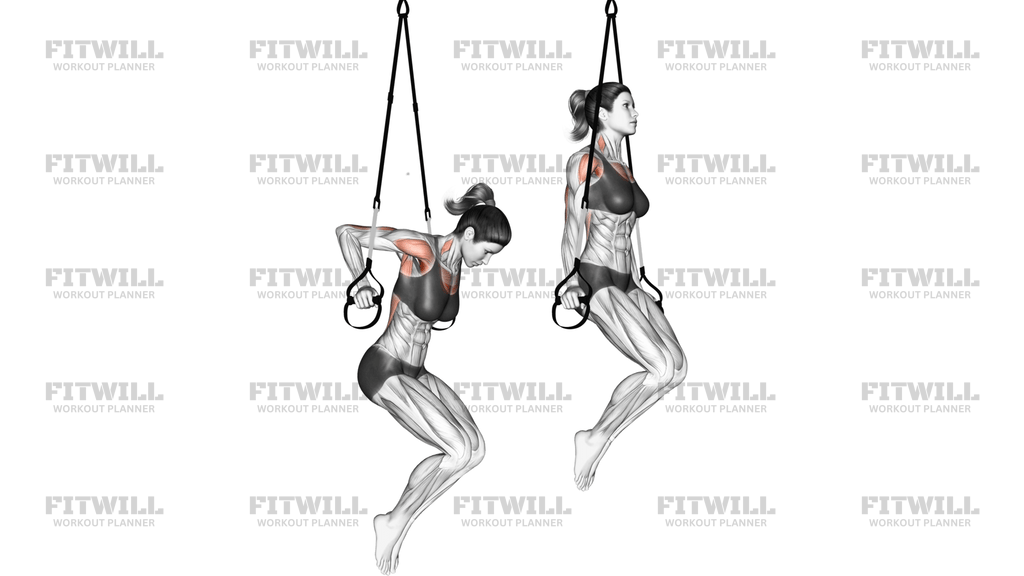
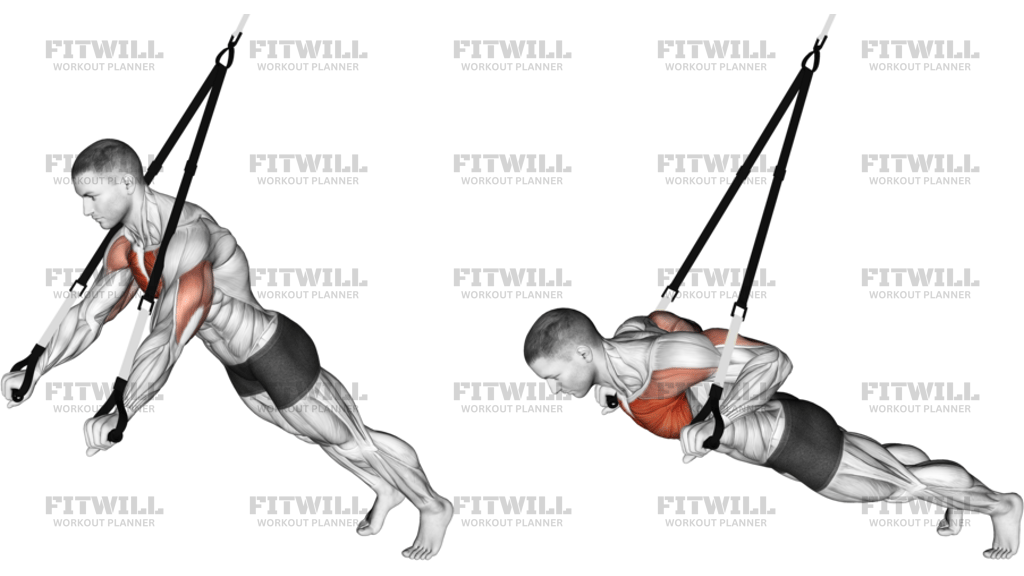
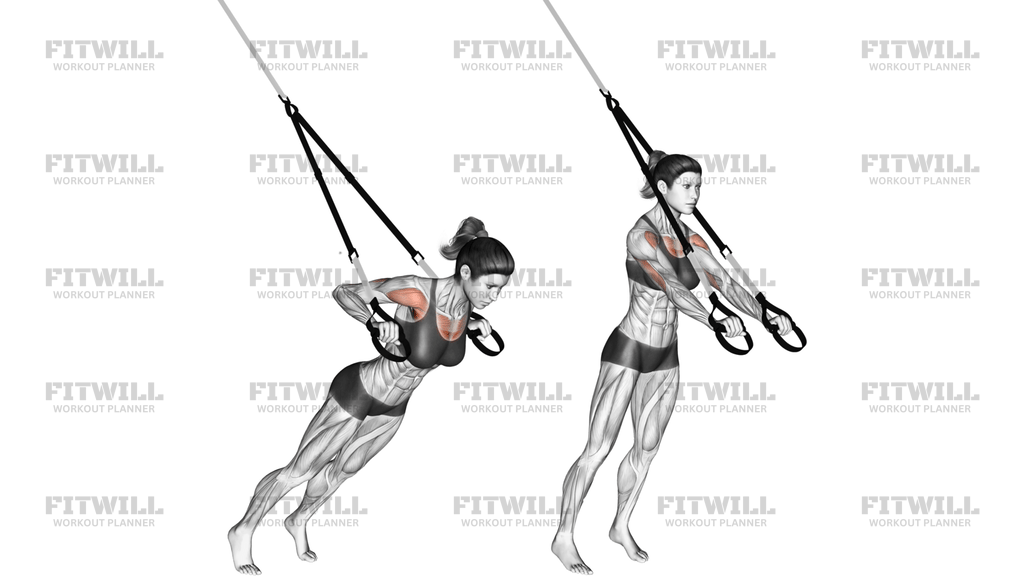
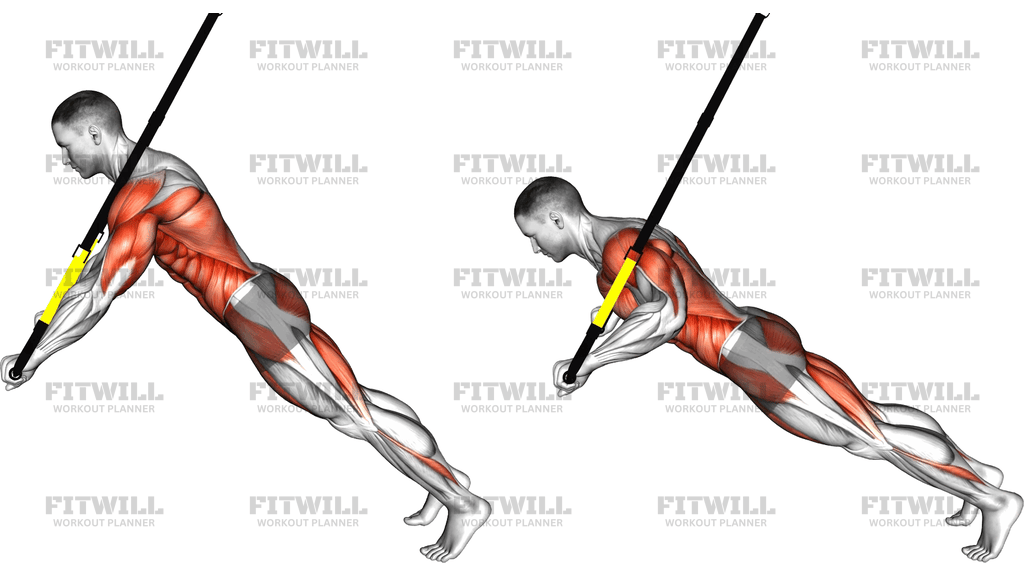
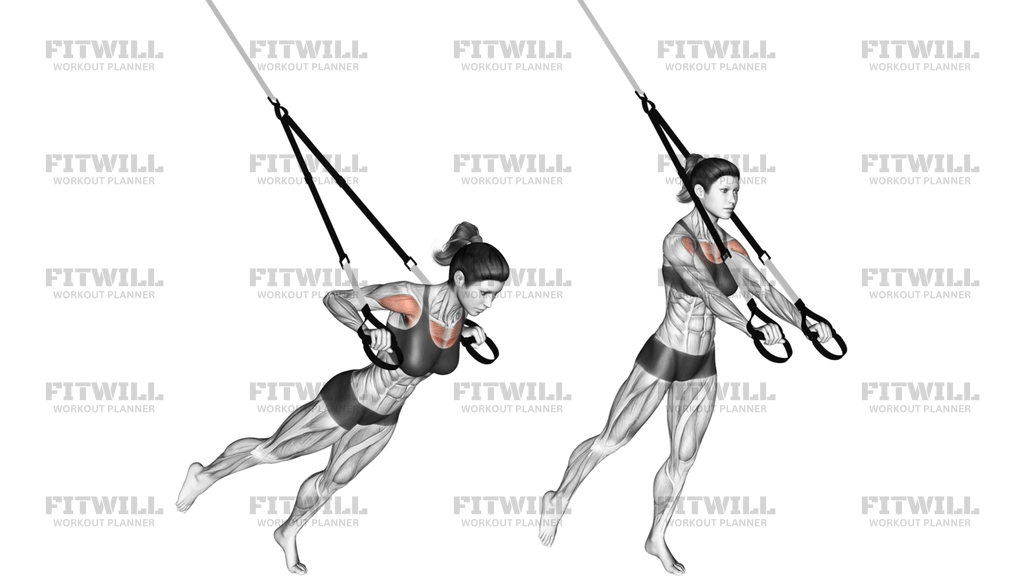
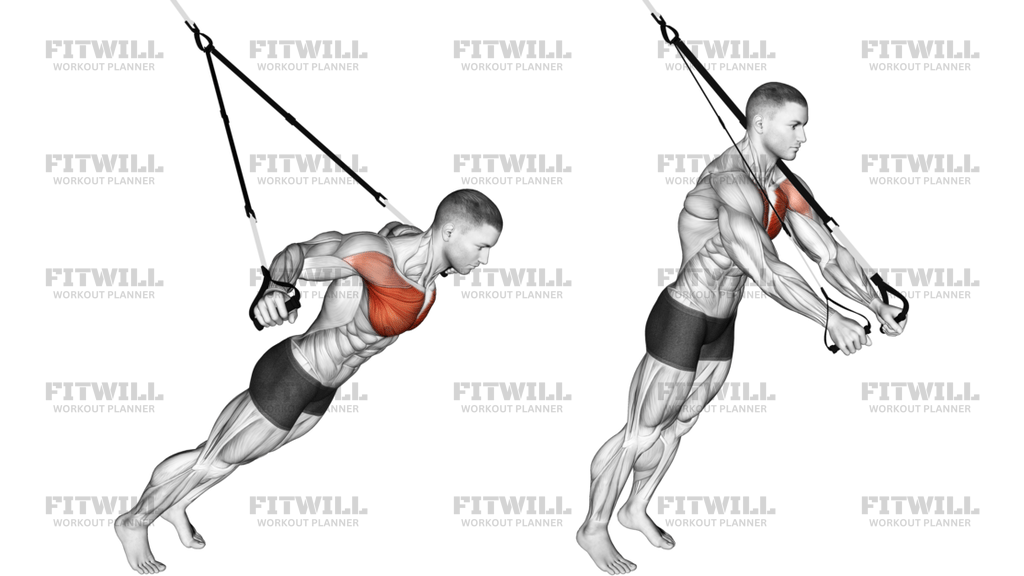
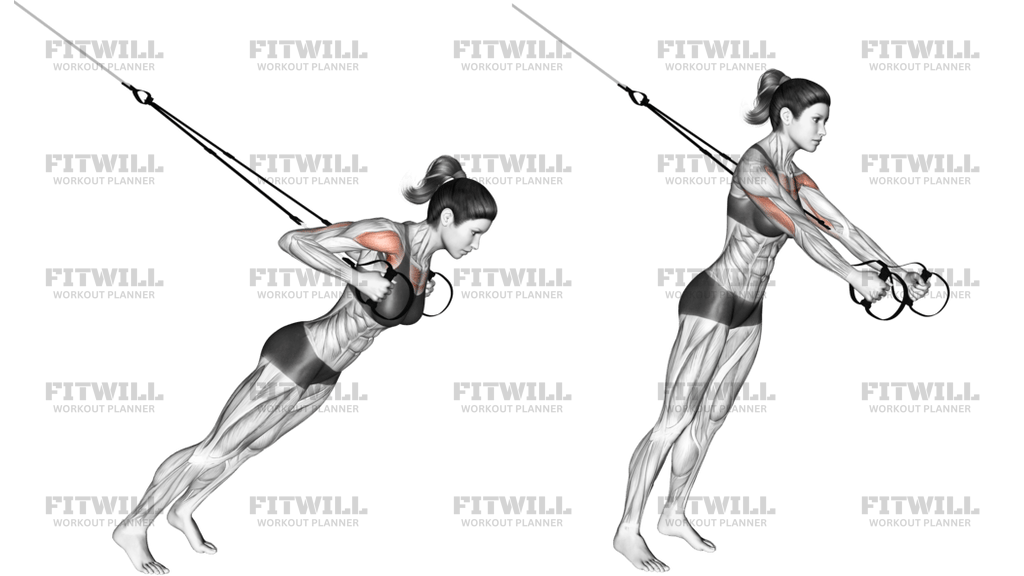
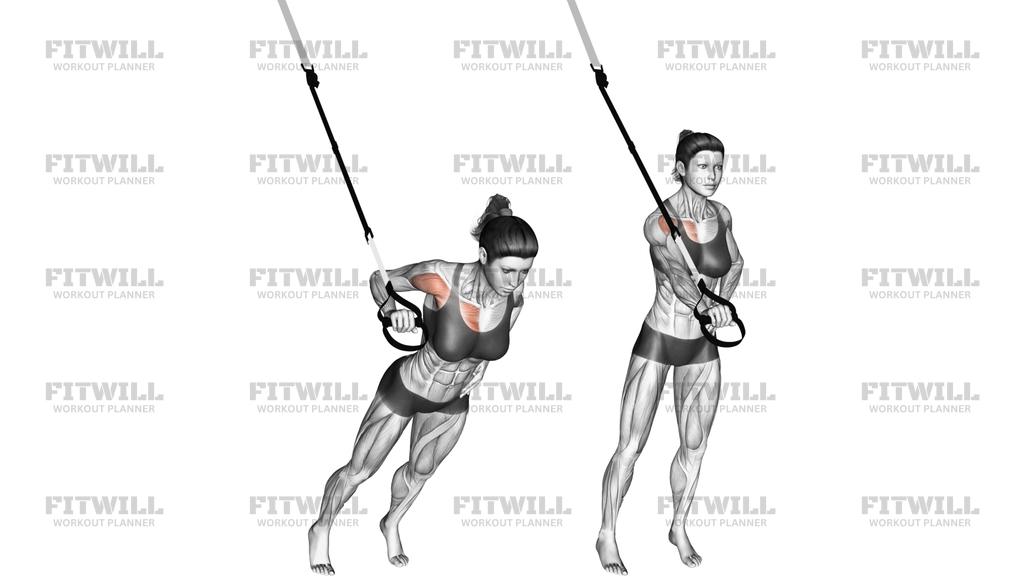
Ring Weighted Vest Decline Push Up
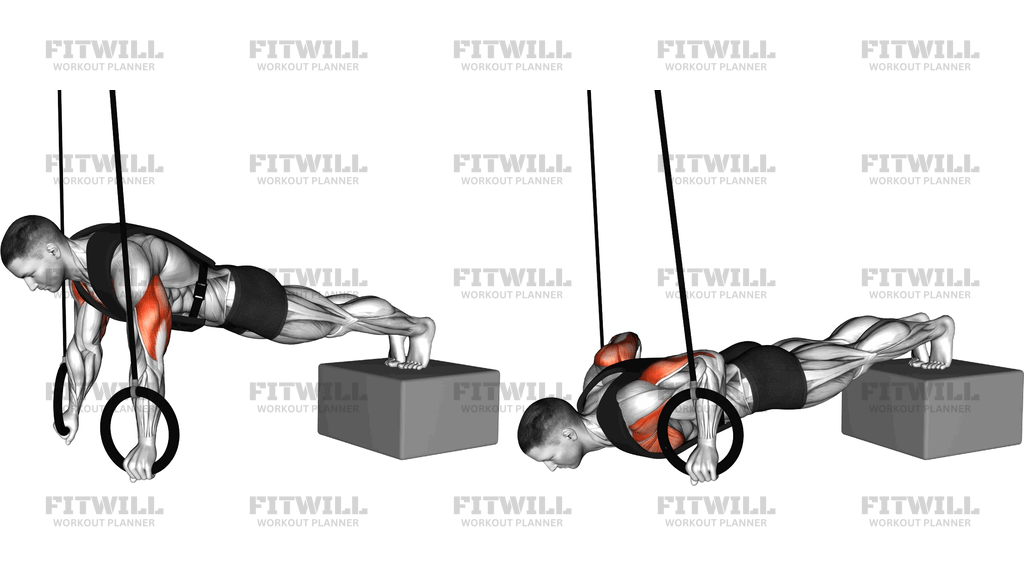
The Ring Weighted Vest Decline Push Up combines three demanding elements into one pressing movement: gymnastic rings, an added load on your torso, and an elevated foot position. Your hands grip hanging rings, your feet rest on a sturdy box or bench behind you, and a weighted vest sits on your upper body. The result is a decline push up that demands far more from your chest, triceps, and shoulders than any floor version, while your whole midsection works overtime to keep you from swaying on the unstable rings.
This variation suits intermediate to advanced lifters and calisthenics athletes who have already mastered regular push ups and ring push ups on the floor. Adding a weighted vest makes sense once bodyweight reps have become easy and you need external load to keep progressing. Because the feet are elevated, more of your bodyweight shifts onto the pressing muscles, and the angle biases the upper chest and front delts slightly more than a flat push up.
The rings are what separate this from a standard decline push up. Each ring moves independently, so your hands can drift, rotate, or sway at any point in the rep. That instability forces your chest, shoulders, and deep stabilizers around the shoulder joint to coordinate constantly, and it also spares your wrists from the fixed extension a floor push up requires. The vest changes the demand in a different way: it adds a few kilos of load high on your torso, which lengthens the lever arm and makes every stabilization error more expensive.
Execution quality depends almost entirely on keeping a rigid line from head to heels. Your body should form one straight plank, ribs down, glutes tight, with the rings hanging directly under your shoulders at the start. As you lower, the rings spread slightly outward and your elbows track around forty-five degrees from your torso, letting your chest travel down between and slightly behind your hands. At the bottom, your chest should approach ring height, then you press back up by driving the rings down and slightly inward, finishing with full elbow extension without letting the hips sag or the head jut forward.
Expect this movement to appear in strength-focused calisthenics programs, gymnastic strength training blocks, and pressing sessions where someone wants maximum carryover from a small number of sets. Because the load and instability are both high, keep the reps moderate and treat the set as skill work as much as strength work. If your form breaks down into shaking, sagging hips, or rings that drift wide, the vest is too heavy or the set is too long, and it is smarter to strip weight back than to grind through sloppy reps.
[ Workout Log & Planner ]
Put your next workout in Fitwill
Keep your plan and training log ready when you are.


Instructions
- Set the rings so they hang roughly knee height off the floor, adjust them to equal length, and place a sturdy box or bench a couple of feet behind where your hands will be.
- Put on the weighted vest with the straps snug against your torso so the load does not shift, then grip the rings with a neutral, knuckles-facing-forward hold and settle into a straight-arm support.
- Walk your feet back one at a time and place the tops of your feet on the box so your body forms a straight decline line from head to heels, hands now under and slightly outside your shoulders.
- Brace hard: squeeze your glutes, tuck your ribs down, pull your belly button in slightly, and press the rings toward each other to create tension in the chest before you descend.
- Lower under control by bending your elbows at roughly forty-five degrees to your torso, letting the rings flare a few inches outward as your chest drops between and behind your hands.
- Descend until your chest is level with or just below the rings, keeping your head neutral and your hips in line with your shoulders rather than letting them drop toward the floor.
- Press back up by driving the rings down and inward, exhaling through the sticking point, and finish with your elbows fully locked out and the rings pulled slightly together at the top.
- Keep the rings from drifting forward or wide throughout the rep; if they sway, pause, reset your line, and continue rather than muscling through.
- Complete the rep, then either continue the set or step your feet off the box one at a time and sit the rings down safely before releasing your grip.
- Breathe in on the way down, exhale on the press, and take a brief reset breath at the top of each rep to re-brace before descending again.
Tips & Tricks
- Start with a vest weight you could handle for a solid set of ring push ups on the floor; the decline angle and instability together make the same load feel substantially harder.
- Rings that turn inward or outward mid-rep usually mean your grip is uneven or one arm is pressing harder than the other. Check that the straps are equal length and that both hands bear weight symmetrically before blaming your stability.
- A common failure point is the hips sagging as fatigue builds, which turns the press into a back-arching strain. Film a set from the side and stop the set the moment your belt line drops.
- Keep your feet anchored by the tops of the feet and toes on the box, not just the toes, or your foot may slip off under load and drop you face-first between the rings.
- Set the ring height so your arms are nearly straight at the top without your shoulders shrugging into your ears; straps set too long will make your hands drag the floor at the bottom.
- If your elbows flare straight out to the sides, your front delts take over and your shoulders take the brunt of the load. Cue your elbows closer to your ribs as you descend.
- Chalk your hands or use thin wrist wraps if your grip fatigues before your chest does; losing ring control under a vest is the main safety risk of this variation.
- Progress by adding vest weight in small increments of one to two kilos rather than large jumps, since stabilization demands scale sharply with load on rings.
- Use a tempo of about two seconds down and one second up; rushing the descent on unstable rings almost always causes the rings to drift and the chest to lose depth.
Frequently Asked Questions
Which muscles does the Ring Weighted Vest Decline Push Up work the hardest?
The chest is the prime mover, with strong contributions from the triceps and front shoulders. Because your feet are elevated and your hands are on unstable rings, your core, serratus anterior, and the small stabilizers around each shoulder also work continuously to hold your line.
Why use rings instead of a fixed surface for a weighted decline push up?
Rings allow your hands to move and rotate naturally, which is easier on the wrists and forces your chest and shoulder stabilizers to control every path of the rep. The trade-off is that the same load feels meaningfully harder than it would on bars or the floor.
Is the Ring Weighted Vest Decline Push Up suitable for beginners?
Not as a starting point. Build up first through regular push ups, then feet-elevated push ups, then unweighted ring push ups. Only add the vest once you can perform clean, controlled ring push ups with your feet elevated for solid sets.
How high should the box or bench be for this exercise?
Knee-to-thigh height works well for most people. The higher the feet, the more load shifts to your chest and shoulders and the harder your core must work, so pick a height where you can still hold a straight line for every rep.
How much vest weight should I add to the Ring Weighted Vest Decline Push Up?
Start light, around five to ten percent of your bodyweight, and only increase once you can keep your hips from sagging and the rings from drifting for all reps. On rings, a small weight jump feels much bigger than it would on a stable surface.
What is the most common mistake in this movement?
Letting the hips drop and the lower back arch as the set gets hard, which turns a chest exercise into a lower back stress test. Stop the set when you cannot hold a straight plank line from head to heels.
My wrists ache during regular decline push ups. Will rings help?
Often yes. Rings let your hands stay in a neutral position and rotate freely instead of being pinned in wrist extension against the floor, which removes much of the wrist stress from the pressing pattern.
What can I substitute if I do not have rings?
A weighted decline push up with hands on dumbbells or push up handles keeps most of the load and angle, though it loses the instability. Suspension straps set to a firm length are the closest alternative.
How do I stay safe when stepping into and out of the Ring Weighted Vest Decline Push Up?
Grip the rings firmly and set your feet on the box one at a time while keeping your arms nearly straight, and step off the same way rather than dropping off mid-support. Make sure the box is stable and cannot slide before you load the vest.
How should I program the Ring Weighted Vest Decline Push Up in my training?
Treat it as a main or secondary pressing movement in the five to twelve rep range, early in a session while you are fresh. Because the stability demand is high, prioritize crisp reps over chasing extra vest weight.