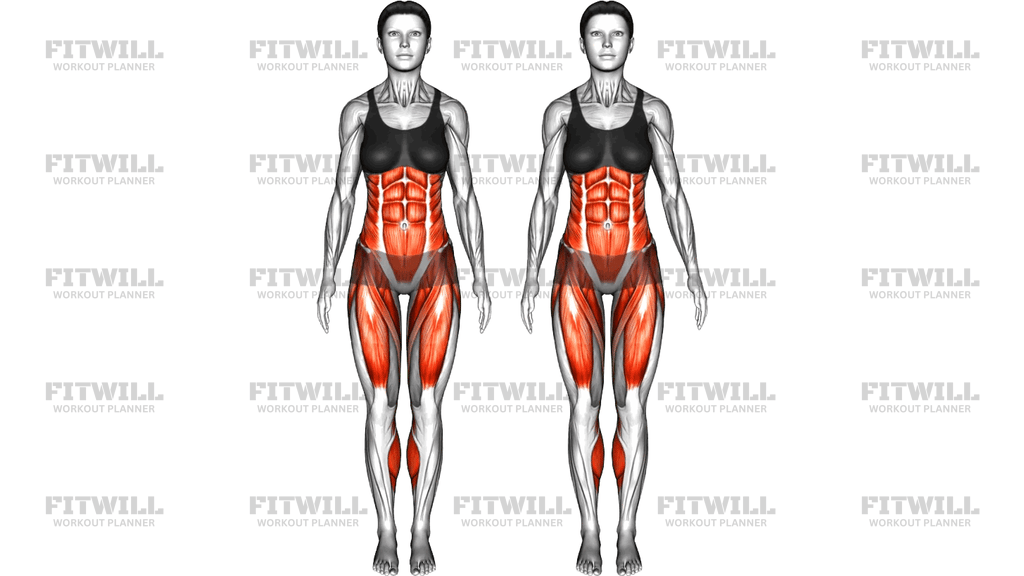
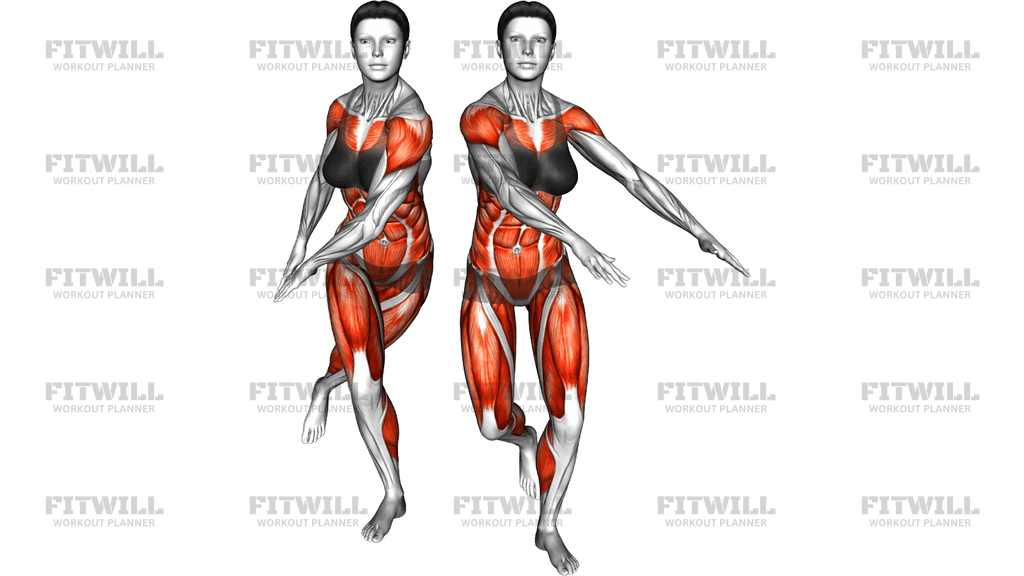
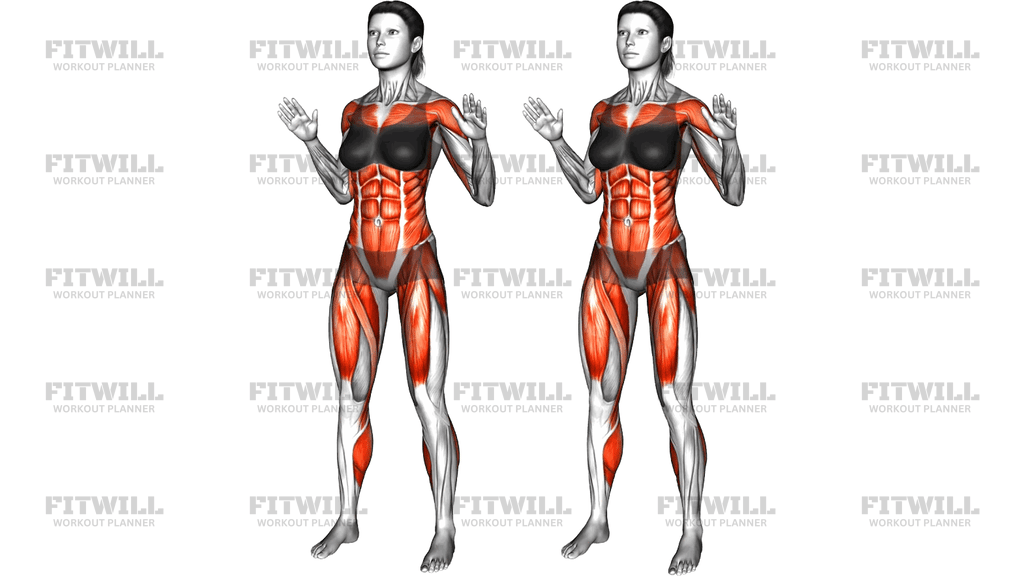
Deep Frog Squat
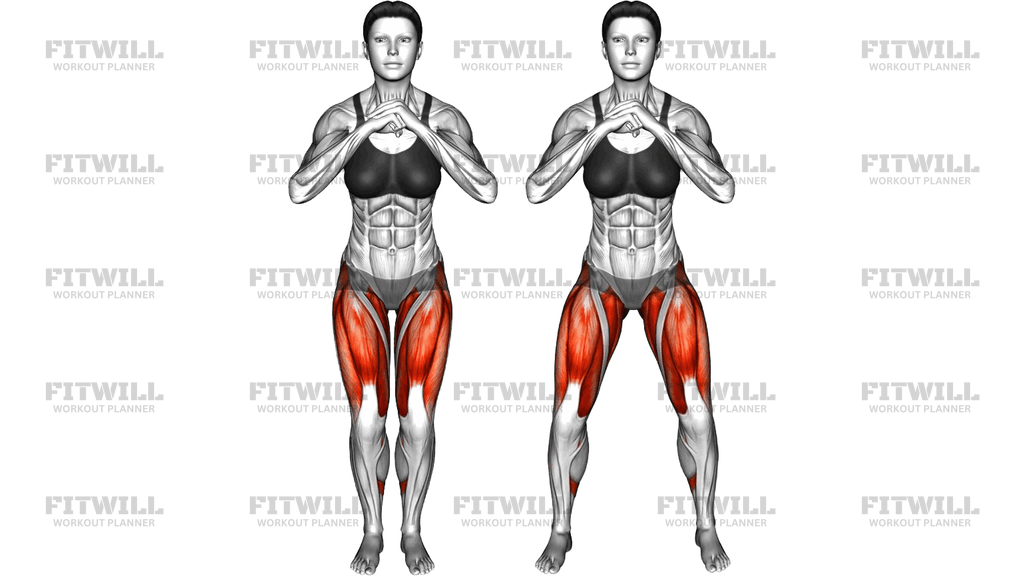
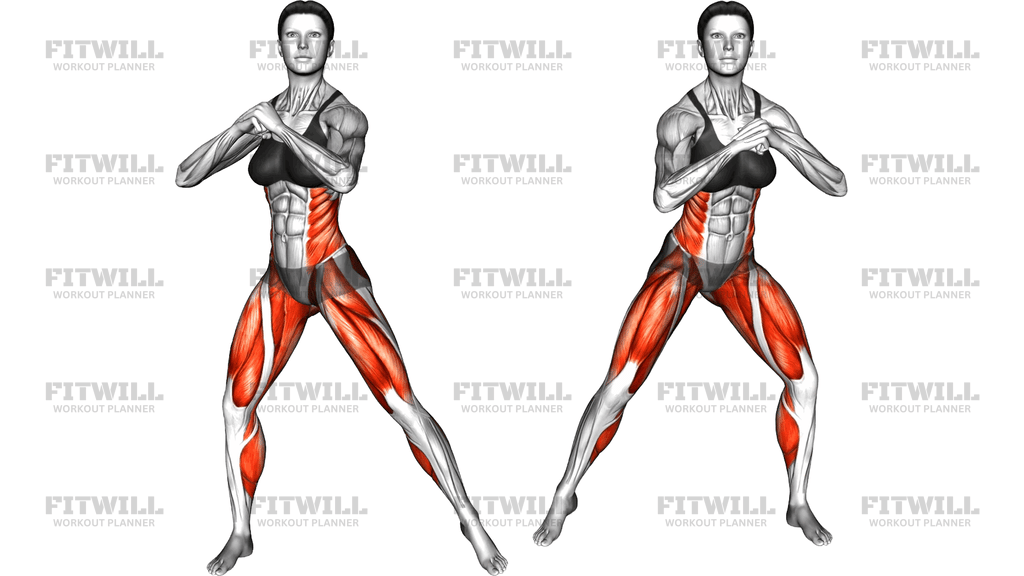
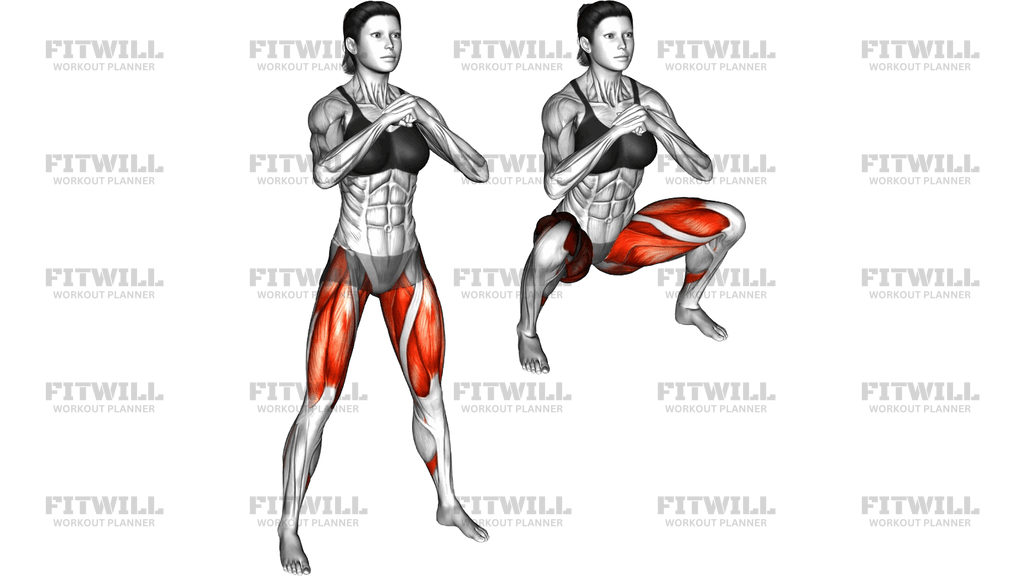
The Deep Frog Squat is a body weight squat performed with a very wide stance, toes turned out, and hands clasped in front of the chest for balance. Instead of stopping at a parallel thigh position, you sink as low as your hips and ankles allow, letting the knees track outward over the toes so the thighs spread apart like a frog's legs. From that deep bottom position, you press back up to standing under control.
This movement is one of the simplest ways to challenge the quads, inner thighs, and glutes through a long range of motion without any equipment. Because the feet are planted wide and turned out, the adductors on the inner thigh are loaded heavily in a stretched position, while the deep knee and hip bend forces the quadriceps and glutes to work harder than they would in a narrow-stance squat.
The setup matters more than it looks. A stance that is too narrow turns this into a stressful deep squat on the knees; a stance that is wide enough with the heels comfortably down lets the pelvis drop between the feet instead of behind them. The clasped hands at chest height act as a counterweight, helping you sit tall, keep the chest up, and stay balanced as you descend.
To perform it well, start standing with the feet roughly one and a half shoulder widths apart, toes angled out at about 30 to 45 degrees. Brace the trunk, then bend the knees directly out over the toes while the hips lower straight down. Descend until the hips sit as close to the floor as your mobility permits, pause briefly, then drive the floor away to stand tall again.
The Deep Frog Squat suits lifters who want better squat depth, people building lower body mobility, and anyone training at home with no equipment. It also works well as a warm-up before barbell squats or as a finisher for high-rep quad and inner thigh work.
Go only as deep as you can while keeping the heels down and the knees moving in the same direction as the toes. If depth forces the heels to lift or the knees to collapse inward, widen the stance slightly, turn the toes out a bit more, or reduce the depth and build up over time. Controlled tempo, not bouncing at the bottom, is what makes this exercise safe and effective.
[ Workout Log & Planner ]
Put your next workout in Fitwill
Keep your plan and training log ready when you are.


Instructions
- Stand with the feet set much wider than shoulder width, toes turned out at roughly 30 to 45 degrees.
- Clasp the hands together in front of the chest with the elbows pointing down, and keep the torso tall.
- Brace the abdominal muscles and pull the shoulders back so the spine stays neutral before descending.
- Push the knees outward in the same direction as the toes while bending them to lower the hips straight down.
- Keep the heels flat on the floor throughout the descent, letting the chest stay upright and the elbows travel inside the thighs.
- Sink until the hips reach their lowest comfortable point with the thighs spread wide, and hold that bottom position for one to two seconds.
- Press the whole foot into the floor and drive the knees out as you push back up to standing.
- Exhale as you rise, then inhale at the top before starting the next repetition.
- Reset the stance and brace between reps if balance drifts, keeping the tempo slow and deliberate on every descent.
Tips & Tricks
- If the heels lift at the bottom, the stance is too narrow or the depth is being forced — widen the feet or stop an inch higher and improve gradually.
- Knees caving inward is the most common fault in this wide position; cue yourself to spread the floor with the feet on every rep.
- Letting the chest fall forward turns this into a good-morning; keep the clasped hands high so they act as a counterweight.
- Do not bounce out of the deep bottom — the stretched inner thigh position rewards a controlled pause, not momentum.
- Turning the toes out too far past 45 degrees reduces how much the quads work; keep the turn moderate so the knees and toes stay aligned.
- Barefoot or flat-soled footwear makes it easier to feel the heels gripping the floor than in cushioned running shoes.
- If depth is limited by tight ankles, allow a very slight outward drift of the heels only if the knees stay over the toes, or work on ankle mobility separately.
- Start with body weight only and slow tempo; add load or reps only when you can reach full depth without the hips tucking under.
Frequently Asked Questions
Which muscles does the Deep Frog Squat work?
The quadriceps on the front of the thighs are the primary movers, with heavy involvement from the inner thigh adductors because of the wide, turned-out stance. The glutes and trunk stabilizers support the deep hip bend and keep you balanced.
Is the Deep Frog Squat safe for beginners?
Yes, as long as beginners limit depth to what they can control with heels flat and knees tracking over the toes. Depth can be increased gradually as hip, knee, and ankle mobility improve.
How wide should my stance be for the Deep Frog Squat?
Set the feet about one and a half shoulder widths or wider, with toes angled out roughly 30 to 45 degrees. The exact width should let your hips drop between your feet with your heels staying down.
Why do my heels lift when I sink into the Deep Frog Squat?
Limited ankle mobility or a stance that is too narrow are the usual causes. Widen the feet, turn the toes out slightly more, or reduce depth temporarily while working on ankle flexibility.
How is the Deep Frog Squat different from a regular squat?
The much wider, externally rotated stance places a large stretch load on the inner thighs and lets you squat far deeper than a conventional squat. The quads also work over a longer range because of the extreme knee bend.
Can I use the Deep Frog Squat as a warm-up before barbell squats?
Yes, several slow body weight reps are an effective way to open up the hips and grove deep knee and hip positions before loading a barbell. Keep it submaximal so it primes rather than fatigues.
Should I pause at the bottom of the Deep Frog Squat?
A one to two second pause is recommended because it builds strength and control in the stretched position. Bouncing out of the deep bottom reduces muscle work and increases stress on the knee joint.
What can I use instead of the Deep Frog Squat if I have knee discomfort?
A sumo squat to a box or bench lets you control depth precisely while keeping the same wide stance, or you can use a cossack squat for a similar inner thigh stretch with less knee flexion.
How many reps of the Deep Frog Squat should I do?
For mobility and control, 8 to 15 slow reps with a bottom pause works well. For strength and muscle endurance, accumulate 3 to 4 sets and add reps or tempo before adding external load.