Squat Front Kick
The Squat Front Kick combines two familiar movements into one fluid pattern: you lower into a bodyweight squat, then drive up and snap one leg forward into a front kick before resetting on the other side. Because each rep finishes on a single supporting leg, it demands more balance and control than either a squat or a kick performed on its own. It is a staple in kickboxing-style conditioning classes, warm-up circuits, and home workouts where no equipment is available.
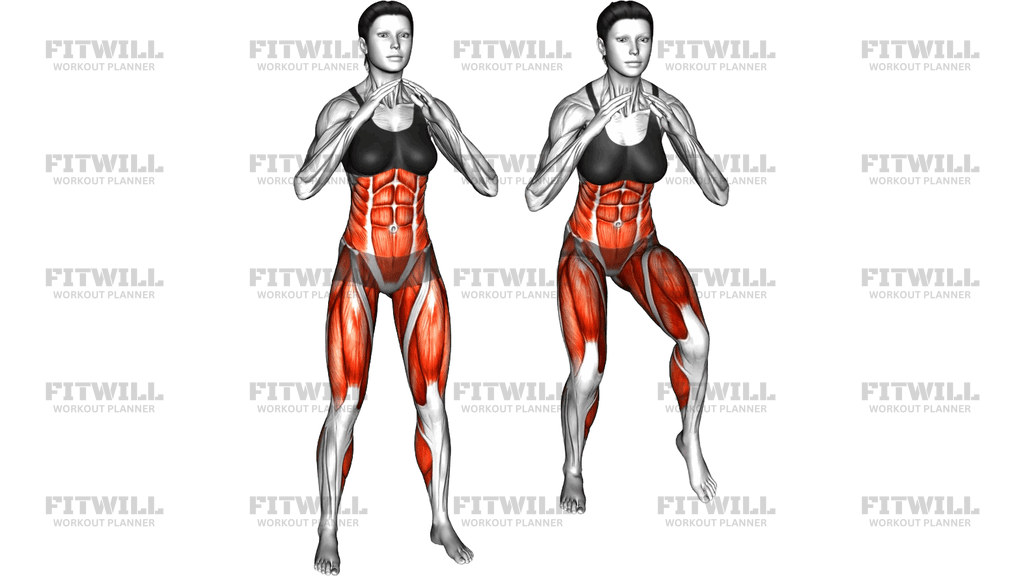
The movement works the quadriceps and glutes through the squat, then challenges the hip flexors and quads again as you kick. The supporting leg's calf, ankle, and hip stabilizers work hard to keep you upright, and your core ties the whole pattern together, especially when your hands are held up in a guard position near your chest and face. Performed for continuous reps, it also raises your breathing rate quickly, so it doubles as light cardio conditioning.
Setup matters more than most people expect. Your stance width and foot angle during the squat determine whether your knees track cleanly, and shifting your weight fully onto one leg before kicking determines whether the kick is controlled or rushed. Rushing the transition is where form breaks down: the chest drops, the kick turns into a low leg swing, and balance disappears.
To execute it well, think of the rep as three clean phases: sit into the squat, stand tall under control, then kick with intent before planting the foot back down. The kick itself comes from the hip and thigh, with the knee leading and the lower leg extending at the target height, roughly waist level for most people. Keep the hands up and the torso upright throughout, rather than letting the arms hang or the chest fall forward.
This exercise suits beginners building single-leg confidence, martial arts practitioners drilling technique under fatigue, and anyone programming circuit or interval work at home. Because it requires no equipment and little space, it travels well and fits easily into short routines. Start with a modest height and speed on the kick and only progress once you can land each rep quietly and without wobbling.
A few practical safety points: warm up the hips and ankles first, keep the supporting knee slightly bent rather than locked when you kick, and avoid kicking so high that your pelvis tucks and your lower back rounds. If balance is a limitation, practice the transition slowly or stand near a wall until the pattern feels automatic.
Fitwill
Log Workouts, Track Progress & Build Strength.
Achieve more with Fitwill: explore over 9600 exercises with images and videos, access built-in and custom workouts, perfect for both gym and home sessions, and see real results.
Start your journey. Download today!




Instructions
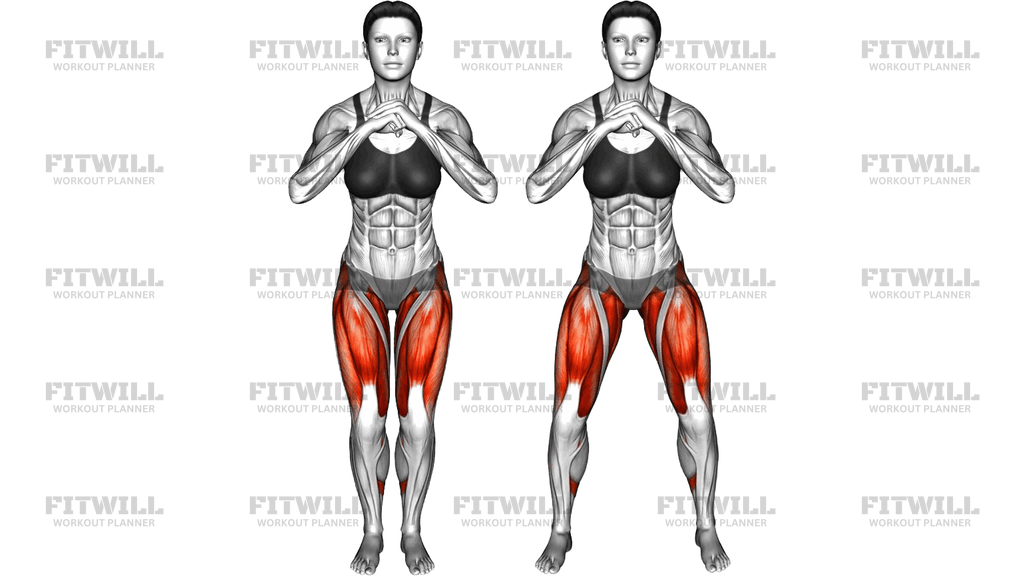
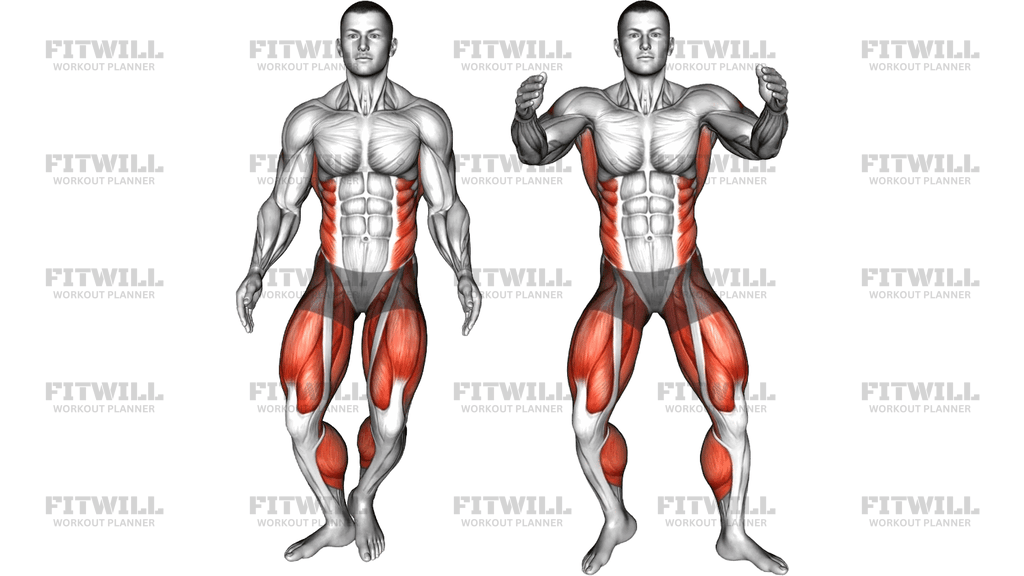
- Stand with your feet about hip-width apart, toes pointing forward or slightly out, and raise both hands in front of your chest and face as if in a guard position.
- Brace your core and pull your shoulders back so your torso is tall before you begin the rep.
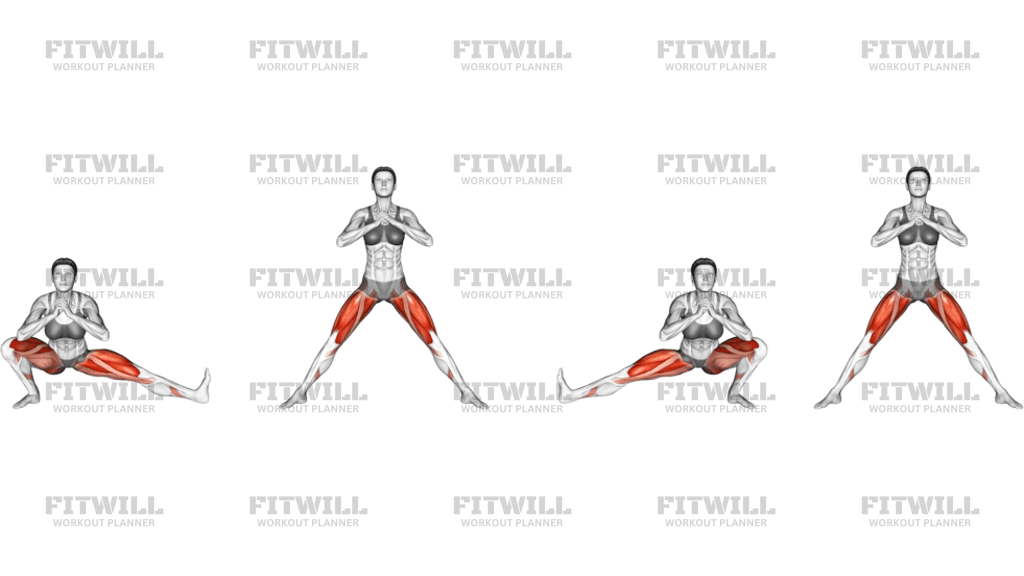
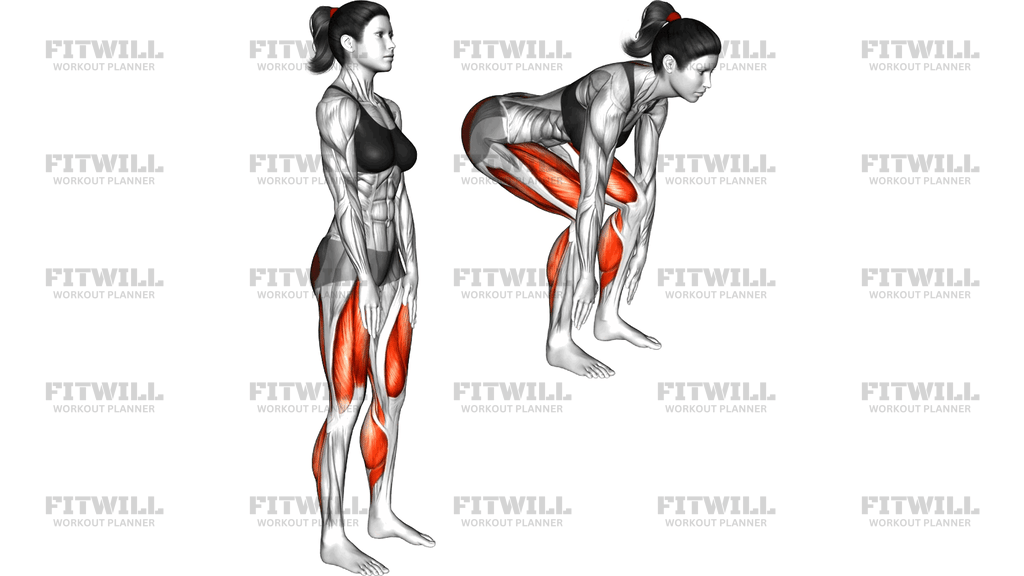
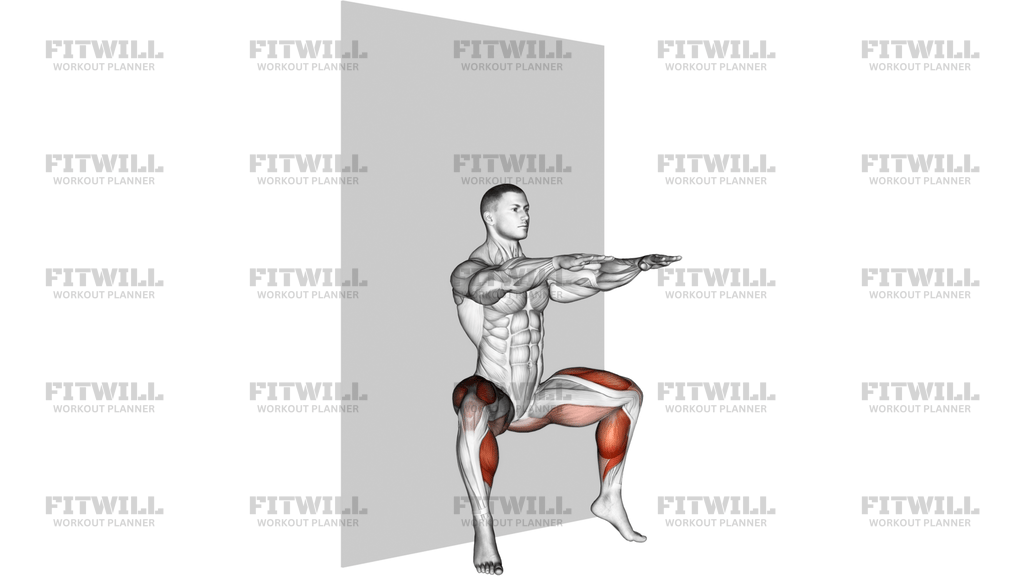
- Push your hips back and bend your knees to lower into a squat, keeping your weight spread across both feet and your chest up.
- Drive through your heels to stand back up, transferring your weight fully onto one leg as you reach standing.
- As you rise, lift the opposite knee and extend it forward into a front kick, letting the knee lead and the lower leg snap out to roughly waist height.
- Keep the supporting knee softly bent and your hands up near your face while the kicking leg is extended.
- Retract the kick by bending the knee first, then place the foot back down on the floor with control.
- Exhale as you stand and kick, and inhale as you lower into the next squat.
- Alternate legs each rep, or complete all reps on one side before switching, landing quietly each time.
- Reset your stance and brace again between reps if your balance drifts or your feet wander from their starting positions.
Tips & Tricks
- If your kick swings low and uncontrolled, it is usually because you started it before fully standing; finish the squat first, then kick.
- Watch that your supporting foot does not twist outward as you kick; keep the toes pointing forward so the knee stays aligned.
- A common mistake is letting the chest fall over the kicking leg; correct it by keeping your hands at your face and your ribs stacked over your hips.
- Point the kicking foot or flex it deliberately rather than leaving it loose, which keeps the lower leg organized and the extension cleaner.
- If your balance wobbles at the top, slow the kick down and pause for a beat standing on one leg before extending; speed comes later.
- Keep the squat depth honest: hips back, knees tracking over the toes. A shallow, rushed squat makes the kick feel harder than it should.
- Land the kicking foot directly under your hips rather than out in front, so the next squat starts from a stable base.
- If your lower back arches when the knee lifts, reduce the kick height and focus on keeping your pelvis neutral as the knee rises.
- Breathe rhythmically rather than holding your breath through the kick, especially when doing higher-rep circuits.
Frequently Asked Questions
What muscles does the Squat Front Kick work?
The quadriceps and glutes do most of the work during the squat, while the hip flexors and quads power the kick. The core, calves, and ankle stabilizers of the supporting leg keep you balanced throughout.
Is the Squat Front Kick suitable for beginners?
Yes, as long as the kick starts low and slow. Beginners can practice the squat-to-stand transition on one leg before adding full extension, or stand near a wall for light support.
How high should I kick during the Squat Front Kick?
Waist height is a reliable target for most people. Kick higher only when you can keep your torso upright and your pelvis neutral at that height without leaning back or rounding your lower back.
Why do I lose my balance when I stand up to kick?
Usually your weight has not fully shifted onto the supporting leg before the kick begins. Pause for a moment standing tall on one leg, then kick, and keep the supporting knee slightly bent instead of locked.
Should I alternate legs or do all reps on one side?
Alternating each rep keeps the workload even and mimics how the movement is used in kickboxing circuits. Doing all reps on one side first is useful when you are drilling technique on a weaker leg.
What can I use instead of the Squat Front Kick?
Alternating reverse lunges train a similar single-leg stand-up pattern, while standing front kicks without the squat isolate the hip flexor action. Combining the two separately is a fair substitute if balance is limiting you.
Do I need any equipment for the Squat Front Kick?
No, it is a bodyweight movement that only needs enough floor space to squat and extend one leg forward. An exercise mat can add comfort if you are training on a hard surface.
Can the Squat Front Kick count as cardio?
When performed for continuous reps or timed intervals, it raises your heart rate noticeably and works well in conditioning circuits. At a slow, deliberate pace it behaves more like a strength and balance drill.
My knees feel strained when I kick, what should I check?
Make sure the supporting foot stays pointing forward with the knee softly bent, and that the kicking knee leads the movement rather than the foot swinging out. Reducing kick height and slowing the tempo usually resolves the strain.