Deep Squat Turn
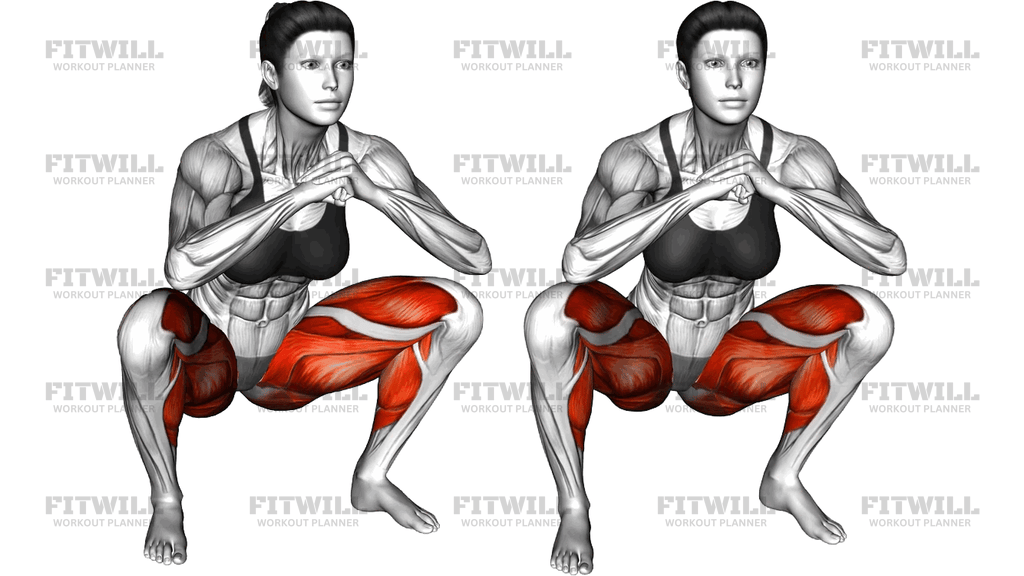
The Deep Squat Turn is a bodyweight movement that takes you into a full-depth squat and then uses deliberate rotation and knee-spreading at the bottom to open the hips and build control in the deepest range of the squat pattern. You settle into a deep squat with feet roughly shoulder-width or slightly wider, clasp your hands in front of your chest, and use your elbows against the inside of your knees to gently press the knees outward while keeping your chest tall and weight balanced across the whole foot. The turning and prying action at the bottom is what separates this from a standard deep squat hold.
This exercise is useful for almost anyone who squats. Lifters who struggle to hit depth without their heels lifting or knees caving in benefit enormously from spending time in this position, because it teaches the ankles, knees, and hips to work together at end range. Desk workers and runners often carry significant tightness in the inner thighs and hip rotators, and the turn component addresses exactly those tissues. It is also a common warm-up before lower body training days and a popular mobility drill in general fitness routines.
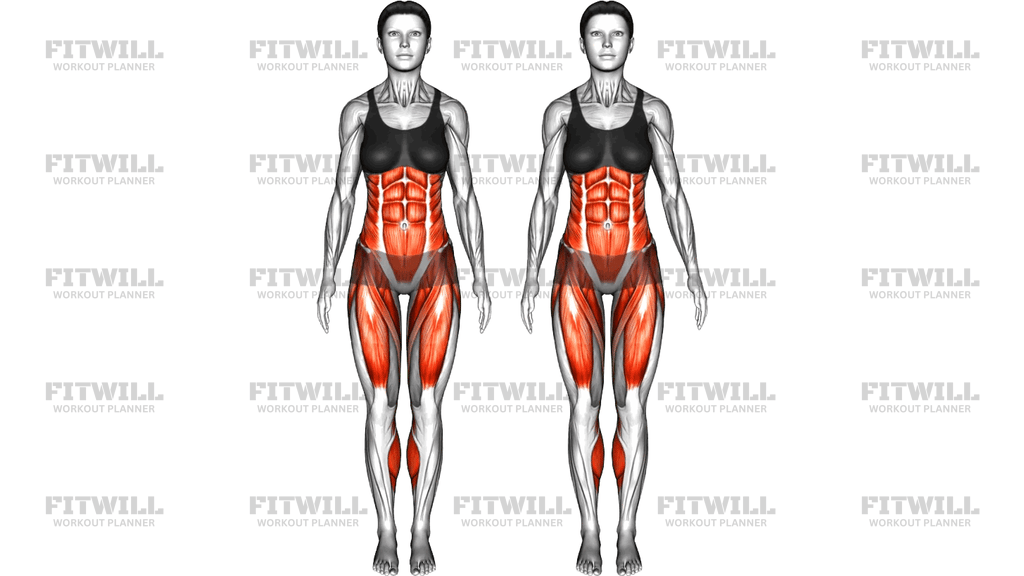
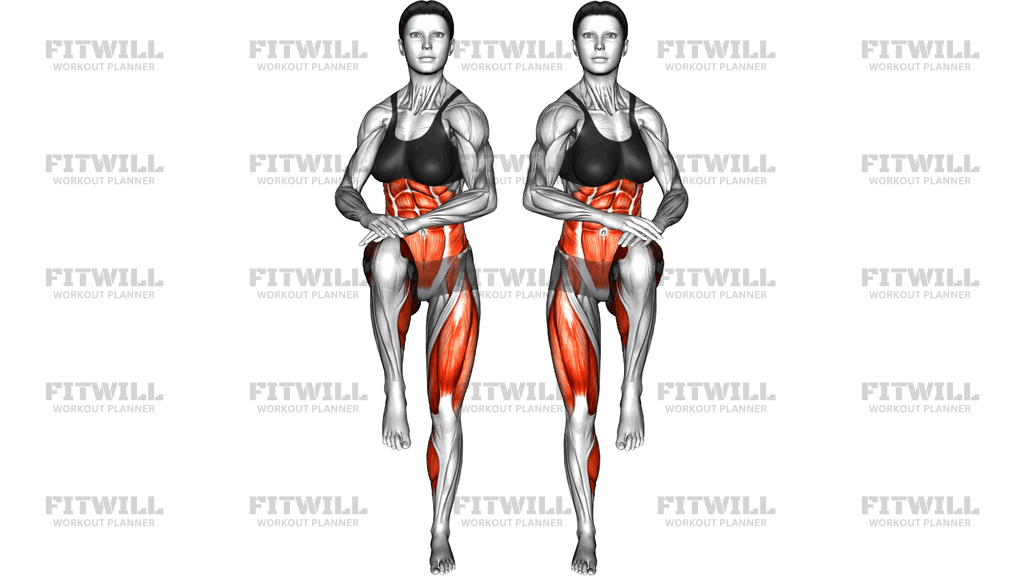
The main work happens in the glutes, quads, and inner thighs, which hold you in the bottom position and control the outward knee press. The deep core stays engaged to keep your torso upright, and the calves and ankle stabilizers are trained as they work through a full range of ankle bend. Because there is no external load, the challenge comes from holding positions and moving with control rather than from weight, so the emphasis is on joint range, positioning, and muscular endurance at the hardest part of the squat.
Setup matters more than people expect. Your foot position determines everything downstream: too narrow and your knees cannot travel outward cleanly, too wide and the hips run out of rotation early. Keep your whole foot in contact with the floor, especially the heels, and let your elbows do the prying rather than forcing the knees with your hands alone. The hands stay clasped at chest height, which helps counterbalance your torso and keeps you from rounding forward as you sit into the hole.
To execute well, descend slowly under control, settle into the bottom, and then apply steady outward pressure through the elbows for a few breaths before easing off. You can add small rotational turns of the torso or gentle shifts of weight from side to side to explore the range, but nothing should feel forced or pinchy. Move within a range that feels like a deep stretch with active tension, not a strain.
Common use cases include squat warm-ups, mobility sessions, recovery days, and as a diagnostic tool: if you cannot sit into a deep squat with heels down and chest up, this drill gives you a daily practice to work on it. Start with short holds of ten to twenty seconds and a few turns per side, and progress the duration and number of repetitions as your hips and ankles adapt. If deep knee flexion is uncomfortable or you have a current knee or hip issue, work with a raised heel or hold onto a stable support and progress gradually.
[ Workout Log & Planner ]
Put your next workout in Fitwill
Keep your plan and training log ready when you are.


Instructions
- Stand with your feet about shoulder-width apart or slightly wider, toes turned out a small amount, and your weight distributed evenly across both feet.
- Clasp your hands together in front of your chest with elbows bent and pointing down, keeping your arms relaxed but close to your torso.
- Brace your midsection lightly, lift your chest, and push your hips back and down as you begin lowering into the squat.
- Continue descending until your hips sit as low as your current mobility allows, keeping your heels flat and your knees tracking over or slightly outside your toes.
- At the bottom, use your elbows to press gently against the insides of your knees, easing the knees outward to open the hips and engage the inner thighs and glutes.
- Hold the deep position and add small controlled turns: shift your weight slightly from one foot to the other and rotate the torso a few degrees each way while keeping the chest up.
- Breathe steadily throughout the hold, inhaling through the nose and exhaling slowly as you maintain outward knee pressure.
- Release the elbow pressure, let the knees come back to a neutral track, and drive through your whole foot to stand back up with control.
- Reset your stance, check that your heels are still down, and repeat for your desired number of holds or turns.
- Finish the set by standing tall and shaking out the legs before moving to the next exercise.
Tips & Tricks
- If your heels lift at the bottom, widen your stance slightly or place a thin book or wedge under each heel temporarily while your ankle mobility improves.
- Knees caving inward is the most common fault in this drill; actively think of spreading the floor apart with your feet as your elbows pry the knees out.
- Do not bounce at the bottom of the Deep Squat Turn. The value comes from steady, sustained pressure, so hold the position and let the tissue adapt with each exhale.
- Keep your hands clasped at chest height rather than dropping them, since the arms act as a counterbalance that helps you stay upright in a deep squat.
- If your torso collapses forward, shorten the range: squat to the depth where your chest stays tall, hold there, and gradually work lower over weeks.
- Turn your toes out only slightly. Excessive toe-out feels easier but reduces how much the hips actually have to rotate, cutting the benefit.
- Warm the ankles first with a few slow bodyweight ankle rocks, since stiff ankles are the usual reason people cannot sit into a full deep squat.
- Avoid forcing through a pinch at the front of the hip or deep in the knee; back off the depth or reduce the elbow pressure and rebuild from a comfortable range.
- Spread the holds across the day rather than doing one long grind. Frequent short exposures to the bottom position improve squat comfort faster than a single max-effort hold.
Frequently Asked Questions
What muscles does the Deep Squat Turn work?
The glutes, quads, and inner thighs do most of the work holding the deep position and controlling the outward knee press. The deep core stabilizes your upright torso, and the calves and ankle stabilizers work through a full range of ankle bend.
Is the Deep Squat Turn suitable for beginners?
Yes, because it uses only bodyweight and the range is self-selected. Beginners can hold onto a doorframe or rack for balance and squat only as deep as they can keep their heels down and chest up, then progress depth over time.
Why do I press my knees out with my elbows in the Deep Squat Turn?
The elbow press opens the hips at the bottom of the squat, stretches the inner thighs, and teaches your knees to track outward instead of caving in. It also helps you find a stable, upright torso position in a full-depth squat.
Should my heels stay flat during the Deep Squat Turn?
Yes, keeping the whole foot down, especially the heels, is a key quality check for the drill. If your heels rise, reduce the depth or temporarily elevate them slightly while you work on ankle mobility.
How is the Deep Squat Turn different from a normal squat?
A normal squat moves down and up through the full range, while this drill takes you to the bottom and keeps you there, adding outward knee pressure and small torso turns. The goal is mobility and control at end range rather than lifting load.
How long should I hold the bottom position?
Start with holds of ten to twenty seconds, adding gentle turns and weight shifts within each hold, and complete two to four rounds. As the position feels more comfortable, extend the holds toward forty-five to sixty seconds.
Can I use the Deep Squat Turn as a warm-up before squats or deadlifts?
It works well as a warm-up because it opens the hips, ankles, and inner thighs and rehearses the exact bottom position you want under the bar. Do a few short holds before your working sets, then move into your regular warm-up ramp.
My knees hurt when I sit into a deep squat. What should I change?
Check that your knees are tracking outward, your heels are down, and your weight is over the middle of your feet rather than on your toes. If discomfort continues, reduce the depth, ease off the elbow pressure, and consult a professional before continuing.
What can I do if I cannot get low enough to use my elbows on my knees?
Hold onto a sturdy support in front of you and squat to your deepest comfortable position, working on ankle and hip range first. As your depth improves, your elbows will naturally reach the inside of your knees at the bottom.