Barbell Pullover With Bench Press
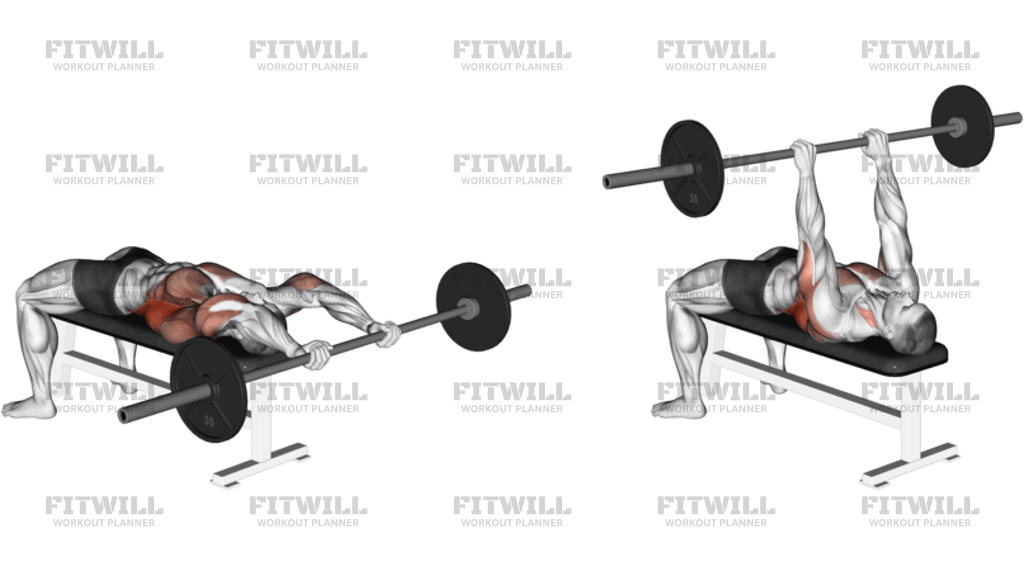
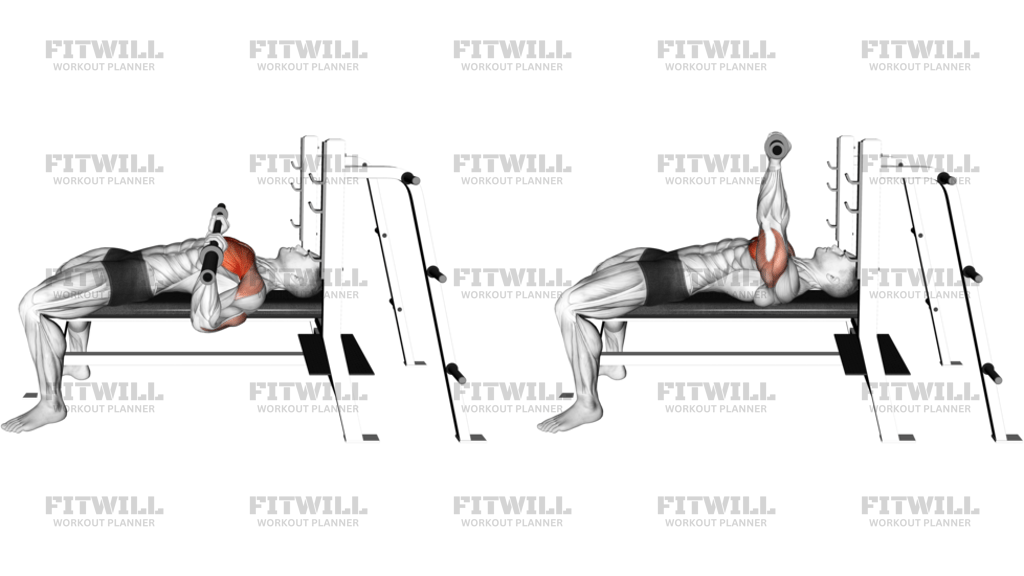
The Barbell Pullover With Bench Press is a two-in-one compound movement performed lying lengthwise on a flat bench. You hold a barbell with a close, shoulder-width grip, lower it in an arc back over your head toward the floor in the pullover portion, then pull it back over your chest and press it straight up like a narrow-grip bench press before repeating. The left and right halves of the rep blend a lat and rib-cage pullover with a triceps-dominant press, so you never put the bar down between the two phases.
This lift earns its place in a program because it loads two big upper-body patterns with one implement. The pullover phase stretches and strengthens the lats, pecs, and serratus through a long range, while the press phase brings the triceps, front delts, and chest into play. Lifters who want a deeper overhead stretch without a pull-up bar, or who are short on time and want more work per set, get a lot out of this combination.
Setup matters more here than in most barbell exercises. Because you lie lengthwise on the bench with the bar traveling behind your head, your head and shoulders need solid support, your feet need to be planted wide for balance, and the weight has to stay modest. A bar drifting off-line behind your head is the main risk in this movement, so a controlled tempo and a light-to-moderate load are non-negotiable.
To execute it well, think of the pullover as an arc drawn with straight but not locked elbows, and the press as a vertical line from your chest. Keep your lower back in contact with the bench rather than arching sharply to chase range, and let the bar travel only as far back as your shoulders allow without discomfort. Breathing in on the way back and exhaling as you press helps keep your trunk braced through the transition.
This exercise suits intermediate lifters building upper-body muscle, trainees finish their pull or push days with it, and home gym owners who want a pullover option without a cable station or dumbbells. Beginners can use it too, but only after practicing each half separately with an empty bar or light weight. Anyone with shoulder impingement history or significant lower-back sensitivity should treat the pullover range as a short, controlled partial rather than chasing the floor behind the bench.
[ Workout Log & Planner ]
Put your next workout in Fitwill
Keep your plan and training log ready when you are.


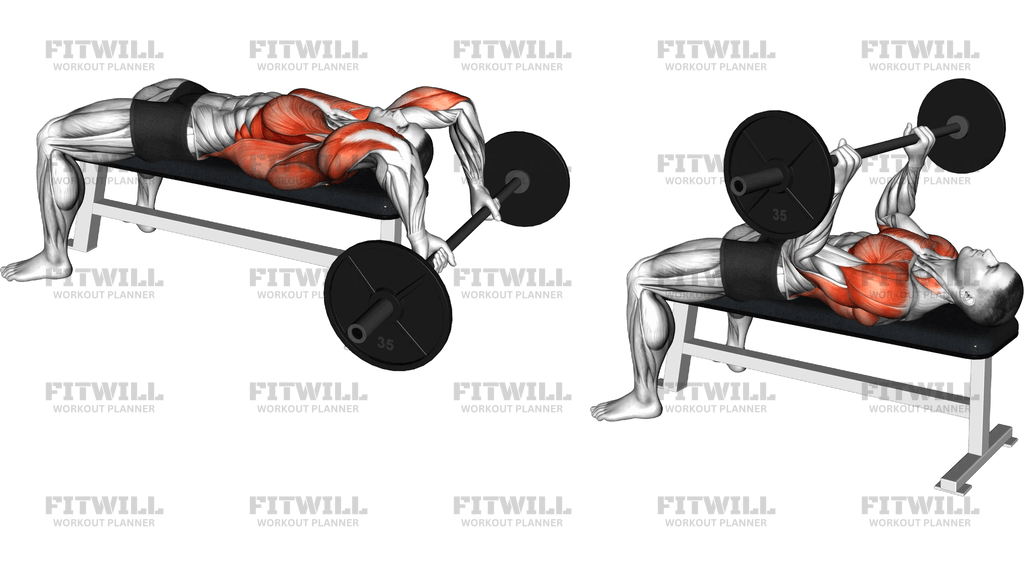
Instructions
- Set a flat bench so you can lie on it lengthwise with your head and both shoulders fully supported, and place a loaded barbell on the floor above your head or have it handed to you once you are in position.
- Grip the bar with an overhand, shoulder-width grip, lie back until your upper back and head are stable on the bench, plant your feet flat on the floor on either side, and press your lower back gently down toward the bench.
- Start with the bar held over your chest at arm's length, elbows slightly bent at a fixed angle you will maintain throughout the set.
- Brace your core and take a breath in before each rep begins.
- Lower the bar in a smooth arc back over your head until it is behind and slightly below bench level, keeping your elbows bent the same amount and your ribs from flaring upward.
- Pull the bar back along the same arc until it returns above your chest, feeling your lats do the pulling rather than swinging the bar with momentum.
- Without pausing, press the bar straight up until your arms are extended over your chest, squeezing your triceps at the top.
- Exhale as you complete the press, then begin the next rep by lowering back over your head under control.
- Complete your reps, then either sit up with the bar over your chest and rack it or lower it carefully to the floor behind you only when it is light enough to set down safely.
Tips & Tricks
- Choose a weight you could comfortably press for at least 12 reps; the pullover phase is the weak link, and loading this like a bench press is how people lose the bar behind their head.
- Set your elbow bend once at the start and freeze it. Opening and closing the elbow angle turns the pullover into a sloppy triceps extension and leaks tension from the lats.
- If your hips rise or your lower back arches hard off the bench as the bar travels back, shorten the range. The bar does not need to touch the floor for the lats to work.
- Keep the bar path in a single vertical plane over the middle of your face and chest. Drifting wide behind the head puts the shoulders in a vulnerable position at the bottom.
- Think of pulling the bar back over your head with your armpits, not your hands. That cue keeps the lats driving the pullover phase instead of the biceps taking over.
- Use collars on both sleeves every time. A plate sliding off with the bar overhead or behind your head is the worst-case scenario in this lift.
- If you train alone, start each set from the press position over your chest rather than trying to snatch the bar from behind your head while lying down.
- Slow the lowering phase down on purpose; the deep stretch at the back of the arc is where most of the pullover benefit lives, and rushing it robs you of it.
- When the transition from pullover to press feels jerky, the weight is too heavy or you are holding your breath. Reset with lighter plates and keep the breathing rhythm going.
Frequently Asked Questions
Which muscles does the Barbell Pullover With Bench Press work hardest?
The lats and chest carry the pullover arc, while the triceps, front shoulders, and pecs drive the press. The serratus and core work to stabilize the rib cage and trunk throughout.
Why is the grip in the Barbell Pullover With Bench Press shoulder-width instead of wide like a normal bench press?
A closer grip keeps the bar controllable in the narrow arc behind your head and shifts more pullover work to the lats. It also makes the press more triceps-dominant, which is part of the point of combining the two moves.
Can beginners do the Barbell Pullover With Bench Press?
Yes, but they should learn the two halves separately first. Practice straight-arm pullovers and close-grip presses with an empty bar, then combine them with a very light load before adding plates.
How far back should the bar go during the pullover portion?
Only until you feel a comfortable stretch across the lats and chest, usually just past head level. Forcing the bar toward the floor behind the bench puts your shoulders and lower back at risk for no extra muscle benefit.
Is the Barbell Pullover With Bench Press safe to do without a spotter?
It can be, if the load stays light and you start each set with the bar over your chest. Keep collars on the sleeves, and know how to lower the bar to the floor behind you or sit up with it if a rep goes wrong.
What is the most common mistake in this exercise?
Using too much weight and turning the pullover into a bouncing swing. Momentum off the bottom makes the press easier but removes tension from the lats and strains the shoulder capsule at the same time.
What can I substitute if my shoulders do not tolerate the Barbell Pullover With Bench Press?
Try a straight-arm dumbbell pullover on a bench for the arc, or a cable pullover standing, and pair either with regular close-grip presses. These split the pattern into pieces with a friendlier range.
Should my lower back stay flat on the bench during the pullover phase?
Keep it in light contact with a gentle brace rather than arching hard. Some natural space under the lower back is fine, but if your ribs flare and hips lift as the bar goes back, you have gone too deep.
How does the Barbell Pullover With Bench Press differ from a plain barbell pullover?
A plain pullover ends when the bar returns over your chest; here you add a full press before starting the next arc. That press trains the triceps and chest through a completely different range and turns one set into more total upper-body work.
Where should this exercise sit in my workout?
It works best as a secondary lift after your main presses or pulls, or as a finisher when the load is light. Because the pullover phase demands control under fatigue, it is not the right choice as your first heavy movement of the day.