Bottle Weighted Bent Over Y Raise
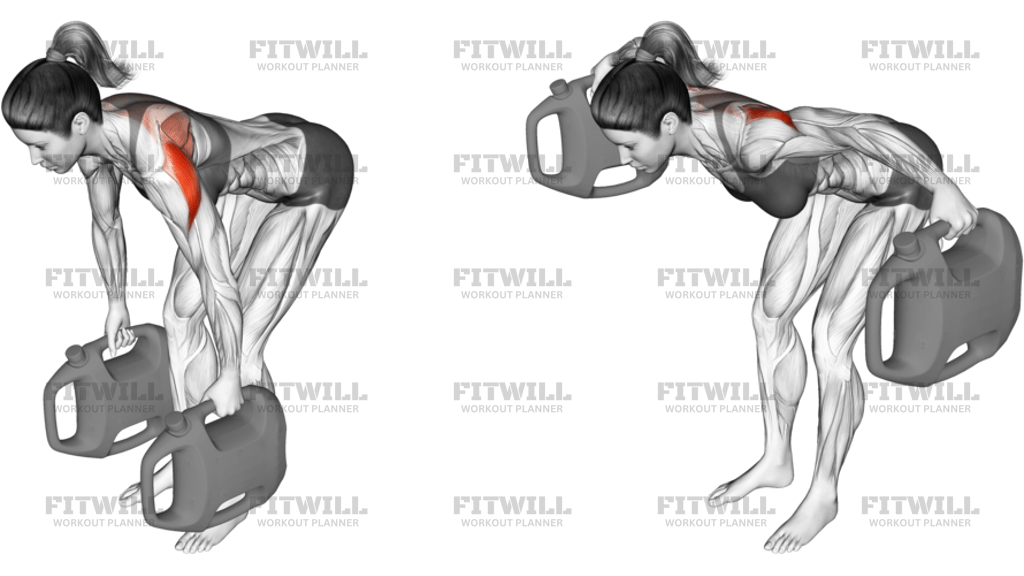
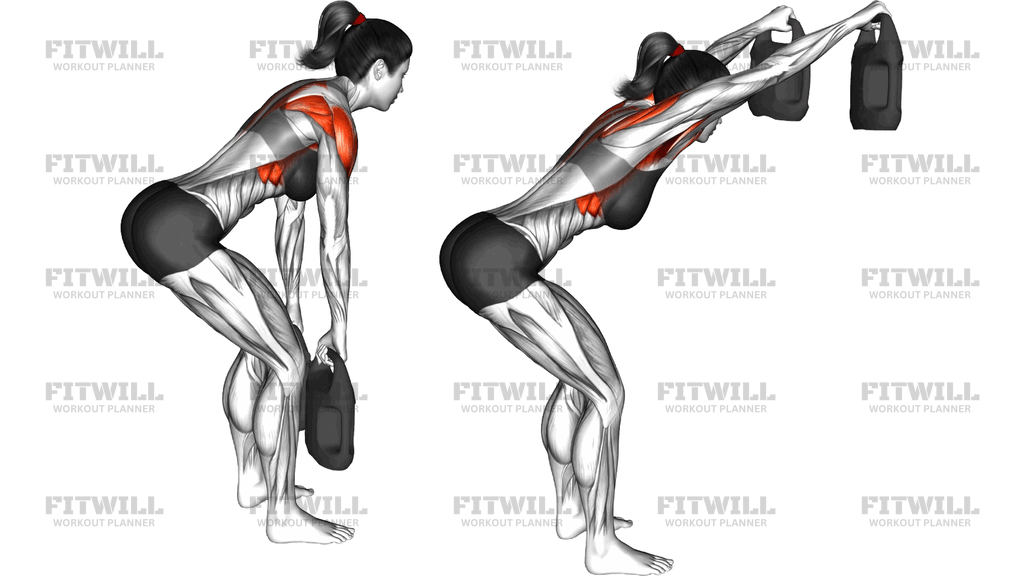
The Bottle Weighted Bent Over Y Raise is a hinged rear-shoulder and upper-back movement performed while holding a weighted bottle in each hand. You hinge forward at the hips until your torso is angled toward the floor, then sweep your arms up and out into a wide Y position so the bottles travel from hanging below your shoulders to overhead and apart. The path combines a raise with a slight horizontal abduction, which is why it hits the rear delts and mid-traps in a way that strict side raises or rows do not.
This exercise is most useful for people whose training is heavy on pressing movements and light on pulling and rear-shoulder work. Desk workers with rounded shoulders, lifters who want healthier overhead position, and anyone building detail across the upper back will all get something out of it. Because each bottle is a relatively light, awkwardly shaped load, the movement also challenges grip and shoulder-stabilizing muscles without hammering the joints with heavy weight.
The primary work comes from the rear shoulders and the trapezius, especially the mid and lower fibers that pull the shoulder blades down and together as the arms rise. The erector spinae and glutes hold the hinged torso position isometrically, and the forearms work continuously to keep the bottles level. That postural demand is part of the value: you are training the upper back through a large range while the rest of the posterior chain braces behind it.
Setup determines everything here. Your hinge depth, spine position, and foot stance decide whether the bottles travel in a clean Y arc or whether your lower back takes over the movement. Aim for a hinge where the torso is roughly 45 degrees or lower, knees softly bent, and the spine long rather than rounded. If you cannot hold that position for the whole set, the bottles are too heavy or the set is too long.
Execution should feel like a sweep, not a heave. Lead with the hands and thumbs, let the shoulder blades glide toward the spine as the arms rise, and pause briefly with the bottles at or slightly above head height in line with your ears. Lower with the same control you raised with; the descent is where most people silently lose half the benefit. Keep the neck relaxed so the shoulders do the work instead of shrugging toward the ears.
Common use cases include upper-back finishers after rows or pulls, warm-up activation before bench or overhead pressing, and higher-rep shoulder-health blocks. Because the equipment is simple, the movement travels well to hotel rooms, garages, and home gyms where you only have a pair of loaded bottles or similar improvised weights.
For safety, treat this as a controlled, moderate-load exercise rather than a max-effort lift. Lighter bottles with honest tempo will build more usable strength here than heavy bottles swung upward with momentum, and stopping a set when your hinge position starts to slip protects your lower back.
[ Workout Log & Planner ]
Put your next workout in Fitwill
Keep your plan and training log ready when you are.


Instructions
- Fill two sturdy bottles with water or similar weight, cap them tightly, and hold one in each hand with a firm overhand grip on the neck or handle.
- Stand with feet about hip-width apart, then push your hips back and hinge forward until your torso is angled between 45 degrees and nearly parallel to the floor, knees softly bent.
- Let the bottles hang straight down under your shoulders with arms extended, palms facing each other or slightly behind you, and brace your core so your lower back stays long and neutral.
- Inhale and set your shoulder blades down and back before the first rep instead of shrugging them up.
- Exhale and sweep both arms up and outward at the same time, leading with the hands so the bottles trace a wide arc away from the body rather than straight up in front of you.
- Finish with the bottles at or slightly above head height, spread wider than shoulder-width so your arms and torso form a Y, and hold for a beat while squeezing the shoulder blades toward each other.
- Lower the bottles slowly along the same wide path until your arms hang fully extended again, resisting the pull of gravity rather than dropping them.
- Keep breathing steadily on each rep: exhale on the raise, inhale on the way down.
- Complete your target reps, then stand up by driving your hips forward and setting the bottles down with a flat back, not by rounding over to reach the floor.
Tips & Tricks
- If your torso bobs up as the arms rise, the bottles are too heavy; the bounce means momentum from your hips is lifting the weight, not your rear shoulders.
- Watch that the bottles finish beside your head, not in front of it. A Y raise that drifts forward turns into a front raise and hands the work back to the front delts.
- Keep a slight bend in the elbows throughout, but do not turn the top into a row by pulling the elbows back hard. The arms stay mostly straight and wide.
- If your grip fails before your upper back does, grip the bottle necks higher or use slightly less water; a straining grip makes you shrug and shortens the range.
- Feel the shoulder blades pull down and together at the top. If you only feel your neck, you are shrugging the upper traps instead of engaging the mid and lower traps.
- Stop the set the moment your lower back starts to round or ache. Reset the hinge between sets rather than grinding reps in a compromised spine position.
- A slow three-second lower does more for this movement than adding weight. The bottles swing easily, so tempo is your main tool for keeping tension honest.
- Stand sideways to a mirror occasionally and check that both arms rise evenly. One side usually leads when the bottles are unevenly filled.
- Warm up with ten bodyweight Y raises in the hinge before picking up the bottles so you know the path before load is added.
Frequently Asked Questions
Which muscles does the Bottle Weighted Bent Over Y Raise work?
The main work comes from the rear shoulders and the trapezius, especially the mid and lower fibers that control the shoulder blades. Your lower back, glutes, and forearms work isometrically to hold the hinge and the grip on the bottles.
How much water should I put in the bottles?
Start light, roughly one to two liters per bottle, and only add volume once you can hold a stable hinge and reach a full Y position for all reps. Because the arms are long levers, small increases feel much heavier than they sound.
Can beginners do the Bottle Weighted Bent Over Y Raise?
Yes, and it is actually a good early upper-back exercise because the load is naturally light. Beginners should first practice the hip hinge without weight, then add bottles once the bent-over position feels steady.
Why do my lower back and not my shoulders feel this exercise?
That usually means the torso is sitting too low or the hinge has collapsed into a rounded spine. Raise your torso slightly toward 45 degrees, brace the core before each rep, and reduce the bottle weight so the raise, not the hold, is the challenge.
How is a Y raise different from a bent-over reverse fly?
A reverse fly moves the arms out to the sides at roughly chest height, while the Y raise sweeps the arms up and outward so they finish overhead and wide. The Y path recruits more of the lower trapezius and trains a longer range through the shoulder.
What can I use if I do not have weighted bottles?
Any light handheld weight works: small dumbbells, kettlebells, or even soup cans. The key is a load you can sweep slowly through the wide Y arc without swinging.
How many reps and sets should I do?
Two to four sets of 10 to 15 controlled reps is a solid working range for strength and muscle endurance in the rear shoulders and upper back. Because the movement is hard to cheat, prioritize tempo and position over high rep counts.
Should my elbows bend during the raise?
Keep only a soft, fixed bend in the elbows. If the elbows bend and pull back, the exercise drifts into a row and the rear delts lose the long-lever tension that makes the Y raise effective.
Is it safe to do this movement every day?
Light sessions of the Bottle Weighted Bent Over Y Raise can be done frequently because the load and joint stress are modest. If your hinge feels fatigued or your lower back is sore, take a rest day or drop to bodyweight reps.