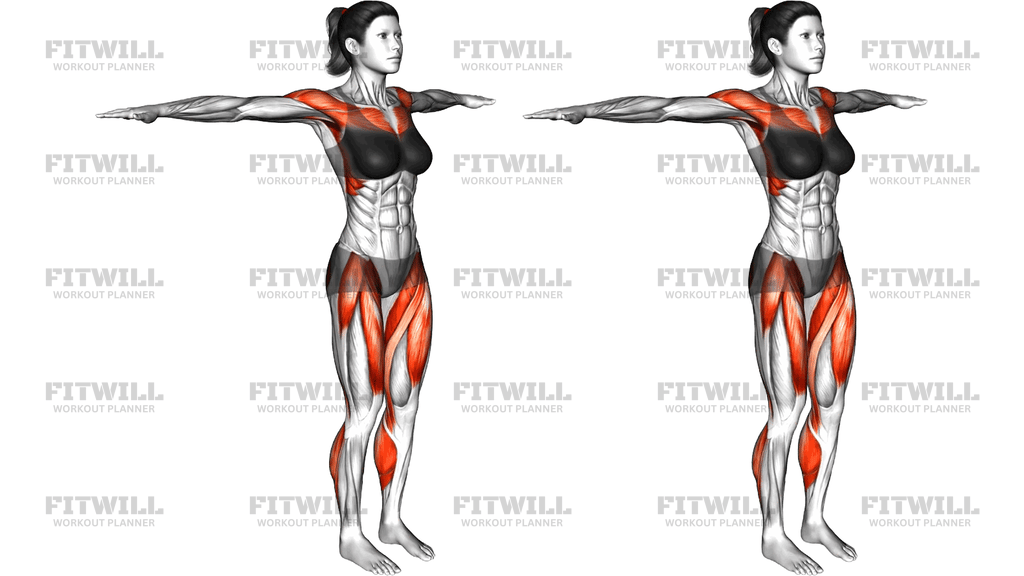
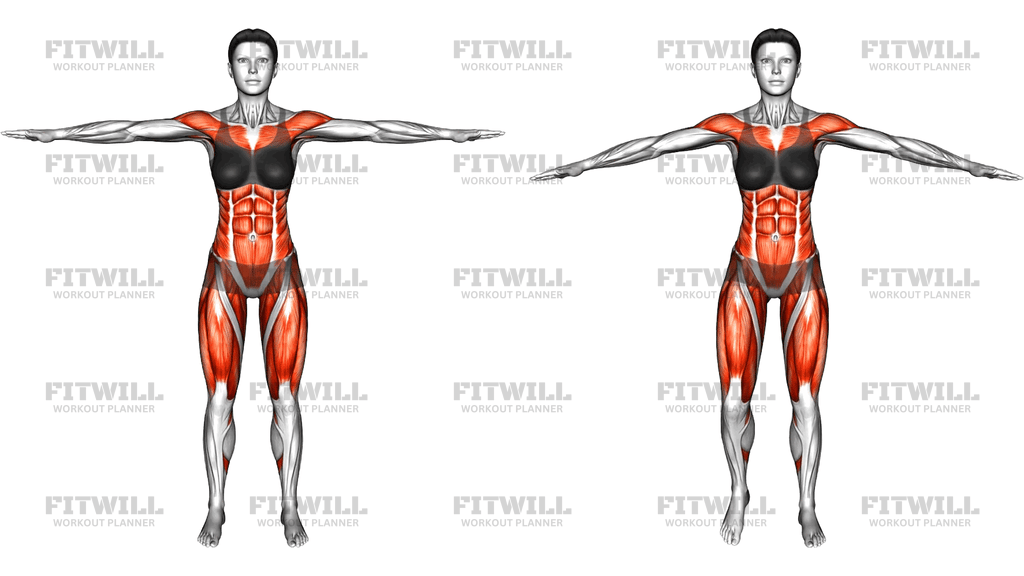
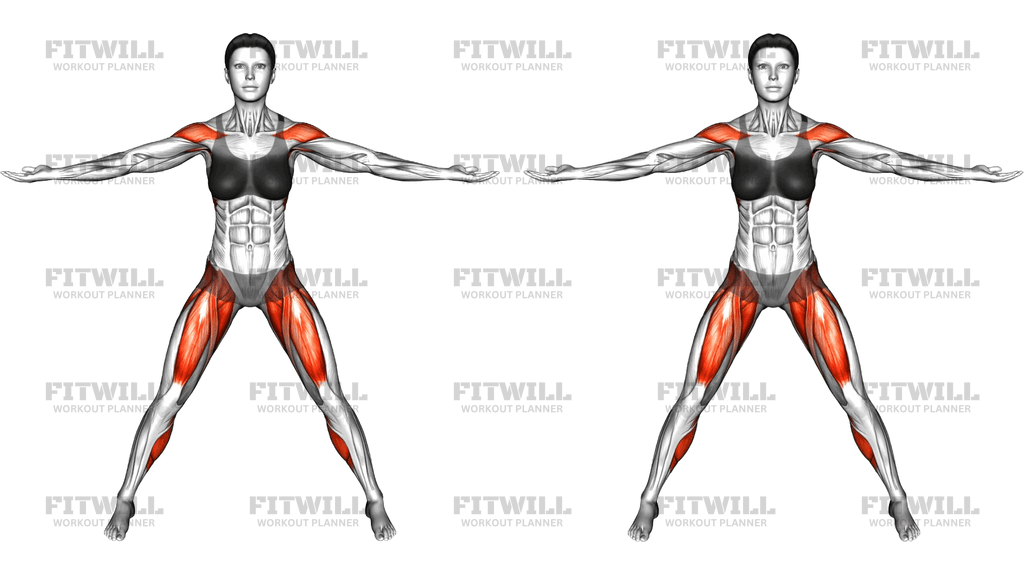
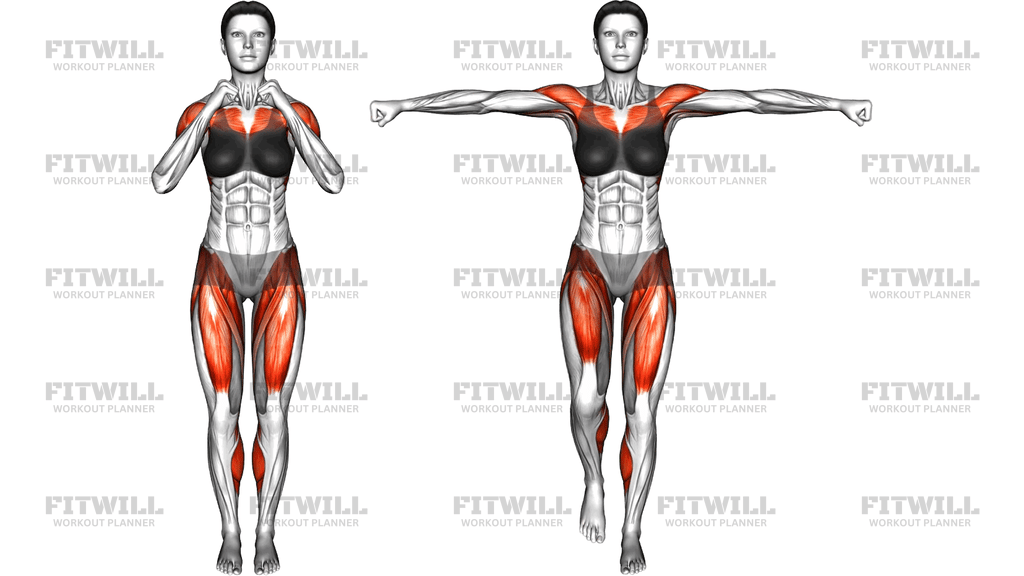
March On Spot Arm Circles
March On Spot Arm Circles combines two simple patterns into one flowing drill: you march in place while holding both arms straight out to the sides and sweeping them in continuous circles. No equipment, no space requirements, and no impact beyond the gentle foot lifts of the march make this a go-to warm-up, active recovery move, or low-intensity cardio option. Because the arms and legs work on independent rhythms, it also asks your brain to coordinate two tasks at once, which is exactly why it appears in so many general warm-up routines.
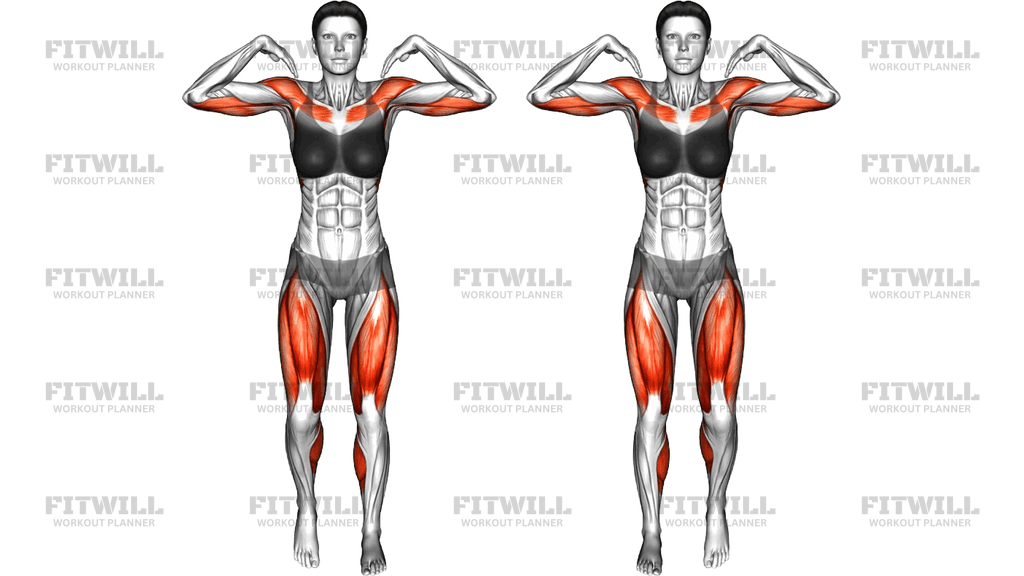
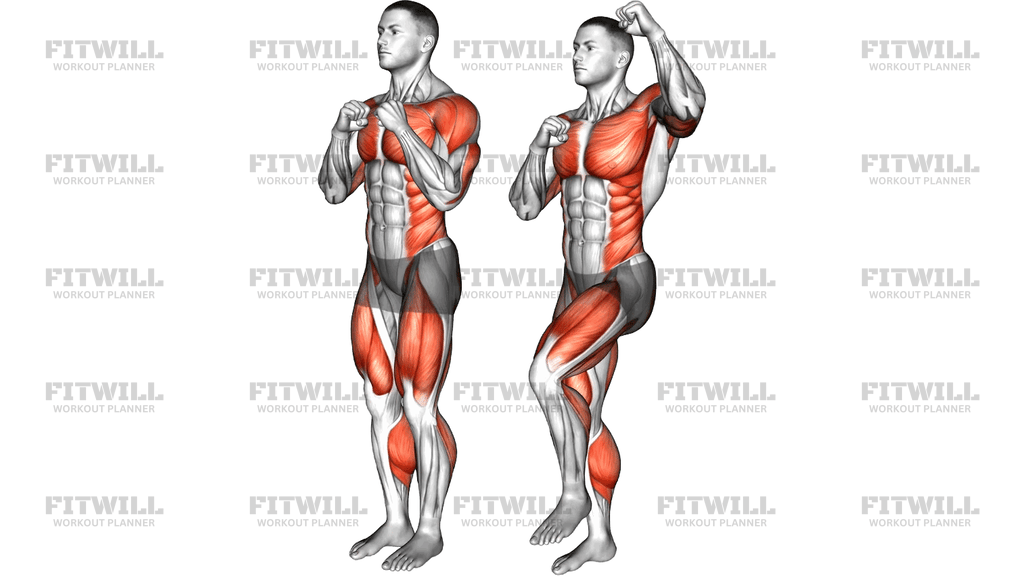
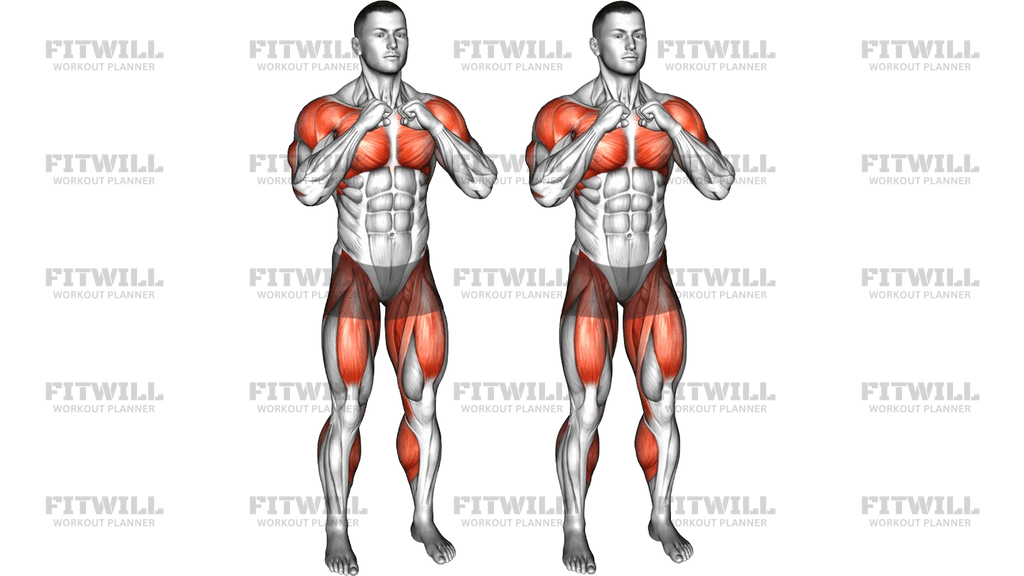
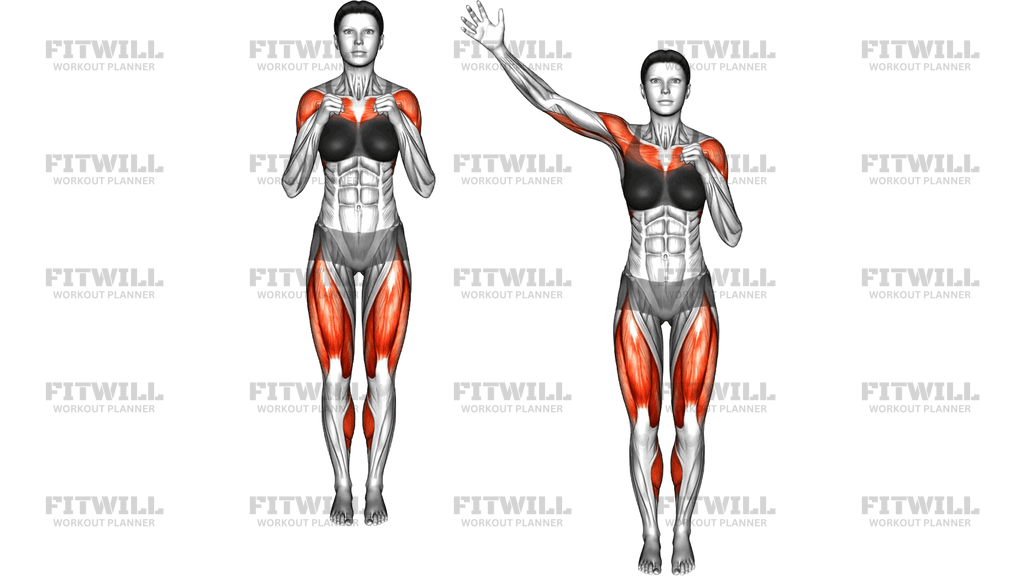
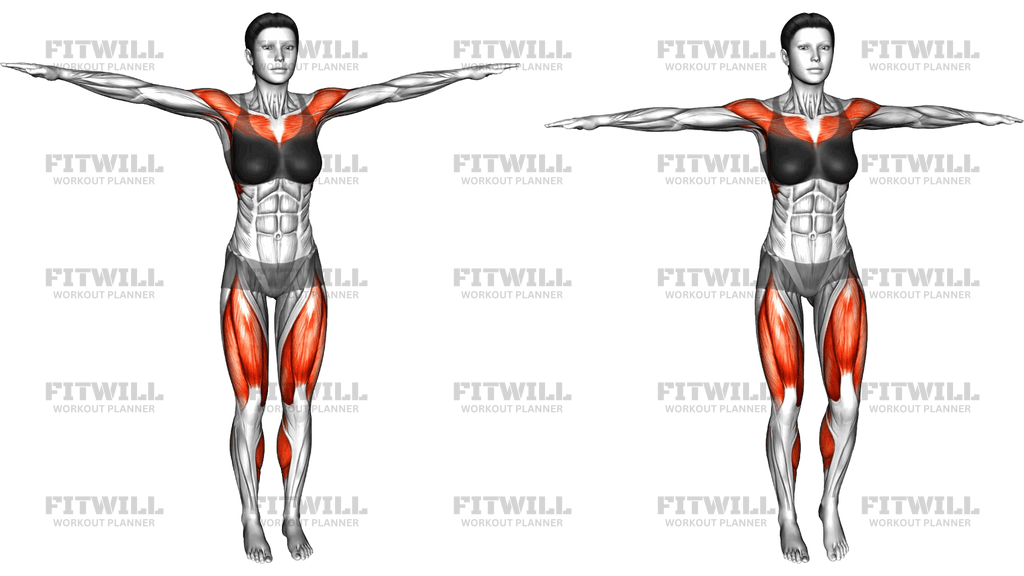
The work splits neatly between the upper and lower body. Holding the arms at or near shoulder height with straight elbows loads the shoulders — particularly the side and front delts — along with the upper back muscles that keep the arms from drifting forward. The marching legs drive the cardio response, with the hip flexors lifting each knee and the quads and calves handling the landing and push-off. Your core stays quietly busy the whole time, bracing to keep the torso upright while the limbs move around it.
Setup matters more than it looks. Stand tall with feet about hip-width apart, arms extended out to the sides at shoulder height, and elbows fully straight but not locked. If the arms drop even slightly below shoulder level, the circles become easier and the shoulder work fades; if they creep higher, the traps take over and the neck tends to tense. A soft bend in the knees and a braced middle keep the march smooth instead of bouncy.
To execute well, start marching at a relaxed tempo — left knee up, right knee up — then begin drawing small circles with both arms. Keep the circles controlled and even on both sides, and gradually enlarge them over ten to twenty seconds until the hands travel through a wide, smooth arc. Reverse the direction halfway through the set so the shoulders get balanced work. Breathe steadily throughout; the movement should feel rhythmic rather than rushed.
You will see this drill used as a dynamic warm-up before upper-body or full-body training, as a low-impact cardio interval in home workouts, and as a re-warming tool between heavier lifts. It suits beginners, older adults, and anyone returning from a layoff, while more advanced trainees can use longer sets or faster marching to raise the heart rate. If your shoulders tire before your legs, that is normal at first — reduce the circle size rather than dropping the arms.
For safety, keep the motion pain-free through the shoulder joint. Anyone with a history of shoulder impingement or neck tension should start with smaller circles and a lower arm position, and stop if any sharp discomfort appears. Land each march softly on the ball of the foot, and stay near a wall or chair for balance support if standing on one leg at a time feels unsteady.
[ Workout Log & Planner ]
Put your next workout in Fitwill
Keep your plan and training log ready when you are.


Instructions
- Stand upright with feet hip-width apart, knees soft, and weight spread evenly across both feet.
- Raise both arms straight out to the sides until they are level with your shoulders, elbows fully extended and palms facing the floor.
- Brace your stomach lightly and pull the shoulder blades down away from your ears so the neck stays long.
- Begin marching in place, lifting each knee to roughly hip height with a smooth, even rhythm.
- Once the march feels steady, start circling both arms forward in small, controlled loops.
- Gradually enlarge the circles until your hands sweep through a wide arc without dropping below shoulder height.
- After about 15-20 seconds, reverse the circle direction while keeping the march tempo unchanged.
- Breathe in and out through the nose and mouth in a steady rhythm — avoid holding your breath as the circles get bigger.
- To finish, shrink the circles back down, stop them, lower the arms to your sides, and let the march slow to a standstill.
Tips & Tricks
- The most common mistake is letting the arms sink below shoulder height as they tire — this turns the drill into an easy leg-only march, so check arm height every few seconds.
- Bouncing or leaning back as each knee lifts usually means the march tempo is too fast; slow the knees down before speeding up the arms.
- If your shoulders shrug toward your ears during the circles, reset by actively pressing the shoulder blades down before restarting the arm motion.
- Circles that are lopsided — one arm bigger than the other — often come from one elbow bending; keep both elbows locked out so the loops match.
- Start with small circles and grow them over the set; jumping straight to large circles is the fastest way to strain the shoulder joint cold.
- Lift the knees with intent rather than shuffling your feet — a lazy march keeps the heart rate low and defeats the cardio purpose of the drill.
- Land on the ball of each foot and keep the landing quiet; heavy stomping loads the knees and ankles unnecessarily.
- Alternate forward and backward circles in every set so the shoulder rotators get balanced work in both directions.
- If coordination breaks down when the circles get large, temporarily slow the march to a slow step-touch until both patterns feel automatic again.
Frequently Asked Questions
What muscles does March On Spot Arm Circles work?
The main upper-body work comes from the shoulders, especially the side and front delts, with support from the upper back. The marching targets the hip flexors, quads, and calves, while the core stabilizes your torso throughout.
Is March On Spot Arm Circles a cardio or strength exercise?
It sits primarily in the cardio and warm-up category. The continuous marching raises your heart rate, while the sustained arm circles provide a light muscular endurance stimulus for the shoulders rather than real strength building.
How long should I perform March On Spot Arm Circles?
Twenty to forty seconds works well as a warm-up component, or thirty to sixty seconds as part of a low-impact cardio circuit. Switch the circle direction roughly halfway through each set.
Why do my shoulders burn before my legs during March On Spot Arm Circles?
Holding straight arms at shoulder height and circling them continuously is a demanding endurance task for the delts, while marching is something your legs do daily. Shrink the circle size or lower the arms slightly if the shoulders fail too early.
Should my arms be completely straight during March On Spot Arm Circles?
Yes, keep the elbows extended so the arms sweep through a clean, even circle. Bending the elbows shortens the lever, shrinks the range, and reduces the work on the shoulders.
Can beginners do March On Spot Arm Circles?
It is very beginner-friendly — the movement is low impact, requires no equipment, and can be scaled by adjusting march speed, knee height, and circle size. Start with small circles and a gentle march for the first few sessions.
I struggle to march and circle my arms at the same time — what should I do?
This coordination challenge is normal at first. Practice the march alone until it is automatic, then add very small arm circles and grow them gradually as the two rhythms start to feel independent.
What can I substitute for March On Spot Arm Circles if my shoulders hurt?
March in place with a relaxed arm swing instead, or perform the arm circles without the march. Smaller circles with the arms slightly below shoulder height also reduce strain while keeping the pattern intact.
Can I use March On Spot Arm Circles as a full warm-up on its own?
It warms the shoulders, hips, and heart effectively, but it does not move the spine through much range or prepare the wrists and ankles for loading. Pair it with a few torso rotations and ankle circles for a complete warm-up.