Child To Cobra Pose
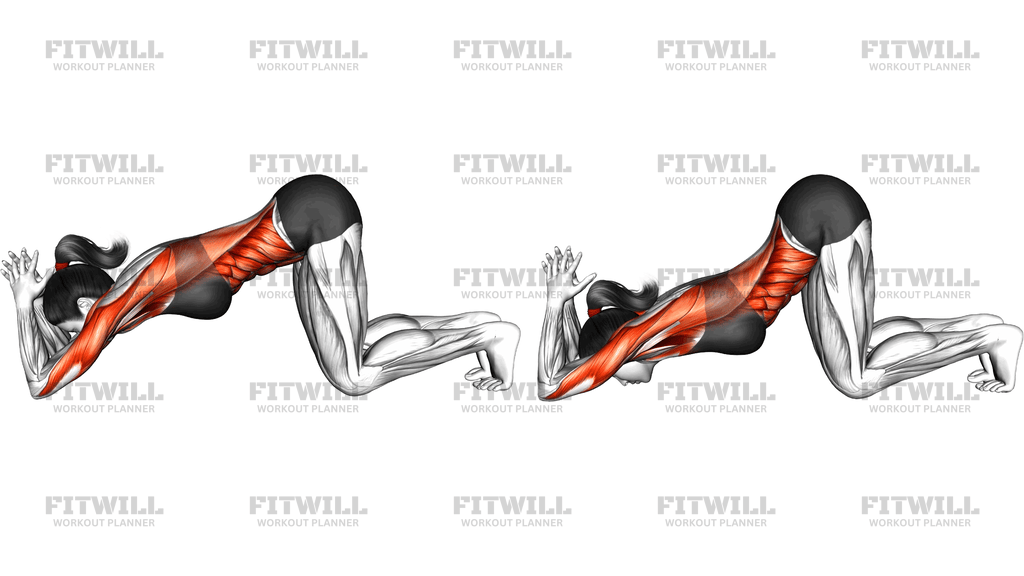
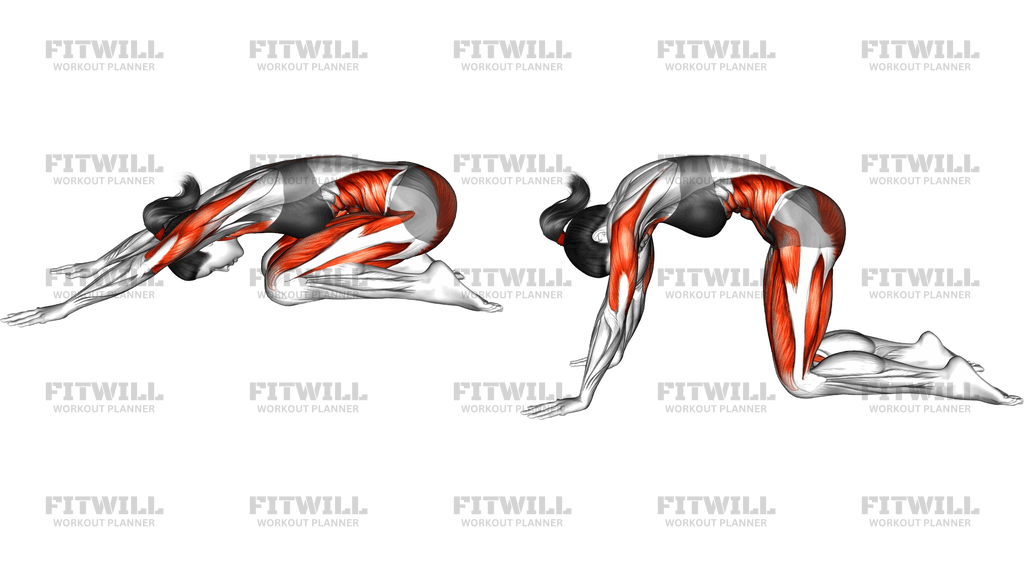
Child To Cobra Pose is a flowing mobility drill that moves you from a folded kneeling position into a full spinal extension and back again. You start in child's pose, sitting your hips back toward your heels with your arms stretched long in front of you, then travel forward through a hands-and-knees position as your hips drop toward the floor and your spine arches into extension, with your chest lifting and your head tilting gently back. It is essentially a moving backbend paired with a moving forward fold, and the transition itself is where most of the benefit lives.
This flow is useful for almost anyone who spends long hours sitting, because prolonged sitting keeps the spine flexed and the hip flexors shortened. Moving repeatedly between deep flexion and controlled extension retrains the spine through its full range, stretches the abdominal wall and front of the hips, and decompresses the lower back after the folded position. It is a common warm-up in yoga classes and a favorite as a morning mobility routine or as a reset between heavier lifting sessions.
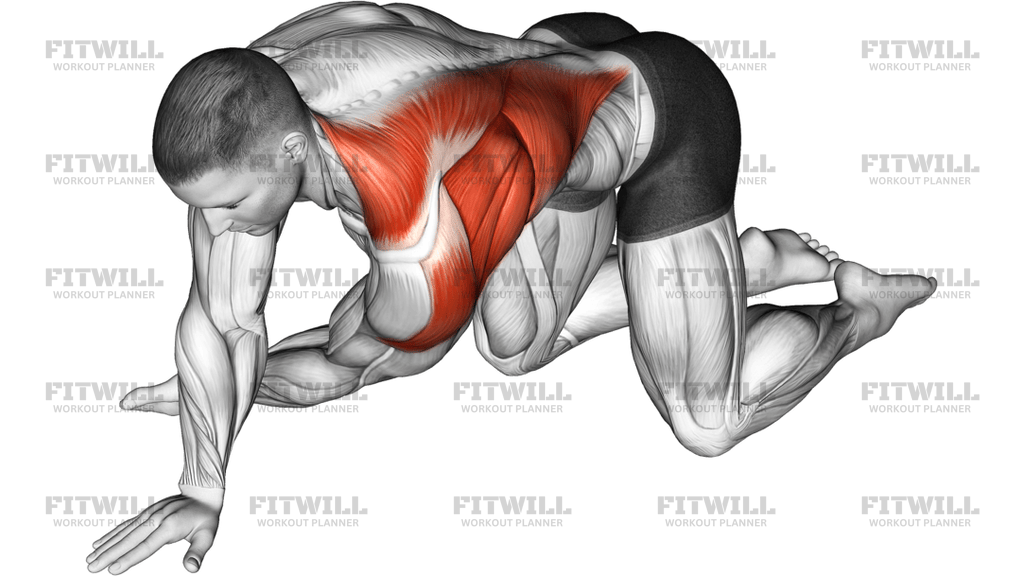
The muscles emphasized change with each phase of the movement. In child's pose you lengthen the lats and lower back while the glutes and hamstrings settle toward the heels. As you sweep forward, the hip flexors and abdominals open under stretch while the spinal extensors and shoulders work to lift the chest. Because the arms stay loaded through the whole flow, the shoulders, wrists, and triceps also get steady, low-grade work, which makes this a gentle but complete upper-body mobilizer.
Setup matters more than people expect. Your knees and hands determine the entire path: if your knees are too close to your hands, the forward transition will feel cramped and your lower back will have to compensate; if they are too far apart, your shoulders will carry excess load. Place your knees roughly hip-width under your hips and your hands shoulder-width ahead of your shoulders so the spine can glide through the transition without force.
Execution should feel like a wave rather than a push. Lead with the hips gliding forward, let the spine follow segment by segment, and finish with the chest lifted and the neck long as the head releases back. The return is the same wave in reverse: tuck the chin, round the back, lift the hips, and fold them back toward the heels. Rushing turns this into a jerky hip shuffle, while moving slowly keeps each vertebra contributing and protects the lower back from hinging at a single segment.
Keep the movement within a range that feels like a stretch, never a pinch. If you feel sharp pressure in the lower back during the extension, reduce how far the hips drop or keep a slight bend in the elbows to shorten the lever. Anyone with wrist discomfort can make fists or use forearms for the extension phase, and those with knee sensitivity can place a folded towel under the knees for cushioning.
[ Workout Log & Planner ]
Put your next workout in Fitwill
Keep your plan and training log ready when you are.


Instructions
- Kneel on an exercise mat with your knees about hip-width apart and your hands flat on the floor, shoulder-width apart, slightly ahead of your shoulders.
- From this hands-and-knees position, sit your hips back toward your heels and walk your hands forward until your arms are extended long and your forehead lowers toward the mat, settling into child's pose.
- Let your shoulders soften away from your ears and take one or two slow breaths in the folded position to establish your starting range.
- Press firmly through your palms and begin gliding your hips forward over your knees, keeping your arms straight so your chest travels ahead of your hands.
- As your hips pass forward, allow your spine to extend segment by segment, letting your chest lower toward the floor before lifting through it.
- Finish the extension with your arms supporting your weight, your chest open, your shoulder blades drawing gently together, and your head tilting back to keep the front of your neck long.
- Breathe in as you sweep forward into the extension, and feel the stretch across your abdomen and the front of your hips at the top.
- Exhale as you reverse the wave: tuck your chin first, round your upper back, then press your hips up and back toward your heels to return to child's pose.
- Complete 6 to 10 slow, continuous repetitions, keeping the forward and backward phases equal in length and smooth throughout.
Tips & Tricks
- The most common mistake is dumping all of the extension into one spot in the lower back. Imagine the spine moving like a wave so each segment shares the work instead of one hinge point taking the load.
- If your shoulders shrug up by your ears during the forward sweep, actively press the floor away and slide your shoulder blades down your back before lifting the chest.
- Keep your hands anchored in place for the entire flow. Sliding them around mid-repetition changes the path and usually causes the lower back to overextend to reach the same depth.
- Tuck your toes under if the tops of your feet or your toes feel compressed when the hips come forward over the knees.
- Do not throw the head back aggressively at the end of the extension; let the neck trail the chest so the backbend stays supported by the shoulders and upper back.
- If your wrists ache in the extended position, spread your fingers wide, shift your weight slightly into the heels of your palms, or drop to your forearms for the cobra phase.
- Slow down rather than adding reps. Two or three breaths per full cycle gives the hip flexors and abdomen time to actually release instead of just being pulled through the range.
- Expect the folded position to feel deeper on the second and third repetition; do not force the hips closer to the heels on the first pass.
Frequently Asked Questions
What muscles does Child To Cobra Pose stretch?
The flow primarily lengthens the lower back and lats in the child's pose phase, then stretches the abdominals and hip flexors as you extend into the backbend. The shoulders and wrists work isometrically throughout to support your body weight.
Is Child To Cobra Pose suitable for beginners?
Yes, it is one of the most accessible spinal mobility drills because your hands and knees control the range. Beginners should simply reduce how far the hips travel forward and skip the deep head tilt until the spine warms up.
How is Child To Cobra Pose different from a standard cobra hold?
A standard cobra is a static prone backbend, while this exercise is a dynamic flow that starts from kneeling and travels through flexion into extension. The repeated transition trains the spine through its full range rather than holding one end of it.
How far should my hips drop in the extension phase?
Lower them only until you feel an even stretch along the front of your hips and abdomen. If you feel pinching or compression in the lower back, the hips have traveled too far or the extension is concentrating in one spinal segment.
Why does my lower back feel pinched instead of stretched?
This usually means the backbend is hinging at a single lumbar segment, often because the chest is not lifting first. Draw the shoulder blades together and lift the chest before letting the hips sink, and shorten the range if the pinch persists.
Can I do Child To Cobra Pose if my wrists hurt?
Yes. Make loose fists instead of flat palms, or perform the extension phase on your forearms with the elbows under the shoulders, which keeps the spinal flow intact while removing wrist extension.
When is the best time to use this exercise?
It works well as a morning mobility routine, a warm-up before lower body or back training, or a cooldown after prolonged sitting. Avoid doing deep repetitions immediately after a heavy set of loaded back extensions when the spinal muscles are fatigued.
Should my knees stay in one place during the flow?
Yes, keep the knees roughly stationary and hip-width apart while the hips glide over and past them. If your knees slide forward, your hands are set too far away and the shoulders will take on unnecessary load.
How many repetitions should I perform?
Six to ten slow, continuous cycles is enough for most people, with each full wave taking one breath in and one breath out. Quality of the transition matters far more than the total count.
Who should be cautious with this movement?
Anyone with acute lower back pain, recent spinal injury, or significant wrist or knee issues should keep the range small or consult a qualified professional first. A folded towel under the knees and a forearm-supported extension make the movement gentler without removing its benefit.