Bodyweight Standing Straight Arm Chest High Fly
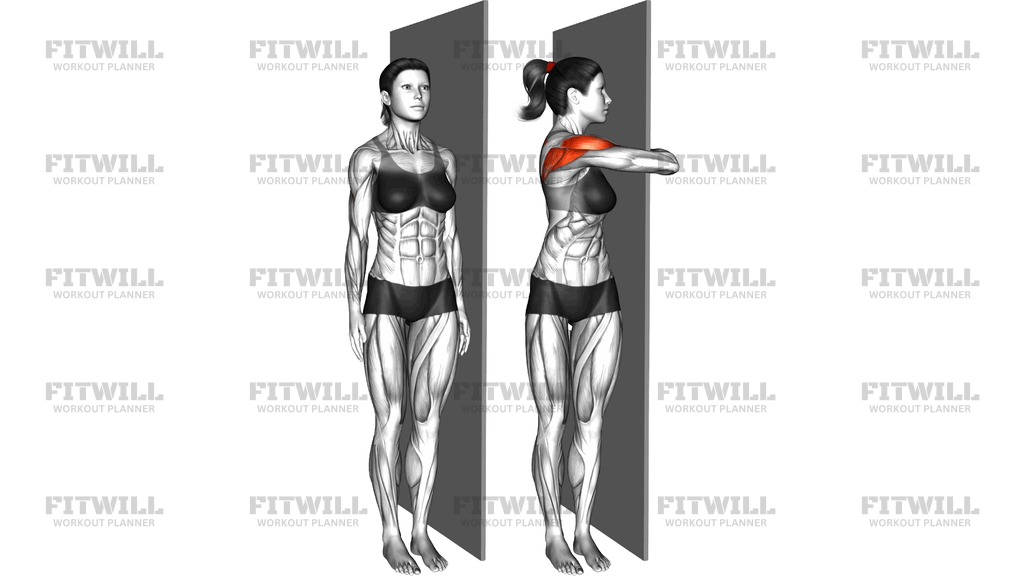
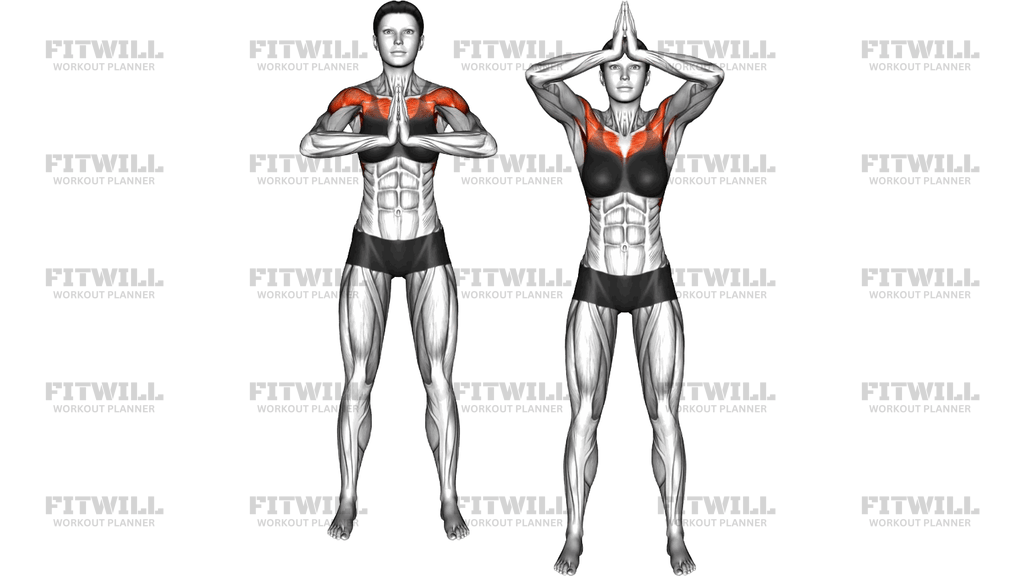
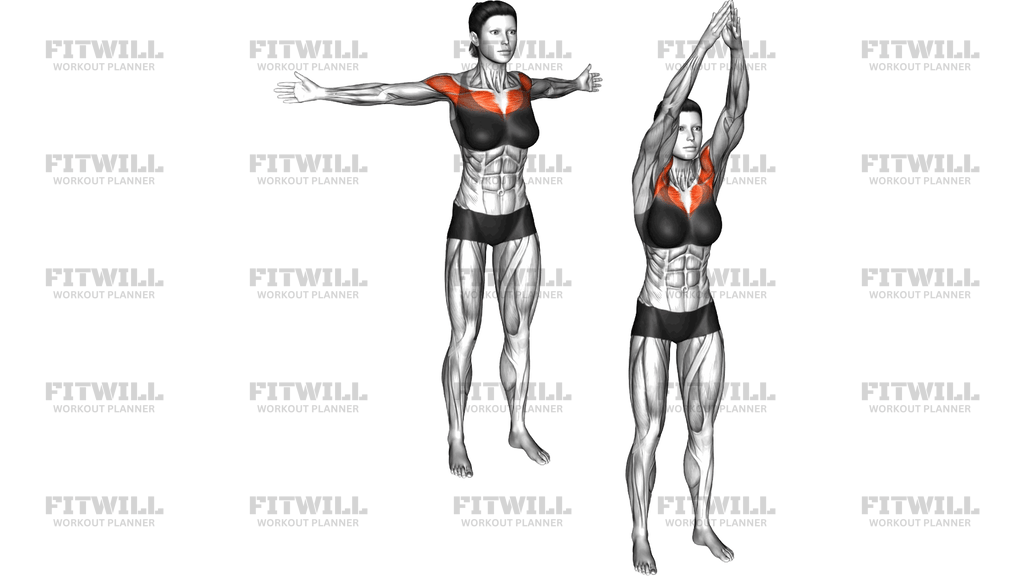
The Bodyweight Standing Straight Arm Chest High Fly is a standing chest movement performed without any equipment. You begin with your arms extended straight out to your sides at shoulder height, forming a T shape, then sweep both arms forward and upward in a wide arc until your hands meet overhead. The emphasis sits on the upper chest, near the collarbone, with the front of the shoulders assisting throughout the arc.
Because there is no external load, the resistance comes from the weight of your own arms and from how deliberately you contract the chest. That makes the exercise less about raw strength and more about control, range of motion, and learning what a genuine chest contraction feels like. When done slowly and with intent, the arms stay locked straight and the movement quality improves noticeably within a few sessions.
This exercise suits beginners who want to groove the chest fly pattern before touching a cable machine or dumbbells, lifters who want a low-fatigue warm-up before pressing work, and anyone training at home with no equipment. It is also a sensible option when the shoulders feel cranky under heavier fly variations, since the arc is unloaded and easy to scale back if anything pinches.
Setup matters more than it looks. A tall stance with the ribs stacked over the pelvis keeps the arc honest; if you lean back or flare the ribs to lift the arms higher, the work shifts away from the chest and into the lower back and shoulders. Shoulders should stay relaxed and down, away from the ears, for the entire rep. Shrugging is the most common fault here and it quietly removes most of the benefit.
To execute well, think of your hands tracing one continuous wide arc rather than two separate swings. Exhale as the arms rise, press the palms lightly together once they meet overhead, hold for a beat, then lower on the same smooth path. The descent is where most people rush, and rushing turns a chest exercise into a shoulder swing.
In practice, this movement works best for 10 to 20 controlled repetitions, either as a warm-up primer or as a finishing contraction after heavier chest work. It will not build muscle the way a loaded press can, but it teaches the adduction pattern that all chest fly variations depend on, and it does so with almost no joint stress.
[ Workout Log & Planner ]
Put your next workout in Fitwill
Keep your plan and training log ready when you are.


Instructions
- Stand tall with your feet hip-width apart, weight even across both feet, and your arms relaxed at your sides.
- Raise both arms straight out to the sides until they are level with your shoulders, palms facing forward, elbows fully locked, forming a wide T shape.
- Draw your shoulders down away from your ears, brace your core lightly, and stack your ribs over your hips so your torso stays upright.
- Inhale, then exhale as you sweep both arms forward and upward in a wide arc, keeping the elbows straight the entire time.
- Continue the arc until your hands meet overhead with your palms touching and your arms close to your ears.
- Press the palms lightly into each other at the top and hold the squeeze for one to two seconds, feeling the contraction in the upper chest.
- Reverse the path slowly, lowering your arms back out to the sides along the same wide arc until you return to the T position.
- Inhale on the way down, then reset your shoulders down and ribs stacked before starting the next rep.
Tips & Tricks
- If you feel the work mostly in the neck or the tops of your shoulders, you are shrugging. Drop the shoulder blades down before you start each rep and keep the traps quiet throughout the arc.
- Bent elbows are the most common cheat here. Once the elbows bend, the arc shortens and the chest loses tension; if you cannot keep them straight, slow the tempo down rather than shortening the path.
- The palm press at the top is where you create real tension. Push your hands into each other with moderate force for the one to two second hold instead of just letting them touch.
- Keep your back vertical. Leaning the torso backward to swing the arms higher turns this into a lower back and shoulder movement instead of a chest fly.
- Aim for roughly two seconds up and three seconds down. The lowering half is where the chest does most of its work in an unloaded fly, so do not let gravity take over.
- Think of one arc, not two arms. If each hand travels its own separate path, the palms often meet in front of the face instead of directly overhead.
- Stop the arc at the first point of shoulder pinching rather than forcing the hands all the way together. A slightly smaller arc done cleanly beats a full arc done with discomfort.
- Use this as a warm-up before bench presses or loaded flyes. Two or three sets of 12 to 15 slow reps pre-activates the chest without creating fatigue.
- If your shoulders fatigue before your chest, lower your starting position slightly so the arms begin just below shoulder height, then build the range up over time.
Frequently Asked Questions
Which muscles does the Bodyweight Standing Straight Arm Chest High Fly work?
The primary muscle is the upper chest, specifically the clavicular head of the pectoralis major, because the arms travel up and inward toward the head. The front shoulders assist through the whole arc, and the serratus anterior helps control the shoulder blades.
Can this exercise build muscle without any equipment?
It can improve muscle control, endurance, and movement quality, but the load from your arms alone is modest. Treat it as an activation or finishing exercise, and use loaded presses or flyes as your main muscle-building chest work.
Why do my shoulders burn more than my chest during the Bodyweight Standing Straight Arm Chest High Fly?
That usually means you are shrugging or bending the elbows, both of which shift the work to the front delts. Keep the shoulders pressed down, the arms dead straight, and slow the tempo so the chest does the steering.
Is this a good exercise for beginners?
Yes. It teaches the chest adduction pattern that cable and dumbbell flyes depend on, with zero equipment and very low joint stress, so it is an ideal first fly variation.
How many repetitions should I do?
Because the resistance is light, use higher reps: 12 to 20 per set with a slow two-second lift and three-second lowering. Stop when you can no longer keep the elbows straight and the shoulders down.
Where should I feel the contraction at the top of the movement?
You should feel it high on the chest, just below the collarbone, where the hands meet overhead. A burning sensation in the neck or traps signals that the shoulders have crept up toward the ears.
Can I replace cable flyes with the Bodyweight Standing Straight Arm Chest High Fly?
Not entirely. The movement path is similar, but a cable provides continuous tension that bodyweight cannot match. Use it to learn the pattern and warm up, then progress to loaded flyes when you need more resistance.
Is it safe for my shoulders?
It is one of the gentler chest exercises because there is no external load, but the overhead position is not comfortable for everyone. Shorten the arc so the hands meet only as high as is pain-free, and stop if you feel pinching.
How can I make the Bodyweight Standing Straight Arm Chest High Fly harder?
Press the palms together forcefully at the top for a longer hold, add pauses during the arc, or slow each rep to five or more seconds. These increase time under tension without changing the movement itself.