Dumbbell Incline Alternate Fly
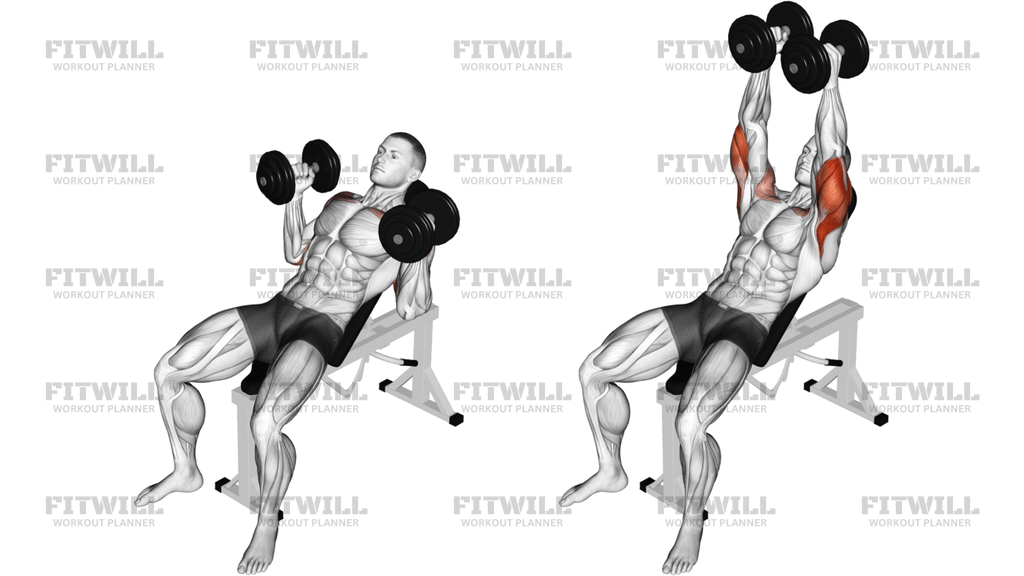
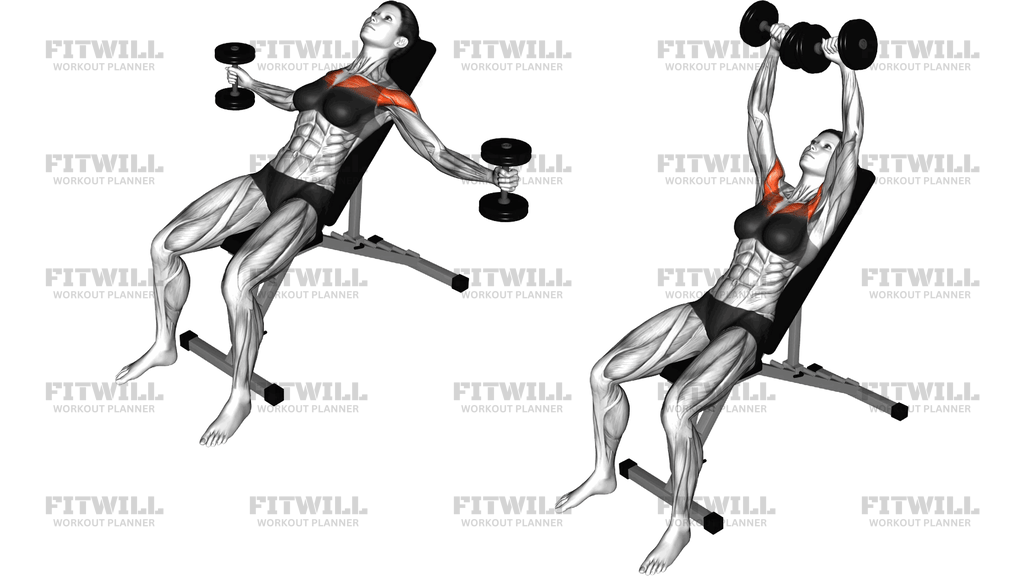
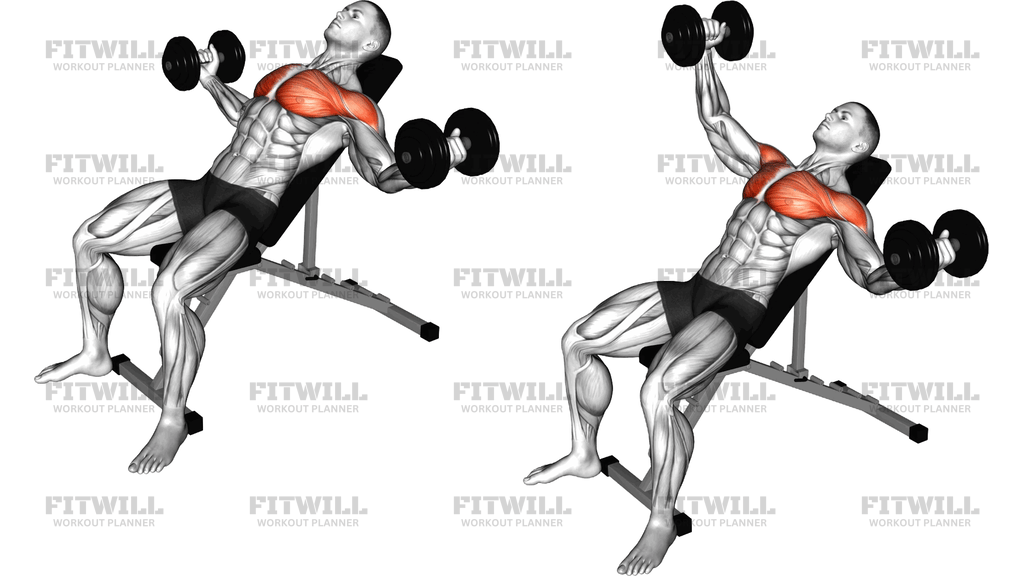
The Dumbbell Incline Alternate Fly is a chest isolation exercise performed on an incline bench, where you work one arm at a time through a wide arcing fly pattern instead of moving both dumbbells together. Lying back on a bench set to roughly 30-45 degrees with a dumbbell in each hand, you open one arm out to the side with a soft elbow bend, sweep it up until it hovers over your chest, and repeat on the other side while the opposite arm waits in the stretched position. This alternating rhythm sets it apart from the standard incline fly and creates a different training effect.
The incline angle shifts the emphasis toward the clavicular head of the pectoralis major — the upper chest fibers that run from your collarbone down toward the upper arm. These fibers are often underdeveloped compared to the mid-chest, which is why lifters who already flat-bench regularly tend to notice the most from incline work. The front delts assist on every rep, and the shoulder stabilizers work hard because each side must control its own dumbbell independently.
Working one side at a time exposes and corrects left-to-right strength differences that stay hidden during bilateral flys. The non-working arm also holds an isometric stretch at the bottom of the range, which builds control in the lengthened position and adds time under tension to the working set. Many lifters find they feel a cleaner chest contraction on this version because they can focus all their attention on one arm at a time rather than coordinating two.
Setup matters more than it might seem. Because you are holding two dumbbells while lying back on an angled bench, kicking the weights up into position with your knees and pressing them overhead before your first rep is the safest way to start. Your back should stay in contact with the pad, feet planted on the floor, and the elbow angle you set at the start should stay nearly constant throughout — the movement happens at the shoulder, not the elbow.
This exercise fits well as a secondary or finishing chest movement after heavier pressing, or as a primary upper-chest builder for lifters training with moderate dumbbells. The arc of the fly means the resistance peaks when your arms are spread wide, so choose a weight you can control at the stretched position rather than one you can only lift from the top. Controlled tempo and a slightly reduced range at the bottom protect the shoulder capsule while still giving the upper chest the stretch that makes this angle worthwhile.
[ Workout Log & Planner ]
Put your next workout in Fitwill
Keep your plan and training log ready when you are.


Instructions
- Set an incline bench to about 30-45 degrees and sit on it with a dumbbell in each hand resting on your thighs.
- Kick your knees up one at a time to swing the dumbbells back, lie onto the pad, and press both weights straight up so your palms face each other above your upper chest.
- Plant your feet flat on the floor, pull your shoulder blades gently back and down into the bench, and brace your core to stop your lower back from arching off the pad.
- Keeping a soft bend in your right elbow, lower that dumbbell in a wide arc out to the side until you feel a stretch across your upper chest, while your left arm stays extended holding its position overhead.
- From the stretched position, sweep the right dumbbell back up along the same arc until it hovers directly above your chest with your palms facing each other.
- Pause briefly at the top and squeeze your upper chest, then repeat the same arcing descent and lift with your left arm to complete one full rep.
- Continue alternating arms for your target number of reps, keeping the elbow bend on the working side fixed throughout so the motion comes from the shoulder joint.
- Exhale as you raise the dumbbell and inhale as you lower it out to the side, staying smooth rather than letting the weight drop.
- When your set is finished, bring both dumbbells to the top position, rotate your wrists so your palms face forward, and lower the weights to your chest before sitting up, or drop them carefully to the floor if they are heavy.
Tips & Tricks
- Do not flare the dumbbells below the level of the bench — once your upper arm passes parallel to the floor on an incline, you gain no extra chest stretch and only load the shoulder joint.
- If your lower back arches away from the pad as the weight descends, the dumbbell is too heavy or you are descending too fast; drop the load and slow the lowering phase to about two to three seconds.
- Keep the elbow angle locked in from the first rep. Straightening the arm as you fatigue turns the fly into a partial press and shifts load to the triceps and front delts.
- The non-working arm tends to drift inward toward midline as the set gets hard — check that it stays extended out in its arced position so both sides get the intended work.
- Let your head rest back on the pad instead of jutting the chin forward to watch the dumbbell; straining the neck is one of the most common flaws on incline fly variations.
- Squeeze the dumbbell handles firmly. A loose grip on a single-arm fly makes shoulder stabilization harder and encourages the elbow to bend under load.
- Aim to bring the dumbbells close together or nearly touching at the top of each rep rather than stopping short — the peak contraction at the top is where this movement earns its place in your program.
- Because each arm rests while the other works, your effective rest per arm is roughly doubled; use slightly heavier dumbbells than you would for a standard incline fly, but only if you can still control the bottom position.
- If the incline bench has no foot clearance, place your feet on the bench frame or a stable platform rather than letting them dangle, so your torso stays anchored.
Frequently Asked Questions
Which muscles does the Dumbbell Incline Alternate Fly target?
The primary target is the upper chest, specifically the clavicular head of the pectoralis major, with the front delts assisting on each lift. The shoulder stabilizers also work continuously since each arm controls its own dumbbell.
How is the Dumbbell Incline Alternate Fly different from a regular incline fly?
In the alternating version, one arm lowers into the stretch while the other holds overhead or works alone, doubling the time under tension and letting you concentrate on each side individually. It also reveals and helps fix strength imbalances between your left and right chest.
What angle should the bench be for the Dumbbell Incline Alternate Fly?
Set the bench between 30 and 45 degrees. Below 30 degrees the emphasis drifts toward the mid-chest, and above 45 degrees the front delts take over from the upper chest.
Is the Dumbbell Incline Alternate Fly suitable for beginners?
Yes, provided beginners start with light dumbbells and master the two-dumbbell setup before the first rep. Many beginners actually find the alternating version easier to learn because they only need to coordinate one moving arm at a time.
Why should I keep a bend in my elbow during the fly arc?
The slight, fixed elbow bend protects the elbow joint and keeps the resistance on the chest fibers. Straightening the arm under load strains the elbow and shifts work toward the triceps, while bending it too much turns the fly into a press.
How far should I lower the dumbbell on each rep?
Lower until your upper arm is roughly level with the bench pad and you feel a comfortable stretch across your upper chest. Going deeper on an incline fly adds stress to the shoulder capsule without much extra benefit for the chest.
What is the most common mistake on the Dumbbell Incline Alternate Fly?
Using too much weight and letting the dumbbell drop quickly to the bottom. Because the resistance is highest when the arms are wide, an uncontrolled descent is the main cause of lost tension and shoulder discomfort in this movement.
Can I substitute the Dumbbell Incline Alternate Fly if I have no incline bench?
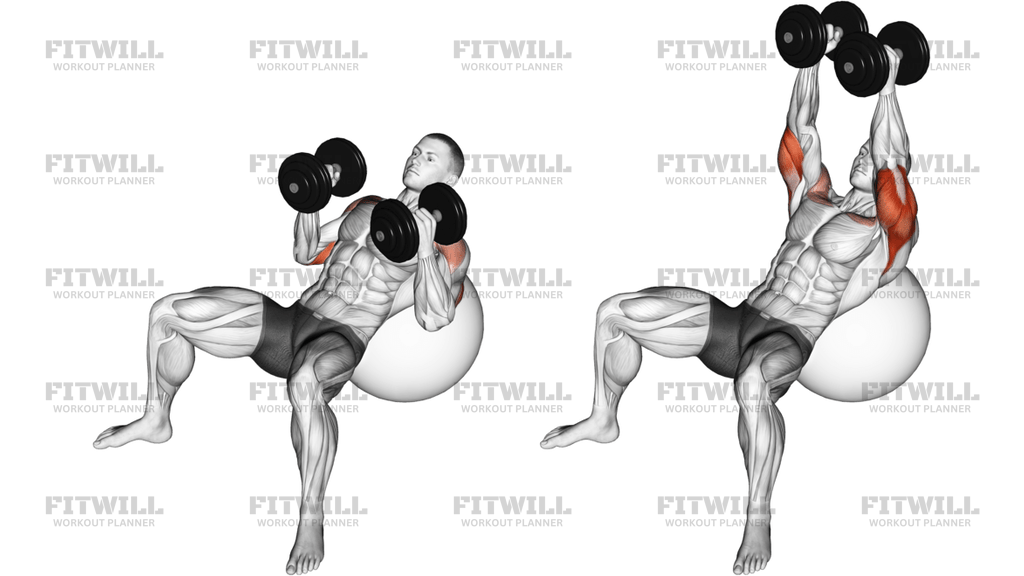
You can perform the same alternating fly pattern on a stability ball or a stacked, firmly secured bench set at an incline, though support is less stable. A low-to-high cable fly is a reasonable standing alternative that hits the upper chest from a similar line of pull.
Where should the Dumbbell Incline Alternate Fly go in my chest workout?
It works best after your main pressing exercises, when the chest is pre-fatigued but your stabilizers are still fresh enough to control the arc. As a strict isolation movement, it is less effective as your first heavy exercise of the day.
How do I get the dumbbells into position safely on an incline bench?
Sit on the bench with the dumbbells on your thighs, then kick each knee up one at a time to swing the weights back as you lie down, and press them overhead to start. To finish, bring the dumbbells back to your chest and sit up with them rather than twisting them out to the sides.