Dumbbell Incline Squeeze Press
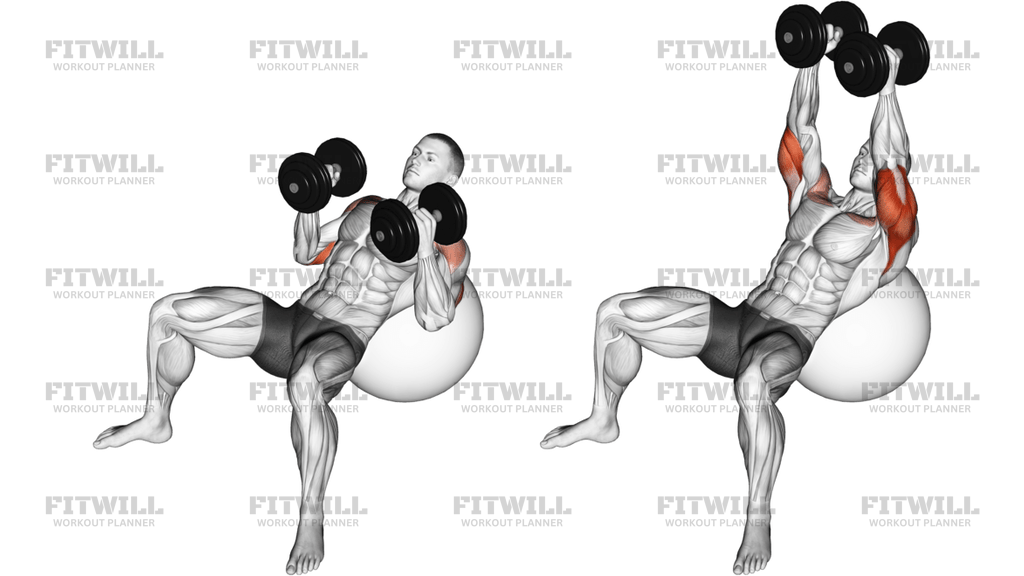
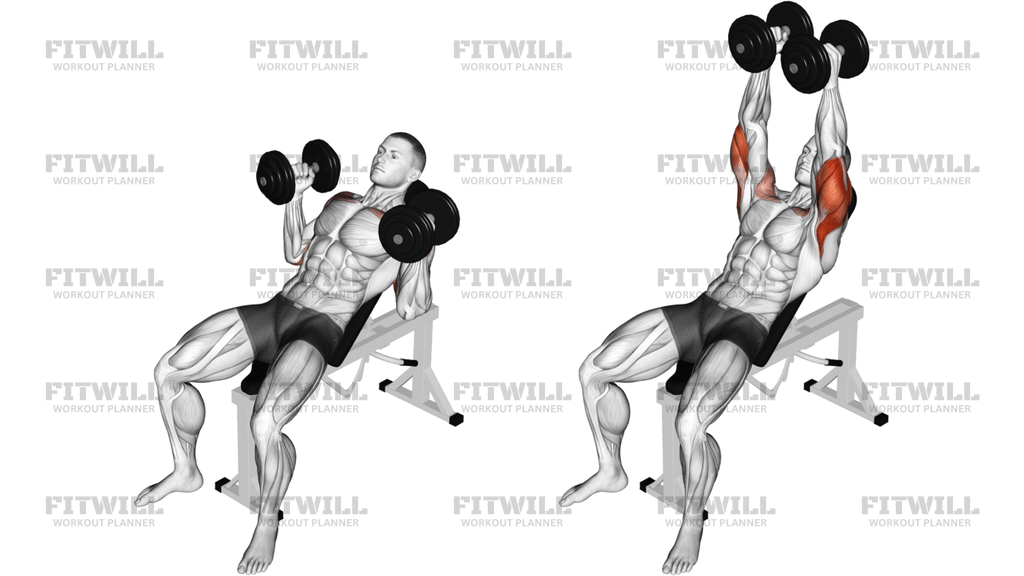
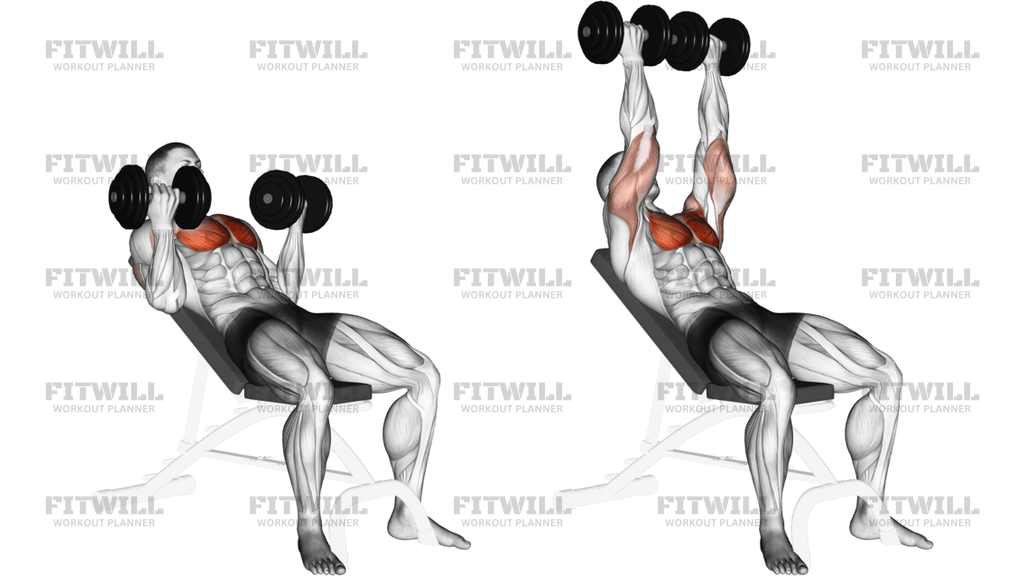
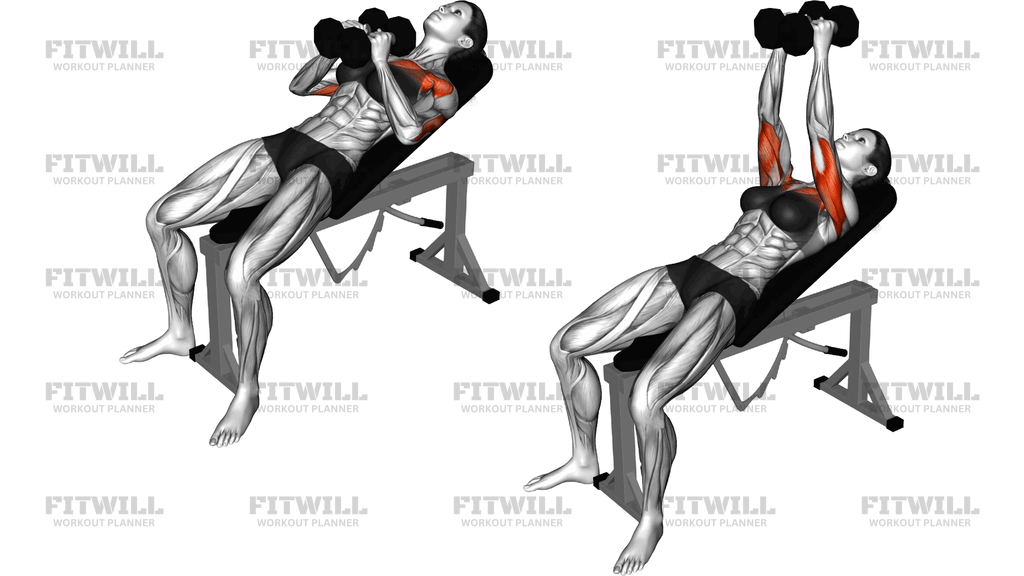
The Dumbbell Incline Squeeze Press is a chest press performed on an incline bench with two dumbbells pressed firmly against each other for the entire set. Instead of holding the weights at shoulder width like a standard press, you keep the inner heads of the dumbbells in constant contact, which forces your arms to work inward against each other. That inward squeeze changes the feel of the press completely: the chest, especially the upper portion, stays under tension through the whole range, and the triceps contribute heavily as you extend the arms overhead.
This movement is a great fit for lifters who feel flat presses mostly in their front shoulders, or anyone who struggles to feel their chest working with a regular dumbbell press. Because the squeeze creates constant tension even at the top of the rep, it works well with lighter weights and higher reps, making it useful for home training with a limited dumbbell set, for accessory work after heavier pressing, and for building that upper-chest line near the collarbone.
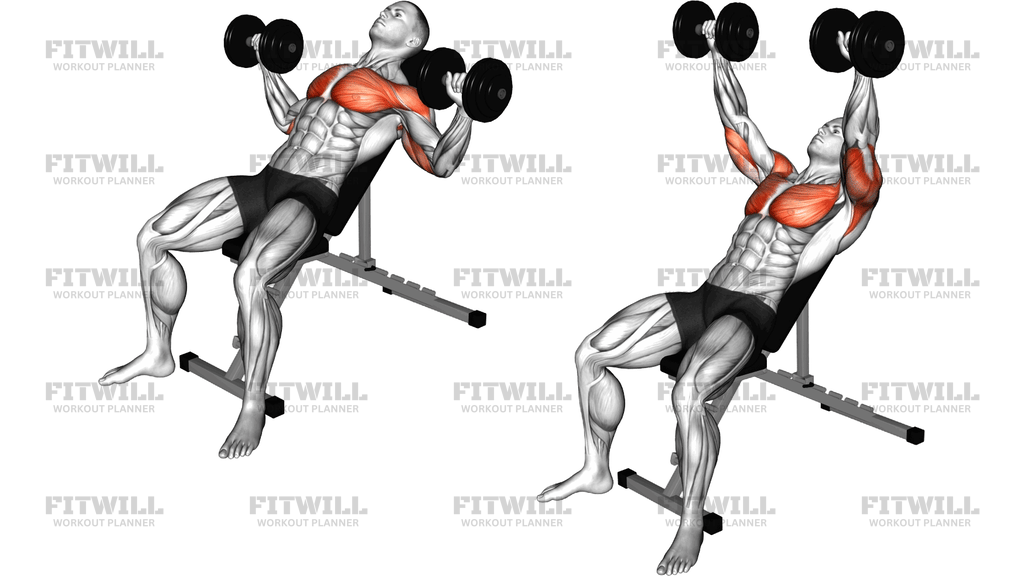
The setup matters more than it looks. The bench angle determines which part of the chest does the work: a moderate incline of roughly 30 to 45 degrees biases the clavicular head of the pectoralis major, while a steeper angle drifts the work toward the front shoulders. Your back and hips should stay planted on the bench, feet flat on the floor, with the dumbbells held vertically at chest level and their inner ends touching throughout.
To execute it well, press the dumbbells up in a slightly converging path while actively squeezing them together, then lower them under control until your upper arms are roughly level with your torso and the weights sit just inside your chest. The temptation is to let the dumbbells drift apart at the bottom or to turn the rep into a close-grip press with no squeeze at all — both quietly remove the point of the exercise. Keep the contact constant and the effort stays on the chest.
Because the hands are locked together in a neutral grip, the shoulder joint travels in a fairly shoulder-friendly path, which is one reason this variation is often tolerated well by lifters with cranky shoulders. Start with a pair of dumbbells noticeably lighter than your normal incline press weight, since the sustained squeeze fatigues the chest and triceps faster than you expect.
[ Workout Log & Planner ]
Put your next workout in Fitwill
Keep your plan and training log ready when you are.


Instructions
- Set an incline bench to about 30–45 degrees and sit back against it with a dumbbell in each hand, feet flat on the floor.
- Bring the dumbbells up to chest level, holding them vertically with their inner heads pressed firmly together, palms facing each other in a neutral grip.
- Pull your shoulder blades down and back into the bench, brace your core, and keep your head and hips in contact with the pad.
- Press the dumbbells up and slightly inward, squeezing the two heads together hard as your elbows extend.
- At the top, the dumbbells should still be in contact with each other, arms nearly straight but without locking the elbows hard.
- Lower the weights slowly along the same path until your upper arms are roughly level with your torso, keeping the inner heads touching the whole way down.
- Keep your elbows tucked at about 45 degrees relative to your torso rather than flaring them straight out to the sides.
- Exhale as you press up and inhale as you lower the dumbbells.
- Pause briefly at the bottom, re-squeeze the dumbbells together, and start the next rep.
- After the final rep, guide the dumbbells down to your chest, sit up, and set them on the floor with control.
Tips & Tricks
- Choose a lighter weight than your usual incline press — the constant inward squeeze adds work your chest and triceps are not used to, and form tends to break once the contact slips.
- The most common mistake is losing the squeeze as you fatigue, turning the set into a narrow neutral-grip press. If the dumbbells keep separating, the set is over or the weight is too heavy.
- Keep your wrists stacked over your elbows. Because the neutral grip pulls the hands close together, the elbows tend to drift outward and shift stress to the shoulders.
- If the dumbbells clank together loudly on each rep, you are probably relaxing the squeeze at the top. Maintain active pressure instead of just letting the weights rest against each other.
- Lower the dumbbells to just inside the line of your chest rather than deep below bench level — chasing extra depth on an incline press mostly loads the shoulder joint, not the chest.
- A bench angle above about 45 degrees turns this into more of a shoulder exercise. If you feel it mostly in your front delts, lower the incline before blaming your form.
- Press the dumbbells up slightly converging, not straight up or backward over your face. The bar path should finish roughly over your upper chest.
- Keep your feet planted and avoid pushing your hips up off the bench to force a heavy rep. If you need to hitch, drop the weight.
- Chalk or a towel on the inner heads can help if smooth-coated dumbbells keep slipping apart mid-set.
Frequently Asked Questions
What muscles does the Dumbbell Incline Squeeze Press work?
The primary work comes from the upper chest, with the triceps extending the elbows and the front shoulders assisting the press. The constant inward squeeze keeps the pecs under tension even at lockout.
Why press the dumbbells together instead of holding them apart?
The inward squeeze makes you actively adduct your arms, which adds continuous pec tension and a strong contraction at the top of each rep. With a normal press, tension drops off once the arms are extended.
Is the Dumbbell Incline Squeeze Press good for beginners?
Yes. It is a controlled, self-limiting movement that teaches you to feel your chest working, and it works well with light dumbbells. Beginners should master the squeeze at the bottom and top before adding load.
How heavy should I go on this exercise?
Use noticeably less weight than your regular incline dumbbell press — many lifters start at around half. The squeeze is the point, and once the dumbbells drift apart the set loses its purpose.
My dumbbells keep slipping apart during the set. What should I do?
Grip the inner heads firmly with your fingers wrapped around them, re-squeeze at the bottom of each rep, and consider a lighter weight. If smooth rubber-coated dumbbells are the issue, a chalked or textured pair helps.
What can I substitute if I only have one dumbbell or no bench?
A single dumbbell squeezed between your palms in a crushing-grip press works on a floor or any incline surface, and a plate squeeze press is a common alternative. The incline angle just shifts emphasis toward the upper chest.
Should my elbows flare out or stay tucked?
Keep them at roughly 45 degrees to your torso. Because the neutral grip already brings the hands close together, fully flared elbows push the shoulder joint into a less comfortable path.
Where should the dumbbells travel at the top of the press?
They should finish over your upper chest, still touching each other, rather than drifting back over your face or neck. Letting the path drift backward is a sign the weight is pulling you out of position.
Can I use the Dumbbell Incline Squeeze Press at the start of my workout?
It is usually better as a second or accessory chest movement after a heavier press, since the squeeze format rewards lighter loads and higher reps. Using it first tends to pre-fatigue the triceps before your main pressing.
How do I finish the set safely?
Lower the dumbbells to your chest with your elbows bent, then sit up from the bench and place them on the floor. Do not drop them to the sides while lying back, as that twists the shoulder joint under load.