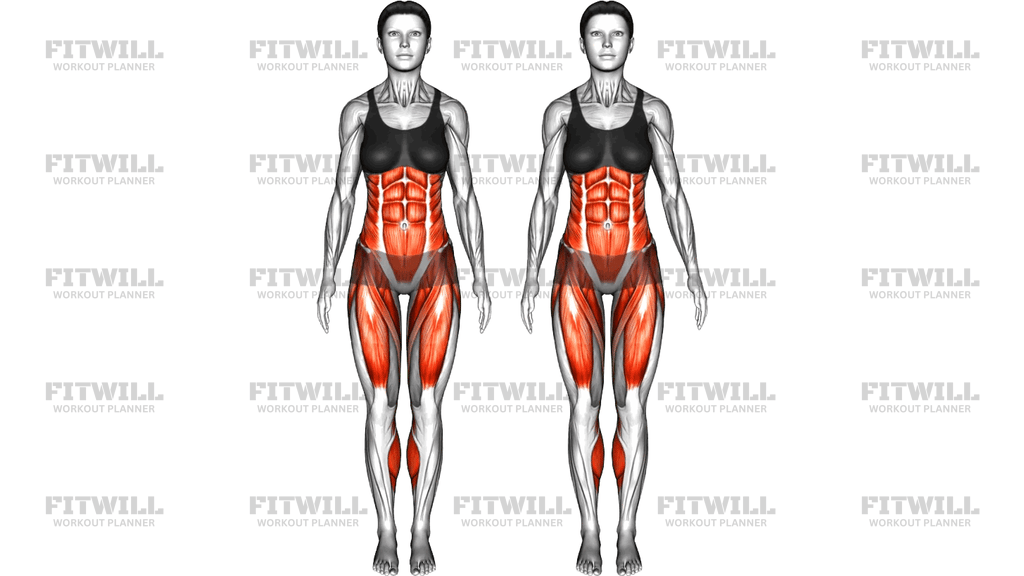
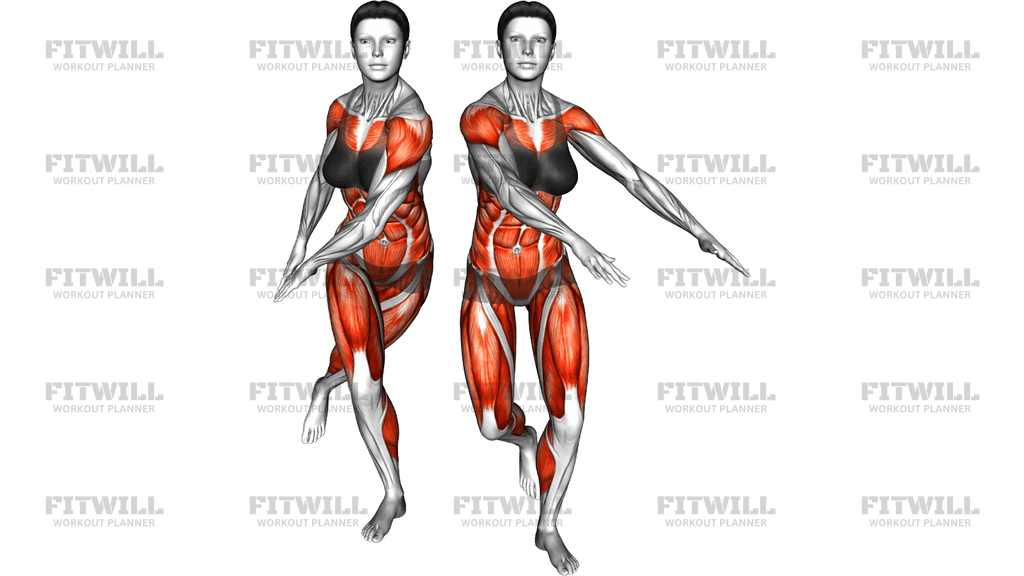
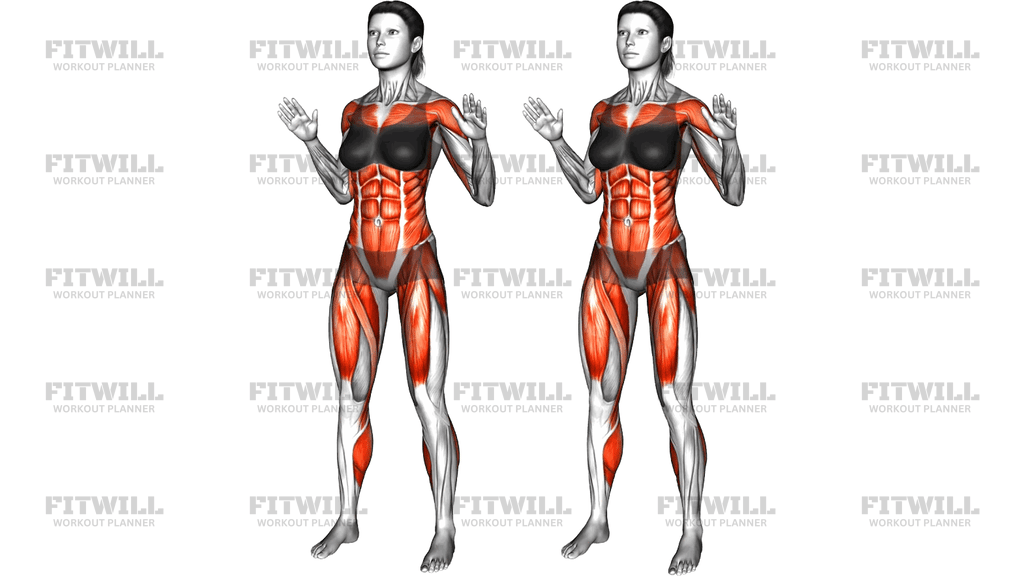
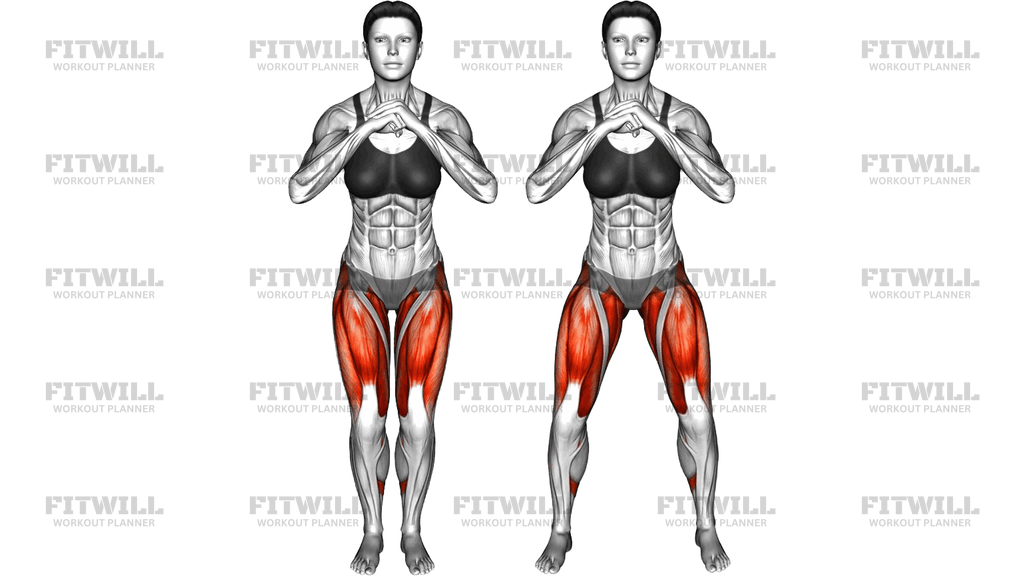
Bodyweight Lateral Step Up
The Bodyweight Lateral Step Up is a single-leg strength exercise performed by stepping sideways onto a flat bench or sturdy platform. Instead of facing the bench directly, you position yourself alongside it, place your inside foot on top, and drive through that leg to lift your body until you are standing tall on the bench. The arms reach forward for balance, and the working leg does the vast majority of the lifting.
Because you approach the bench from the side, the movement challenges your legs in the frontal plane, which most gym routines ignore. The lateral angle places extra demand on the hip abductors, particularly the gluteus medius, while the quads and glutes handle the upward drive. Your ankle and hip stabilizers work constantly to keep your pelvis level and your knee tracking over your toes.
This exercise suits a wide range of trainees. Beginners use it to build the single-leg strength needed for lunges and pistols. Runners, cyclists, and field-sport athletes use it to address side-to-side imbalances that forward-only training creates. It is also a common rehabilitation and prehabilitation choice for people working on knee control, since the height and load can be scaled simply by choosing a lower or higher platform.
Setup matters more than it first appears. Stand sideways to the bench with your inside foot fully planted on the surface, not just the toes. Keep your weight over the working leg from the first inch of the rep, because pushing off the floor with the trailing leg turns a step up into a two-legged hop and hides how strong the working side really is.
To execute it well, shift your weight onto the bench foot, lean slightly forward, and press the whole foot down as you straighten the leg. Bring the trailing foot up to meet the working foot, pause briefly at the top with your hips fully open, then lower yourself back to the floor with control rather than dropping. The lowering phase trains just as much as the climb.
Use the Bodyweight Lateral Step Up as a warm-up activation drill, as a main lower-body movement in minimal-equipment workouts, or as a high-rep finisher. Keep the bench at knee height or lower at first, and only progress the height once you can complete every rep without swinging, hopping, or letting the knee cave inward.
[ Workout Log & Planner ]
Put your next workout in Fitwill
Keep your plan and training log ready when you are.


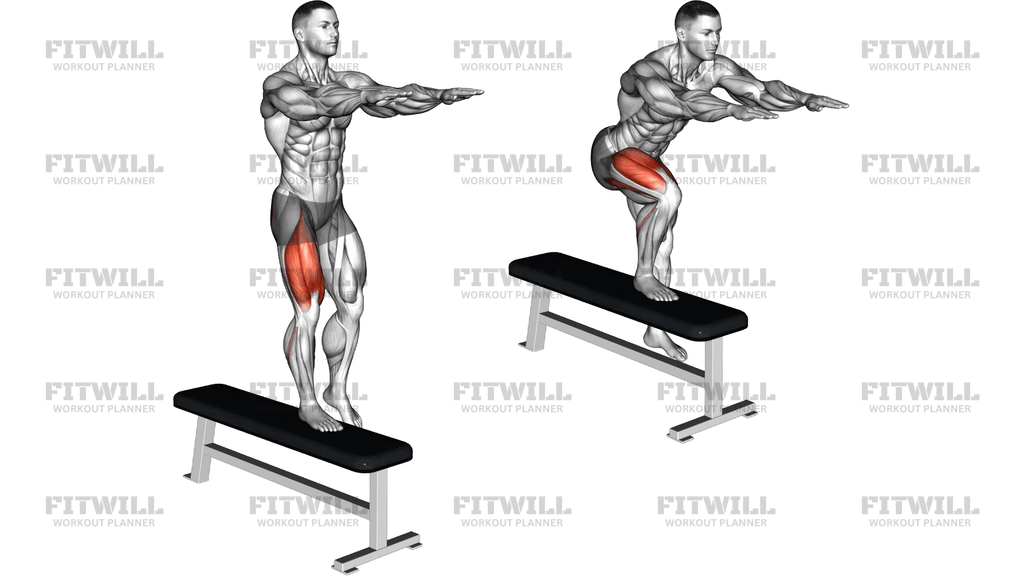
Instructions
- Stand sideways to a flat bench with your inside foot planted fully on the bench surface and your outside foot flat on the floor, feet hip-width apart in a staggered position.
- Extend both arms straight forward to about shoulder height to counterbalance your torso, and keep your chest lifted with your gaze ahead.
- Brace your core lightly and shift your body weight completely over the foot on the bench before you start the lift.
- Press through the entire foot on the bench and drive your body upward, letting the knee travel over the toes without collapsing inward.
- Lift the trailing foot off the floor and bring it up beside the working foot so you finish standing tall on the bench with hips fully extended.
- Pause for a second at the top and keep your weight balanced over the leg that did the work.
- Lower the trailing foot back to the floor slowly, resisting with the working leg for a controlled descent of two to three seconds.
- Exhale as you step up and inhale as you lower yourself back down.
- Complete all repetitions on one side, then reposition to the other side of the bench and work the opposite leg.
Tips & Tricks
- Plant the whole foot on the bench, not just the ball, so you can push through the heel and midfoot instead of tipping forward onto the toes.
- The most common mistake is pushing off the floor leg. Keep that foot lightly touching or hovering so the bench-side leg does all the work.
- If your knee drifts inward as you climb, imagine spreading the floor with the bench foot and drive the knee out over the second and third toes.
- Lower the bench height before you lower your standards. A shin-to-knee-height step lets you keep clean form on every rep.
- Do not let the trailing foot slam down on the descent. If it lands hard, you are dropping rather than lowering with the working leg.
- Keep the forward arm reach relaxed. Tensing the shoulders and shrugging wastes balance rather than adding it.
- Briefly squeeze the glute of the working leg at the top to make sure the hip finishes fully open instead of staying slightly bent.
- Alternate which leg starts each set so one side never quietly gets more volume than the other.
- Slow the lowering phase down before adding repetitions. Eccentric control is where knee stability is actually built in this movement.
Frequently Asked Questions
Which muscles does the Bodyweight Lateral Step Up work?
The quadriceps and glutes do the main lifting, with the gluteus medius on the outside of the hip working hard to keep the pelvis level. The calves, hamstrings, and deep core stabilize throughout the climb and descent.
How high should the bench be for the Bodyweight Lateral Step Up?
Start with a bench around shin to knee height so you can plant your full foot and control the descent. Increase the height only when every rep is smooth and your knee tracks cleanly over your toes.
Why is the step performed laterally instead of facing the bench?
The side-on position trains the legs and hips in the frontal plane and loads the outer hip muscles more than a front-facing step up. This helps correct left-to-right imbalances and improves knee control from an angle most exercises miss.
Can beginners do the Bodyweight Lateral Step Up?
Yes, it is one of the best entry points to single-leg training. Use a low step, hold a wall or rack lightly for balance if needed, and focus on controlled lowering before chasing more reps.
Why does my trailing leg feel like it is doing half the work?
That is the most common fault with this exercise. Keep the floor foot only lightly touching or hovering, and consciously push the whole body up through the foot on the bench so the working leg owns the rep.
My knee caves in when I step up. How do I fix it?
Slow the tempo down, lower the step height, and cue the knee to travel out over the toes rather than inward. Weak hip abductors are usually the cause, and this exercise itself strengthens them when performed with attention.
What can I use instead of a flat bench?
Any stable platform around knee height works, such as a stair, a low plyo box, or a sturdy bench. Avoid anything that rocks or slides, and make sure both feet fit fully on the surface.
Is the Bodyweight Lateral Step Up safe for the knees?
For most people it is a knee-friendly exercise because the load is your own bodyweight and the range can be limited by step height. Keep the movement pain-free, control the lowering phase, and choose a lower step if you feel any pinching or discomfort.
Should I do the Bodyweight Lateral Step Up slowly or quickly?
Perform the climb with intent and the descent slowly, around two to three seconds down. Explosive step ups have their place, but earn them only after slow, controlled reps look identical on both sides.