Frog Crunch
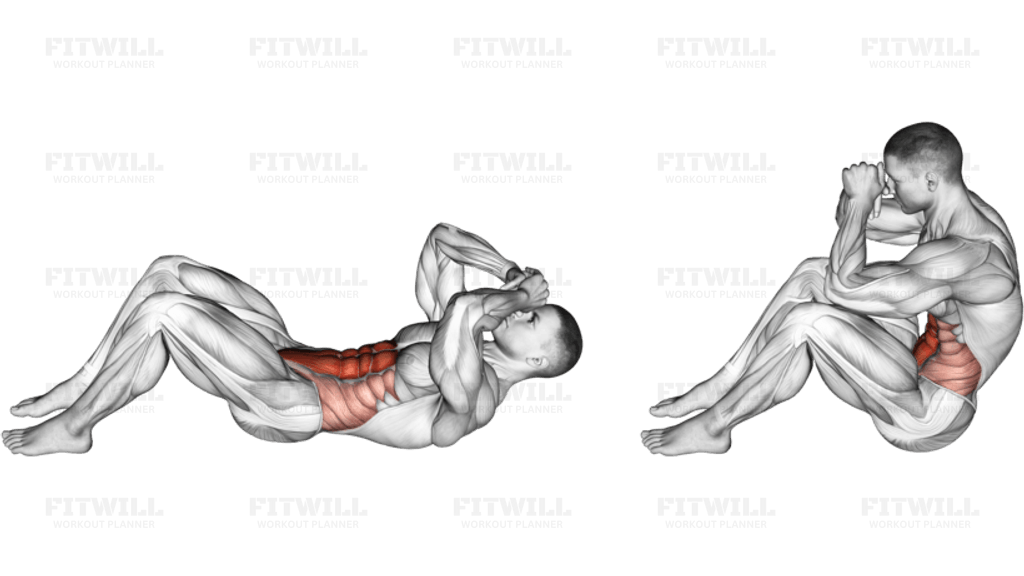
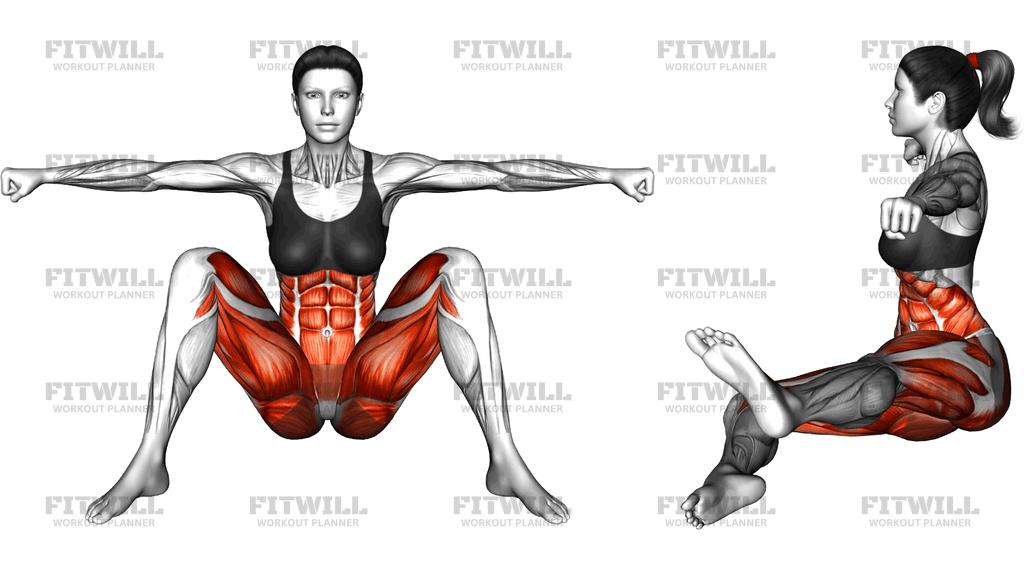
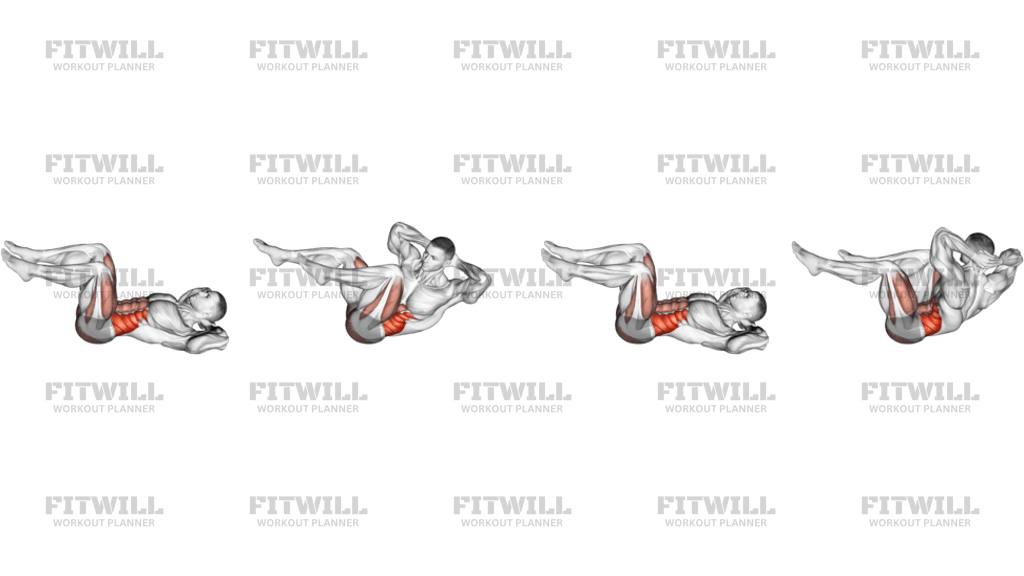
The Frog Crunch is a floor-based abdominal exercise where you lie on your back with the soles of your feet pressed together and your knees dropped out wide, then curl your torso up to reach your hands toward your feet. The frog leg position is what sets this apart from a standard crunch: with the hips externally rotated and the feet together, the hip flexors and inner thighs sit in a shortened position, which forces the rectus abdominis to do most of the work of lifting the torso.
This movement is a good fit for anyone who wants to train the abs directly without loading the spine with weight. Because the legs stay still and anchored by their own position, there is no need to stabilize a hanging or elevated lower body, which makes it easier to focus purely on the curling action of the trunk. It works well as a mid-rep burner in a core circuit, as a finisher after heavier compound lifts, or as a step up from basic crunches for people who find regular crunches too easy or too hip-flexor dominant.
The setup matters more than it looks. Lying flat on your back with arms extended overhead behind you lengthens the distance the abs have to travel, and letting the knees fall open to the sides removes the ability to cheat by driving the thighs toward the chest. If your knees drift forward or your feet separate, the hip flexors take over and the crunch turns into a partial sit-up. Keep the heels pulled in close to the body so the frog position holds itself.
To execute it well, think about peeling your head, shoulders, and upper back off the floor one segment at a time rather than yanking the head forward. Your hands travel along the inside of your legs toward your feet, and the end position is a rounded upper spine with your fingertips reaching at or past your toes. Exhale hard on the way up and let the ribcage sink toward the pelvis. Lower back down under control until your arms are stretched overhead again, and reset your breathing before the next rep.
Common use cases include home workouts where no equipment is available, warm-up activation before training, and high-rep ab sessions where the goal is time under tension rather than load. If you are new to the movement, a reduced range is fine: curl only until your shoulder blades clear the floor and build up from there. If your neck fatigues before your abs do, support your head lightly with one hand or reduce the range rather than pulling on your head.
From a safety standpoint, keep the movement slow enough that your lower back stays in contact with the floor throughout. If you feel the lumbar spine arching or lifting as you reach overhead, stop at a shorter arm angle where you can keep the ribs down. People with hip or groin tightness may find the wide-knee position uncomfortable, and can simply narrow the knee angle slightly while keeping the soles of the feet together.
Fitwill
Log Workouts, Track Progress & Build Strength.
Achieve more with Fitwill: explore over 9600 exercises with images and videos, access built-in and custom workouts, perfect for both gym and home sessions, and see real results.
Start your journey. Download today!




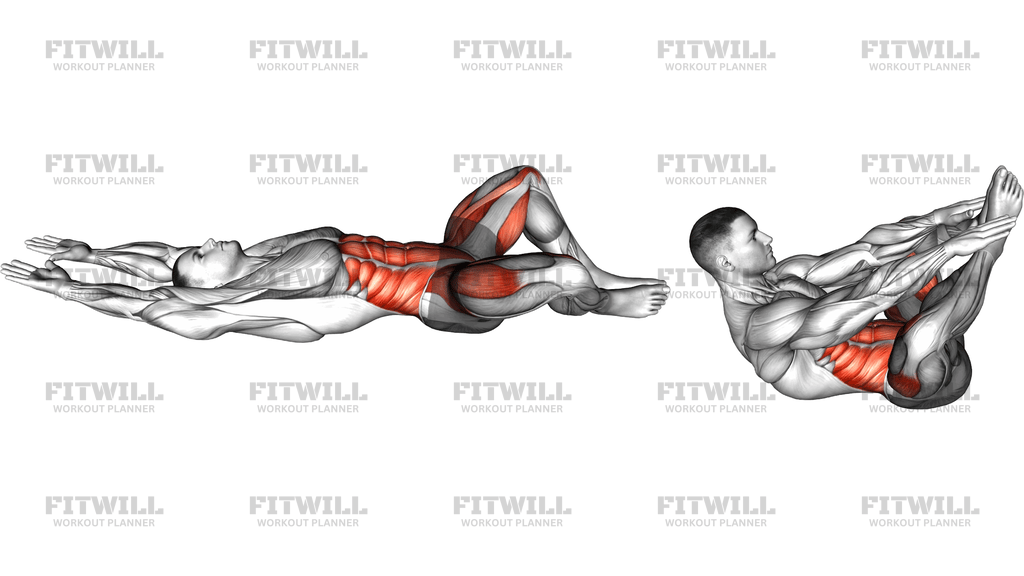
Instructions
- Lie flat on your back on an exercise mat with your legs bent and the soles of your feet pressed together.
- Let your knees fall open toward the floor on both sides so your legs form a diamond, and pull your heels in close to your body.
- Extend both arms straight overhead behind your head with your palms facing up, keeping your lower back and hips in contact with the floor.
- Brace your abdominal muscles and exhale as you curl your head, shoulders, and upper back up off the mat.
- Reach your hands forward along the inside of your legs toward your feet, rounding your upper spine as you rise.
- At the top, your fingertips should reach toward or touch your toes, with your torso curled and your shoulder blades well off the floor.
- Pause briefly at the top and squeeze your abs rather than holding your breath.
- Inhale as you lower your torso back down slowly, reversing the path until your arms are stretched overhead and your upper back rests on the mat.
- Reset the frog position if your knees have drifted, then begin the next rep from the fully stretched position.
Tips & Tricks
- If your knees keep creeping up toward your chest, press them gently outward again at the start of each rep so the frog position stays intact and the hip flexors cannot take over.
- Curl your ribcage toward your pelvis instead of leading with your chin; if your neck burns before your abs, cradle the back of your head with one hand without pulling.
- Keep the heels pulled close to your glutes. Feet drifting away from the body turns the frog crunch into a partial sit-up and reduces the ab emphasis.
- Do not slam your knees toward the floor to force a deeper stretch. Let them fall under gravity, and a wider comfortable angle is enough.
- Reach toward your toes, not past them at all costs. Overshooting usually means your lower back is arching off the floor to buy extra range.
- Move at a tempo of roughly one second up and two seconds down. Rushing the return lets momentum replace the eccentric work of the abs.
- Exhale sharply as you curl up. Holding your breath at the top tends to keep the ribs flared and shortens the contraction.
- If you cannot keep your lower back flat with arms fully overhead, start with your hands by your chest and extend them only as your mobility improves.
Frequently Asked Questions
What muscles does the Frog Crunch work?
The primary muscle is the rectus abdominis, the front wall of the abs. The lower portion of the abs, the obliques, and the hip flexors assist, though the shortened frog-leg position limits how much the hip flexors can contribute.
Why are the knees turned out and the soles of the feet together in the Frog Crunch?
This frog position externally rotates the hips and shortens the hip flexors, which prevents them from dominating the lift. That forces the abdominals to curl the torso, and it also keeps the legs stable without you needing to hold them in place.
Is the Frog Crunch good for beginners?
Yes, as long as the range is reduced. Beginners can curl only until the shoulder blades clear the mat and keep the hands near the chest instead of reaching overhead, then progress to the full reach as the abs get stronger.
Why do I feel my neck more than my abs during the Frog Crunch?
This usually means the head is being led forward instead of the ribcage curling first. Cradle the back of your head lightly with one hand, look toward your knees rather than your feet, and focus on rounding the upper spine as you rise.
Should my knees touch the floor during the Frog Crunch?
No, and for most people they will not. The goal is simply to let the knees fall open naturally under gravity; forcing them down only stresses the inner thighs and hip joints without improving the ab contraction.
How is the Frog Crunch different from a regular crunch?
In a regular crunch the legs are typically bent with feet flat, and the hip flexors help pull the torso up. In the Frog Crunch the turned-out legs neutralize that assistance, and the overhead arm reach adds range, so the abs work harder for the same bodyweight.
Can I do the Frog Crunch every day?
Since it is a bodyweight movement, frequent practice is generally fine, but the abs still need recovery like any other muscle. Two to four sessions per week with adequate rest between hard sets is a sensible starting point.
What can I substitute if the frog leg position bothers my hips?
Keep the soles of the feet together but narrow the knee angle, or switch to a standard crunch or reverse crunch with bent legs. The key elements are the spinal curl and the controlled reach, not a specific knee width.
How many reps of the Frog Crunch should I do?
Aim for sets of 10 to 20 controlled reps, stopping when your form breaks down rather than when you hit an exact number. Because the load is your bodyweight, tempo and full range matter more than rep count.