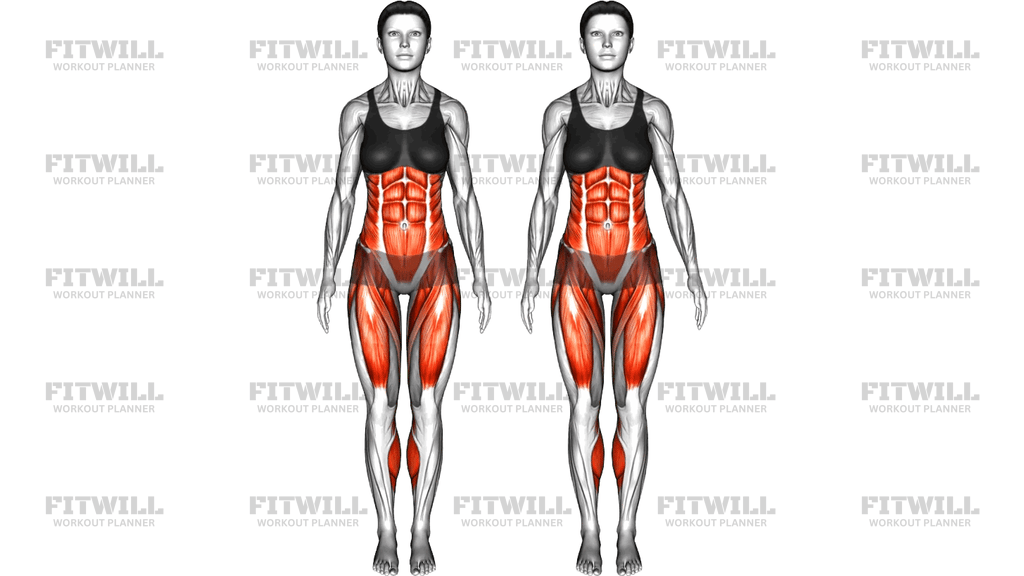
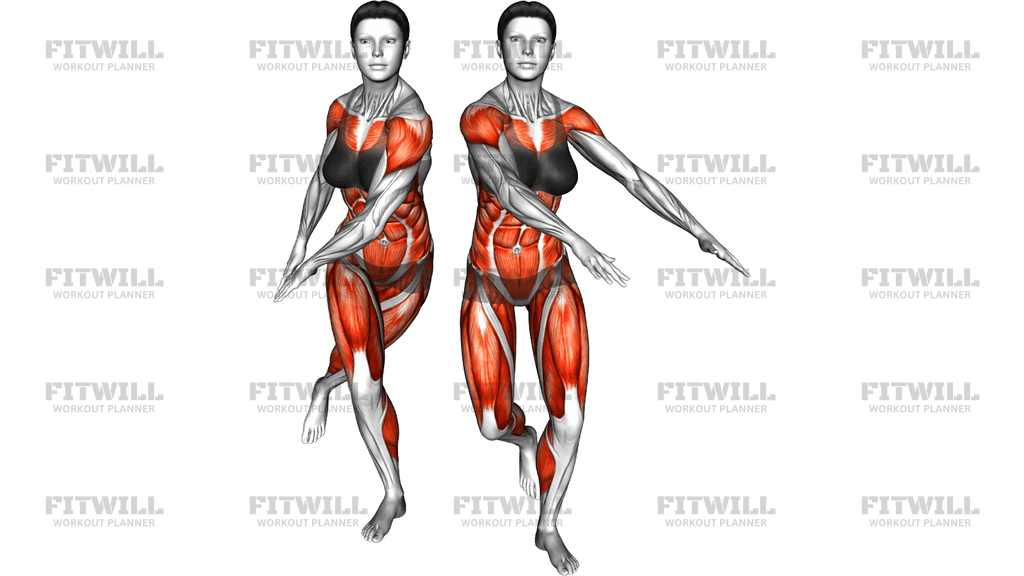
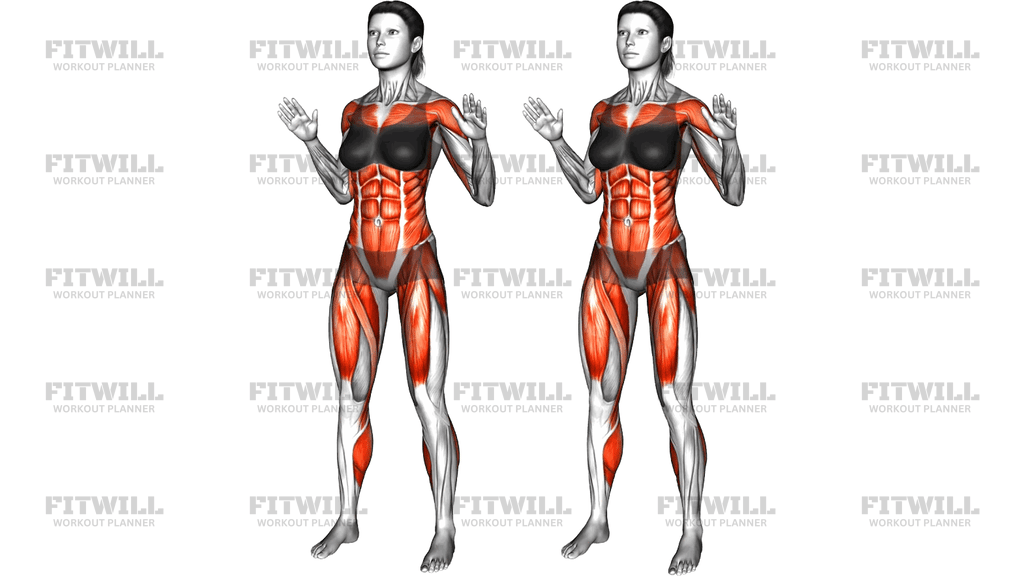
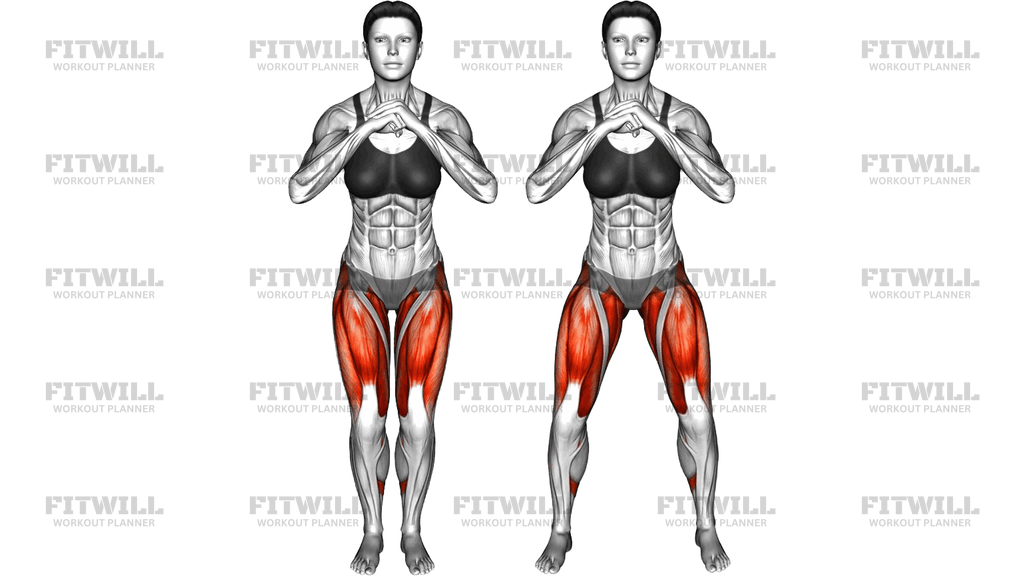
Side Step Sprinting Arms
Side Step Sprinting Arms is a bodyweight coordination drill that combines a lateral stepping pattern with the arm action of sprinting. You stand tall, step out to one side, and drive your bent arms in the alternating front-to-back swing you would use while sprinting, all while keeping your trunk braced and upright. The result is a movement that raises your heart rate quickly while challenging your ability to keep the upper and lower body working on opposite rhythms.
This drill is especially useful for athletes who need to link footwork with arm mechanics — field and court sport players, sprinters working on arm drive, and anyone doing general conditioning. Because the legs move sideways while the arms pump forward and back, it also trains cross-body coordination: the opposite arm and leg must stay synchronized, which reinforces the diagonal patterns used in running and cutting.
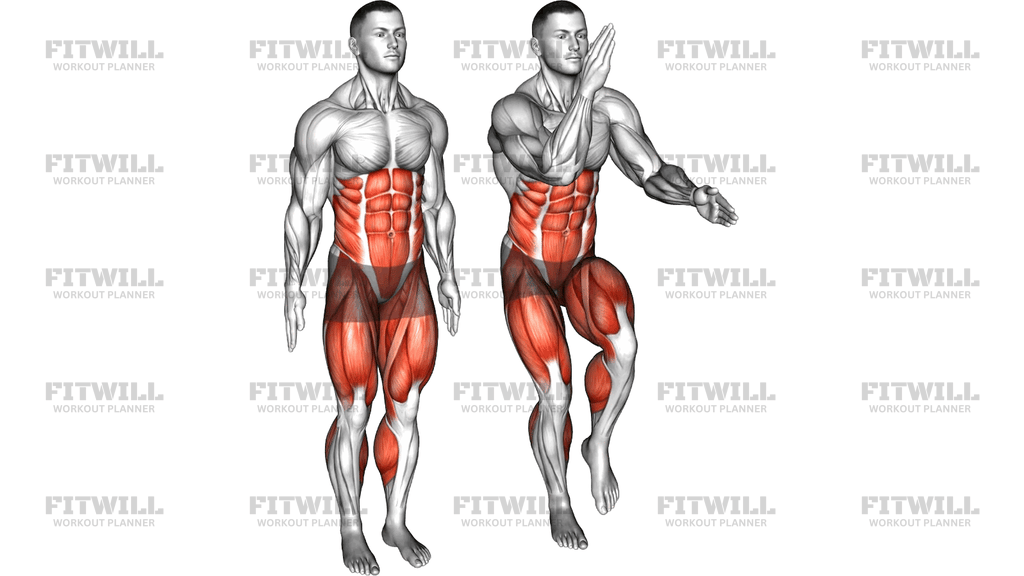
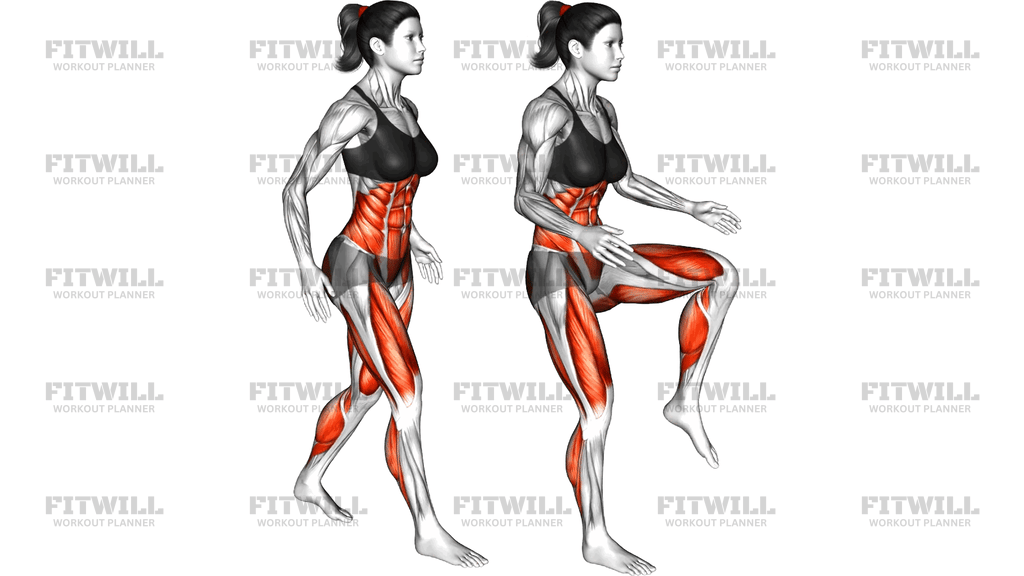
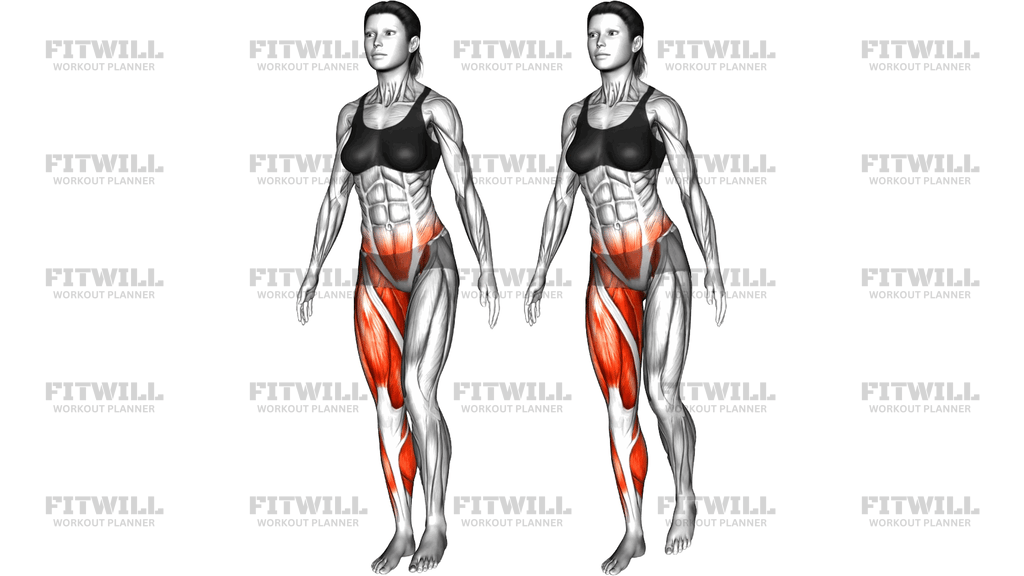
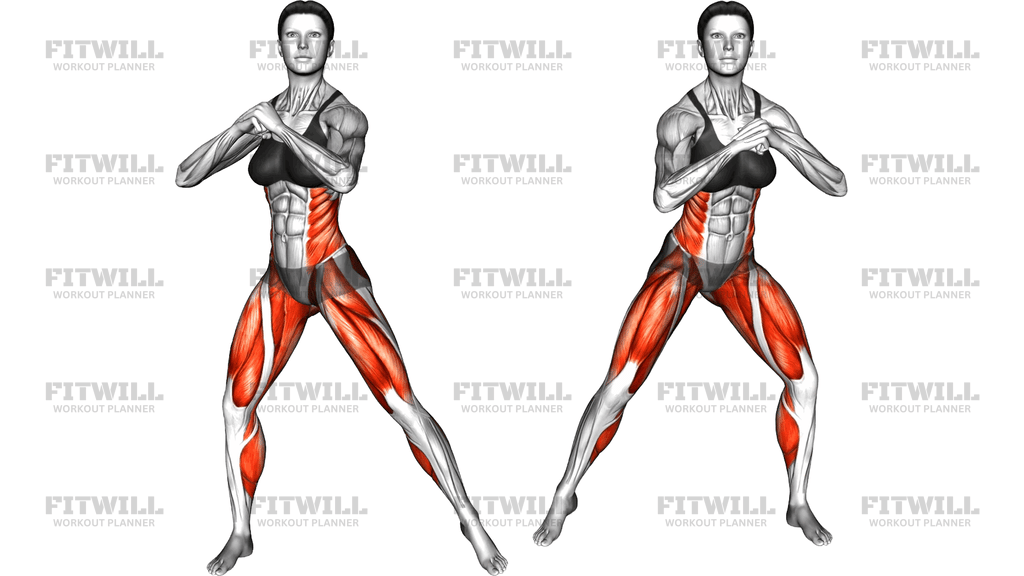
The main work comes from the quads and hips as you push off and step out, the calves as they control each landing, and the abdominals and obliques as they hold your torso steady against the twisting pull of the arm swing. The shoulders and arms do steady work holding the sprint position, but the emphasis is on rhythm and posture, not upper-body strength.
Setup matters more than it looks. A tall spine, soft knee bend, and elbows held close to roughly 90 degrees are what separate a crisp, athletic rep from a sloppy shuffle with flailing arms. Keep your weight over the balls of your feet so you can change direction instantly, and keep your head and chest facing forward rather than rotating with each step.
A good rep looks like this: step out to the side, swing the opposite arm up toward your chin while the other arm drives back, then bring your feet together and repeat on the other side. Stay light and quick rather than deep and slow — this is a rhythm drill, not a lunge. Beginners can start with 20–30 seconds of continuous side steps; more advanced users can go faster, wider, or longer while holding the same arm mechanics.
Because it needs no equipment and only a few feet of space, Side Step Sprinting Arms fits easily into warm-ups, circuit training, or halftime-style conditioning blocks. If your knees or ankles are sensitive, keep the steps short and stay on a forgiving surface, and stop if you feel any sharp joint pain rather than muscle effort.
[ Workout Log & Planner ]
Put your next workout in Fitwill
Keep your plan and training log ready when you are.


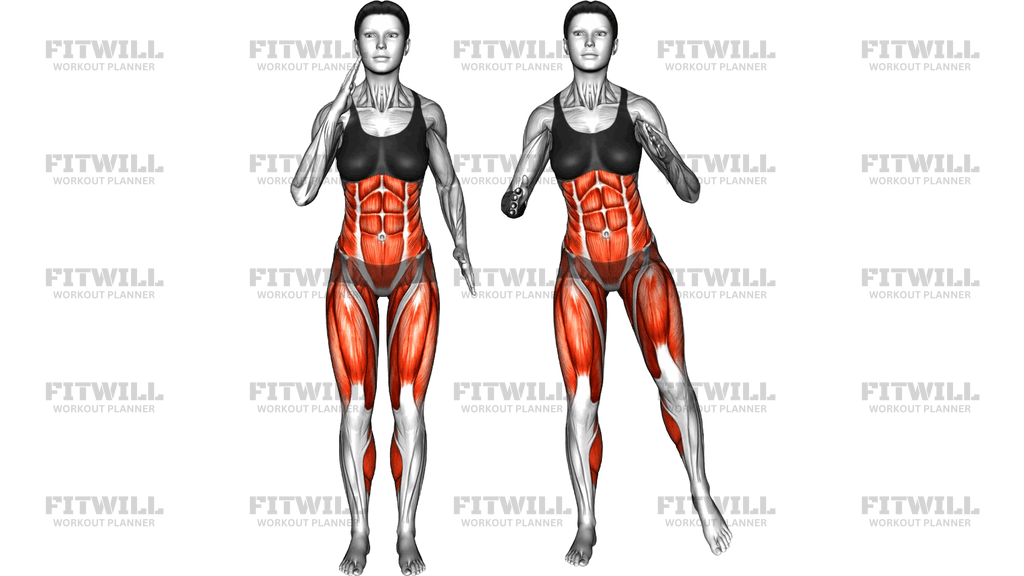
Instructions
- Stand with your feet hip-width apart on a clear, non-slip surface, knees slightly bent and your weight on the balls of your feet.
- Bend your elbows to about 90 degrees and lift your arms so one hand is near your chin and the other is back by your hip, matching a sprinting arm position.
- Brace your abdominals lightly and keep your chest tall, eyes forward, with your shoulders relaxed away from your ears.
- Step your right foot out to the side, then bring your left foot toward it — or step together, depending on the rhythm you want — while swinging your arms in opposition: right arm back as left arm drives up.
- Keep the arm swing crisp and front-to-back at chest height, with elbows brushing past your ribs rather than swinging across your body.
- Immediately repeat the side step toward the left, switching your arm drive so the opposite arm comes up, staying light on the balls of your feet.
- Exhale sharply with each step and inhale during the brief transition between sides, keeping your breathing steady as the pace builds.
- Continue alternating side steps and arm swings for your chosen time or rep count, staying quiet on your landings.
- To finish, slow the step rate over a few seconds, let your arms drop, and stand still for a moment to bring your breathing back down before your next set.
Tips & Tricks
- The most common breakdown is the arms drifting across the front of your body — correct it by pretending to brush your hip pocket on the backswing and driving toward your chin on the front swing.
- If your torso starts twisting with each step, your abdominals have stopped bracing; narrow the step width slightly and refocus on keeping your chest and eyes facing forward.
- Stay on the balls of your feet the entire time. Heavy, flat-footed landings turn a quick drill into a slow grind and load your knees more than necessary.
- Speed comes from the legs, but rhythm comes from the arms. If the drill feels disorganized, slow your feet down and exaggerate the arm swing until the two sync up.
- Avoid standing fully upright between steps — keeping a shallow knee bend throughout is what lets you push sideways quickly and protects your joints on each landing.
- Keep your elbows at roughly 90 degrees. Straight or overly bent arms slow the swing and change the sprint mechanics you are trying to reinforce.
- Start with a small side step and a moderate pace for your first set, then widen the step or speed up only when the arm-leg pattern stays clean.
- If you are using this as a warm-up, keep it under 30 seconds per round; if it is your main conditioner, extend to 40–60 seconds while keeping the same step quality.
Frequently Asked Questions
What muscles does Side Step Sprinting Arms work?
It primarily targets the quads and hips through the side-stepping action, with strong support from the calves on each landing and the abs and obliques holding your torso stable. The shoulders and arms stay active from the continuous sprint-style arm swing.
Is Side Step Sprinting Arms good for beginners?
Yes. Beginners should use a narrow side step and a slower arm swing for 20–30 seconds, focusing on keeping the opposite arm and leg coordinated. Once the pattern feels automatic, increase the pace or step width.
How far should I step to the side during Side Step Sprinting Arms?
Start with a step of roughly shoulder width and only widen it if you can keep your knees soft, your chest tall, and the arm swing clean. A wider step adds demand on the glutes and outer hips but makes rhythm harder to maintain.
Why do the arms move forward and back while the legs step sideways?
That opposing-arm, opposite-leg pattern is how you sprint and cut in sports, so the drill trains your body to hold sprint mechanics while the feet handle lateral footwork. It builds cross-body coordination as well as conditioning.
How do I keep my balance during Side Step Sprinting Arms?
Keep your weight over the balls of your feet, your knees slightly bent, and your head still with your eyes on a fixed point ahead. If you still wobble, shorten the step and slow the arm swing until your footing is secure.
What is the most common mistake with this drill?
Letting the arms swing loosely across the body and letting the torso rotate with each step. Fix both by holding the 90-degree elbow position, driving hands toward your chin and hip, and keeping your chest square to the front.
Can I replace Side Step Sprinting Arms with another movement?
High knees or fast feet drills give a similar conditioning effect but lose the lateral footwork; side shuffles keep the lateral work but lose the sprint arm drive. If you need both elements, nothing substitutes quite as well as the original.
How long should each set of Side Step Sprinting Arms last?
For warm-ups, 20–30 seconds is enough to elevate your heart rate and groove the pattern. For conditioning, work up to 40–60 second rounds with equal or partial rest, as long as your step quality and arm mechanics hold up.
Is Side Step Sprinting Arms safe for my knees?
For healthy knees it is a low-impact, controlled drill, especially with shallow steps and quiet landings. If you have a current knee or ankle issue, use a narrower step on a cushioned surface and stop if you feel sharp pain rather than muscle effort.