Alternate High Knee Turn Sky Reach
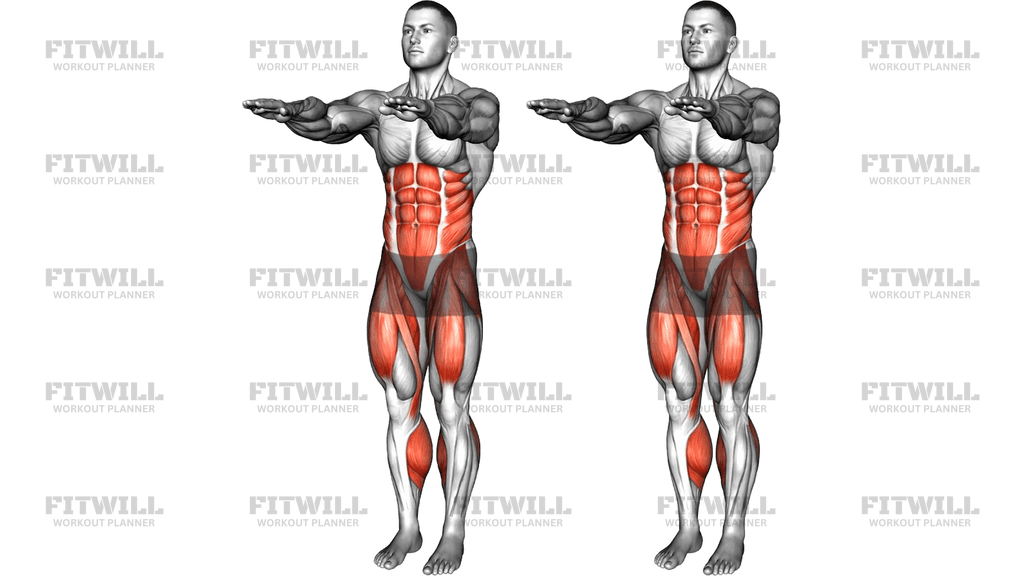
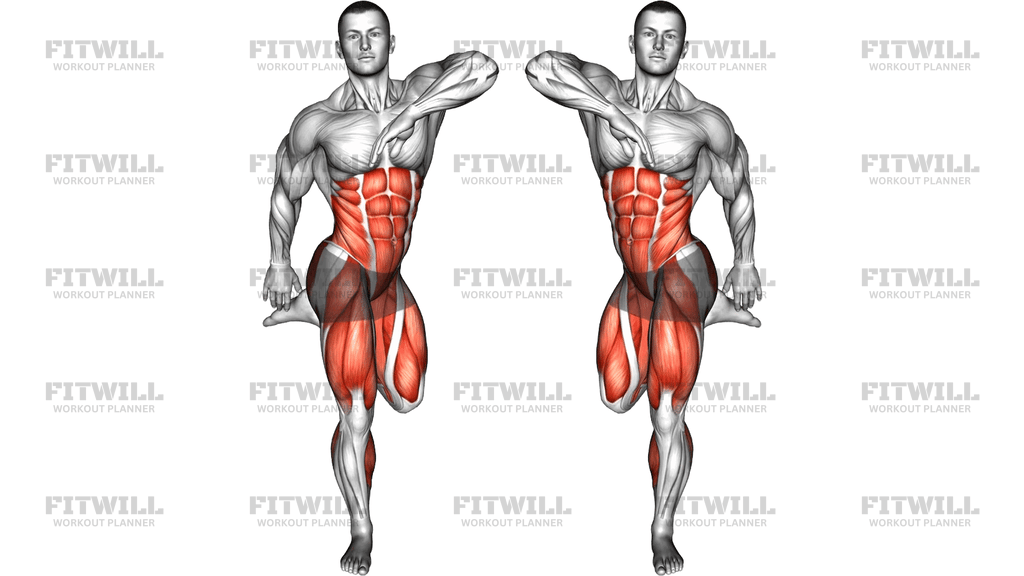
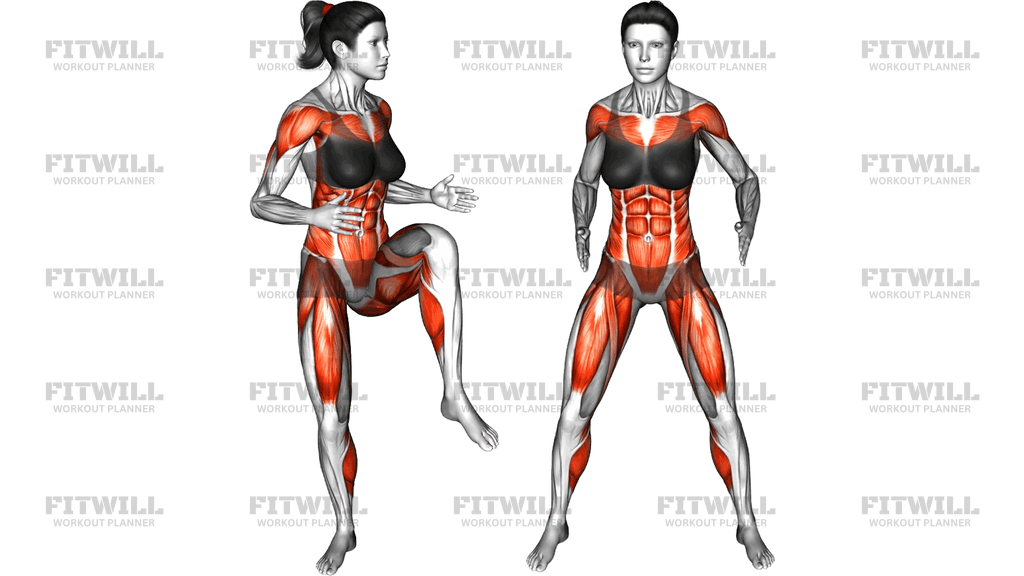
The Alternate High Knee Turn Sky Reach is a standing body weight movement that combines three actions into one repetition: driving one knee up toward hip height, rotating the torso toward that lifted knee, and reaching the opposite arm straight up toward the ceiling. Each rep ends with your body stacked on one leg, knee high, spine long, and one hand reaching skyward before you lower the leg, reset your stance, and repeat on the other side. It looks simple, but the combination of knee drive, rotation, and overhead reach makes it one of the more complete standing core drills you can do without any equipment.
This movement trains the deep core and the obliques through the turning action, the hip flexors and quads through the knee drive, and the stabilizing muscles of the standing leg and ankle as they hold your balance through the reach. The upward arm action also wakes up the shoulders and upper back, and because you are shifting your weight from a wide two-footed stance onto a single supporting leg each rep, your heart rate climbs quickly. That makes it useful both as a core exercise in its own right and as a warm-up or conditioning drill.
The setup matters more than people expect. You want feet roughly hip-width to slightly wider, weight distributed across the whole foot, and the torso tall before you start. If you begin slouched or with your ribs flared, the rotation at the top of the rep tends to come from your lower back instead of your trunk, which is exactly what you want to avoid. Keeping the movement rooted in the trunk and hips is what separates a controlled sky reach from a sloppy lean.
To execute it well, think of the knee and the opposite hand working as a pair. As the knee rises, the same-side arm stays down or pulls back slightly while the opposite arm extends up, and your torso turns so that the reaching hand moves slightly away from the lifted knee rather than straight above it. Pause for a beat at the top, then place the foot back down with control before switching sides. The lowering phase is where most people rush, and slowing it down roughly doubles the core demand.
This exercise fits well into home workouts, dynamic warm-ups, circuit training, and routines for sports that require rotational power and single-leg stability, such as tennis, baseball, or martial arts. Because it needs no equipment and no floor space beyond a single standing spot, it travels easily. Beginners can reduce the knee height and skip the pause, while more advanced lifters can slow the tempo, add a light medicine ball held at the chest, or increase the pace for a conditioning effect.
The main safety points are keeping the standing knee soft rather than locked, moving the reach with control instead of whipping the arm overhead, and staying within a rotation range where your hips and trunk stay connected. If you feel the movement in your lower back rather than your waist or hips, reduce the knee height and tighten the brace before continuing.
[ Workout Log & Planner ]
Put your next workout in Fitwill
Keep your plan and training log ready when you are.


Instructions
- Stand tall with your feet about hip-width apart or slightly wider, arms relaxed at your sides, and your weight spread evenly across both feet.
- Brace your abdominal wall as if bracing for a light tap to the stomach, keep your chest lifted, and soften both knees slightly so they are not locked.
- Shift your weight onto your left leg, keeping the foot fully planted and the knee softly bent.
- Drive your right knee up toward hip height while rotating your torso to the right toward the lifted knee.
- As the knee rises, reach your left arm straight up toward the ceiling so the hand finishes above or slightly past your head, palm facing inward.
- Hold the top position for one to two seconds: standing leg stable, knee high, ribs down, and the reach coming from the shoulder rather than a sideways lean.
- Lower the right foot back to the floor with control, bringing the left arm down as the foot lands, and return to the even two-footed stance.
- Exhale as you drive the knee and reach, then inhale as you lower the leg and reset your brace.
- Repeat the same sequence on the opposite side, driving the left knee while the right arm reaches up, and continue alternating for your target number of reps or time.
- Between sets, stand evenly on both feet, shake out the shoulders, and reset your posture before the next round.
Tips & Tricks
- The most common mistake is twisting from the lower back. Fix it by exaggerating the knee drive and letting the turn follow the hip, so the rotation happens at the trunk rather than the lumbar spine.
- If you find yourself leaning sideways to reach higher, shorten the reach. A straight arm that stops just above the head with ribs stacked down works the core harder than a dramatic lean.
- Keep the standing knee soft throughout. A locked knee combined with single-leg balance and rotation is where the joint takes unnecessary stress.
- Drive the knee with intent rather than lifting it lazily. A crisp knee lift engages the hip flexors and helps the torso rotate naturally instead of forcing the twist.
- Look forward or slightly up at the reaching hand with your eyes only; avoid cranking the neck to chase the arm.
- Land each foot quietly. Heavy, slapping landings usually mean you are rushing the return and losing the core control this exercise is built around.
- If balance is shaky, widen your base slightly and slow the top pause down rather than grabbing onto a wall, which removes the stabilizing work from the standing leg.
- For a conditioning version, keep a brisk tempo and shorter pauses; for a core-focused version, slow the knee lift and lower to about two seconds each and hold the reach for three seconds.
- Check your foot placement on every rep. The planted foot should point roughly forward or slightly out; letting it rotate fully inward as you turn is a common drift that limits hip rotation.
Frequently Asked Questions
What muscles does the Alternate High Knee Turn Sky Reach work?
The primary work comes from the abs and obliques, especially during the turn and reach. The hip flexors and quads power the knee drive, while the glutes, calves, and standing-leg stabilizers keep you balanced, and the shoulders assist the overhead reach.
Is the Alternate High Knee Turn Sky Reach suitable for beginners?
Yes, as long as you start with a moderate knee height and a controlled tempo. Beginners often benefit most from pausing at the top, because the hold teaches balance and trunk control before any speed is added.
Should my reaching hand go straight up or toward the lifted knee?
The arm reaches up toward the ceiling on the opposite side of the lifted knee, which is why the name includes both the turn and the sky reach. Chasing the hand toward the knee collapses the rotation and turns it into a crunch rather than a turning drill.
Why do I feel this in my lower back instead of my core?
That usually means the rotation is coming from the lumbar spine because the brace has relaxed or the ribs are flaring. Reduce the knee height, re-brace the abdominal wall, and let the turn follow the hip rather than leading with the shoulders.
Can I use the Alternate High Knee Turn Sky Reach as a warm-up?
Absolutely. Done at a moderate pace with a shorter hold, it raises the heart rate and mobilizes the hips, trunk, and shoulders, which makes it a good lead-in to lower body lifting, running, or rotational sports.
How can I make this exercise harder without adding weights?
Slow the knee lift and lowering to two seconds each, extend the top pause to three seconds, or perform the reach on an unstable surface like a balance pad under the standing foot. Each option increases the balance and core demand safely.
What is a good substitute if single-leg balance is difficult right now?
Perform the same knee drive, turn, and reach while keeping the toes of the moving foot lightly touching the floor instead of lifting fully. This shortens the balance requirement while keeping the rotation and reach pattern intact.
How many reps should I do?
For core control, aim for 8 to 12 controlled reps per side with a pause at the top. For conditioning, go for 30 to 45 seconds of continuous alternating reps at a brisk but repeatable pace.
Is it safe to do this exercise every day?
Because it uses only your body weight and no external load, most people can perform it frequently, though it still fatigues the hip flexors and trunk. If your standing leg or waist feels sore, take a rest day or reduce the volume.