Side Step Squat Arms Lateral Raise
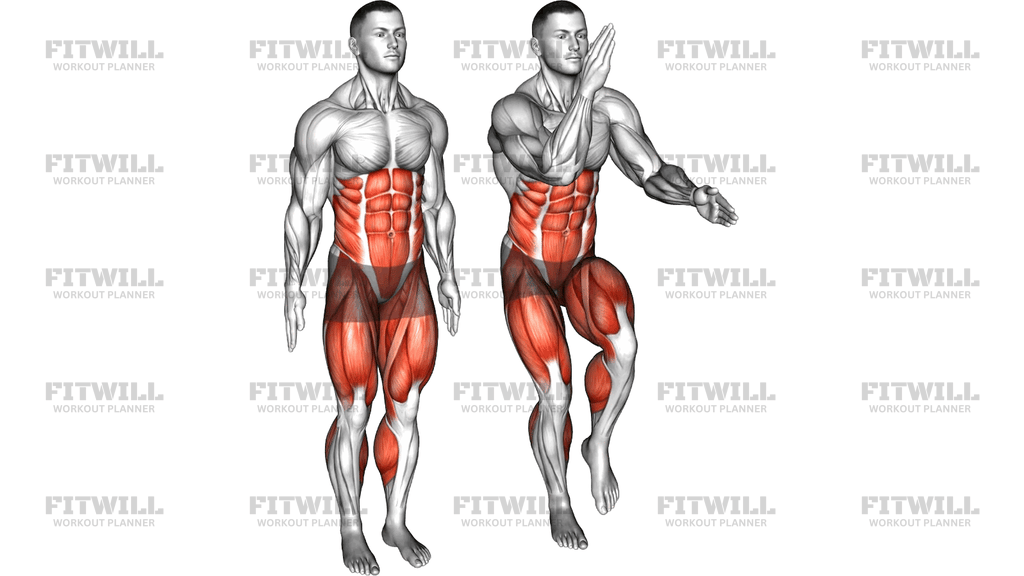
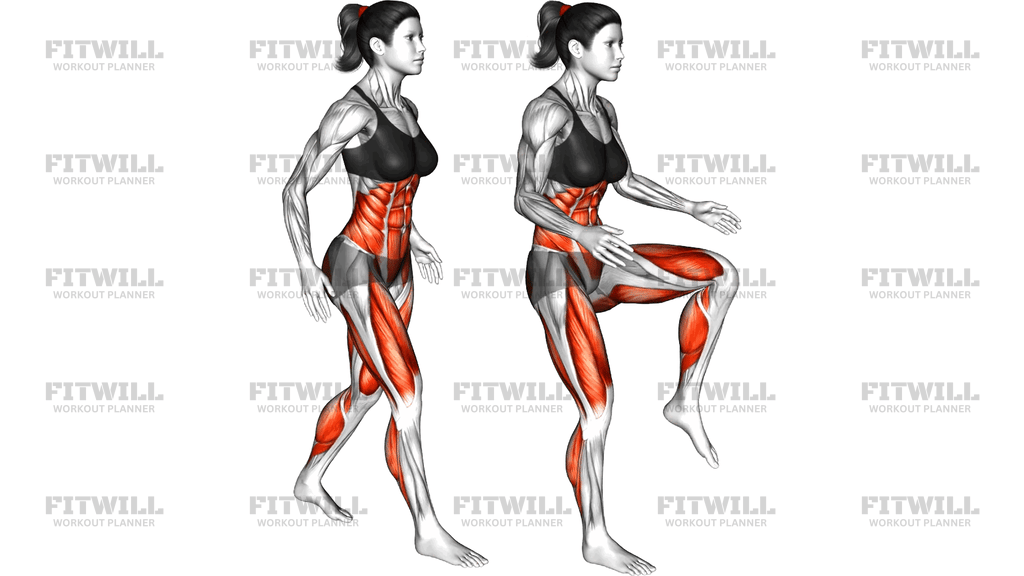
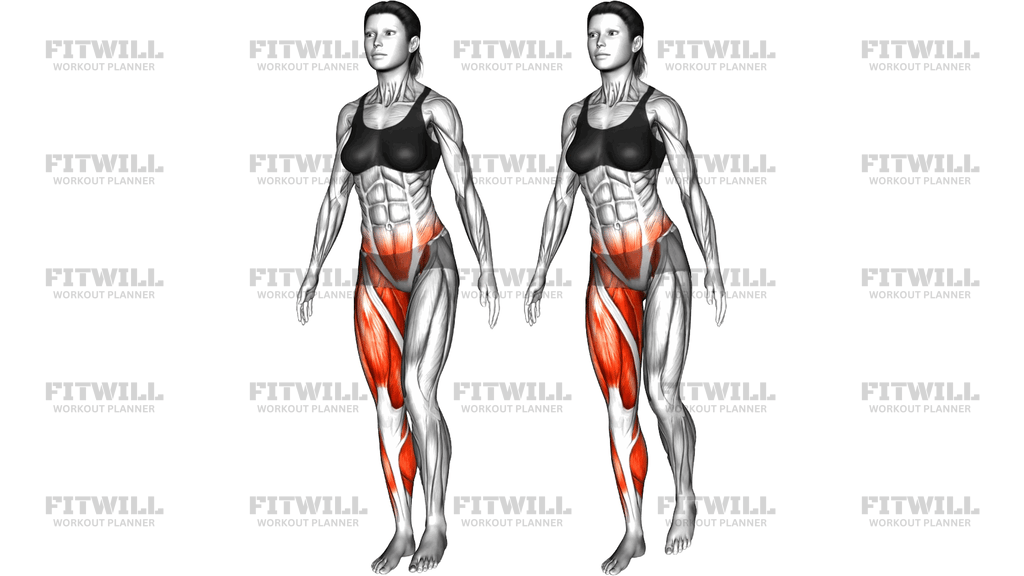
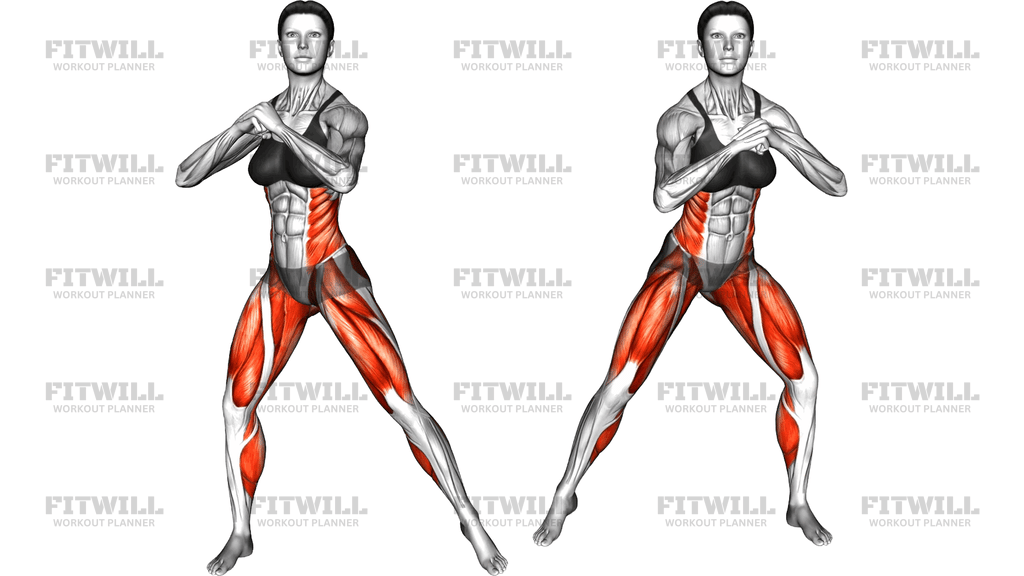
The Side Step Squat Arms Lateral Raise is a bodyweight compound movement that combines a lateral side step with a squat while the arms lift out to shoulder height at the same time. Instead of squatting in place, you step one foot out to the side, lower into a squat as both arms rise into a lateral raise position, then press back up and step the feet back together. This pairing turns two simple patterns, a side lunge-style squat and a shoulder abduction movement, into one coordinated full-body action.
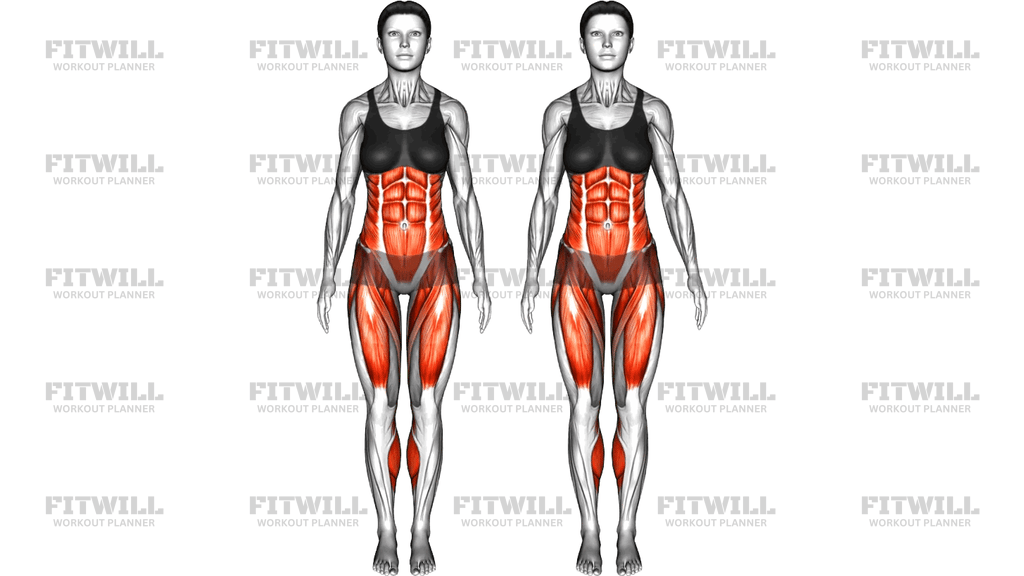
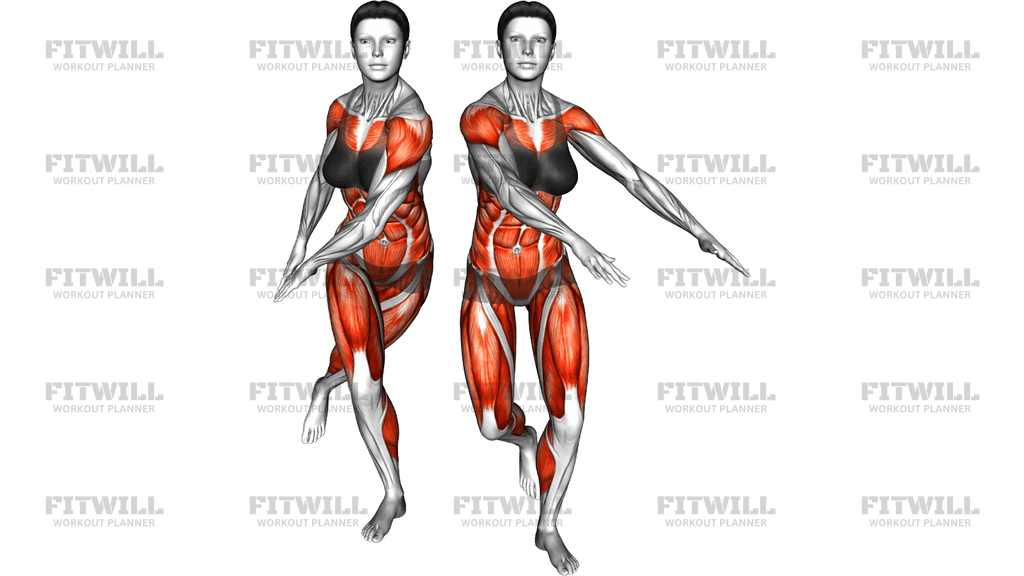
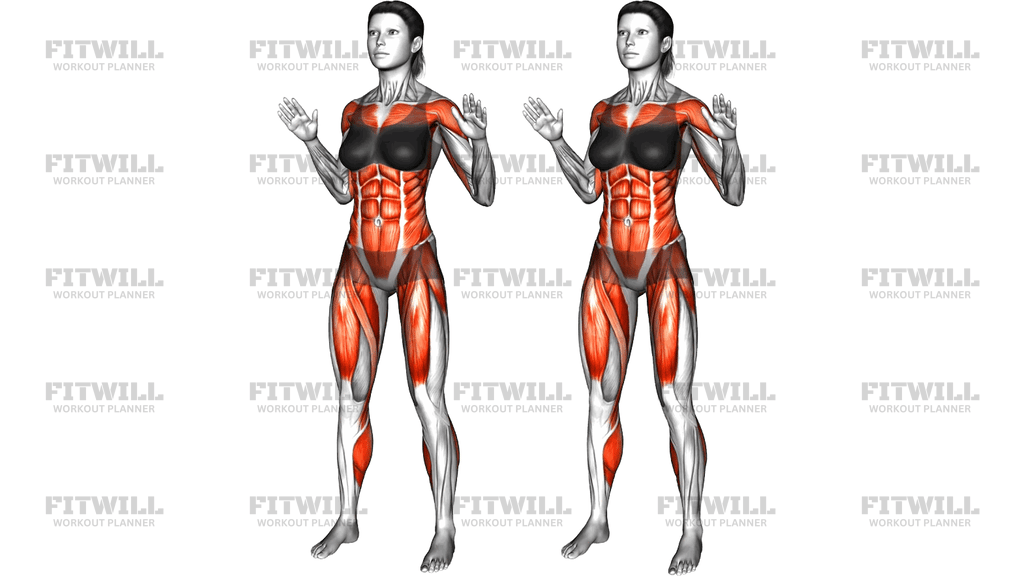
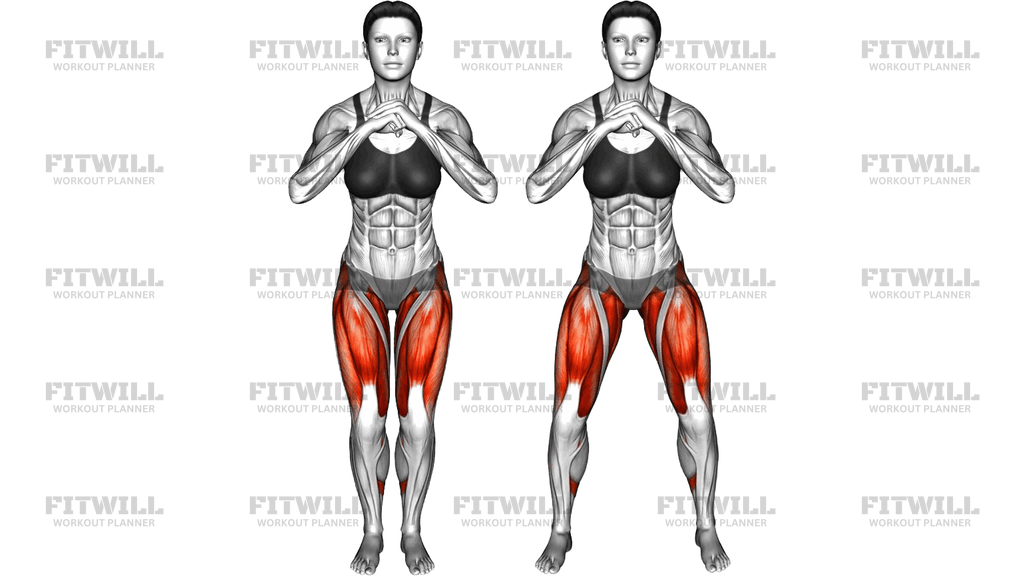
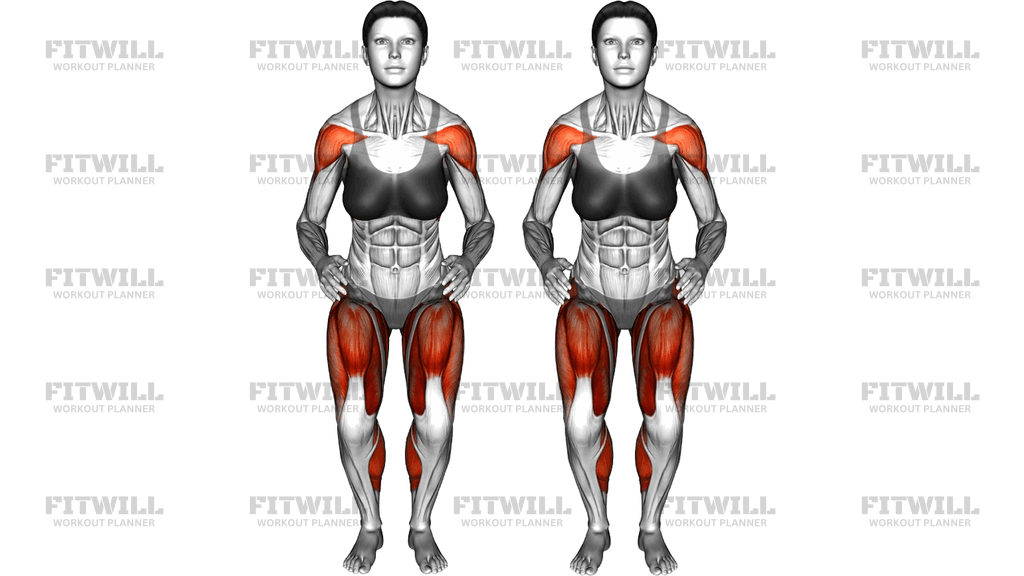
The lower body does most of the work. The quads and glutes drive the squat, while the inner thighs and hip stabilizers control the side step and keep the knee tracking over the foot. Raising the arms to the sides brings the side shoulders into play, and holding them up through the squat adds a sustained demand on the upper back and core, which have to keep the torso upright while the legs move.
This exercise is a good fit for warm-ups, home workouts, and circuit training because it needs no equipment and raises the heart rate quickly. It is also useful for teaching coordination between the upper and lower body, which is why it often appears in beginner strength work and general conditioning classes. Because the load is your own body weight, you can focus on rhythm, balance, and clean positions rather than lifting heavy.
Setup matters more than it looks. Your stance starts about hip-width with the feet pointing forward, and every side step should land in the same controlled position with the weight spread across the whole foot. If the stepping foot drifts too wide or the knee collapses inward, the squat loses its alignment and the hips do less of the work they should.
To execute it well, step out, sit the hips straight down and slightly back, and let the arms travel out to the sides until they reach roughly shoulder height with a soft bend in the elbows. Keep the chest tall and the spine neutral rather than leaning forward to chase depth. Drive through the floor to stand, lower the arms with control, and bring the feet back together before repeating on the same side or alternating.
The most common faults are rushing the step, letting the arms swing instead of lifting, and allowing the knees to cave inward on the squat. Slowing the tempo fixes all three. If balance is a challenge, reduce the depth of the squat first and build range over time rather than forcing a deep position with shaky footwork.
Fitwill
Log Workouts, Track Progress & Build Strength.
Achieve more with Fitwill: explore over 9600 exercises with images and videos, access built-in and custom workouts, perfect for both gym and home sessions, and see real results.
Start your journey. Download today!




Instructions
- Stand tall with your feet hip-width apart, toes pointing forward, and let your arms hang relaxed at your sides.
- Brace your core lightly, pull your shoulders back and down, and set your gaze on a fixed point ahead to help with balance.
- Step one foot out to the side so your stance is wider than your shoulders, keeping both feet flat and pointing forward.
- As you plant the step, push your hips back and bend both knees to lower into a squat, keeping your weight evenly spread across both feet.
- At the same time, raise both arms straight out to the sides until they reach about shoulder height, with a slight bend in the elbows and palms facing down or slightly forward.
- Pause briefly at the bottom with your chest upright and your knees stacked over your toes, not collapsing inward.
- Press through the floor to stand, lowering your arms back down to your sides under control as you rise.
- Step the working foot back in so your feet return to hip-width, then either repeat on the same side or alternate sides for the desired number of repetitions.
- Exhale as you step down into the squat and raise your arms, inhale as you stand and lower the arms.
- Reset your posture between reps if you feel yourself leaning forward or losing your foot position.
Tips & Tricks
- If your knees drift inward during the side step squat, consciously spread the floor apart with your feet as you descend, which wakes up the outer hips and cleans up the tracking.
- Keep the arm raise slow and deliberate. Letting momentum swing the arms up turns the lateral raise into a shrug and robs the side shoulders of the work.
- Stop the squat at the depth where your chest stays tall. A shallow squat with a straight spine beats a deep squat with a rounded lower back.
- Land each side step with the whole foot flat. Landing on the toes or the outer edge of the foot makes balance harder and shifts stress away from the quads and glutes.
- Think about sitting down between your feet, not bending forward over them, especially as the stance widens.
- If your shoulders fatigue before your legs, lower the arms to just below shoulder height rather than dropping the squat depth.
- Alternate sides each rep if you notice one hip or knee drifting more than the other, which often hides a left-to-right strength difference.
- Slow the tempo to a two-count down and a one-count up. This exercise is easy to rush, and rushing usually shows up as a shallow squat with fast, uncontrolled arm swings.
- On carpet or smooth floors, go barefoot or in flat shoes so your feet can grip and you can feel the weight shift through the stepping foot.
Frequently Asked Questions
What muscles does the Side Step Squat Arms Lateral Raise work?
The quads and glutes do the main work of the squat, with the inner thighs helping control the side step. The side shoulders drive the arm raise, and the core stabilizes your torso throughout.
Is the Side Step Squat Arms Lateral Raise good for beginners?
Yes, it is a low-load bodyweight exercise that teaches coordination between the legs and arms. Beginners can start with a shallower squat and a narrower step, then build depth and range as balance improves.
How deep should I squat during the Side Step Squat Arms Lateral Raise?
Lower only as far as you can keep your chest upright, your heels down, and your knees tracking over your toes. For most people that means thighs at or slightly below parallel, but a controlled half squat is a fine starting point.
Should my arms stay up while I squat, or move with me?
In this version the arms rise to shoulder height as you lower into the squat and lower back down as you stand, so the whole movement happens together. Keeping them synced keeps the side shoulders working through the full rep.
Why do my knees cave inward when I step to the side?
That usually means the outer hip muscles are not doing their job of stabilizing the step. Slow the movement down, narrow the step slightly, and consciously press the knee out over the little toe as you descend.
Can I add resistance to the Side Step Squat Arms Lateral Raise?
Yes, light dumbbells in each hand turn the arm raise into a weighted lateral raise, or a resistance band around the thighs adds hip demand to the squat. Add load only after the bodyweight version feels smooth and stable.
How is this different from a regular squat?
The side step widens your stance and adds a balance and hip-stability demand that a regular squat does not have, while the lateral raise brings the shoulders in. It trains more of your body at once but with less load on the legs per rep.
How many repetitions should I do?
For conditioning and warm-ups, 10 to 15 reps per side works well. For strength-endurance focus, slow the tempo and work in the 8 to 12 range per side until form starts to slip.
Is it safe for my knees?
Done with the knees tracking over the toes and the heels staying down, this is a knee-friendly bodyweight movement. If you have a current knee issue or pain during the side step, reduce the depth and width of the step and check with a professional before continuing.