Lying Cycle Punches
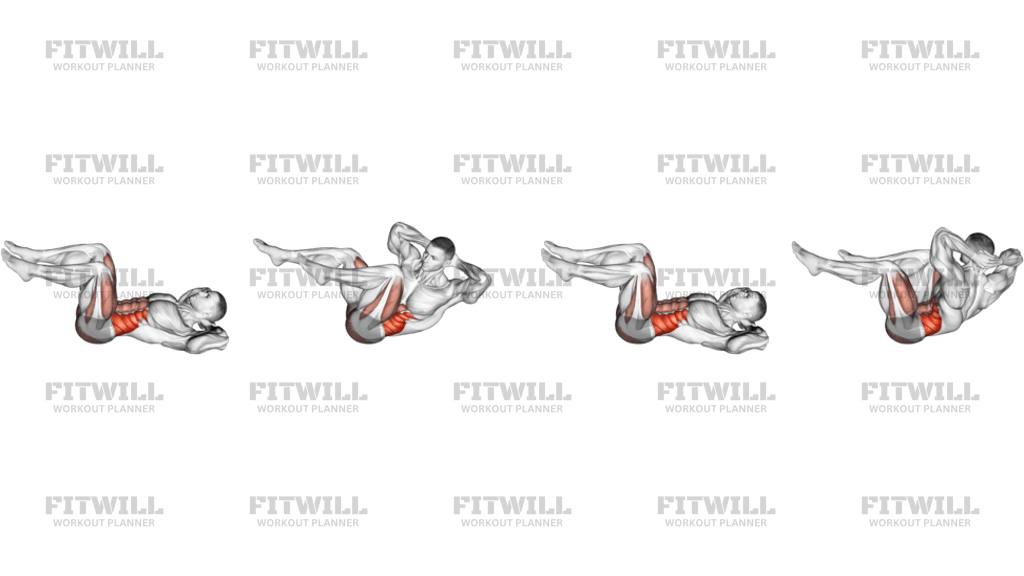
Lying Cycle Punches combine two rhythmic patterns into one floor drill: your legs pedal in the air as if you were riding a bicycle, while your arms punch alternately straight up toward the ceiling. You lie flat on your back the whole time, which means your trunk has to stay braced and stable while your limbs move continuously around it. That mix of steady trunk control and fast limb movement is exactly what makes this drill useful.
The main work comes from your abs and hip flexors. The pedaling legs are driven by the hip flexors pulling the thighs up and around, while the abs keep your lower back pressed toward the floor and stop your pelvis from tilting as the legs cycle. The punches add the shoulders and arms, and because you punch one arm at a time, your core also rotates and resists rotation slightly with every rep. Done at a steady tempo, the movement doubles as low-impact conditioning that lifts your breathing rate without any jumping or equipment.
This is a good choice for anyone who wants a core-and-cardio drill that is gentle on the knees and lower back compared to standing cardio options. It fits well in circuit training, warm-ups, home workouts, and boxing-style conditioning sessions. Because it requires no equipment beyond a floor and preferably a mat, it is easy to program almost anywhere, and the intensity scales naturally with how fast and how long you cycle and punch.
Setup matters more than it looks. If you lie down and immediately start thrashing your legs and arms around, the lower back tends to arch and take over, which is where most discomfort with this type of drill comes from. Take a moment to flatten your lower back into the floor, engage the abs, and start the cycling with bent knees before extending anything. A controlled start keeps the tension where it belongs.
To execute it well, keep the cycling smooth and circular rather than choppy, and match your punches to the rhythm of your legs so the whole body moves as one coordinated pattern. Your head and shoulders can rest on the mat the entire time; this version does not require a crunch or lift, so keep the neck relaxed. If you feel your lower back peeling off the floor, bend your knees more or slow the tempo until control returns.
A practical way to use Lying Cycle Punches is in timed intervals, such as 20 to 40 seconds of continuous cycling and punching followed by rest, repeated for several rounds. Beginners should start with shorter sets and higher knee bends, while more advanced trainees can extend the legs closer to the floor and lengthen the intervals as core control improves.
Fitwill
Log Workouts, Track Progress & Build Strength.
Achieve more with Fitwill: explore over 9600 exercises with images and videos, access built-in and custom workouts, perfect for both gym and home sessions, and see real results.
Start your journey. Download today!




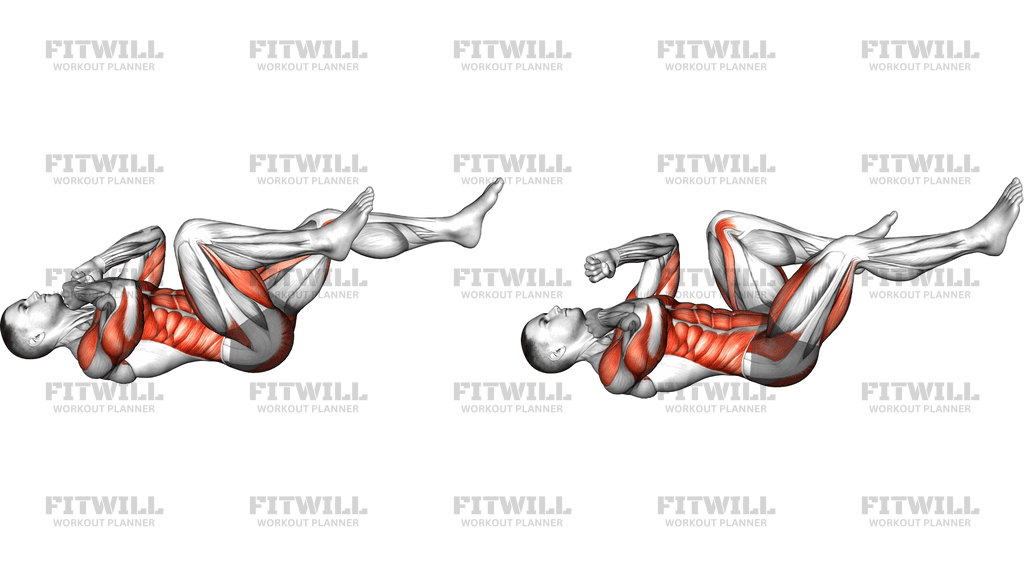
Instructions
- Lie on your back on an exercise mat with your legs extended and your arms bent, hands loosely fisted at about chest height.
- Press your lower back gently into the floor, tighten your abs, and lift both feet off the ground so your knees are bent above your hips.
- Begin pedaling your legs in the air in a smooth bicycle motion, keeping the circles moderate in size at first.
- As your legs cycle, punch one arm straight up toward the ceiling, then switch arms so you are punching alternately in rhythm with your legs.
- Keep your head, shoulders, and upper back resting on the mat, and your neck relaxed throughout the set.
- Breathe steadily and continuously rather than holding your breath, ideally exhaling every few punches.
- Continue the cycling and punching pattern for your target time or rep count without letting your lower back arch off the mat.
- To finish, slow the pedaling down, lower both feet to the floor one at a time, and rest your arms by your sides before your next set.
Tips & Tricks
- If your lower back lifts or arches during the cycling, shorten the arc by keeping your knees more bent; longer leg extensions pull harder on the hip flexors and tip the pelvis forward.
- Match your punch rhythm to your leg rhythm instead of letting the arms flail independently, or the pattern falls apart and you lose the trunk control benefit.
- Aim your punches toward the ceiling, not across your body, so your shoulders do the work and your upper back stays on the mat.
- Do not crank your neck forward to watch your hands; keep your gaze straight up at the ceiling to avoid neck strain.
- Point your toes slightly to keep the leg circles clean, but avoid locking the knees hard when the legs extend.
- Start with small, quick cycling circles and only increase the range as you can keep your sacrum and lower back flat on the floor.
- If your legs fatigue before your abs do, take short breaks with both feet on the floor rather than letting sloppy reps continue.
- Use this drill in timed intervals, and if you want more challenge, extend the legs closer to the floor on each cycle rather than moving faster.
Frequently Asked Questions
What muscles do Lying Cycle Punches work?
The abs and hip flexors do most of the work driving the leg cycling and stabilizing your trunk. The shoulders and arms handle the punches, and the obliques help control the slight rotation with each alternating arm.
Is Lying Cycle Punches suitable for beginners?
Yes, as long as you keep your knees fairly bent and the cycling circles small. This keeps tension on the abs instead of the lower back, which is the main thing beginners need to watch.
Should my shoulders stay on the floor during Lying Cycle Punches?
Yes, this version is performed with your head and shoulders resting on the mat. The punches travel straight up toward the ceiling, so there is no need to crunch up or lift the torso.
Why does my lower back hurt when my legs cycle in the air?
The hip flexors pull on the pelvis, and if your abs are not braced hard enough, the lower back arches off the floor. Bend your knees more, reduce how far the legs extend, and press your lower back into the mat before starting again.
How long should I perform Lying Cycle Punches per set?
Start with 20 to 30 seconds of continuous cycling and punching, and build toward 40 to 60 seconds as your control and conditioning improve. Timed intervals work better than counting reps for this drill.
How are Lying Cycle Punches different from bicycle crunches?
Bicycle crunches lift and rotate the torso to bring the elbow toward the opposite knee, while Lying Cycle Punches keep the shoulders on the floor and punch the arms upward instead. This makes it easier on the neck and more rhythmic for conditioning.
Do I need any equipment for this exercise?
No equipment is required beyond a floor, though an exercise mat is recommended to cushion your back and tailbone. That makes it a convenient option for home workouts and travel.
Can I use Lying Cycle Punches as cardio?
Yes, at a brisk continuous tempo it raises your breathing and heart rate while staying low-impact, since your back stays supported on the floor the entire time. It works well in circuits or as a cardio finisher.
How can I make Lying Cycle Punches harder?
Extend your legs closer to the floor on each cycling revolution, which increases the lever length and demands more from the abs and hip flexors. You can also lengthen the interval time rather than speeding up, which tends to preserve better form.