Slight Lean Step Out
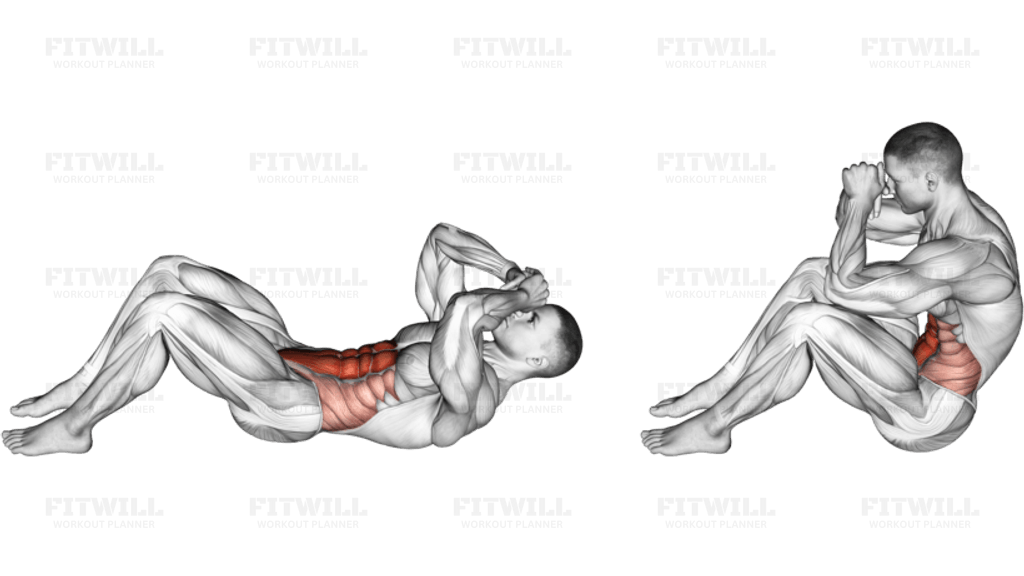
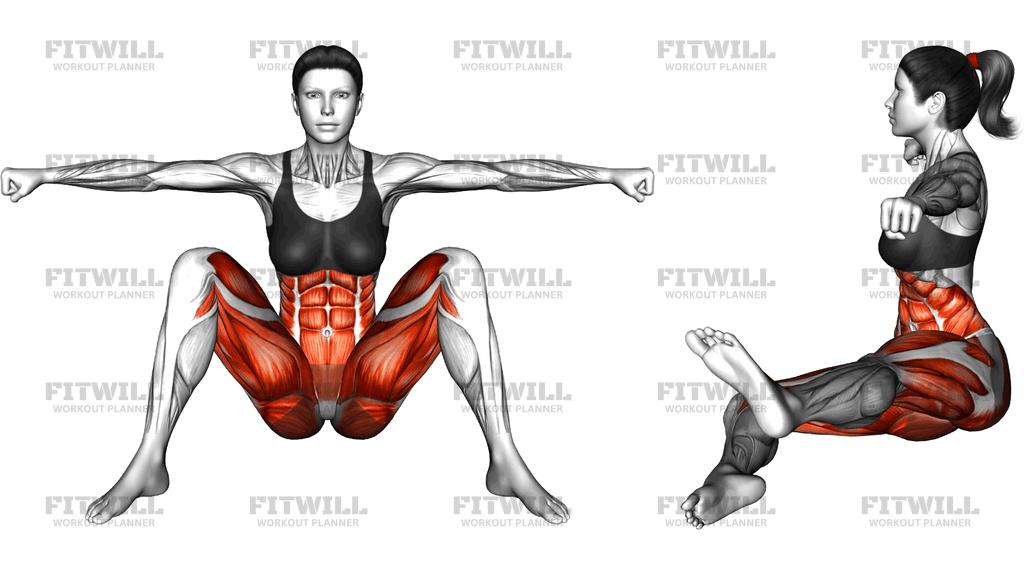
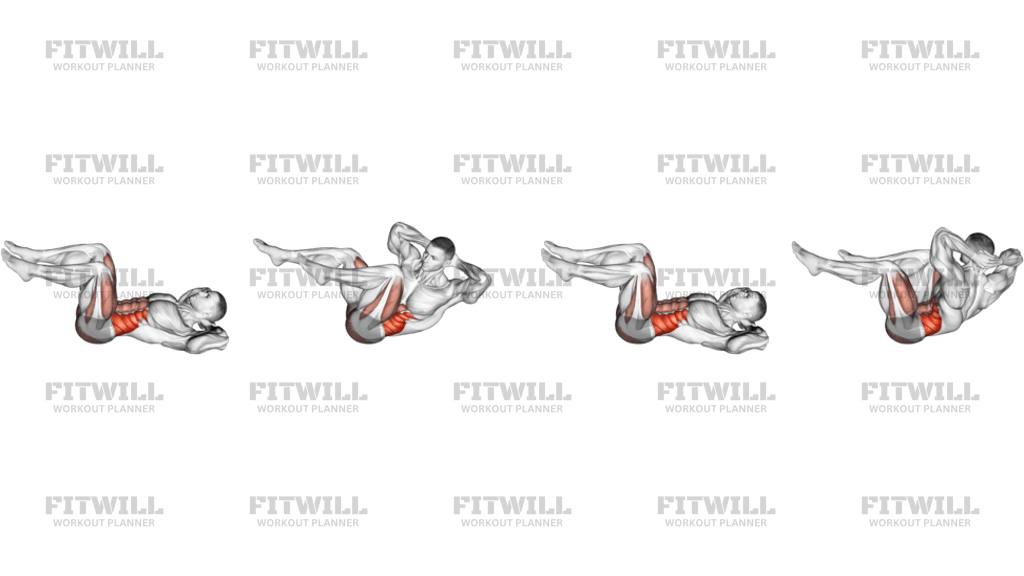
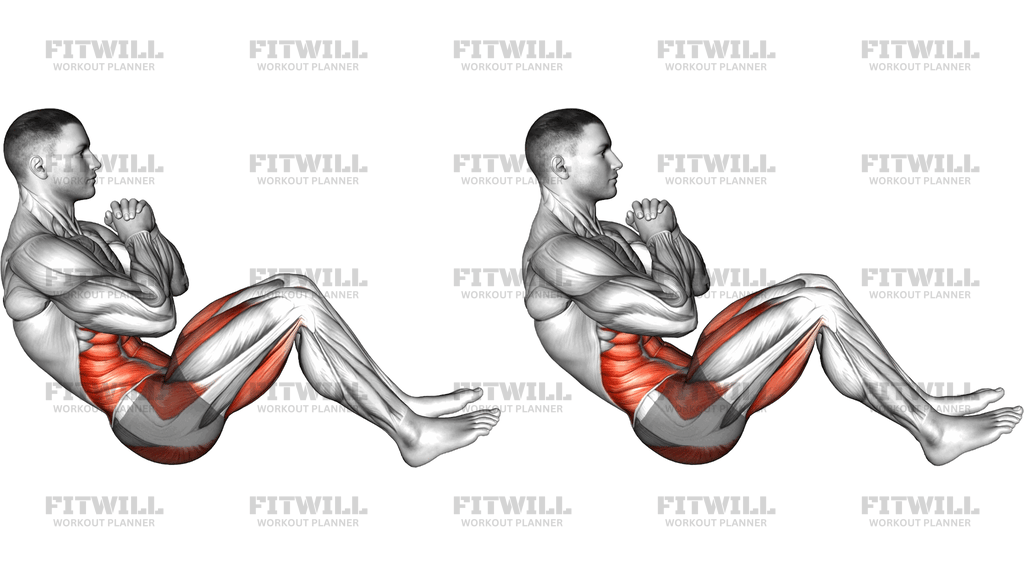
The Slight Lean Step Out is a seated body weight core exercise that combines a leaned-back hold with slow, alternating foot extensions. You sit on the floor with your knees bent and feet hovering just off the ground, clasp your hands in front of your chest, tip your torso back a few degrees, and then extend your feet forward one at a time in a controlled stepping pattern. Because both legs stay off the floor for the entire set, your trunk has to work continuously just to hold the position, and each leg extension adds a new challenge to that stability.
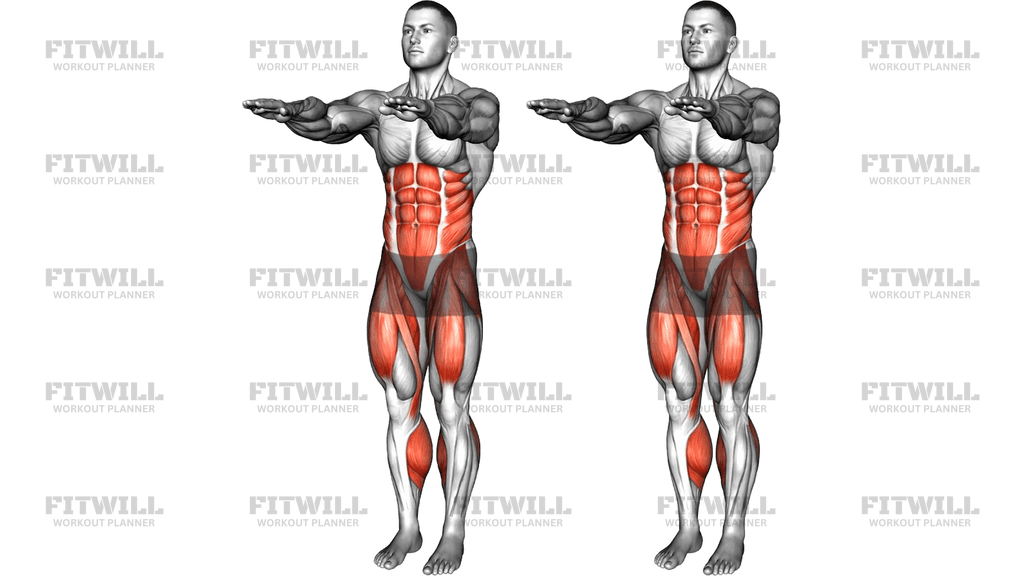
The main work comes from the abs and hip flexors. The lean-back position loads the rectus abdominis and deeper corset muscles isometrically, while the stepping action makes the hip flexors and quads lift and extend the legs against the length of the lever. Because you extend one foot at a time rather than both, the demand shifts slightly from side to side, which forces the obliques and stabilizers to keep your torso from twisting or collapsing as each leg moves.
This movement is especially useful for people who find full V-sits or hollow holds too aggressive but still want to train the trunk in that lengthened, anti-extension position. It is also a natural fit for anyone working on the strength needed for leg raises, L-sits, or boat-pose variations. Since it needs no equipment beyond a bit of floor space, it works well as a warm-up primer, a finisher on ab day, or part of a home routine.
Setup matters more here than it looks. If you sit too upright, the abs get a free ride; if you tip back too far or round your lower back into the floor, the position turns into a strain on the lumbar spine instead of a core exercise. The sweet spot is a slight lean where your trunk feels braced, your chest stays tall, and your lower back keeps its natural curve rather than slumping. Your hands stay clasped at your chest throughout, which keeps the arms from doing balance work they were never meant to do.
Execution is about tempo and breathing, not speed. Each foot extension should take a couple of seconds out and a couple of seconds back, with the non-moving leg held steady and the torso completely quiet. Most people will feel this within ten to fifteen slow steps per side. If your lower back starts to arch away from its neutral position or your breathing turns choppy, that is the signal to end the set, even if the legs still feel strong.
As with any hovering core hold, quality beats volume. Short sets with a flat back and quiet shoulders will build more usable trunk strength than long, shaky sets where the position degrades. Start with your feet just a few inches off the floor and only lean back as far as you can control, then gradually lengthen the lever by extending the legs further out as your strength improves.
[ Workout Log & Planner ]
Put your next workout in Fitwill
Keep your plan and training log ready when you are.


Instructions
- Sit on the floor with your knees bent and your feet flat on the ground, hip-width apart, hands clasped together in front of your chest.
- Tighten your abs and tip your torso back until you feel your midsection engage, keeping your chest lifted and your lower back in its natural curve rather than rounded.
- Lift both feet off the floor so your shins hang just above the ground and your weight rests on your sitting bones and the back of your pelvis.
- Exhale and brace your trunk as if bracing for a light push before you begin the stepping action.
- Extend one foot forward and slightly away from your body until the knee is close to straight, keeping the foot a few inches off the floor the whole time.
- Draw that foot back to the tucked starting position under your knee, then immediately extend the opposite foot the same way.
- Continue alternating legs in a slow, even rhythm, keeping your hands clasped at your chest and your shoulders relaxed down away from your ears.
- Breathe steadily throughout, inhaling as one leg returns and exhaling as the other extends out.
- When your abs start to burn or your lower back begins to arch, lower your feet to the floor, sit upright, and rest before starting the next set.
Tips & Tricks
- If your lower back starts to tuck under and round during the lean, you have tipped back too far. Come up a few degrees until you can keep a neutral curve, then resume the steps.
- Keep the stepping foot low to the floor. Extending the leg up and out turns this into a hip flexor raise and steals work from the trunk.
- The most common mistake is letting the torso drift or twist toward the moving leg. Watch that your clasped hands stay centered over your midline for every step.
- Fight the urge to rush. A two-second extension and two-second return per side is a good tempo; faster reps let momentum replace muscle work.
- If holding the lean for a full set is too hard, rest one hand lightly on the floor beside your hip for support and remove it as you get stronger.
- Your sitting bones, not your tailbone, should carry your weight. If you feel pressure on your tailbone or the back of your sacrum, reduce the lean slightly.
- Keep the non-stepping knee bent and still. Many people unconsciously straighten both legs, which shortens the set and shifts load away from the trunk.
- Look straight ahead or slightly up the wall in front of you. Dropping the chin tends to round the whole upper back and weaken the brace.
Frequently Asked Questions
What muscles does the Slight Lean Step Out work?
The primary work comes from the abs, especially the rectus abdominis holding the leaned-back position, with strong support from the hip flexors and quads as each leg extends. The obliques and deep core stabilizers keep the torso from twisting as the legs alternate.
Why does the Slight Lean Step Out use a slight lean instead of a deep V-sit position?
The slight lean keeps your lower back in a manageable, neutral position while still forcing the abs to hold your torso against gravity. It lets you accumulate quality time under tension without rounding into the floor the way a deeper lean often causes.
Should my feet touch the floor during the exercise?
No. Once you lift into the starting position, both feet stay hovering just off the floor for the whole set. If you need to touch down, end the set, rest, and start fresh rather than sneaking partial rests.
How far should I extend each foot on the step out?
Extend until the knee is nearly straight and the leg reaches forward and slightly away from your body, with the foot staying a few inches off the floor. Straightening the leg fully is fine as long as your back position and torso stay unchanged.
I feel this in my hip flexors more than my abs. Is that wrong?
Some hip flexor involvement is expected because they lift and extend the legs, but if they dominate completely, you are probably leaning too upright. Tip back a few more degrees while keeping your lower back neutral and the emphasis should shift toward your trunk.
Is the Slight Lean Step Out suitable for beginners?
Yes, with modifications. Beginners can keep the lean very slight, extend the legs only partway, or rest one hand lightly on the floor for balance. As control improves, remove the support and lengthen the leg extension.
What can I substitute if sitting on the floor is uncomfortable?
A firm cushion or folded mat under your sitting bones raises you slightly and takes pressure off the tailbone, which usually solves the problem without changing the movement.
How many steps should I do per set?
Start with 10 to 15 slow steps per side, which is usually 30 to 60 seconds of work. Stop the set as soon as your lower back begins to arch or your brace breaks, even if that comes earlier than planned.
Is it safe for my lower back?
When performed with a neutral spine and a controlled lean, it is a reasonable trunk exercise for most healthy people. If you have a history of back issues or feel any sharp discomfort, check with a qualified professional before adding it to your routine.