Fast Sit Up Slow Down
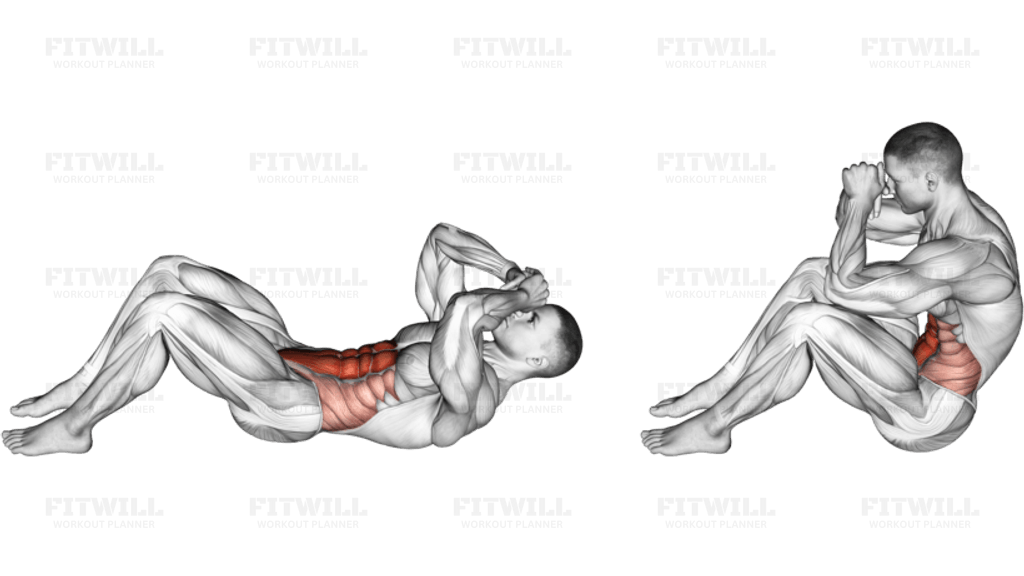
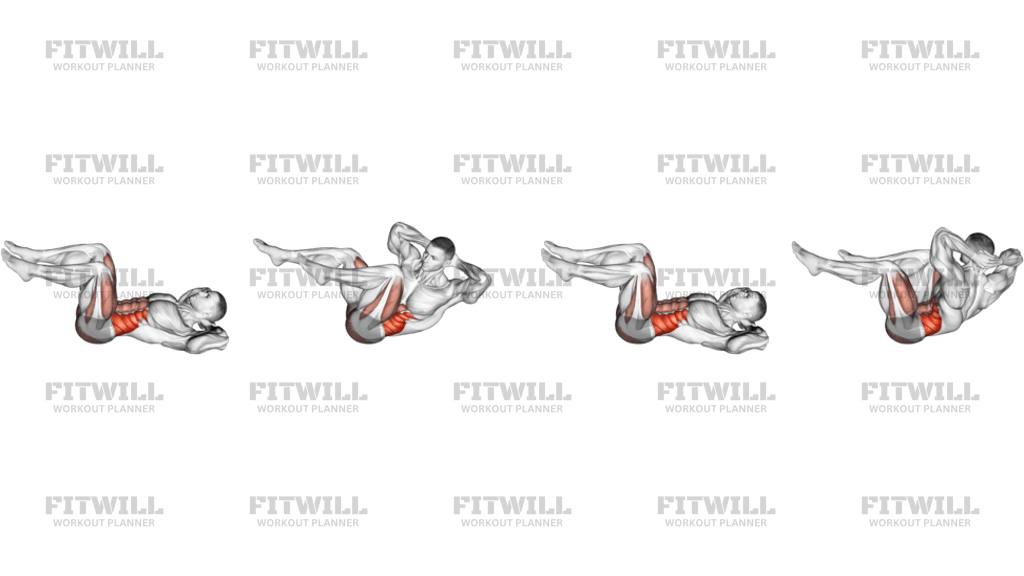
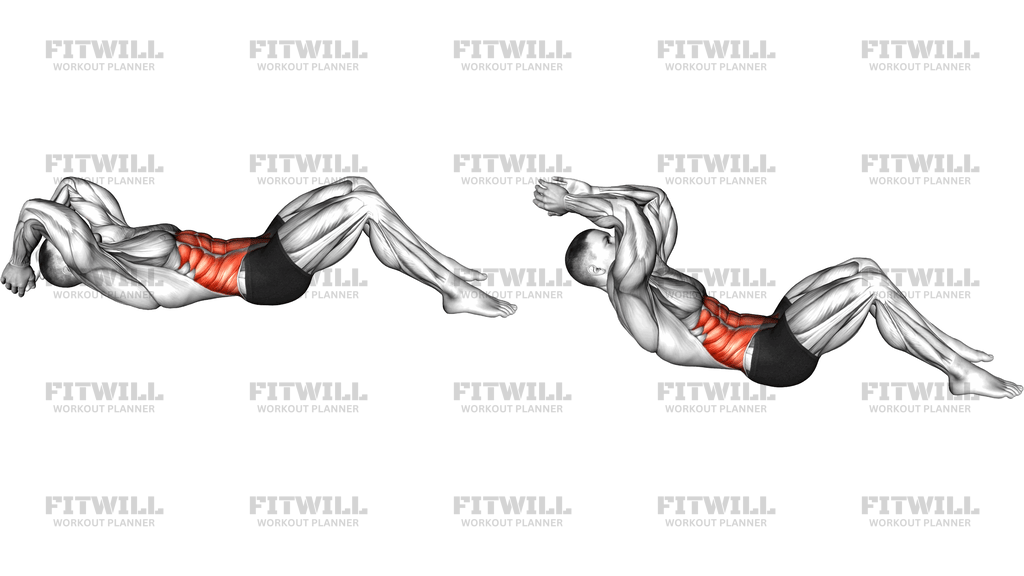
Fast Sit Up Slow Down is a tempo-based bodyweight sit-up performed on the floor with bent knees and hands placed behind the head. The name describes the rhythm exactly: you drive up to the top position quickly, then lower your torso back down slowly and under control. That contrast between an explosive concentric phase and a deliberate eccentric phase is what separates this from a standard sit-up and makes it noticeably harder at the same bodyweight.
The fast portion teaches you to initiate the movement from the abdominals with intent, while the slow return keeps the abs under continuous tension through the entire lowering range. Most people lose the benefit of a sit-up on the way down by letting gravity dump them back onto the floor. Reversing that habit builds strength in the lengthening phase, which is where much of the trunk's real-world control comes from.
This movement is useful for anyone who has outgrown basic crunches but does not yet want to add load to their ab training. It suits general strength training, martial arts and combat sport conditioning where fast trunk flexion matters, and home workouts where no equipment is available. Because it requires nothing more than floor space and a mat, it fits easily into warm-ups, finishers, or short core circuits.
Primary work comes from the rectus abdominis, with the obliques stabilizing the ribcage and pelvis, and the hip flexors assisting as the torso approaches the thighs. The deep core works throughout to keep the spine moving as one piece rather than hinging at one segment.
Setup matters more than it looks. Lie on your back with knees bent and feet flat on the floor, place your hands lightly behind your head without pulling on the neck, and keep the lower back in contact with the floor before you start. If the feet lift, the hips shift, or the elbows flare forward during the fast phase, momentum takes over and the abdominal work drops off.
Execute it by curling up quickly to a seated or near-seated position, then taking three or more seconds to roll back down, vertebra by vertebra, until the shoulders and head touch the floor again. Stop the set when the descent speeds up involuntarily, because that is the signal your abs have stopped controlling the movement and your lower back is about to absorb the load instead.
Fitwill
Log Workouts, Track Progress & Build Strength.
Achieve more with Fitwill: explore over 9600 exercises with images and videos, access built-in and custom workouts, perfect for both gym and home sessions, and see real results.
Start your journey. Download today!




Instructions
- Lie on your back on an exercise mat with your knees bent to about 90 degrees and your feet flat on the floor, hip-width apart.
- Place your hands lightly behind your head or ears with elbows flared out to the sides, and let your head rest back so your neck stays neutral.
- Brace your abdominal wall by gently drawing your belly button toward your spine and exhale slightly to set your core before moving.
- Pull your torso up quickly by curling the ribs toward the pelvis, leading with the chest rather than the head, until you reach a seated or near-seated position.
- Keep your feet planted and your knees pointing up throughout; do not let the legs rock or the feet lift as you rise.
- At the top, pause briefly and confirm your abs, not your neck or arms, brought you there.
- Lower your torso slowly over three to five seconds, peeling the upper, middle, and lower back off the floor in sequence until your shoulders and head touch down.
- Exhale on the fast way up and inhale steadily during the slow descent.
- Reset your brace for a moment at the bottom, then repeat for the target number of reps.
- End the set as soon as the lowering phase becomes fast or your lower back starts arching off the mat.
Tips & Tricks
- If you feel the movement in your neck, stop pulling with the hands behind your head and instead touch your fingertips to your ears; the hands should never drive the torso up.
- Count the descent out loud or in your head. If you cannot keep a steady three-second count on the way down, the set is over, even if you could still fire up quickly.
- Do not slam into the floor at the bottom. A light, controlled touch of the shoulders protects the spine and keeps tension in the abs between reps.
- If your feet keep lifting during the fast phase, slide them slightly closer to your hips or anchor them under a sturdy object until your control improves.
- Keep a small gap between your chin and chest. Tucking the chin hard turns this into a neck flexion exercise and shortens the abdominal range.
- If your lower back arches and lifts off the mat as you descend, slow the eccentric further and reduce your range until your pelvis stays stable.
- Exhaling sharply as you curl up helps the ribs drop and the abs shorten fully, which is why many people get a stronger contraction on the fast phase with a deliberate breath.
- When slow repetitions become too easy, resist the urge to jerk harder; instead, extend the descent to five seconds or add a brief hold at the top.
Frequently Asked Questions
Which muscles does Fast Sit Up Slow Down work?
The rectus abdominis does the main work of flexing the trunk, supported by the obliques and deep core. The hip flexors assist, especially in the second half of the upward pull as the torso approaches the thighs.
Why does the descent have to be slow in Fast Sit Up Slow Down?
The slow lowering keeps the abdominals under tension through the lengthening phase, which is where most standard sit-ups waste the rep. Dropping quickly lets gravity, not your muscles, control the movement.
Is Fast Sit Up Slow Down suitable for beginners?
Beginners can do it, but many find the full sit-up range too demanding at first. Starting with a partial range, curling up only until the shoulder blades leave the floor, or doing the slow descent from a half sit-up builds the needed control.
How fast should the upward phase actually be?
Fast means driven and purposeful, not reckless. You should rise in about one second with the abs initiating the pull, without bouncing off the floor or yanking the head forward.
How long should the slow phase last?
Aim for three to five seconds on the way down. If you cannot maintain that duration by the final reps, the set has done its job and it is time to stop.
My feet lift off the floor during the fast sit-up. What should I change?
This usually means momentum from the hip flexors is dominating the pull. Move your feet closer to your hips, slow the ascent slightly, or anchor your feet under a stable object until your abdominal strength catches up.
Can I substitute Fast Sit Up Slow Down with regular crunches?
Crunches are a reasonable substitute if full trunk flexion is uncomfortable, but they train a shorter range. To keep the tempo element, perform the crunch up quickly and lower over three to five seconds the same way.
Is it safe for the lower back?
For most people with a healthy spine, yes, provided the descent is controlled and the lower back is not slammed into the floor between reps. If you have a history of back issues, use a reduced range and stop if you feel pain rather than muscular effort.
Do I need a mat for Fast Sit Up Slow Down?
A mat is recommended because your spine and shoulder blades contact the floor on every rep. A carpeted surface works in a pinch, but a thin exercise mat gives the most consistent footing for your feet as well.