Downward Dog Crunch
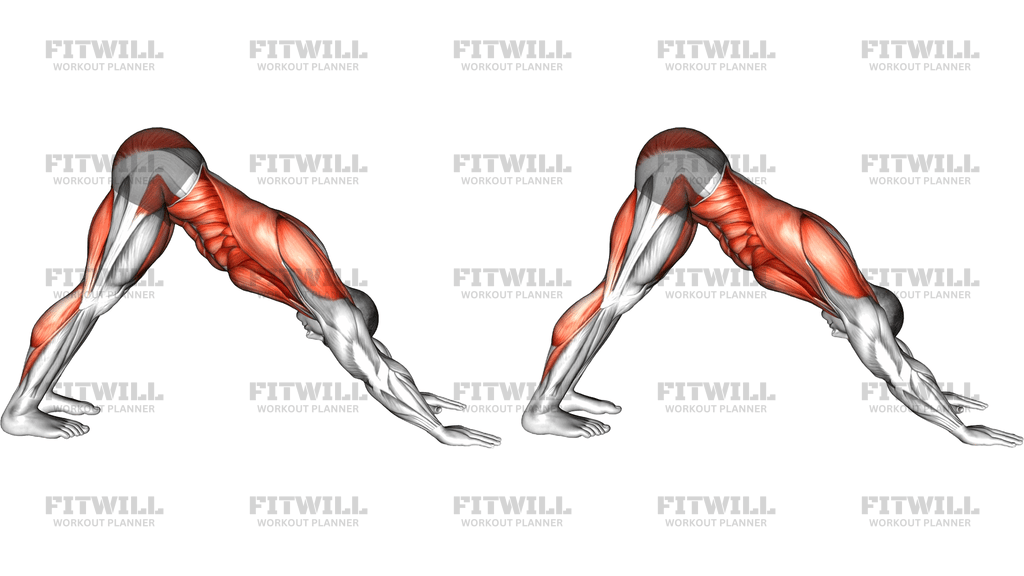
The Downward Dog Crunch is a body weight movement that starts in a downward dog position, with your hands and feet on the floor and your hips driven up into an inverted V, and finishes with a forceful knee-driving crunch. As you initiate the crunch, you shift your weight forward over your shoulders, round your lower back slightly, and pull one knee in toward your chest while rising onto the ball of the working-side foot. You then press back into the downward dog stretch before repeating on the other side. It is essentially a dynamic blend of a yoga-based position and a standing-style knee crunch done from the floor.
This exercise trains the abdominal wall, especially the lower portion of the abs, through a full range of flexion. The forward shift demands real work from the shoulders, triceps, and upper back to hold your torso stable as your center of gravity travels over your hands, while the downward dog position between reps lengthens the hamstrings, calves, and lats. Because one side works at a time, your hips and deep core also have to resist rotation and keep you square.
The setup matters more than most people expect. Hand placement roughly shoulder-width with fingers spread gives you a stable base for the forward transfer of weight, and the foot position determines how much load lands on the working leg during the crunch. If your downward dog is too short, your heels high, or your hips too far back, the crunch turns into a sloppy knee lift instead of a deliberate spinal flexion.
To execute it well, think of the crunch as pulling your knee toward your nose rather than simply lifting it. Exhale hard as you draw the knee in, let your spine round so the abs actually shorten, and hold the tucked position for a beat before pushing the floor away to return. Moving slowly on the return keeps tension on the shoulders and prevents you from collapsing back into the stretch.
This movement fits well as a core finisher, a warm-up primer before pushing or pulling work, or a low-equipment option when training at home or while traveling. It also suits people who want to combine mobility with core work, since every rep cycles between a deep posterior-chain stretch and a strong abdominal contraction.
Keep your expectations realistic about muscle activation: this is a moderate-intensity core movement, not a heavy flexion exercise. Its value comes from the controlled transition between positions and the shoulder stability it demands. If you have wrist or shoulder issues, warm those joints up first, and if your hamstrings are tight, bend the knees slightly in the downward dog so you can keep your spine long.
[ Workout Log & Planner ]
Put your next workout in Fitwill
Keep your plan and training log ready when you are.


Instructions
- Place your hands on the floor about shoulder-width apart with fingers spread, then walk your feet back and lift your hips up into a downward dog position, forming an inverted V with a long spine and heels reaching toward the floor.
- Position your feet roughly hip-width apart and let your head hang relaxed between your arms, with your weight spread evenly across your palms rather than dumped into the wrists.
- Brace your core lightly and press the floor away with your hands so your shoulders stay active instead of sagging toward your ears.
- Shift your body weight forward over your hands, rising onto the ball of one foot as your shoulders move over your wrists.
- Exhale and drive the opposite knee in toward your chest, rounding your lower back and letting your hips tuck under so the knee travels as high as your mobility allows, aiming it toward your nose.
- Squeeze your abs at the top of the crunch for a moment, keeping your arms straight and your supporting leg active.
- Inhale as you push the floor away, extend the knee, and slide your hips back into the full downward dog position, feeling the stretch through your hamstrings, calves, and lats.
- Reset your breath and repeat the crunch with the other leg, alternating sides for your target number of reps.
- Move with control throughout; the crunch should be sharp and deliberate, and the return to downward dog smooth rather than a collapse.
Tips & Tricks
- The most common mistake is turning the crunch into a simple knee lift. Focus on rounding your spine and tucking your hips so the abs do the pulling instead of your hip flexors alone.
- If your heels lift immediately in the downward dog, your calves or hamstrings may be limiting you. Bend the knees slightly rather than forcing a flat back with a shortened range.
- Keep pressure spread across your whole palm and fingers. Letting your weight roll onto the outside of the wrists is a frequent cause of wrist discomfort in this position.
- Do not let your shoulders sink toward the floor during the forward shift. Actively press the floor away to protect the shoulder joint and keep the triceps and upper back engaged.
- Alternate feet deliberately: the foot you rise onto during the crunch changes how much load your supporting leg carries, so stay consistent from rep to rep.
- Exhale sharply on the knee drive and inhale on the return. Holding your breath usually causes the hips to swing and the torso to rotate.
- Avoid swinging the knee in with momentum. A slower, controlled crunch with a one-second hold trains the abs better than rapid reps.
- If your hamstrings pull your hips down in the downward dog, narrow or widen your stance slightly until you find a position where your spine can stay long.
- Slow the return phase down before adding reps. Most people rush the transition back to downward dog, which is exactly where form tends to fall apart.
Frequently Asked Questions
What muscles does the Downward Dog Crunch work?
The primary muscles are the abs, particularly the lower portion of the rectus abdominis, since the knee drive flexes the spine. Your shoulders, triceps, and upper back support the forward weight shift, while the hamstrings, calves, and lats get worked during the stretch phase.
Is the Downward Dog Crunch good for beginners?
Yes, with modifications. Beginners can reduce the forward weight shift, drive the knee only partway in, and bend the knees in the downward dog if flexibility is limited. It is low load, so the main challenge is coordination rather than strength.
Why does my knee drive feel like a hip flexor exercise instead of an ab exercise?
This usually happens when you lift the knee without rounding your spine. Tuck your hips under and let your lower back round as the knee comes in, and exhale forcefully so the abs shorten rather than just letting the hip flexors raise the thigh.
How do I set up the Downward Dog Crunch correctly?
Start with hands shoulder-width apart, fingers spread, and feet about hip-width apart in a downward dog with an inverted V shape. Your weight should sit across your whole palms, your head relaxed between your arms, and your spine long before each crunch begins.
My wrists hurt during this exercise. What should I change?
Spread the load across your entire palm and fingertips instead of leaning into the heel of the hand, and avoid sinking your shoulders during the forward shift. Warming up the wrists beforehand and slightly reducing the amount of weight transferred forward also helps.
Can I do the Downward Dog Crunch without any equipment?
Yes, it requires only your body weight and floor space, though an exercise mat is a comfortable option on hard surfaces. No bars, straps, or machines are involved.
How does the Downward Dog Crunch differ from a mountain climber or standing knee raise?
Unlike a mountain climber, the crunch starts from a downward dog and emphasizes spinal flexion with a forward weight shift rather than rapid hip drive from a plank. Compared to a standing knee raise, the floor position lets the spine round fully and adds a hamstring and calf stretch between reps.
How many reps should I do?
Six to ten controlled crunches per side works well as a core set, or two to three rounds as a finisher. Quality matters more than volume, so stop when your spine rounding becomes shallow or your shoulders start to sag.
Is it safe if I have lower back issues?
The movement involves spinal flexion under body weight only, which is generally manageable, but if flexion aggravates your symptoms, keep the knee drive smaller and avoid forceful rounding. Stop if you feel pinching or pain rather than normal muscular effort.
Where should I put the Downward Dog Crunch in my workout?
It works well as a warm-up primer before upper body or core training because it mobilizes the posterior chain while activating the abs and shoulders. It also fits as a mid-workout transition movement or a core finisher in home sessions.