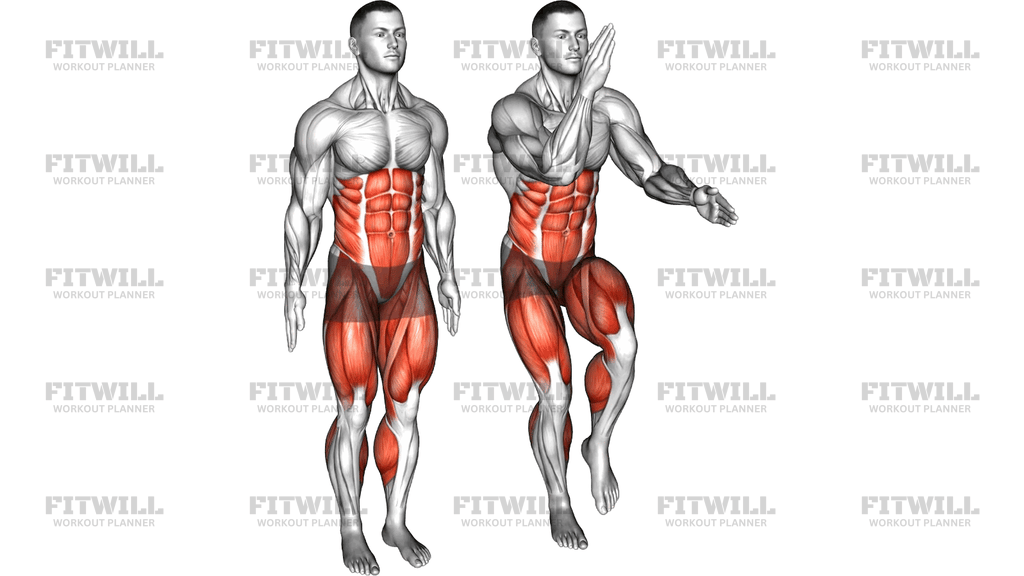
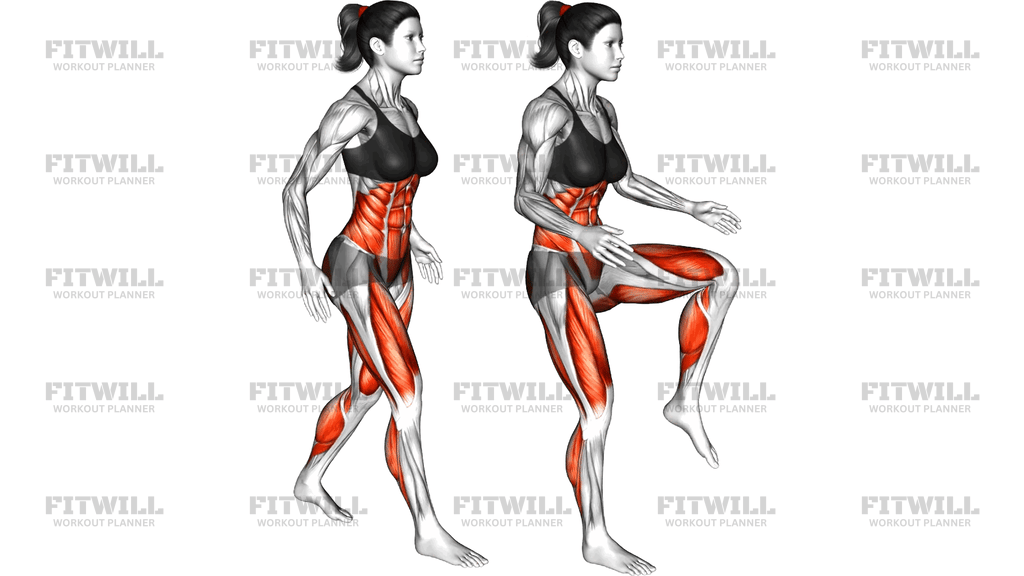
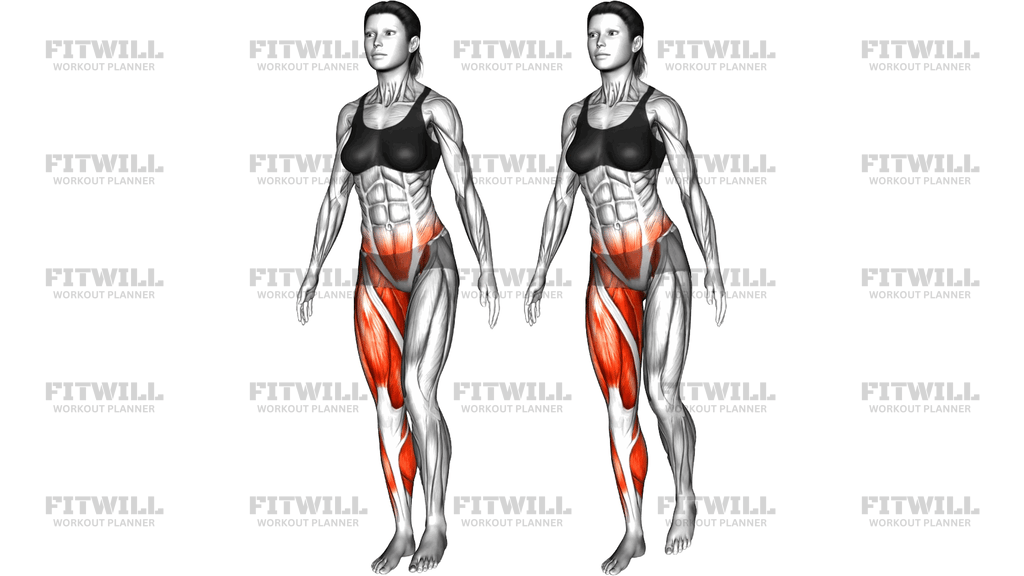
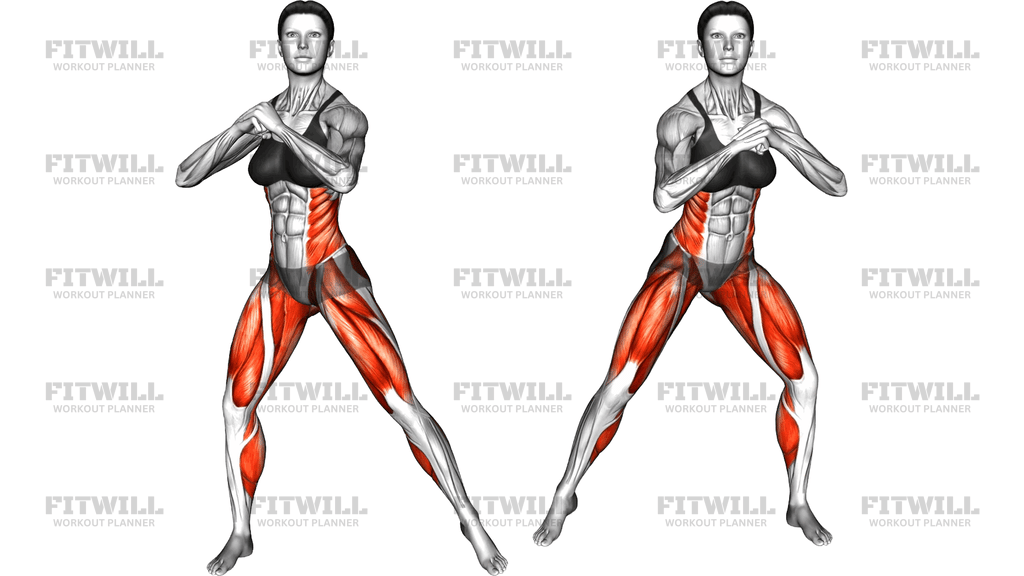
Side To Side Hop
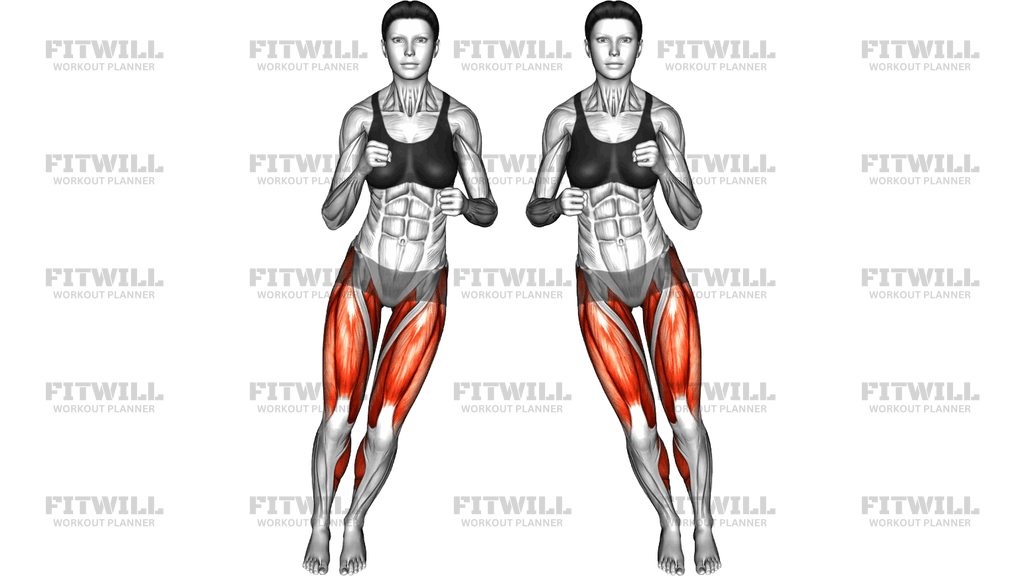
The Side To Side Hop is a bodyweight plyometric drill where you jump a few inches laterally from a two-footed stance and immediately rebound back in the other direction, chaining hops together in a continuous rhythm. It looks simple, but it demands quick ground contact, an upright torso, and soft knees, which makes it one of the most efficient ways to build lateral agility with zero equipment.
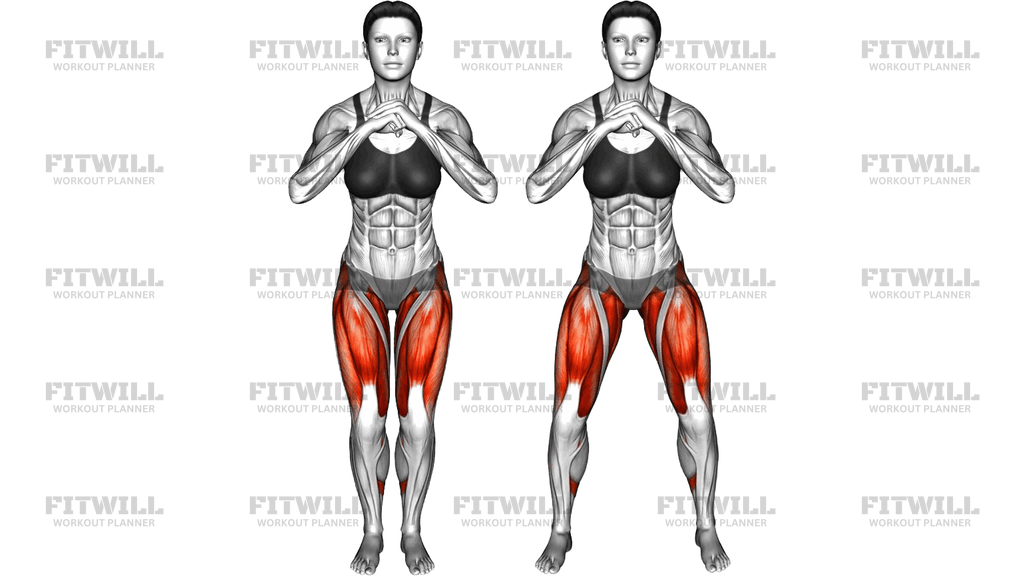
This movement trains the quadriceps, glutes, and calves as the prime movers, while the hip abductors and adductors control every landing and push-off. Because you absorb and redirect force sideways rather than forward, it also strengthens the ankles, knees, and hips in the frontal plane, which is exactly where most daily movement and field sports happen. Your core works isometrically the whole time to keep the trunk quiet over a moving base of support.
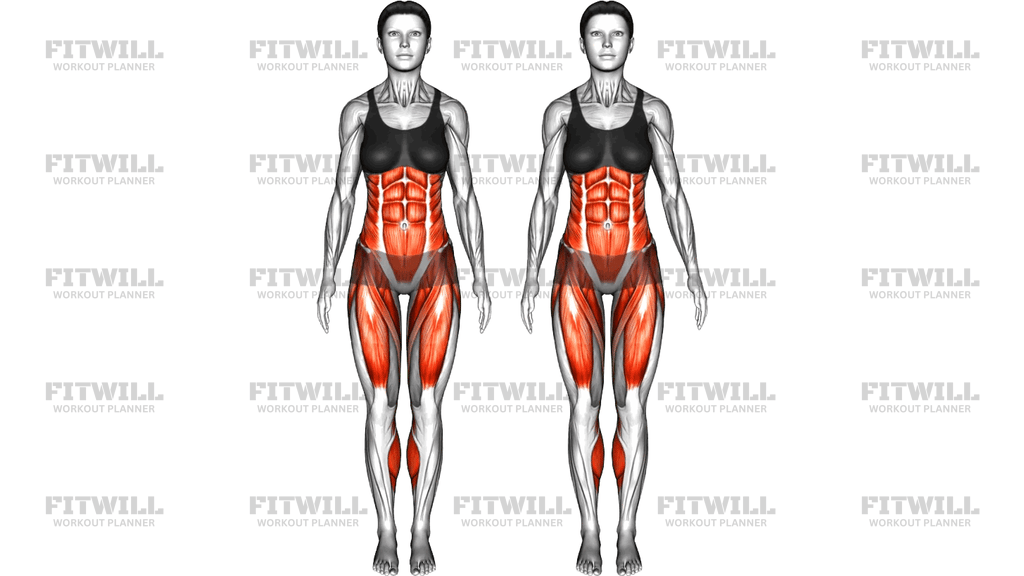
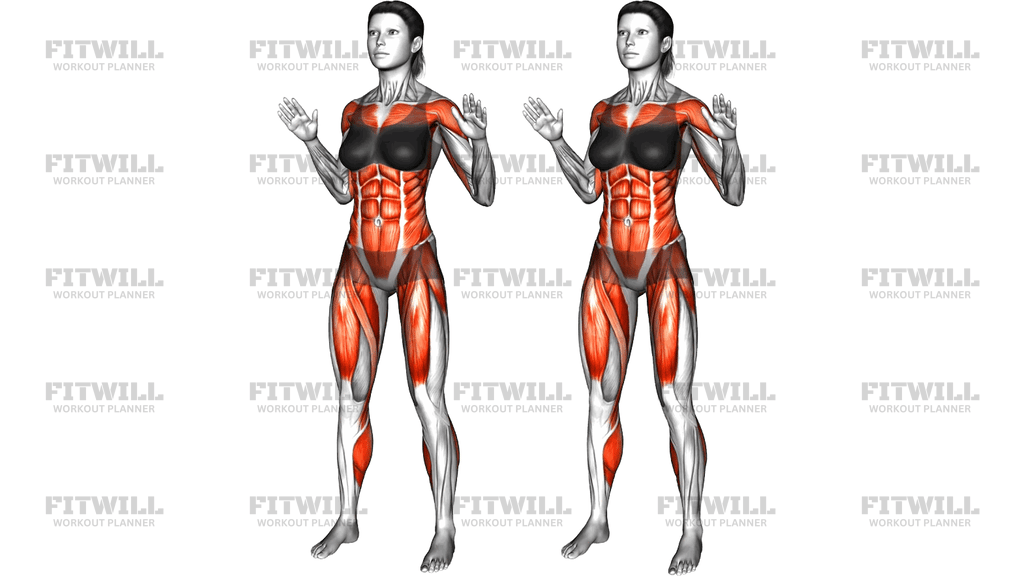
Setup matters more than people expect. Stand with the feet together or hip-width apart, knees softly bent, and arms bent at your sides ready to swing. If you start tall and stiff with straight legs, every landing slams through the joints instead of moving through the muscles. A slight athletic stance, with weight over the midfoot and the chest up, lets you rebound instead of just falling side to side.
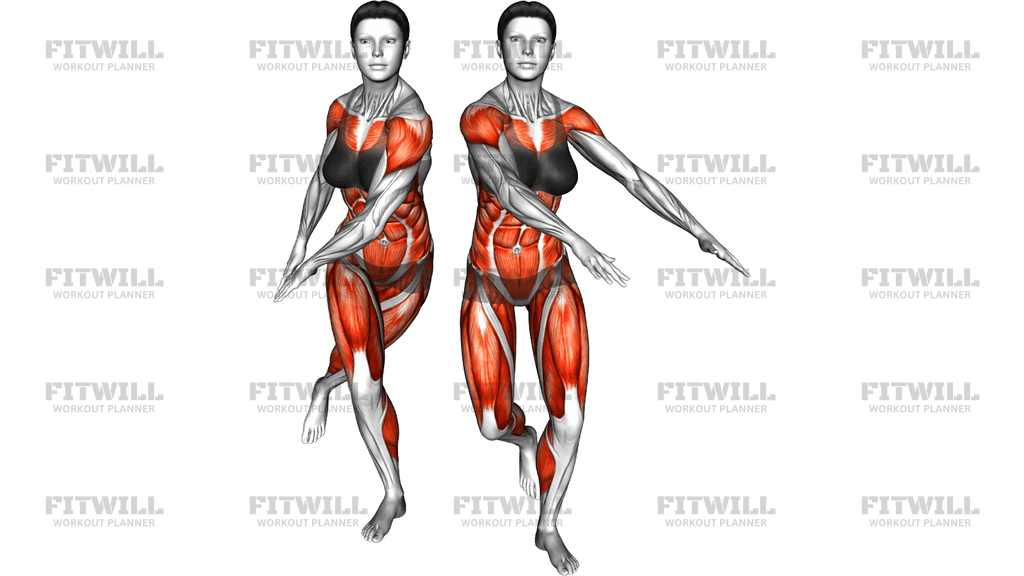
To execute well, push off one side, travel only a few inches to a foot, land on both feet with bent knees, and immediately rebound the other way. The hops should be low, quick, and quiet. If your landings are loud, you are crashing rather than absorbing. Keep the torso fairly vertical and let the arms swing naturally to counterbalance the legs.
Side To Side Hops show up in warm-ups, agility circuits, HIIT classes, and rehab-adjacent conditioning once basic squatting and landing mechanics are solid. They are especially useful for racket sport players, skiers, and field sport athletes who need to change direction fast. Beginners can start with slow, deliberate side steps or short sets of five to ten seconds, while advanced trainees can extend to thirty-second bursts or add speed.
From a safety standpoint, treat this as an impact exercise: land on a firm, non-slip surface, in supportive shoes, with the knees tracking over the feet. If you feel sharp knee or ankle pain, or your form gets sloppy as you tire, stop the set. Quality of contact beats speed every time.
[ Workout Log & Planner ]
Put your next workout in Fitwill
Keep your plan and training log ready when you are.


Instructions
- Stand upright with your feet together or about hip-width apart, arms bent at your sides with loose fists, and your weight balanced over the midfoot.
- Sink into a shallow athletic stance by bending the knees and hips slightly, keeping the chest lifted and the back neutral.
- Brace the core lightly as if bracing for a light nudge, and lift the heels a fraction so you are springy on the balls of your feet.
- Push off with both legs and hop sideways a few inches to a foot, keeping the hop low to the ground.
- Land on both feet at the same time with knees bent, letting the hips and knees absorb the impact quietly.
- Without pausing, rebound immediately in the opposite direction, keeping the rhythm even from side to side.
- Swing the arms naturally in opposition to the legs to stay balanced, keeping the shoulders relaxed.
- Breathe in a steady rhythm throughout, exhaling on each push-off rather than holding your breath.
- Continue for your chosen time or rep count, then stop by taking one final landing, standing tall, and letting the heart rate settle before the next set.
Tips & Tricks
- Keep the hops low. High jumps slow down the rebound and multiply the landing force on the knees and ankles.
- Aim for quiet landings. If your feet are slapping the floor, bend the knees and hips a little more on contact instead of locking out.
- Do not let the knees cave inward on landing; think about pushing the knees out slightly over the toes so the hips control the movement.
- If you drift forward or backward across the room, pick a floor line or tile seam and hop along it to keep the path purely lateral.
- Start each set slower than feels necessary. Speed is easy to add later, but sloppy fast reps are hard to unlearn.
- Keep the torso upright and the gaze forward. Leaning the chest toward the direction of the hop usually means the core has switched off.
- If your calves burn before your legs feel challenged, shorten the hop distance and focus on a quick, springy toe-off.
- Do Side To Side Hops on a firm, non-slip surface in cushioned shoes; soft, uneven ground like thick grass or sand makes lateral landings less predictable.
- Stop the set when your rhythm gets choppy. Tired, heavy landings are where ankles and knees get annoyed, not tired muscles.
Frequently Asked Questions
What muscles does the Side To Side Hop work?
The quadriceps, glutes, and calves drive each hop, while the inner and outer hip muscles control every sideways landing. The core also stays engaged to keep your torso steady over a moving base.
Is the Side To Side Hop suitable for beginners?
Yes, as long as you start with small, slow hops and shallow knee bend. If even that feels jarring, begin with alternating side steps without leaving the ground and progress to hopping once the landings feel smooth.
How far should I hop sideways?
A few inches to about a foot is plenty. The goal is a quick rebound and controlled landing, not maximum distance, and short hops let you keep a fast, even rhythm.
Why do my knees drop inward when I land?
That usually means the outer hip muscles are fatigued or not yet strong enough to stabilize the landing. Slow the tempo, shorten the hop distance, and consciously think about spreading the knees slightly over the toes on contact.
Can I do Side To Side Hops every day?
Short, easy bouts are fine for most people, but because this is an impact exercise, it is smarter to give your legs a day between higher-volume sessions. If your ankles or shins feel beat up, take an extra rest day.
What can I use instead of the Side To Side Hop?
Fast lateral side steps, side-to-side lunges, or low lateral skater steps without the jump all train similar muscles with much less impact. A small step platform can also be used for controlled lateral step-ups.
How long should I perform Side To Side Hops?
Beginners can work in sets of 10 to 20 seconds, while conditioned trainees often use 20 to 40 second bursts in intervals or circuits. Stop the set as soon as your rhythm and landing quality deteriorate.
Should my arms move during the Side To Side Hop?
Yes, let them swing gently with a natural counterbalance to the legs, with the elbows bent and shoulders relaxed. Stiff, pinned arms make balance harder, while exaggerated swinging wastes energy.
Is it safe to do Side To Side Hops if I have knee issues?
It depends on your specific situation, so check with a qualified professional first. If you do proceed, keep the hops very low, land with soft knees, and stop immediately if you feel sharp pain rather than muscle effort.