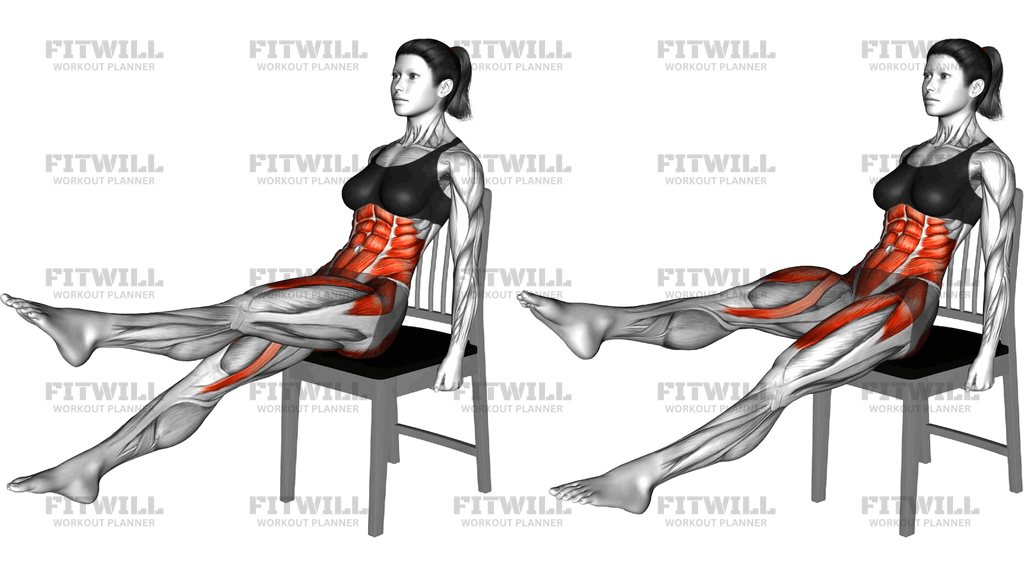
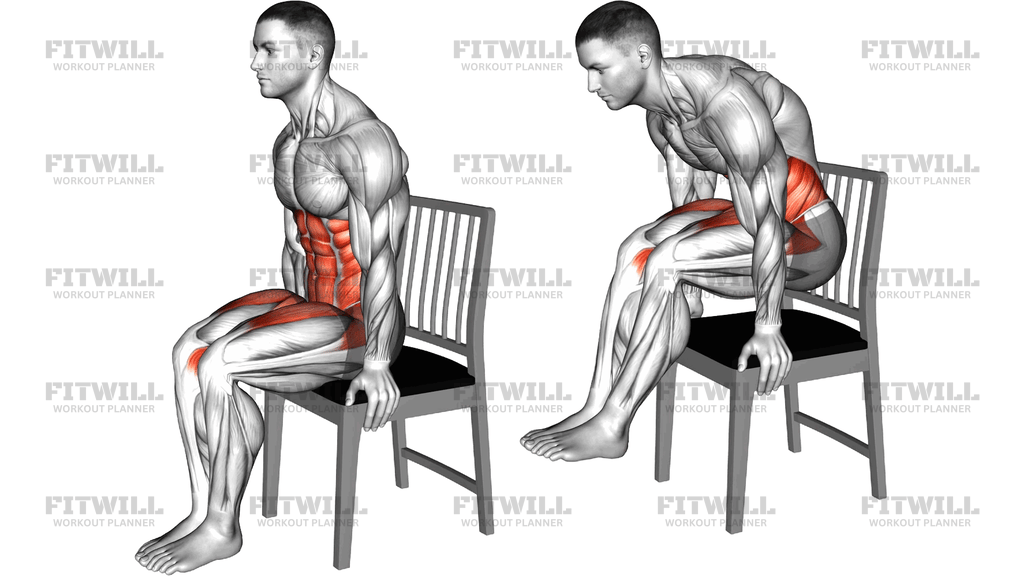
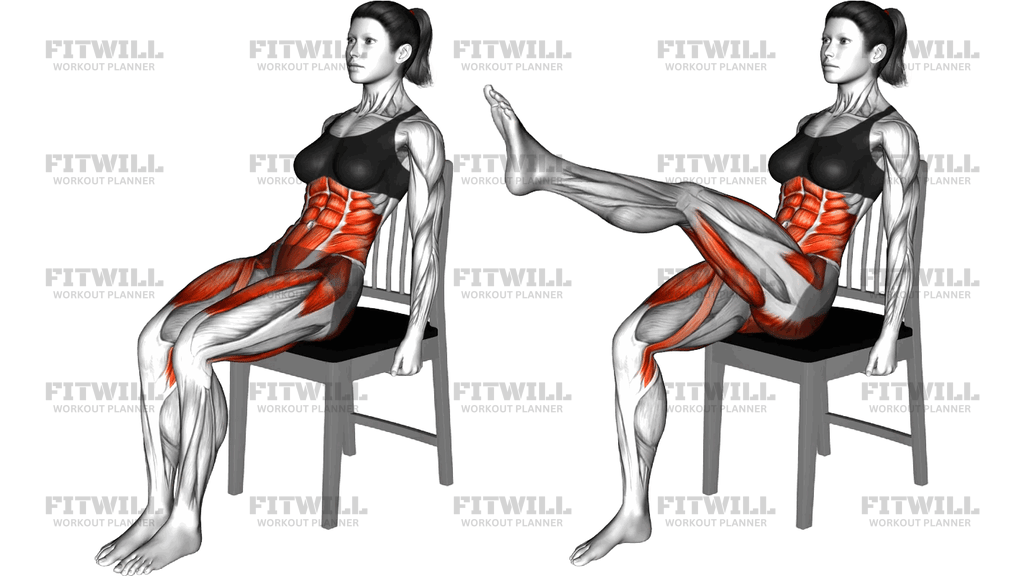
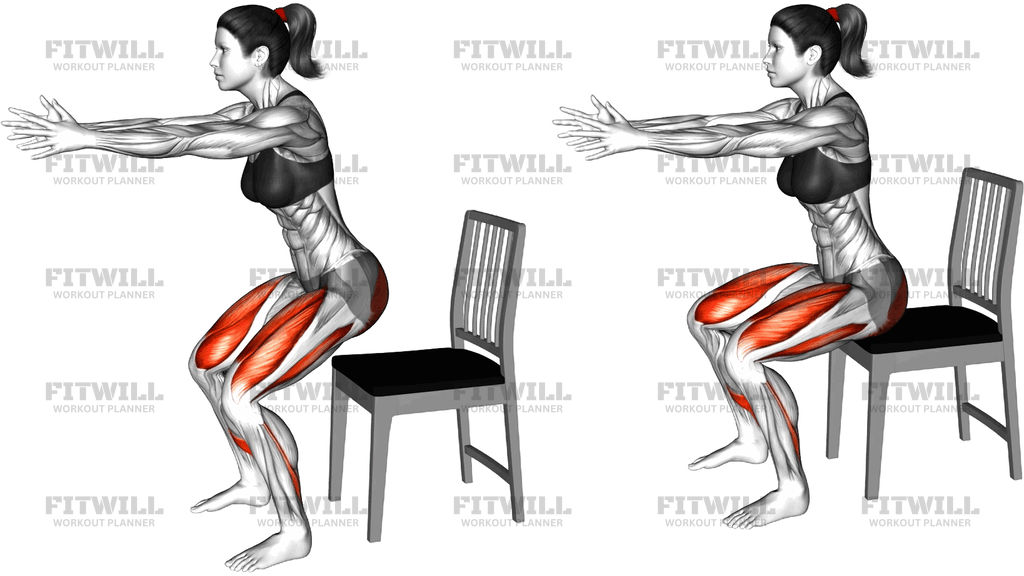
Sitting Stepout Hands Up On A Chair
Sitting Stepout Hands Up On A Chair is a low-impact seated drill that pairs a wide leg step-out with a deliberate overhead arm raise, all performed from a sturdy chair. You stay supported on the seat the entire time, which makes this one of the simplest ways to combine lower-body and upper-body movement without load, balance demands, or getting down to the floor. From a tall seated position with your feet together, you step one foot out wide to the side, raise your hands straight up, and then reverse the whole thing in a controlled rhythm.
This exercise is especially useful for beginners, older adults, people returning to training after a long layoff, and anyone who spends long hours sitting and wants a movement break that does not require equipment beyond a stable chair. Because the chair takes over the job of holding you upright, you can focus entirely on how the legs and arms move rather than on staying balanced. That also makes it a common warm-up drill before lower-body sessions and a frequent choice in seated circuit or mobility-style workouts.
The main work happens around the thighs and hips. Lifting the foot and placing it out wide asks the hip muscles to move and control the leg away from the midline, while the thigh muscles, including the quads, stay active to stabilize the knee as the stance widens. Raising the hands up brings the shoulders into the picture, particularly the front and side portions of the deltoids, with support from the upper traps and the muscles that hold your torso tall. Your core works quietly the whole time to keep your ribs stacked over your pelvis, especially at the moment the arms go overhead.
Setup matters more than it looks. The chair needs to be heavy or positioned against a wall so it cannot slide, and the seat height should let your feet rest flat on the floor with your shins roughly vertical. Sitting too low crams the hips and makes the step-out sloppy; sitting too high encourages you to slump. Your posture on the seat — sit bones planted, chest tall, gaze forward — is what allows the arm raise to happen at the shoulder joint instead of turning into a lower-back arch.
To execute it well, treat each rep as two clean halves: the step-out with the arm raise, and the controlled return. Move the foot out to a width where you still feel grounded and both sit bones stay on the seat, lift the hands smoothly to overhead rather than jerking them up, and bring everything back with the same care. The most common errors are rushing, letting the back arch as the arms rise, letting the stepping foot collapse inward, and pushing off the thighs with the hands. Keep the tempo moderate, keep the breathing steady, and let the chair do its job as a stable base.
[ Workout Log & Planner ]
Put your next workout in Fitwill
Keep your plan and training log ready when you are.


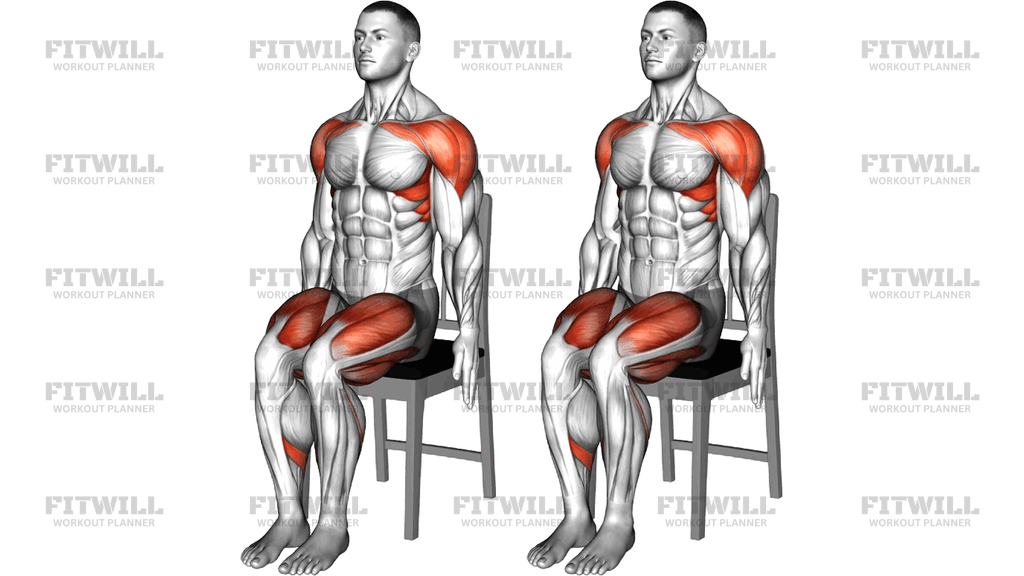
Instructions
- Place a sturdy, armless chair on a non-slip floor, ideally with its back against a wall so it cannot slide, and sit on the front half of the seat.
- Sit tall with your sit bones planted, feet flat on the floor together, shins roughly vertical, and your arms hanging relaxed at your sides.
- Lightly brace your abdominal muscles and stack your ribs over your hips so your torso is upright before anything moves.
- Step your right foot out wide to the side, placing it flat on the floor with the toes pointing forward or slightly out.
- As the foot plants, raise both hands straight up overhead in a smooth arc, palms facing each other or forward, finishing with your upper arms near your ears.
- Step your left foot out to match so both feet are set wide, keeping both sit bones on the seat and your weight even through both legs.
- Pause briefly at the top, then lower your arms back down along the same path and step the feet back in one at a time until they are together.
- Exhale as you step out and raise your hands, and inhale as you return to the seated position with feet together and arms down.
- Reset your posture at the bottom of each rep — tall spine, feet flat, shoulders relaxed — before starting the next repetition.
- Complete your target reps or time, alternating which foot steps out first on each set to keep the work even.
Tips & Tricks
- If your lower back arches when your hands go overhead, raise the arms only as high as you can keep your ribs down — overhead reach often fails at the spine before the shoulder.
- Keep the stepping foot flat and pushing gently into the floor; a common mistake is letting the knee drift inward as the stance widens, so cue the knee to track over the toes.
- Do not push off your thighs with your hands to help the movement — the arms are meant to travel up, not to lever your torso around.
- A lightweight kitchen chair can slide; test it with a few slow reps or brace the back legs against a wall before committing to a full set.
- Widen the step only as far as both sit bones stay planted — when one hip starts lifting off the seat, you have gone past the useful range for this setup.
- Slow the lowering phase down deliberately; most people control the step-out but let the feet snap back together, which wastes the control half of the exercise.
- Keep your shoulders relaxed as the hands rise — shrugging toward the ears is a sign the upper traps are taking over work the shoulders should be doing.
- If a full overhead reach is uncomfortable, raise the hands to shoulder height instead; the leg pattern and posture benefits stay the same.
- Alternate the leading leg between sets so one side does not quietly do more of the stepping work over weeks of practice.
Frequently Asked Questions
What muscles does Sitting Stepout Hands Up On A Chair work?
The thigh muscles, especially the quads, work to control the leg as you step out and back, while the hips move the leg away from the midline. The shoulders, mainly the front and side delts, handle the arm raise, and your core stabilizes your upright torso throughout.
Is this exercise suitable for complete beginners?
Yes, it is one of the most beginner-friendly combination drills because the chair supports your weight and removes balance demands. Start with a narrow step-out and hands raised only to shoulder height, then progress the range as it feels comfortable.
How wide should I step my feet out during Sitting Stepout Hands Up On A Chair?
Step out to a width where both feet stay flat, your knees track over your toes, and both sit bones remain on the seat. If a hip lifts or a foot turns sharply outward, the stance is too wide for your current mobility.
Why does the arm raise matter if the legs are doing the stepping?
The hands-up portion turns a simple leg drill into a full-body pattern, adding shoulder work and demanding more from your core to keep the torso tall. It also makes the exercise useful as a warm-up for movements that combine upper and lower body.
My lower back arches when my hands go up — how do I fix it?
That usually means the shoulder or upper-back range is limited, so the spine compensates. Slow the arm raise down, keep your ribs stacked over your pelvis, and stop the hands at whatever height your back position can hold.
What kind of chair should I use?
Use a stable, armless chair without wheels, placed on a non-slip surface or against a wall. Padded chairs with arms or office chairs on casters either block the arm path or slide out from under you.
How is Sitting Stepout Hands Up On A Chair different from a standing step-out?
The seated version removes the balance and strength demands of supporting yourself on one leg, so it isolates the hip and thigh movement in a safer range. The standing version loads the legs much more but requires far more stability.
How many reps should I do?
Start with 8 to 12 controlled reps, stepping out and back at a pace you can fully control, and build toward 2 to 3 sets. It also works well timed, such as 30 to 45 seconds of continuous step-outs as a warm-up.
What can I substitute if I do not have a suitable chair?
A sturdy bench or the edge of a stable, armless seat works the same way. If you have no seat at all, a seated step-out on the floor with arm raises is the closest match, though it requires more hip mobility.
Can I do this exercise with knee or hip discomfort?
The seated, supported nature makes it gentler than most lower-body drills, but you should still keep the step-out narrow and pain-free, and check with a qualified professional if you have a known condition. Never push through sharp or pinching sensations.