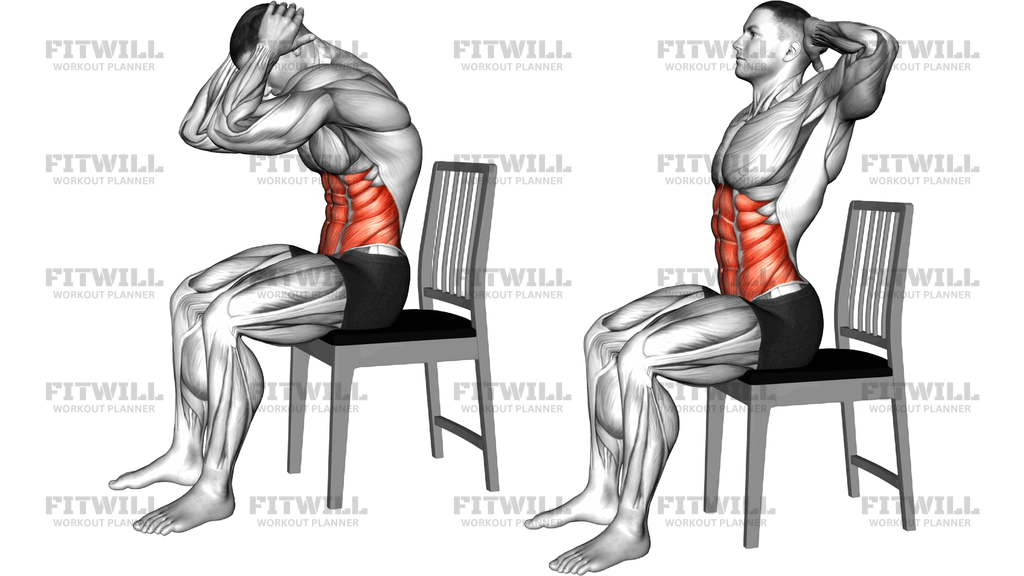
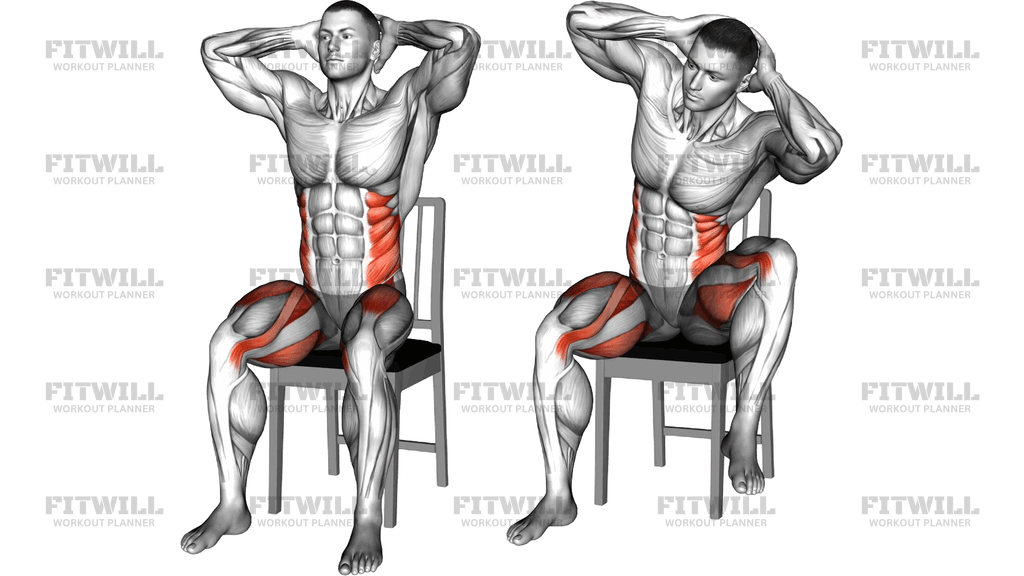
Flutter On A Chair
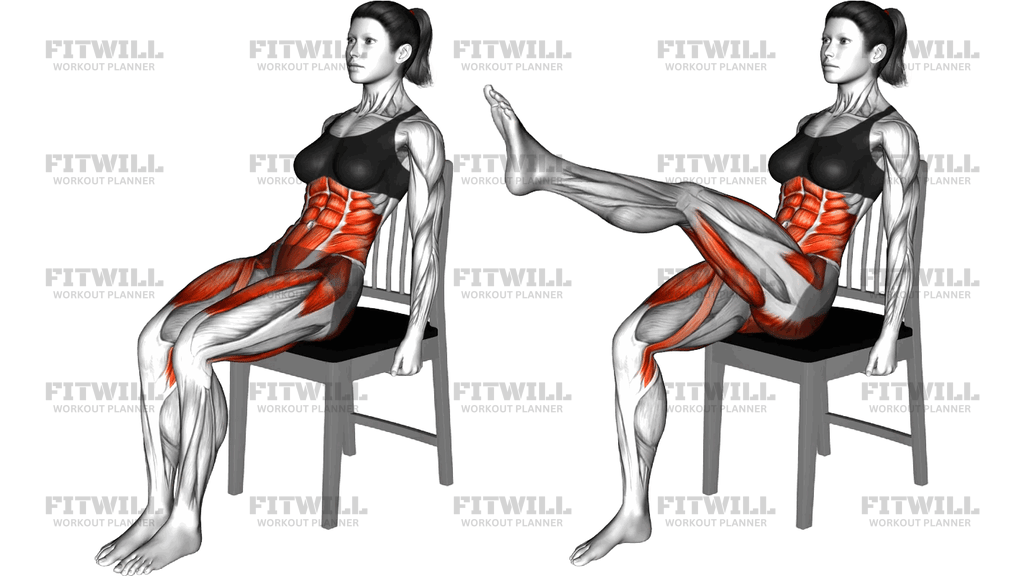
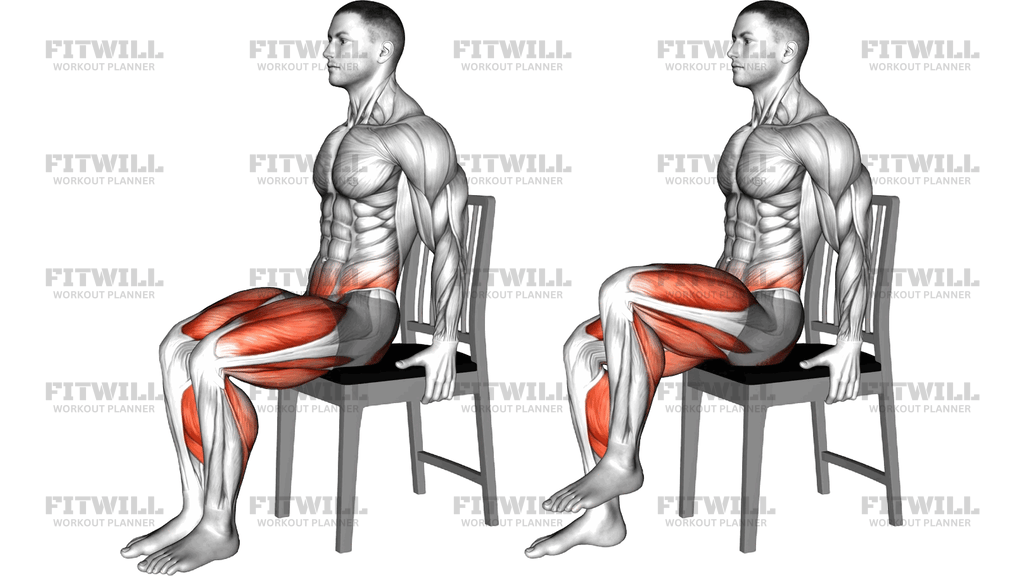
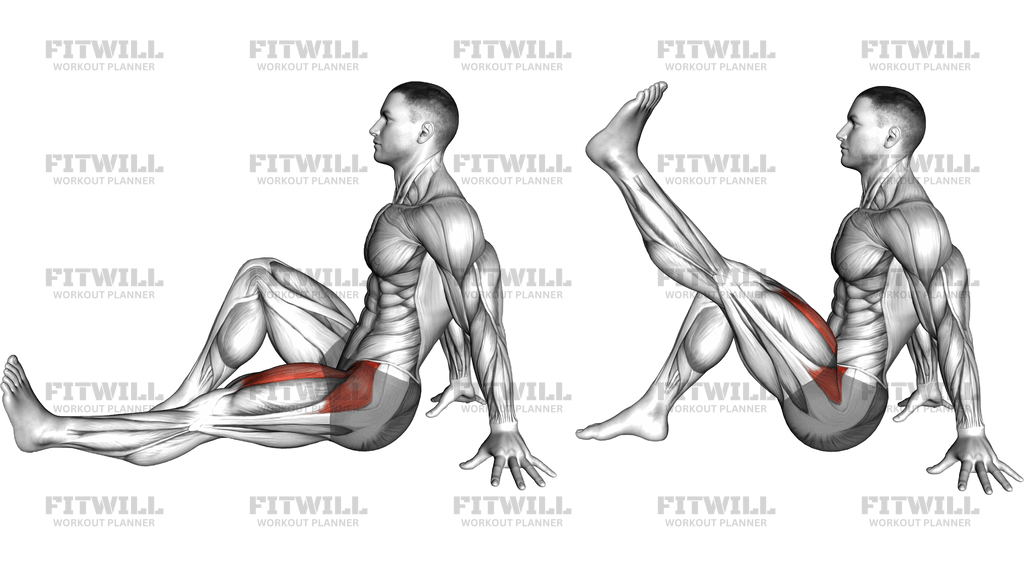
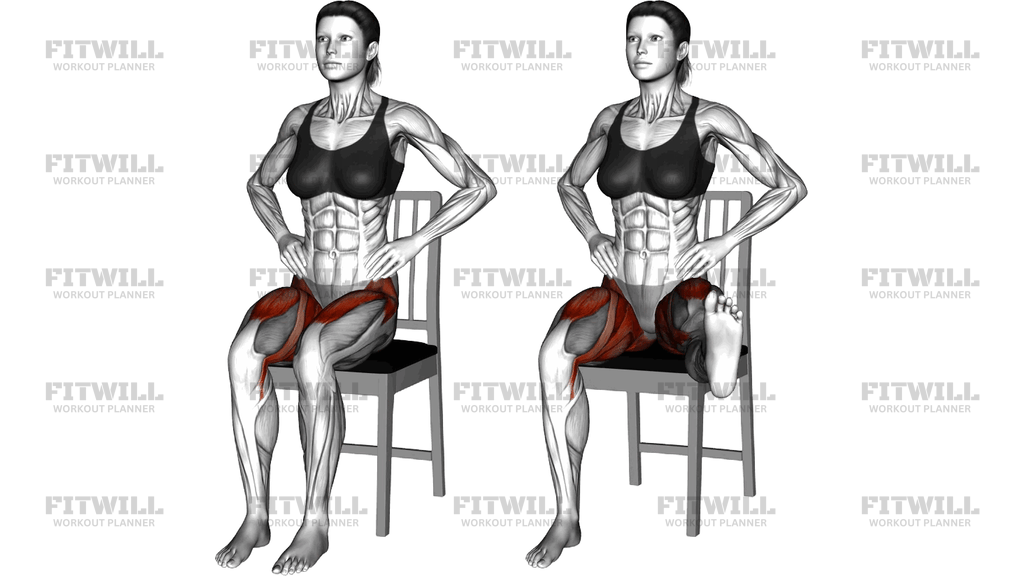
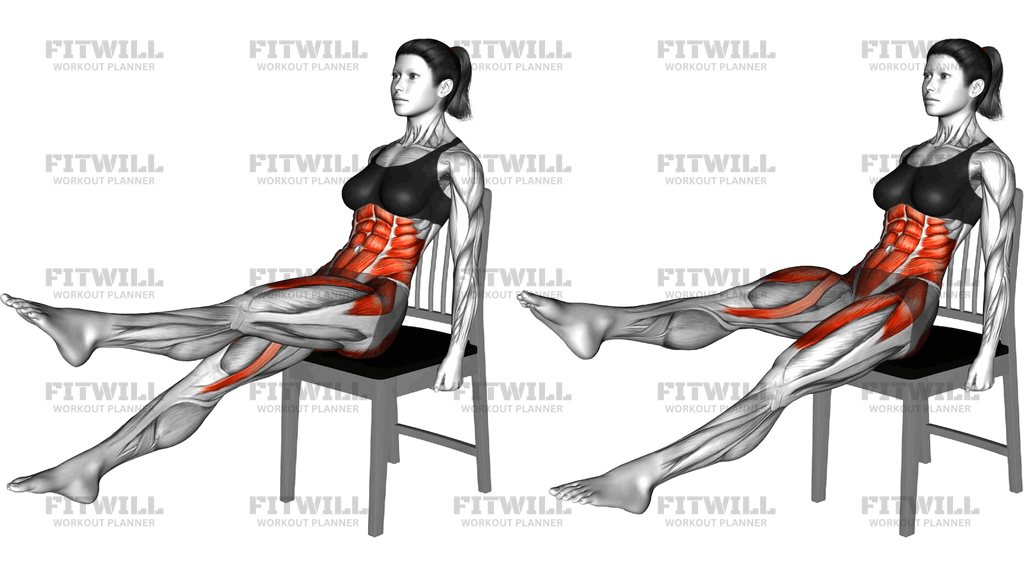
Flutter On A Chair is a seated core exercise where you sit on the edge of a sturdy chair, lean back slightly, grip the seat beside your hips, and beat your straightened legs up and down in a small, alternating flutter. Because the legs stay extended and held off the floor for the entire set, your lower abs and hip flexors have to work continuously to control the weight of the legs against gravity.
This movement fits well for people who want to train the abdominal wall without getting down on the floor, whether that is because of knee discomfort, a lack of mat space, or simply training in an office or home setting where a chair is the only equipment available. It also works as a progression step toward harder hanging leg raises: if you can hold both legs off the ground while fluttering on a chair, you are building the specific strength the hanging versions demand.
The main muscles working are the lower portion of the rectus abdominis and the hip flexors, which lift and hold the legs. The quadriceps stay active to keep the knees straight, and the deep core works to hold your torso steady while the legs move. Your arms and shoulders contribute isometrically as they brace against the seat, but they should not be doing the moving.
The setup matters more than it looks like it would. Sit right at the front edge of the chair so the backs of your thighs are just barely supported, grip the sides of the seat firmly, and lean your torso back only far enough to find balance. Lean too far back and your lower back arches and takes stress; sit too upright and the hip flexors do the job the abs should be doing. The torso angle is the dial that sets the difficulty.
Execution comes down to small, controlled beats. Extend both legs forward with a slight bend at the knee, lift the feet a few inches off the floor, and then alternate raising one leg while lowering the other in a steady rhythm, each foot traveling roughly the height of a coffee mug. Keep the flutter small, keep the lower back from collapsing into an arch, and keep breathing in a steady rhythm rather than holding your breath.
Aim for time under tension rather than speed: sets of 15 to 30 seconds, or 20 to 40 total beats, done for 2 to 4 rounds. If your lower back starts to arch or your legs sink, end the set, rest, and shorten the next one. Quality beats duration with this exercise every time.
[ Workout Log & Planner ]
Put your next workout in Fitwill
Keep your plan and training log ready when you are.


Instructions
- Sit on the front edge of a sturdy chair so that only the bottom half of your thighs is supported and nothing hangs over the front.
- Place your hands on the seat on either side of your hips and grip the edge firmly with your fingers wrapped around it.
- Lean your torso back to roughly a 45-degree angle, chest lifted, and draw your belly button in toward your spine to brace your core.
- Extend both legs straight out in front of you with a soft bend in the knees and lift your feet until they are a few inches off the floor.
- From this held position, raise one leg a few inches higher while lowering the other leg by the same amount, keeping both knees nearly straight.
- Switch the legs in a steady, small flutter, letting each foot travel only a few inches up and down per beat.
- Exhale steadily through the beats and inhale through the nose; do not hold your breath during the set.
- Keep your shoulders down and your weight supported through your hands and seat bones, not through hunching up toward your ears.
- Complete 20 to 40 beats or 15 to 30 seconds, then lower both legs slowly to the floor, release your grip, and rest before the next set.
- On every reset, re-brace the core and lift the legs back to the starting height before beginning the next round.
Tips & Tricks
- If your lower back starts to arch or feel strained, raise your torso angle slightly more upright and lift the legs a little higher — the arch almost always comes from the legs dropping too low.
- Keep the flutter range small; big scissor-like swings turn this into a hip flexor power move and take the tension off the lower abs.
- Point your toes forward with the knees nearly straight. Letting the knees bend progressively is the most common way this exercise quietly gets easier.
- Grip the seat hard and pull your shoulder blades down. People who let the shoulders creep up toward the ears usually tire in the neck before the abs.
- If the chair slides or feels unstable, place it against a wall so the back legs cannot kick out from under you.
- Count beats out loud or tap a rhythm with your feet. When you can no longer keep the rhythm steady, the set is effectively over.
- Do not look down at your legs for each beat; keep your gaze forward on the wall to keep the neck relaxed.
- For an easier version, start with the feet only an inch off the floor and flutter one leg while the other stays lifted and still; alternate halfway through the set.
- To make it harder, hold a light object such as a water bottle between your ankles, or pause for two seconds each time one leg reaches its top position.
Frequently Asked Questions
Which muscles does Flutter On A Chair work the most?
The lower abs and hip flexors do the primary work of holding the extended legs off the floor and driving the flutter. The quadriceps help keep the knees straight, and the deep core stabilizes your torso throughout.
Why do my hip flexors burn more than my abs during Flutter On A Chair?
That usually means your torso is too upright or your lower back is arching, so the hip flexors take over. Lean back slightly more, re-brace the abs, and lift the legs a bit higher to shift the effort back to the abdominal wall.
Can beginners do Flutter On A Chair?
Yes, and the chair version is actually friendlier to beginners than floor flutter kicks because you can adjust the torso angle. Start with one leg fluttering while the other stays held still, or keep the beats very small and short.
How high should my feet be during Flutter On A Chair?
Hold the feet a few inches off the floor and let each beat travel only a few inches. The lower the legs drop, the more the lower back is loaded, so raise the working height if you feel any arching or strain.
What kind of chair should I use for Flutter On A Chair?
Use a stable, armless chair without wheels, ideally one with a firm flat seat you can grip on both sides. Place it against a wall if it tends to slide, and avoid padded chairs with soft edges that give your hands nothing to hold.
Is Flutter On A Chair safe for people with lower back issues?
It can be, but only if you keep the lower back pressed long rather than arched and stop the set as soon as you feel the legs sinking. If you have an existing back condition, check with a qualified professional before adding it to your routine.
How does Flutter On A Chair compare to floor flutter kicks?
Both train the lower abs and hip flexors, but the seated version lets you dial difficulty up or down by changing your torso angle, and it spares the low back for anyone who finds floor versions too aggressive. The floor version is harder because gravity pulls on the legs through a fuller range.
What can I use instead of a chair for Flutter On A Chair?
Any stable elevated surface works: a bench, the edge of a bed, or a sturdy ottoman, as long as you can sit at the front edge and grip beside your hips. The key is that your hands have something solid to brace against.
How long should I hold the flutter in Flutter On A Chair?
Start with 15 to 20 seconds or about 20 beats per set and build toward 30 to 40 seconds over a few weeks. End the set the moment your form breaks rather than grinding out extra seconds with an arched back.