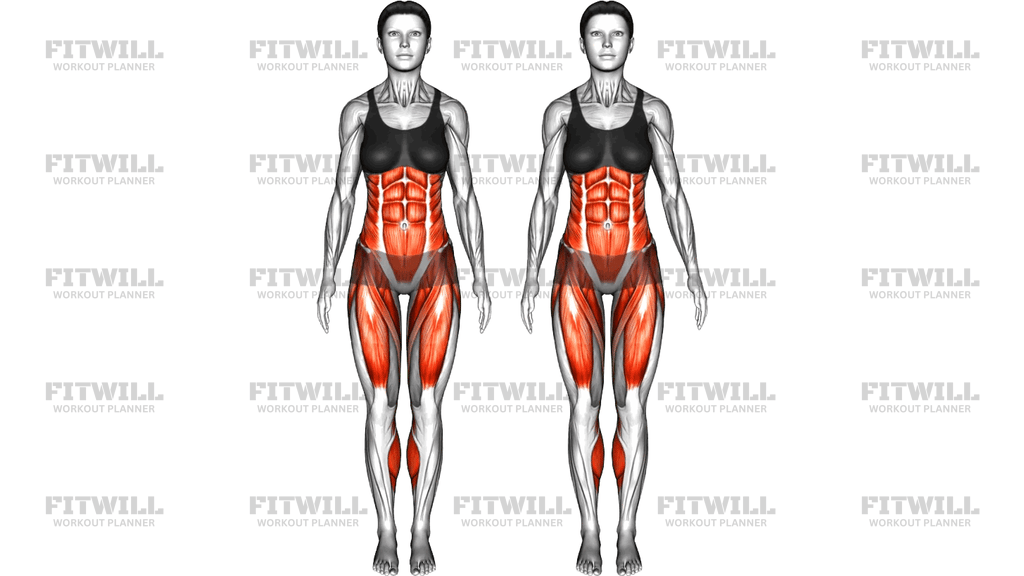
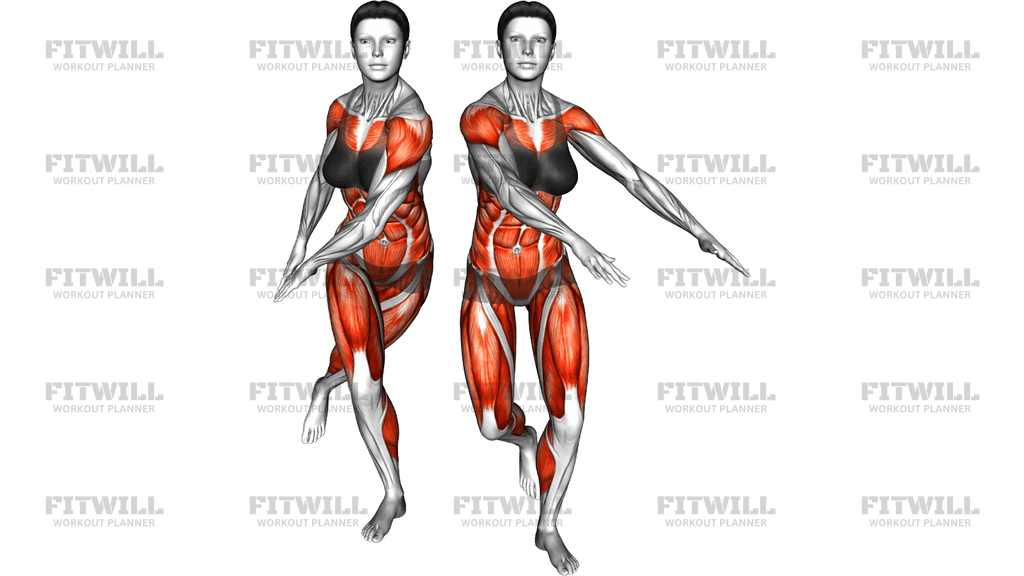
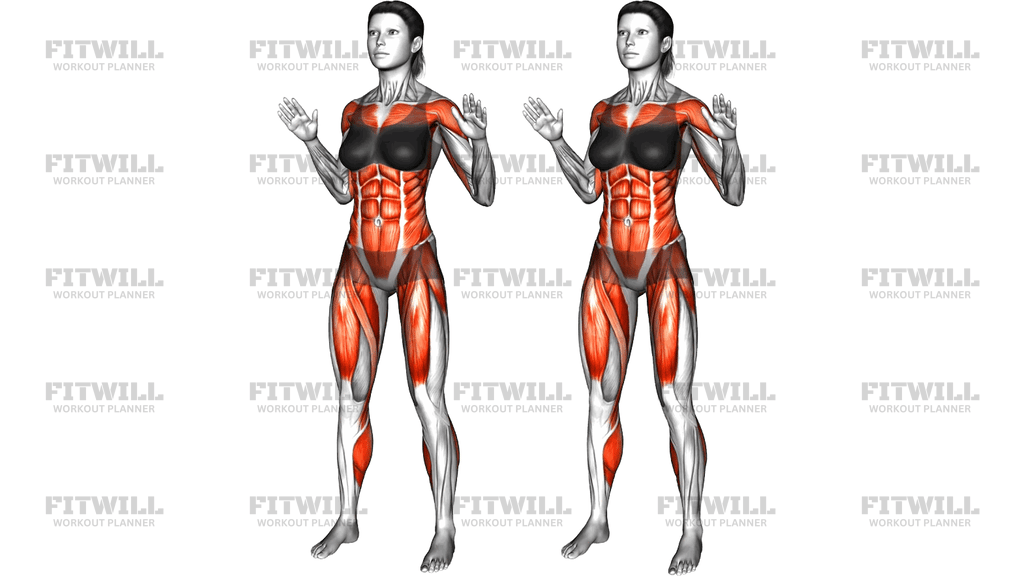
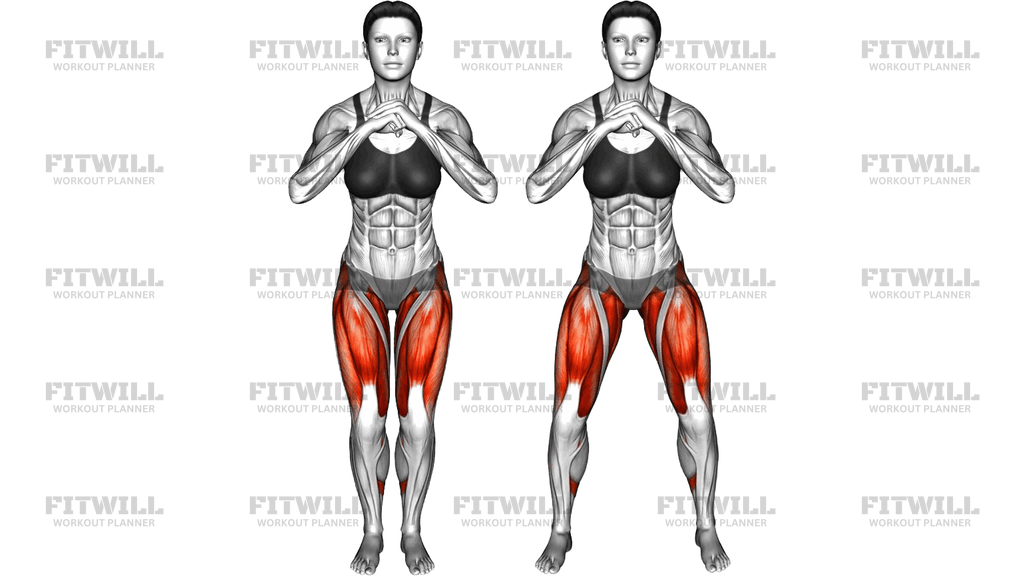
Lying 90 Degree Alternate Leg Extension
The Lying 90 Degree Alternate Leg Extension is a body weight core and thigh exercise performed from your back with both hips and knees bent to 90 degrees, so your shins are parallel to the floor. From there, you straighten one leg out over the floor while the other leg holds its bent position, then switch. It looks simple, but keeping the trunk completely still while one leg leaves the stable support position is exactly what makes it valuable.
The working leg drives the movement through the quadriceps, with the rectus femoris doing double duty as a hip flexor and knee extender. At the same time, the deep core and lower abs have to brace hard to stop your lower back from arching as the extended leg lengthens away from your body. That combination of moving one limb while resisting movement in the spine is the same skill that carries over to walking, running, climbing stairs, and nearly every standing single-leg activity.
This is a strong pick for beginners building trunk control before progressing to dead bugs or leg lowers, for people returning from time away from training who need a low-load reintroduction to core work, and for lifters who want a quad-focused drill that also challenges pelvic stability. Because it is done on the floor with no external load, you can scale it easily by limiting how far the leg extends or by slowing the tempo.
The 90 degree starting position matters more than it appears. With hips and knees both at right angles, your lower back sits in a neutral position against the floor, and the bent leg acts as an anchor for the pelvis. If you start with legs too low or let the extended leg drop toward the floor before you can control it, the lumbar spine takes over the work and the core benefit disappears. Set the position deliberately before the first rep.
Execution comes down to one idea: the leg moves, the torso does not. Straighten the knee fully on each extension, reach the leg out to roughly 45 degrees above the floor or higher if that is where you can keep your back flat, then bend the knee and draw the leg back to the stacked start before switching sides. Move with control rather than speed, and treat the transition between legs as part of the exercise, not dead time between reps.
[ Workout Log & Planner ]
Put your next workout in Fitwill
Keep your plan and training log ready when you are.


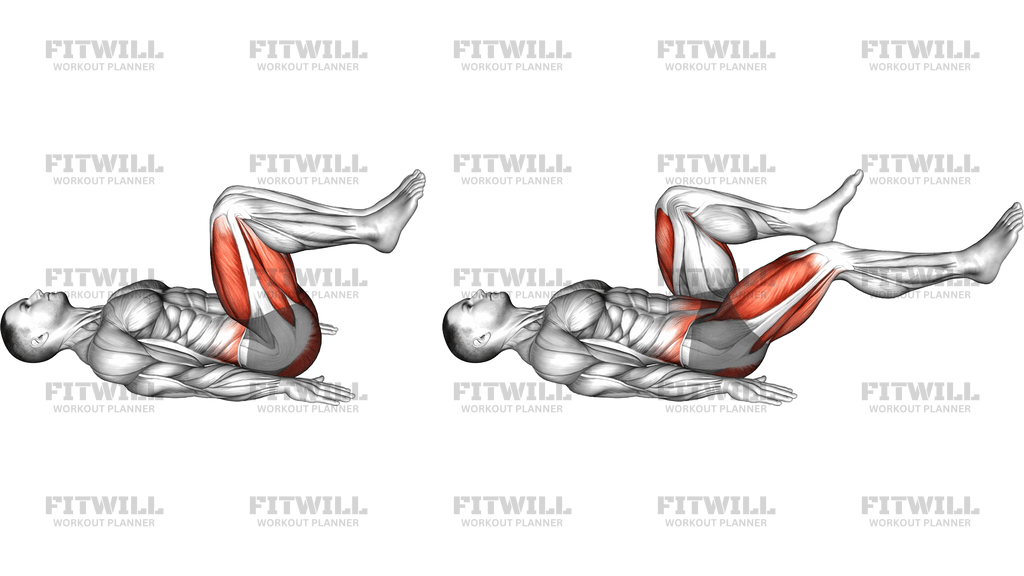
Instructions
- Lie flat on your back on an exercise mat with your arms relaxed at your sides and palms down.
- Raise both legs and bend your hips and knees to 90 degrees so your shins are parallel to the ceiling and your knees sit directly over your hips.
- Press your lower back gently toward the floor and brace your core as if preparing for a light push to the belly.
- Keeping one leg holding the 90 degree position, slowly straighten the other knee and lower that leg out over the floor until it is extended at roughly 45 degrees or as far as you can go without your back arching.
- Pause briefly at the end of the extension with the knee fully straight and the leg hovering above the floor.
- Bend the knee and draw the leg back up to the stacked 90 degree start position.
- Switch sides and extend the opposite leg, continuing to alternate for the desired number of reps.
- Exhale as the leg extends and inhale as it returns, keeping the breath steady instead of holding it.
- Keep your head, shoulders, and arms flat and relaxed throughout so the work stays in the thighs and trunk.
- When finished, bend both knees, lower your feet to the floor one at a time, and rest before the next set.
Tips & Tricks
- If your lower back lifts off the mat when the leg extends, do not extend as far; stop the leg higher, at 60 to 70 degrees, and earn more range over time.
- A common mistake is letting the extended foot drop toward the floor for a bigger stretch. The exercise targets the quad and hip control, not how close the heel gets to the ground.
- Press the palm of the hand on the working side down into the mat during each extension; this gives you instant feedback if the ribs flare or the back arches.
- Keep the resting leg locked in at 90 degrees. If that knee drifts toward your chest as the other leg extends, your pelvis is rotating and the brace has slipped.
- Take two to three seconds to extend and two to three seconds to return. Rushing turns this into a leg swing and removes most of the trunk challenge.
- Fully straighten the knee on every rep. Half-hearted extensions shortchange the quadriceps and make the rep count misleading.
- Place a towel under the natural curve of your lower back if your spine sits far from the floor; the gap should not grow during the movement.
- Breathe on every rep rather than bracing and holding; this exercise should build endurance in the deep core, not maximal pressure.
- If your hip crease cramps on the working side, that usually means the hip flexors are taking over. Shorten the range slightly and keep the extension higher.
Frequently Asked Questions
What muscles does the Lying 90 Degree Alternate Leg Extension work?
The quadriceps, especially the rectus femoris, drive the knee extension, while the hip flexors assist in controlling the leg. The lower abs and deep core work isometrically to keep the spine and pelvis still.
Is the Lying 90 Degree Alternate Leg Extension good for beginners?
Yes, it is one of the better entry points for core and leg control because the 90 degree starting position keeps the spine neutral and the load is just the weight of the leg. Beginners should limit how far the leg extends until they can keep their lower back flat.
Why do my hips and knees both start at 90 degrees in this exercise?
That stacked position puts your pelvis and lumbar spine in a neutral alignment and gives the bent leg a stable reference. It also makes any arching or tilting of the trunk easy to feel and correct.
How far should my leg extend during the Lying 90 Degree Alternate Leg Extension?
Extend until the knee is fully straight and the leg is around 45 degrees above the floor, but only as low as you can keep your lower back pressed to the mat. Height matters less than a flat back and a still torso.
What is the most common mistake with this movement?
Letting the lower back arch off the floor as the leg extends, which shifts the work from the core to the lumbar spine. The fix is to shorten the range and reset the brace before every rep.
How is this different from a dead bug?
A dead bug adds opposite-arm extension, which raises the coordination and trunk demands. The Lying 90 Degree Alternate Leg Extension isolates the leg pattern, making it a cleaner stepping stone and a better choice if your legs are the limiting factor.
Can I do the Lying 90 Degree Alternate Leg Extension without a mat?
Yes, a carpeted floor or grass works fine. A mat is simply there to cushion your spine and give you tactile feedback about whether your lower back stays down.
How many reps should I do?
Start with 8 to 12 extensions per leg, moving slowly, for 2 to 3 sets. Prioritize a flat lower back and full knee extension over total reps.
Is this exercise safe for people with lower back sensitivity?
It is generally spine-friendly because the back stays supported on the floor, but keep the extension range high and stop if you feel lumbar discomfort. Anyone with a history of back issues should clear new exercises with a qualified professional first.
What can I use to progress this exercise?
Progress by extending the leg lower toward the floor, adding ankle weights, or moving to the dead bug with opposite arm reach. Each option increases the demand on the core to resist the pull of the lengthening leg.