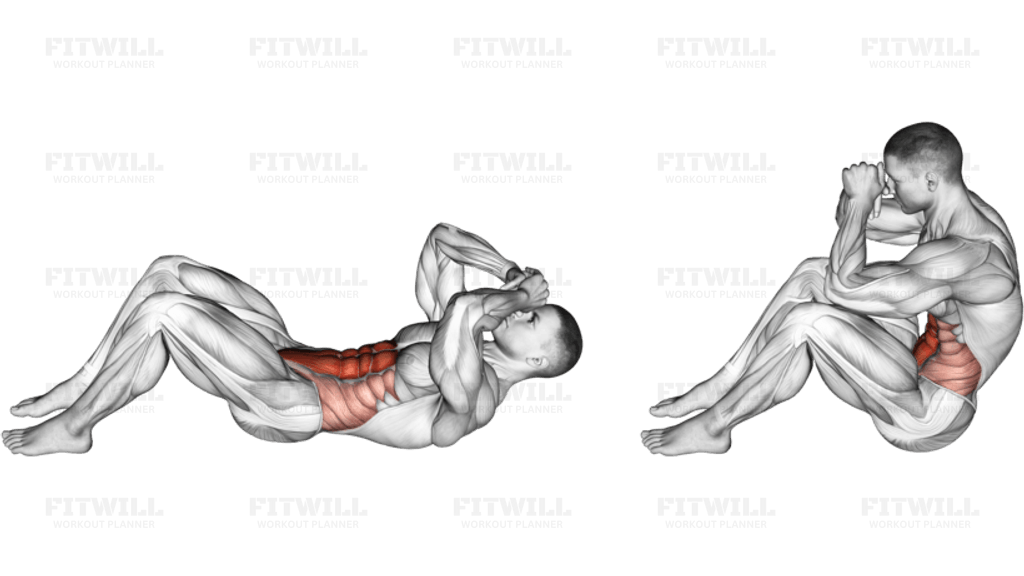
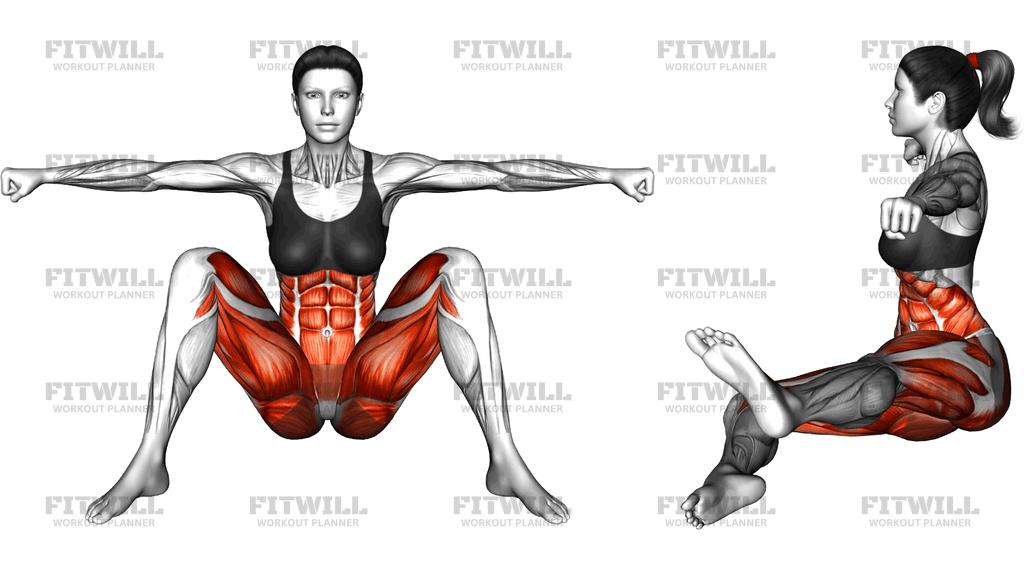
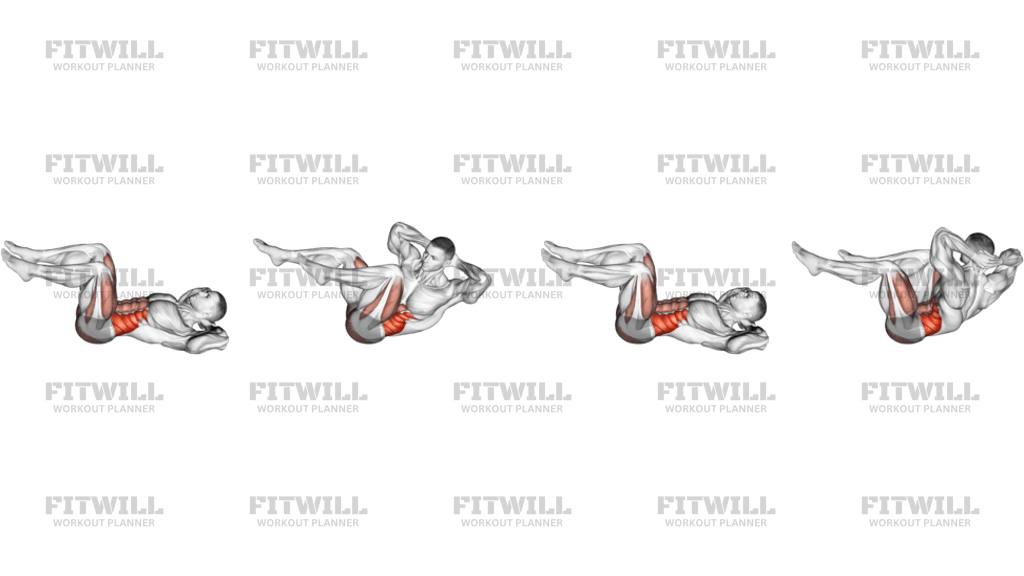
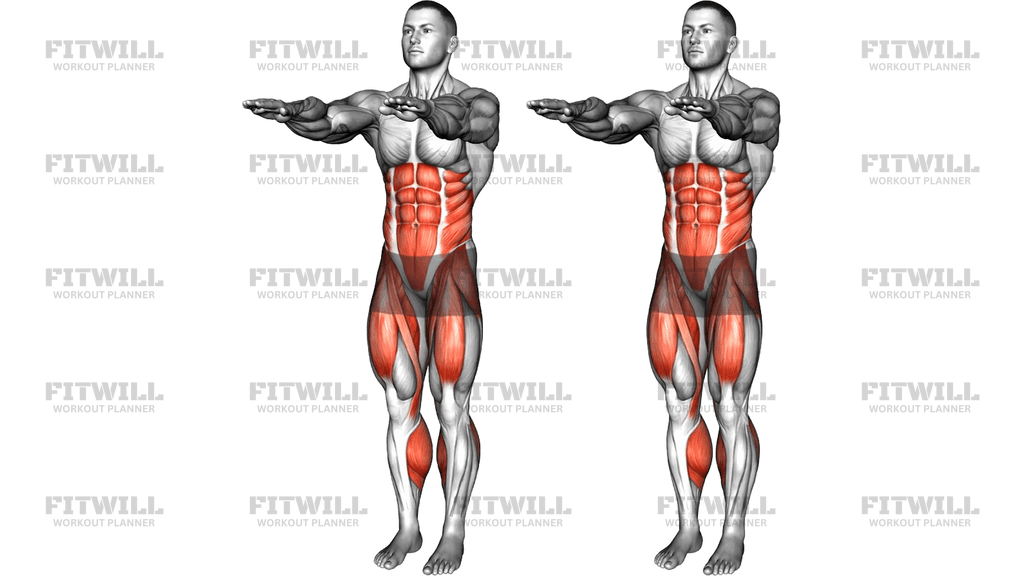
Seated Under Knee Crossed Arms Lean Back
The Seated Under Knee Crossed Arms Lean Back is a body weight balancing drill performed on the floor. You sit with your knees bent, cross your arms and hook each hand under the opposite knee so your arms lock your thighs in place, then lean your torso back until you are balancing on your sit bones with your feet resting lightly on the floor. Because your arms are laced behind your knees, you cannot pull with them or swing for momentum, which forces the abdominal wall and hip flexors to do the actual work of controlling your torso angle.
This setup makes the exercise especially useful for people who tend to cheat seated core work by yanking with their hands or rounding forward. With the arms fixed under the knees, the only adjustable variable is how far back you lean and how quietly you hold the balance. That makes it a natural progression toward more demanding holds like the boat pose and hollow-body positions, and a useful teaching tool for learning where your balance point over the sit bones actually sits.
The primary demand falls on the abs, particularly the rectus abdominis, which works isometrically to keep your spine from folding further back as you lean. The deep core braces to stabilize the trunk, the hip flexors hold your thighs toward your chest, and the muscles along the spine manage your torso angle. The crossed-arm position also passively stretches the low back as you settle into the lean, so many people feel a gentle release through the lumbar area while the front of the trunk works.
Setup matters more here than in most floor core drills. Sit far enough forward on your sit bones that you have room to tip back without your tailbone slamming down, and get your hands truly crossed and wedged under the knees before you shift your weight. If your arms are only loosely hooked, they will slip as you lean and you will instinctively catch yourself with a jerky movement. Take a moment to set the position each rep rather than rushing into the lean.
To execute well, exhale, brace your trunk, and tip back from the hips a few degrees at a time, keeping your chest tall and your shoulders relaxed down rather than shrugged toward your ears. Find the point where your weight sits squarely on your sit bones and your feet barely kiss the floor, pause there for a breath or two, then return upright under control. Common use cases include core finishers, warm-up activation for more intense abdominal training, and low-impact core work for people managing cranky low backs who still need anti-extension and hip flexor strength.
Keep the movement small and honest. A two-inch lean back performed with a braced trunk and a steady balance beats a dramatic lean that collapses into a rounded spine. If you feel pressure in your tailbone or a strain in your neck, shorten the range, sit on a folded mat for padding, and refocus on keeping the ribs drawn down toward the hips throughout the hold.
[ Workout Log & Planner ]
Put your next workout in Fitwill
Keep your plan and training log ready when you are.


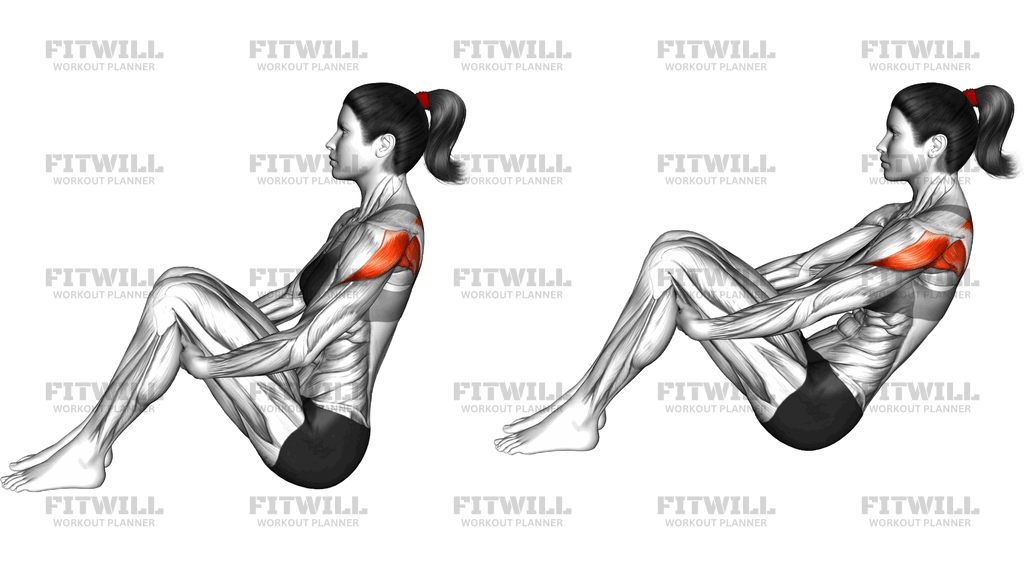
Instructions
- Sit on an exercise mat with your knees bent and your feet flat on the floor, positioned about hip-width apart and close enough to your hips that your knees point upward.
- Cross your forearms in front of your legs and slide each hand under the opposite knee, hooking your arms so the backs of your arms wedge firmly beneath the knees.
- Sit tall on your sit bones, drawing your shoulder blades down so your shoulders stay relaxed and away from your ears.
- Exhale and brace your trunk, pulling your ribs down and lightly tightening the abdominal wall as if bracing for a light push.
- Lean your torso back slowly from the hips, tilting a few degrees at a time while keeping your chest open and your spine long.
- Stop at the point where your weight balances squarely on your sit bones and your feet barely touch the floor, and hold that position for one or two controlled breaths.
- Return upright by tipping forward from the hips under control, letting your abdominal wall stay engaged until you are seated tall again.
- Breathe steadily throughout, inhaling as you settle into the lean and exhaling as you brace and return.
- Reset your hand position under the knees before each repetition so the crossed-arm lock stays secure, then repeat for your planned number of holds.
Tips & Tricks
- If your hands slip out from under your knees during the lean, you are leaning too far back for your current control; shorten the range and re-hook your arms so the backs of your forearms are truly wedged beneath the knees.
- A common mistake is collapsing into a rounded spine at the bottom of the lean. Fix it by imagining your sternum lifting toward the ceiling as you tip back, so the lean comes from the hips rather than a curl of the lower back.
- Shrugged shoulders are a giveaway that you are tensing your neck and upper traps instead of your trunk. Drop the shoulder blades down before every rep.
- If your tailbone aches on a hard floor, slide a folded mat or towel under your hips before starting; the balance point should feel like pressure on the sit bones, not bone-on-floor discomfort.
- Keep your feet light on the floor rather than lifting them. Pressing them down gently actually helps you find the balance point before you progress to hovering heels.
- Do not hold your breath during the hold. Exhaling as you lean back helps the deep core engage and keeps the brace from turning into a straining, red-faced effort.
- Watch for the temptation to rock into position using momentum. Each lean should start from a still, seated-tall position so the abs, not inertia, control the tilt.
- If you feel the work mostly in your hip crease and very little in your abdomen, lighten the lean angle and focus on drawing the ribs toward the hips to shift the demand back to the trunk.
Frequently Asked Questions
What muscles does the Seated Under Knee Crossed Arms Lean Back work?
The abs, especially the rectus abdominis, work isometrically to control your torso angle, while the deep core and hip flexors stabilize the trunk and hold the thighs in place. The lower back muscles manage the lean angle as you balance on the sit bones.
Why are the arms crossed under the knees in this exercise?
Hooking your arms under the knees locks your hands in place so you cannot pull or swing for momentum. This forces the trunk, rather than the arms, to control the lean and makes the balance point easier to find.
Is the Seated Under Knee Crossed Arms Lean Back suitable for beginners?
Yes, it is a good beginner-friendly core drill because the range can be kept small and the arms provide a stable anchor. Beginners should start with a shallow lean and brief holds before progressing deeper or longer.
How far back should I lean during the Seated Under Knee Crossed Arms Lean Back?
Lean only until your weight balances on your sit bones with your spine still long and your feet just touching the floor. Going further usually turns the position into a rounded, slumped hold that stresses the lower back instead of training the abs.
Should my feet stay on the floor during this exercise?
Yes, keep the feet resting lightly on the floor. Pressing them down gently helps you locate the balance point, and you can progress to hovering the heels once the lean feels stable.
What is the most common mistake in the Seated Under Knee Crossed Arms Lean Back?
The most common mistake is collapsing the chest and rounding the lower back as you tip back. Keep the sternum lifted and let the lean come from the hips so the trunk stays braced throughout.
Can I do the Seated Under Knee Crossed Arms Lean Back without a mat?
You can, but a mat or folded towel under the hips makes the sit-bone pressure much more comfortable, especially on hard floors. Comfort at the balance point lets you focus on bracing rather than padding.
What can I substitute if the crossed-arm position is uncomfortable for my shoulders?
Try the same lean-back balance with your arms extended straight forward at shoulder height, which trains the same trunk control without the under-knee hook. Reduce the lean angle if the balance feels much harder without the anchor.
Is it safe for my lower back?
When performed with a braced trunk and a modest lean angle, it is a gentle, low-load core exercise. Stop short of any position where your lower back rounds and strains, and keep the return to upright smooth and controlled.