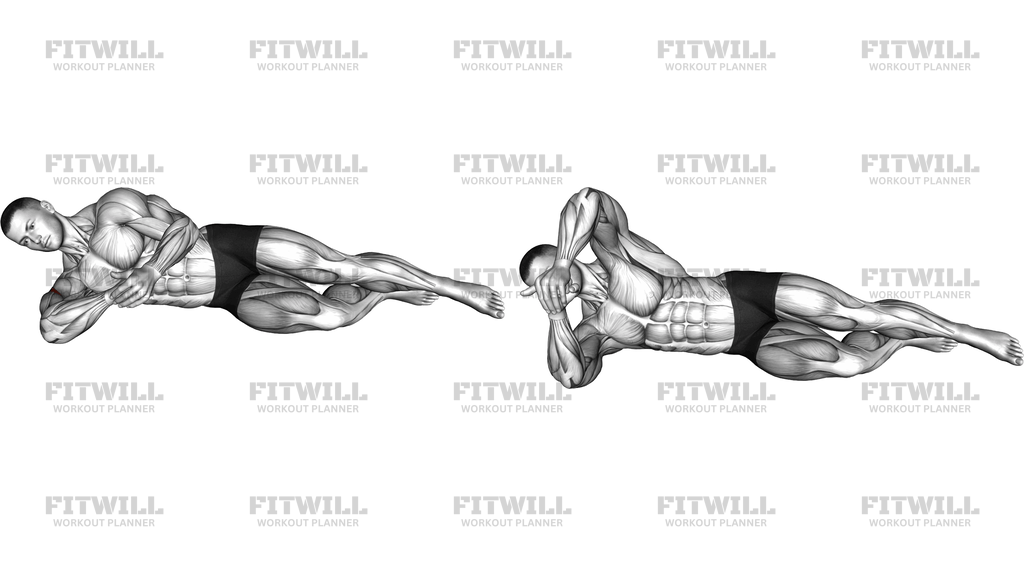
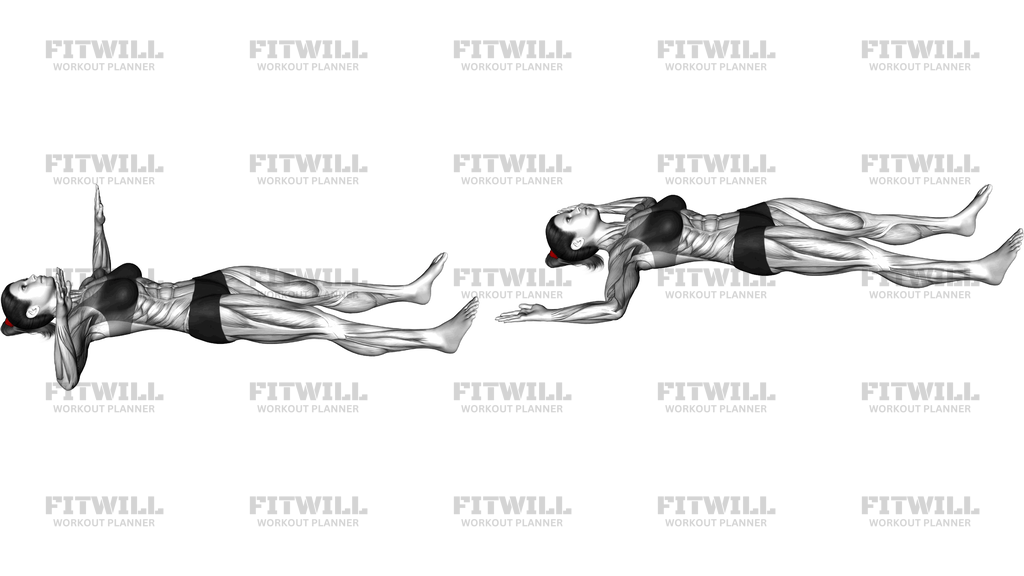
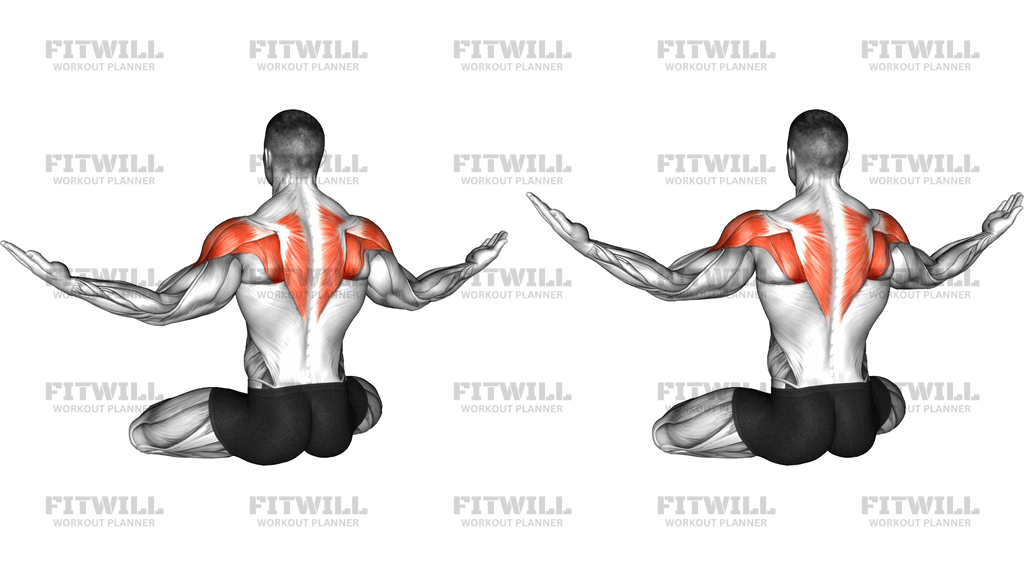
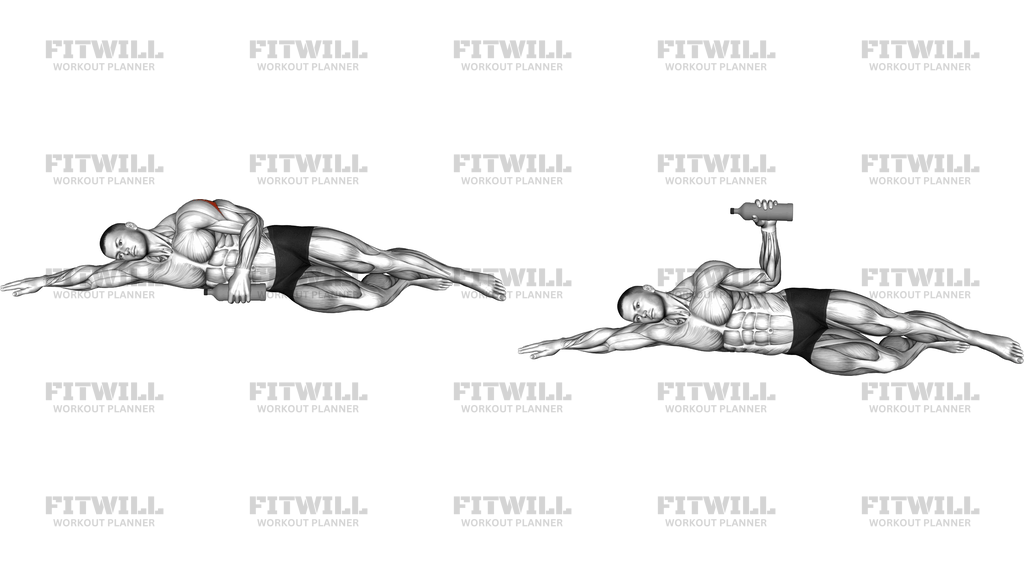
Prone Shoulders Cars
Prone Shoulders Cars is a controlled articular rotation for the shoulder joint, performed lying face down. You start with one hand lightly behind your head and the elbow out wide, then sweep the arm through its largest comfortable arc, straightening it as the hand travels out to the side and overhead before reversing the exact path back. Because the floor blocks your torso from twisting, every degree of the circle has to come from the shoulder itself, which is what makes this version so revealing.
This drill is useful for almost anyone who presses, pulls, throws, or sits at a desk. It takes the rotator cuff, rear deltoids, and the mid and lower trapezius through end-range rotation while the scapular stabilizers work to keep the shoulder blade quiet. Lifters who only move their shoulders in straight up-and-down paths often discover, the first time they try it, that one side can reach further overhead or sweep wider than the other.
The prone setup matters more than it looks. Lying on your front gives you constant feedback: if your chest peels off the floor or your hips shift, you have borrowed motion from the spine instead of the shoulder. It also means the arm must hover actively rather than resting, so the muscles around the socket stay engaged through the whole rotation instead of going slack at the top.
To execute it well, move slowly enough that you could stop the arm at any point in the circle. Think of drawing a smooth arc with your fingertips along an imaginary wall beside you, letting the palm rotate naturally as the elbow straightens. The end position has the arm long beside your ear with the thumb leading, then you retrace the path with the same control rather than dropping the arm back down.
Expect this to show up in warm-ups, shoulder rehab progressions, and mobility sessions rather than as a heavy strength lift. Keep the effort at a level where you feel stretch and muscular work, never sharp pain, especially at the front of the shoulder. If one side is tighter, match the range of your restricted side on both arms instead of chasing extra distance with the loose one.
[ Workout Log & Planner ]
Put your next workout in Fitwill
Keep your plan and training log ready when you are.


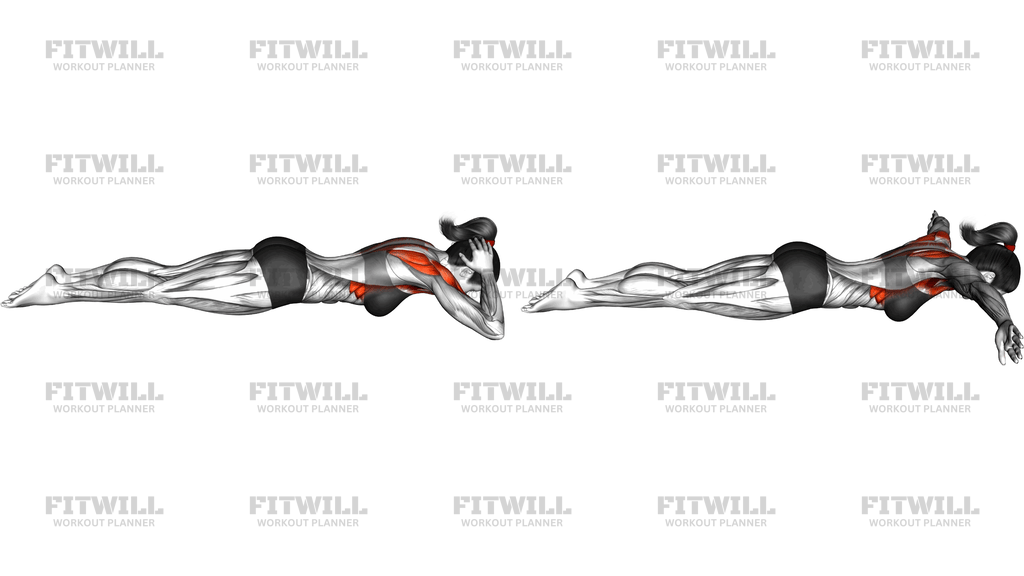
Instructions
- Lie face down on an exercise mat with your legs extended behind you, the tops of your feet relaxed, and your forehead hovering just off or resting lightly on the floor.
- Place one hand lightly behind your head and draw the elbow out to the side so the upper arm sits roughly level with your shoulder line.
- Brace your abdominals gently and press the front of your hips into the floor so your torso and pelvis stay completely still throughout the set.
- Lift the elbow and forearm a few centimeters off the floor and hold them there; this hover should be maintained for the entire rotation.
- Begin sweeping the elbow up and back, keeping it wide, and let the arm straighten gradually as the hand travels out to the side and overhead.
- Finish the arc with the arm fully extended long beside your ear, thumb leading, shoulder reaching away from the floor without shrugging up into the neck.
- Reverse the exact path, bending the elbow and bringing the hand back behind the head with the same control you used going out.
- Exhale slowly as the arm sweeps overhead and inhale as it returns; avoid holding your breath at the tightest part of the arc.
- Complete your repetitions in one direction, then switch to the other arm, and repeat in the opposite rotational direction if you are working full circles.
Tips & Tricks
- The most common fault is shrugging the shoulder blade up toward the ear as the arm travels overhead; keep the space between your shoulder and ear long and let the arm do the reaching.
- If your chest lifts off the floor during the overhead portion, your spine is rotating to fake extra shoulder range; shorten the arc until you can keep the torso glued down.
- Rushing is the second-biggest mistake. A rotation that takes two seconds is a swing, not a controlled articular rotation; aim for eight to ten seconds per full revolution.
- Do not let the hand drag along the floor. The hover is what keeps the rotator cuff and scapular muscles working through the entire range instead of only at the sticky points.
- If the front of the shoulder pinches near the top of the arc, back off a few degrees from that end range rather than pushing through; work just below the pinch and expand gradually over weeks.
- Expect one side to move better than the other. Rather than compensating, use the tighter side's range as the target for both arms so the difference closes instead of widening.
- Keeping the hand behind the head at the start protects the elbow; if you let the hand drift behind your neck and pull on it, you lose the rotation and turn the move into a neck stretch.
- A thin mat or folded towel under the front of the shoulders and ribs makes long holds more comfortable and helps you notice the moment your torso starts to lift.
Frequently Asked Questions
What muscles does Prone Shoulders Cars work?
The rotator cuff drives most of the rotation, with the rear and middle deltoids assisting. The lower and middle trapezius and serratus anterior work isometrically to keep the shoulder blade controlled while the arm circles.
Why is this drill done lying face down instead of standing?
The floor stops your torso from rotating, so all of the motion must come from the shoulder joint itself. It also forces the arm to hover actively, keeping the surrounding muscles engaged through the whole circle.
Is Prone Shoulders Cars suitable for beginners?
Yes, as long as the range is kept modest and the movement is slow. Beginners often benefit most from it because the floor gives instant feedback when they start compensating with the trunk.
How many repetitions should I do per side?
Two to four slow rotations per direction per arm is typical in a warm-up or mobility session. Because each revolution takes eight to ten seconds, quality matters far more than volume.
Why do I feel this more in my upper back than my shoulder?
The mid and lower trapezius work hard to hold the shoulder blade still while the arm rotates, so upper-back fatigue is normal. Sharp pain is not; reduce the range if you feel anything sharper than muscular effort.
Can I use Prone Shoulders Cars before pressing or pulling workouts?
Yes, it works well as a warm-up because it takes the shoulder through rotation, which straight-plane presses and pulls rarely touch. Keep it light and stop short of fatigue so it prepares rather than tires the joint.
My arm cannot reach fully overhead without my chest lifting. What should I do?
Shorten the arc so the hand only travels as far as you can manage while keeping the torso on the floor. Over consistent practice, that end range usually expands on its own.
What can I substitute if lying on the floor is uncomfortable?
The same rotational arc can be done standing or side-lying, though you lose some of the trunk-stabilizing feedback. A folded towel under the chest and hips is usually enough to make the prone position comfortable.
Should I circle in both directions?
Yes. Sweeping the arm out-to-overhead and back is one direction; reversing the path rotates the shoulder the opposite way, and training both gives you more complete coverage of the joint's range.