Lying Rotator Cuff Rotation
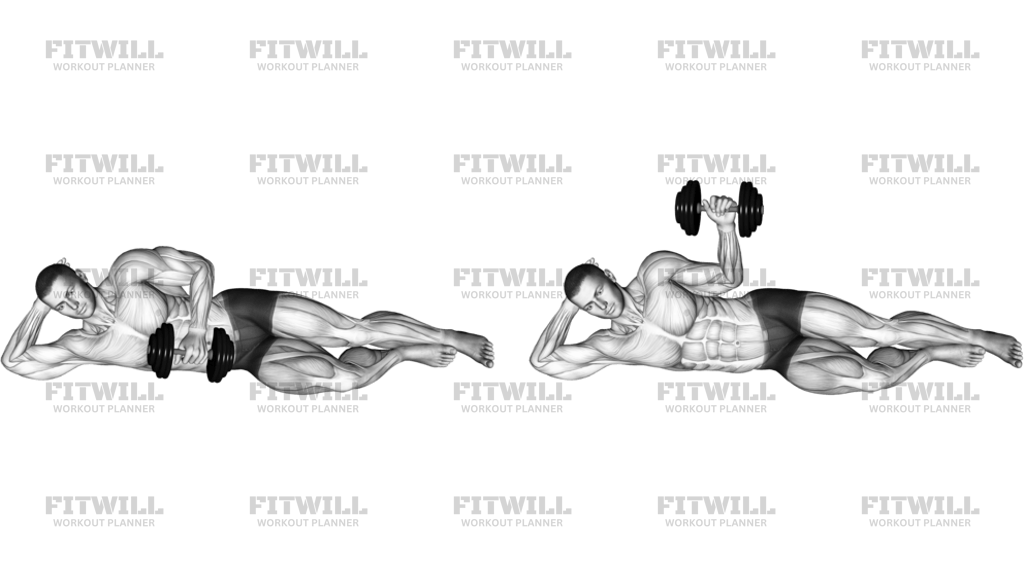
The Lying Rotator Cuff Rotation is a supine shoulder exercise that trains the small muscles responsible for rotating the upper arm at the shoulder joint. You lie flat on your back with one arm out to the side at roughly shoulder height, elbow bent to 90 degrees, and slowly rotate the forearm from palm-facing-back toward the floor up to palm-facing-forward toward the ceiling. Because no weight is involved, the movement isolates the rotator cuff without loading the joint, which makes it a controlled and honest way to assess and build rotational strength.
This exercise is most useful for people rebuilding shoulder stability after long periods of pressing work, for desk workers whose shoulders have drifted into a rounded forward posture, and for anyone whose external rotation feels weak or stiff compared to the rest of their training. Swimmers, throwers, and racket sport players also benefit, since their sports demand repeated rotation under speed. The supine position does something seated or standing rotations cannot: the floor supports the shoulder blade and blocks the common habit of shrugging or leaning into the movement, so the rotation genuinely comes from the shoulder joint itself.
The main muscles at work are the rotator cuff group, particularly the infraspinatus and teres minor on the external rotation phase, with the subscapularis contributing as the forearm returns. The posterior deltoid assists, and the muscles that hold the shoulder blade flat against the ribcage work isometrically the entire time. The triceps and forearm barely contribute, which is exactly the point — if you feel them taking over, the setup has drifted.
Setup quality determines everything here. Keep the upper arm out to the side no higher than shoulder level, anchor the elbow in one spot, and keep the back of the shoulder and the whole arm in contact with the floor. If the shoulder blade lifts or the elbow drifts toward the ribs, you have moved past the range the cuff can control, and continuing only reinforces a compensation. Slow the rep down before you shrink the range — this exercise rewards tempo far more than it rewards distance.
A practical way to program it is two to three sets of 10 to 15 slow rotations per side, either as a shoulder warm-up before upper body training or as focused cuff work two to three times per week. Treat mild muscular effort as the target and any sharp or pinching sensation as a signal to reduce the range or stop and reset the position.
[ Workout Log & Planner ]
Put your next workout in Fitwill
Keep your plan and training log ready when you are.


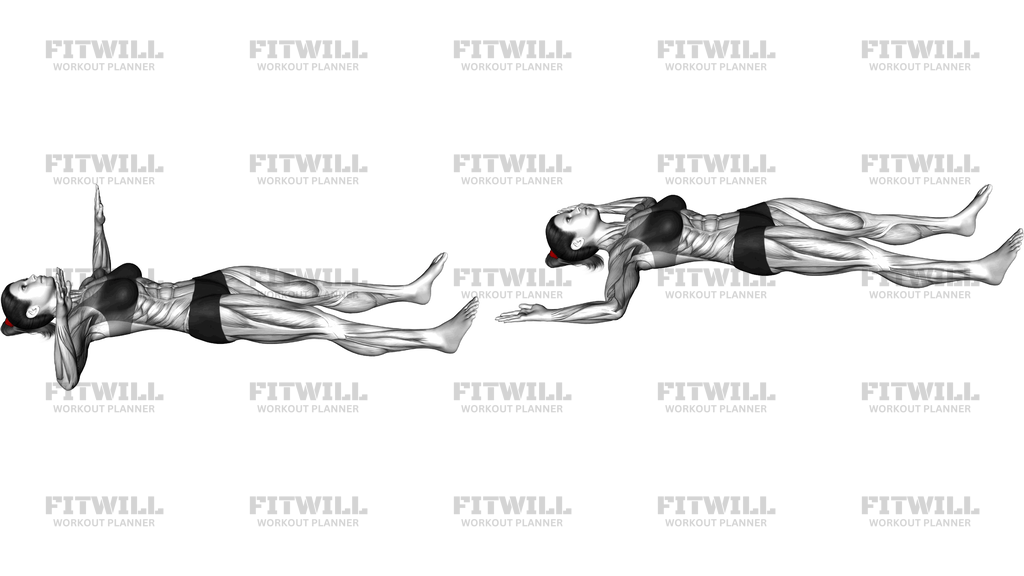
Instructions
- Lie flat on your back on an exercise mat with your legs extended and relaxed, and let your head rest neutral on the floor.
- Extend one arm straight out to the side at shoulder height so it forms roughly a 90-degree angle with your torso, palm facing up.
- Bend the elbow to 90 degrees so the forearm points toward the ceiling, and press the back of the upper arm and shoulder gently into the floor.
- Brace your core lightly and keep the shoulder blade flat against the floor; this is your starting position.
- Exhale and slowly rotate the forearm away from your torso until the back of your hand moves toward the floor, keeping the elbow fixed in place.
- Pause briefly at the end of the range where you can keep the shoulder blade and arm on the floor without straining.
- Inhale and rotate the forearm back up until it is again vertical or slightly past it, moving at the same controlled speed.
- Complete all repetitions on one side, then lower the arm, shake it out, and reset the position before switching to the other arm.
- Keep your neck relaxed and your gaze straight up throughout; avoid turning the head to watch the moving hand.
Tips & Tricks
- Think of your elbow as a hinge pin: if it slides along the floor toward your ribs or up toward your head, the rotation is no longer coming from the shoulder joint, so restart the rep.
- The most common mistake is letting the shoulder blade lift off the floor as the hand drops. Place your free hand on the front of the working shoulder to feel for any riding up.
- Slow down before you go further. A three-second rotation through a shorter range builds more cuff control than a fast swing that reaches the floor.
- If the back of the hand cannot approach the floor without pinching at the front of the shoulder, place a small towel under the upper arm to slightly elevate it and shorten the range.
- Keep the wrist neutral and the hand open. Clenching the fist or cocking the wrist turns this into a forearm exercise and hides what the shoulder is actually doing.
- Do not force the end range with momentum. The floor gives you feedback here — the moment the shoulder blade lifts or the low back arches, that is your true current limit.
- Match both sides by rep count and range, not by effort. Many people find the non-dominant side rotates less; note the range difference and work to close it gradually.
- Breathe steadily instead of holding your breath. A held breath tightens the neck and chest and makes clean rotation harder.
Frequently Asked Questions
Which muscles does the Lying Rotator Cuff Rotation work?
It primarily targets the rotator cuff muscles that rotate the upper arm, especially the infraspinatus and teres minor, with the subscapularis working on the return. The posterior deltoid assists, and the shoulder blade stabilizers hold the position isometrically.
Is the Lying Rotator Cuff Rotation good for beginners?
Yes, it is one of the most beginner-friendly shoulder exercises because it uses no external load and the floor guides the arm position. Beginners should focus on slow tempo and keeping the shoulder blade flat rather than chasing a bigger range.
Why should the elbow stay bent at 90 degrees during this exercise?
The 90-degree bend shortens the lever and isolates rotation at the shoulder joint instead of turning the movement into a pressing or arm exercise. Straightening the elbow or changing the bend mid-set shifts work away from the rotator cuff.
How far should my hand go toward the floor?
Only as far as you can keep the back of the shoulder and shoulder blade in contact with the floor. If the shoulder lifts or you feel pinching at the front of the shoulder, you have passed your controllable range.
Can I do the Lying Rotator Cuff Rotation with a dumbbell or band later?
Yes, once you can perform slow, clean bodyweight reps with a stable shoulder blade, a very light dumbbell or a resistance band is a common progression. Keep the same supine setup, elbow position, and range before adding load.
Should I feel this in the front of my shoulder?
You may feel gentle tension at the front if you are tight, but you should not feel sharp or pinching pain there. Discomfort at the front usually means the range is too large or the elbow has drifted, so shorten the range and re-anchor the arm.
How many reps and sets should I do?
Two to three sets of 10 to 15 slow rotations per side works well, either as a warm-up before upper body training or as standalone cuff work. Because the movement is unloaded, quality of tempo matters more than total volume.
What is the most common mistake with this exercise?
Letting the shoulder blade rise off the floor or the elbow slide as the hand rotates. Both compensate for a weak cuff and remove the isolation that makes the supine setup valuable.
Can I do the Lying Rotator Cuff Rotation every day?
Light, pain-free reps most days are generally fine since the load is minimal, but treat it like any strength work if you are training to fatigue. Two to three focused sessions per week is a sensible starting point.