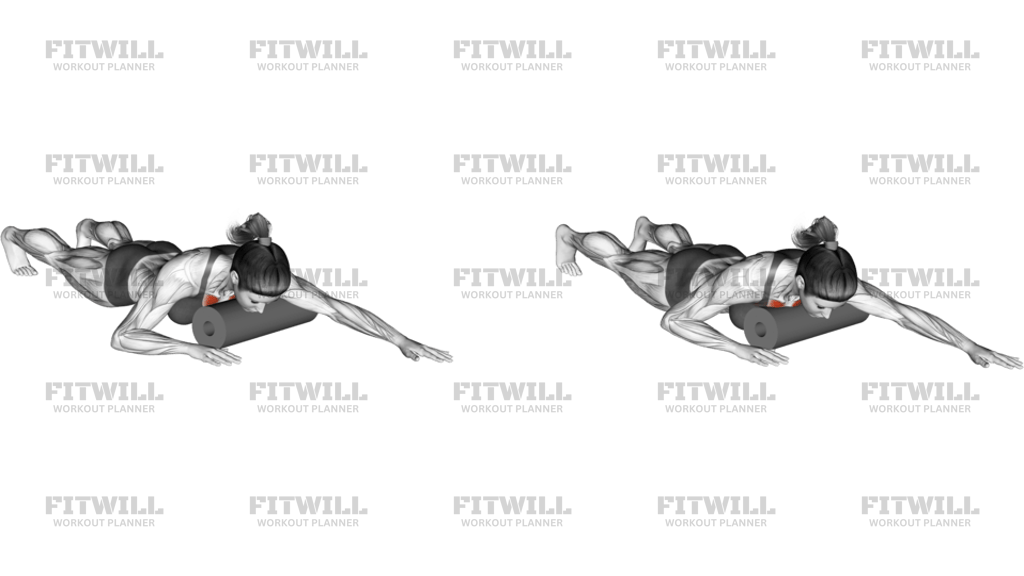
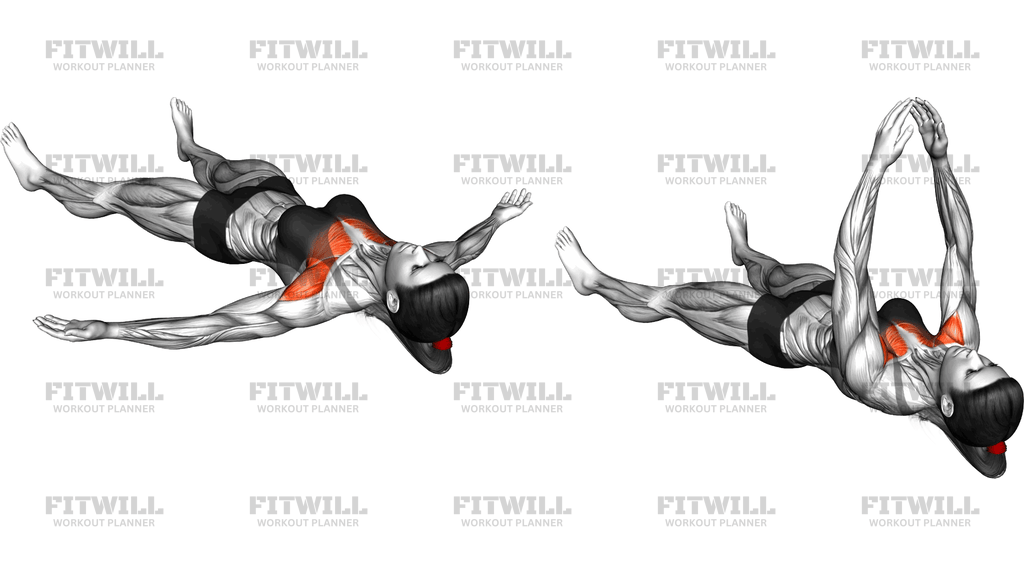
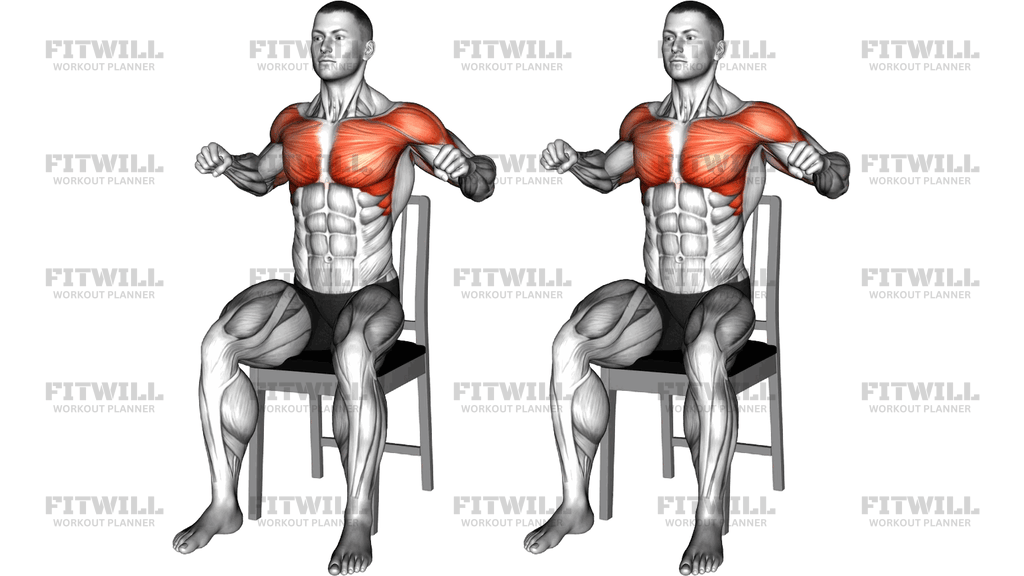
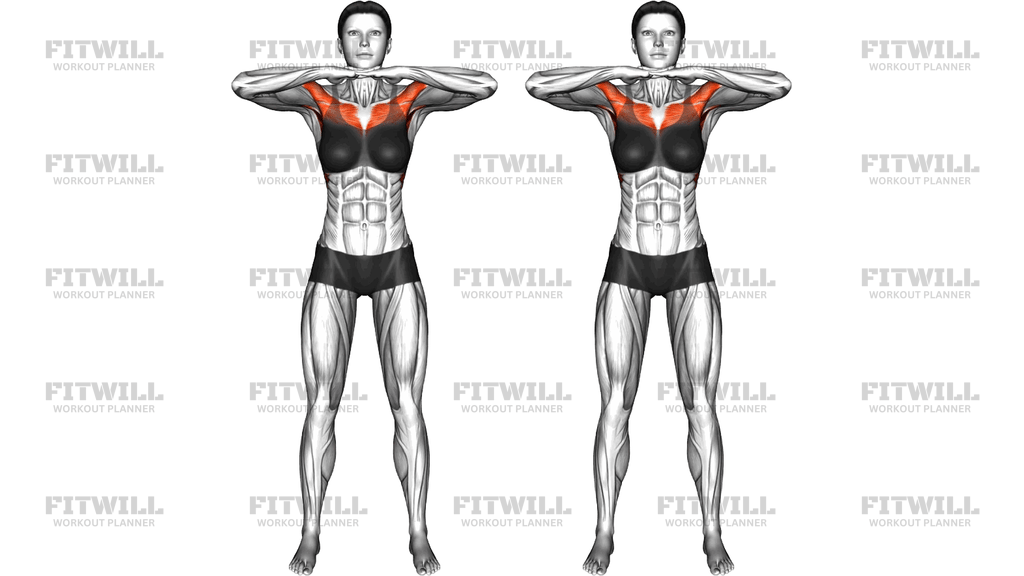
Standing Top Grab Front Grab
The Standing Top Grab Front Grab is a standing chest stretch that uses a fixed anchor instead of free-swinging arms. You grip a sturdy object in front of your body — a rack upright, a bar, a pole, or a doorframe — at roughly shoulder height, bend the elbow to about 90 degrees, and then rotate the torso away from the anchored arm until the chest opens up. Because the hand stays fixed, the stretch hits the pectoralis major far more directly than simply pulling the shoulders back, and you can fine-tune the intensity by how far you rotate rather than by how hard you pull.
This stretch is especially valuable for anyone who spends a lot of time pressing or sitting. Bench press, overhead pressing, push-ups, and long hours at a desk all encourage the shoulders to roll forward and the chest to shorten. If you finish pressing sessions with tight pecs, or you notice your posture slumping by the afternoon, this movement gives you a simple, controllable way to open things back up without any equipment beyond something solid to hold.
The primary target is the pectoralis major, including both the sternal portion across the middle of the chest and the clavicular portion near the collarbone. The front deltoid and the tissues around the front of the shoulder joint get a secondary stretch, and depending on your grip and angle, you may also feel it along the biceps and inner arm. A nice bonus of the standing setup is that it teaches you to feel the difference between opening the chest and simply arching the lower back — a distinction many people lose when they stretch on the floor.
Setup matters more here than in most stretches. The anchor should be at or just above shoulder height, the elbow bent to roughly 90 degrees, and the hand planted firmly so nothing slips when you rotate. Stand close enough that the arm stays roughly in line with the shoulder, with the feet in a stable stance. If the grip is too low the chest barely stretches; too high and the front of the shoulder can get pinched before the pec ever feels it.
To execute well, keep the ribs down and the core lightly braced, then rotate the torso slowly away from the anchored arm, letting the chest — not momentum — decide how far you travel. Exhale as you rotate, settle into the end position, and hold for 15 to 30 seconds while breathing normally. Compare sides and give the tighter side an extra round. Two to three rounds per side is usually plenty, whether you use it as a warm-up opener or as part of a cooldown.
The stretch should feel like a broad, comfortable pull across the chest and possibly the front of the shoulder. Never chase a sharp or pinching sensation, especially at the front of the shoulder joint. Stay well short of pain, avoid bouncing at the end range, and back off immediately if you are recovering from a chest, shoulder, or arm injury.
Fitwill
Log Workouts, Track Progress & Build Strength.
Achieve more with Fitwill: explore over 9600 exercises with images and videos, access built-in and custom workouts, perfect for both gym and home sessions, and see real results.
Start your journey. Download today!




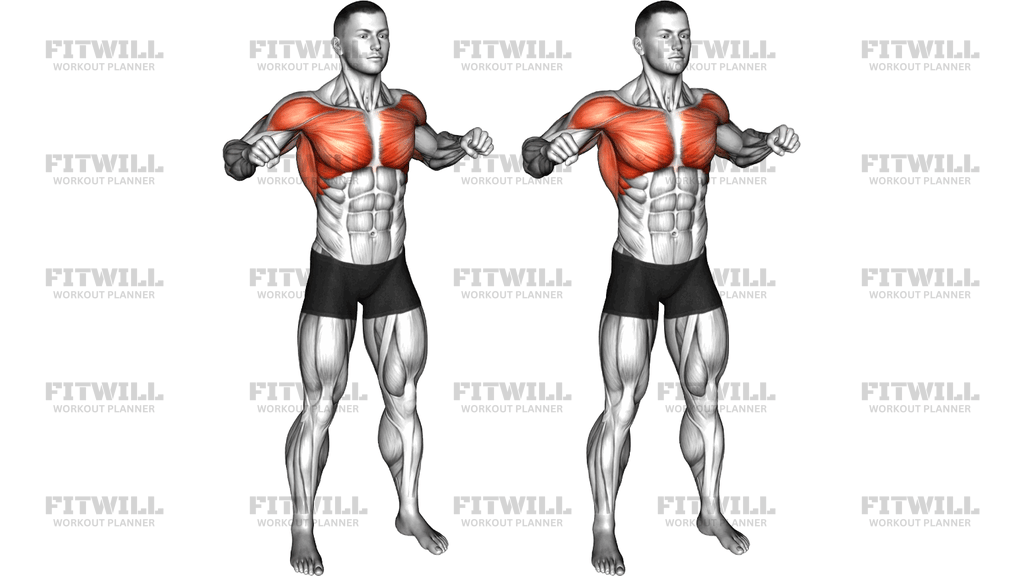
Instructions
- Stand facing a sturdy anchor such as a rack upright, a fixed bar, or a doorframe, with the feet about hip-width apart and a tall, relaxed posture.
- Raise the arm on the side you want to stretch to roughly shoulder height, bend the elbow to about 90 degrees, and grip the anchor firmly in front of your body.
- Check that the hand sits at or just above shoulder level and that the arm stays roughly in line with the shoulder, not drifting out wide or crossing inward.
- Soften the knees slightly, brace the core lightly, and keep the ribs from flaring upward before you begin.
- Slowly rotate the torso away from the anchored arm, leading with the chest and shoulder, until you feel a clear pull across the pectoral muscle.
- Hold the end position for 15 to 30 seconds, breathing steadily and letting the muscle relax a little more with each exhale.
- Rotate back toward the anchor in a slow, controlled manner before releasing your grip — never just let go at the deep end of the stretch.
- Reset your stance, take a breath, and repeat for a second round if the side still feels tight.
- Switch sides, grip the anchor with the other hand, and repeat the same rotation, spending extra time on whichever side feels tighter.
Tips & Tricks
- If you feel a pinch at the front of the shoulder instead of a chest stretch, lower your grip slightly or reduce the rotation — the elbow does not need to be high for the pecs to be targeted.
- Keep the shoulder blade on the stretching side relaxed; hiking the shoulder up toward the ear shortens the pec and kills the stretch.
- Resist the urge to arch the lower back to fake extra range — think of the rotation coming from the chest and mid-back, not a lean from the waist.
- Keep the wrist straight and the grip firm but not crushing; a bent wrist under load or tension can irritate the forearm before the chest gets anything.
- Do not bounce at the end of the rotation. The fixed grip means any jerking goes straight into the shoulder joint, so ease into depth gradually.
- Use a short hold of 10 to 15 seconds as a warm-up before pressing, and longer holds of 30 seconds after training when the goal is to improve range.
- Test both sides before choosing your hold time — most people have one noticeably tighter chest, and matching the tighter side is more useful than matching the looser one.
- If your hand slips on a smooth anchor, adjust your grip or choose a textured surface rather than gripping harder, so the forearm and wrist stay relaxed.
Frequently Asked Questions
What muscles does the Standing Top Grab Front Grab stretch?
It primarily targets the pectoralis major across the chest, with a secondary stretch through the front deltoid and the tissues at the front of the shoulder. Depending on your angle, you may also feel it along the biceps and inner arm.
How high should I grab during the Standing Top Grab Front Grab?
Grip at about shoulder height, or just slightly above it. Grabbing much higher tends to shift tension into the shoulder joint, while grabbing lower reduces the stretch on the chest.
Is the Standing Top Grab Front Grab suitable for beginners?
Yes. The movement is low-skill and self-limiting, since you control the depth with a small rotation of the torso. Beginners should just start with a modest rotation and build up over a few sessions.
Can I do the Standing Top Grab Front Grab without a power rack?
Absolutely. Any solid anchor at shoulder height works — a doorframe, a fixed pole, a sturdy bar, or even the edge of a well-secured piece of furniture. Just make sure it cannot move when you rotate against it.
Why do I feel the Standing Top Grab Front Grab in my shoulder instead of my chest?
This usually means the grip is too high, the rotation is too aggressive, or the shoulder is riding up toward the ear. Lower the hand slightly, relax the shoulder blade, and rotate less until the chest takes over.
How long should I hold the Standing Top Grab Front Grab?
Around 15 to 30 seconds per side works well for most people, repeated two to three rounds. Use shorter holds before pressing workouts and longer holds after training or at the end of the day.
Should I do the Standing Top Grab Front Grab before or after a workout?
Both work, but adjust the intensity. Before training, use a gentle, brief version to open the chest; after training or between pressing sessions, use longer, more relaxed holds to work on range.
How is the Standing Top Grab Front Grab different from a doorway chest stretch?
The fixed grip in front of the body lets you control the stretch by rotating the torso rather than stepping through a doorway, which makes the depth easier to adjust and keeps the shoulder in a safer line.
Is the Standing Top Grab Front Grab safe if I have a shoulder injury?
If you have a current or recent shoulder, chest, or arm injury, clear the movement with a qualified professional first. In general, stay well short of any pinching or sharp sensation and keep the elbow height modest.