Seated Abduction On A Chair
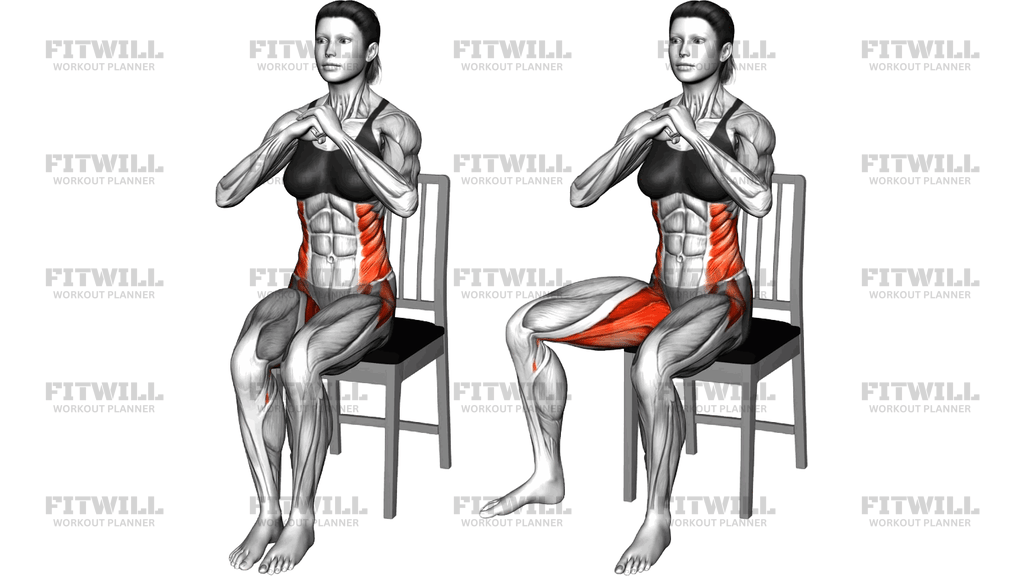
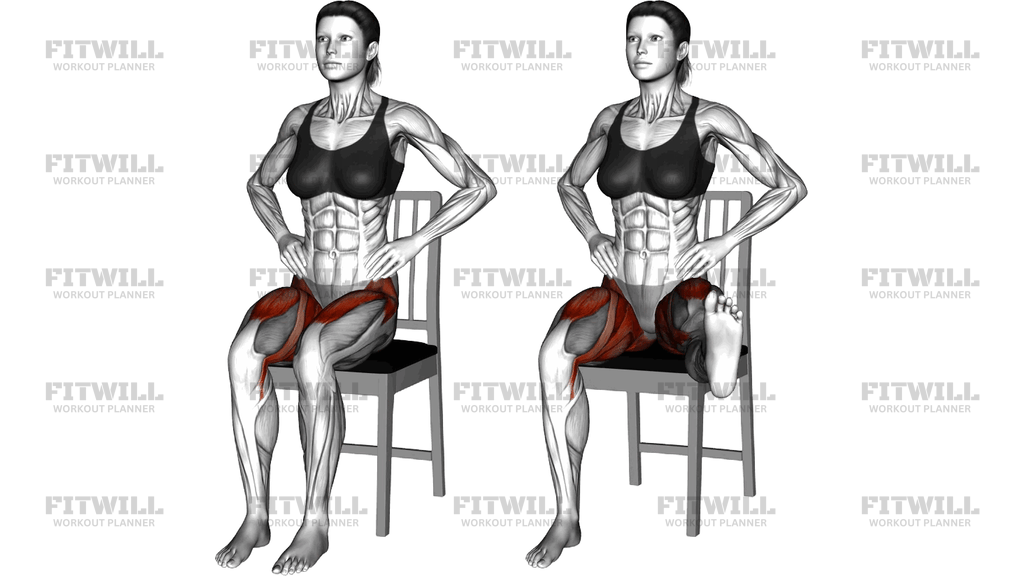
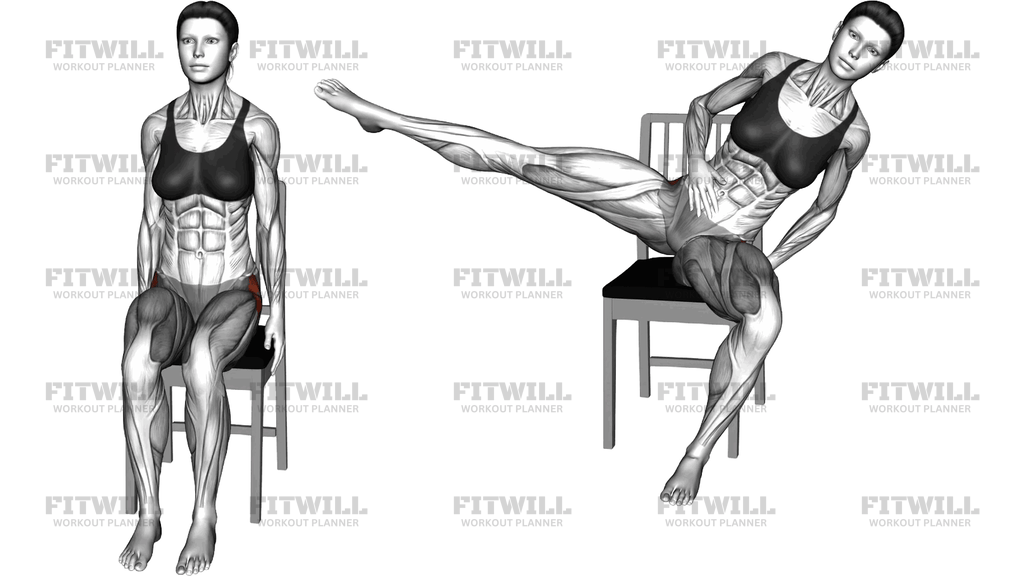
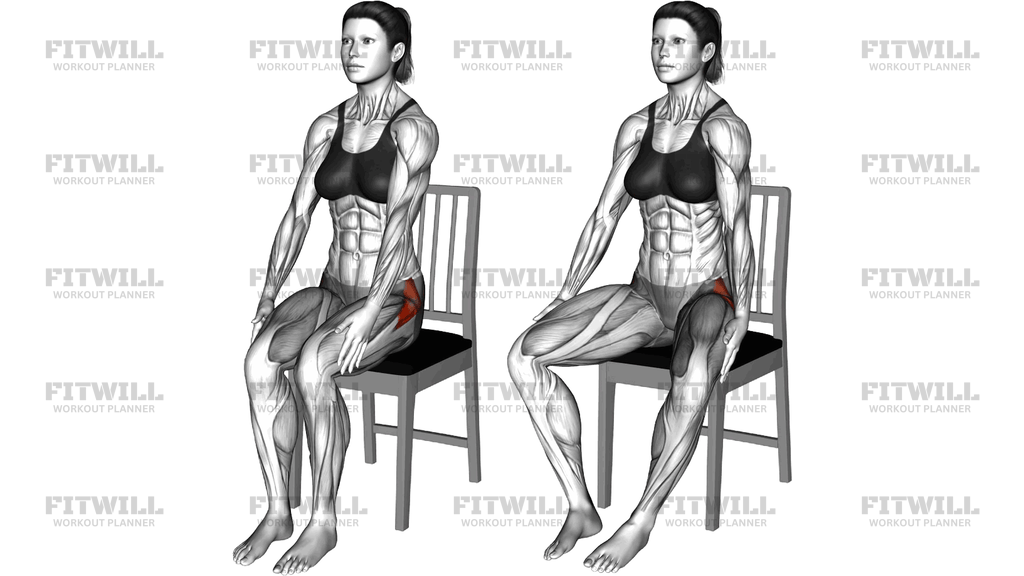
Seated Abduction On A Chair is a simple bodyweight drill that trains the muscles on the outside of the hip while you sit. Starting from an upright seat with both knees together, you lift one knee out to the side against nothing but your own resistance and gravity, then bring it back under control. The highlight area in the movement is the gluteus medius, the fan-shaped muscle sitting on the upper outer edge of your pelvis, with the gluteus maximus and tensor fasciae latae assisting.
This is one of the most accessible hip exercises you can do, because all it requires is a sturdy chair. It suits beginners who have never trained their hips directly, office workers who sit for long stretches and want to wake the outer hips up, older adults who need a low-load way to keep the hips mobile, and anyone rehabbing back into training after time off. Because you are seated, the position removes balance from the equation entirely, so you can put all of your attention on feeling the outer hip work.
The setup matters more than it looks. Sit tall on the front half of the seat with your feet flat on the floor and knees bent to roughly ninety degrees. If you slump back or perch on the edge of the seat, the pelvis tilts and the hip no longer moves through a clean path. A tall spine, relaxed shoulders, and knees starting together give the working hip room to open without the leg bumping into the chair or the floor.
To execute the movement, keep your torso still and swing one knee out to the side as far as you can comfortably go, letting the lower leg and foot follow. The foot stays planted or lifts only slightly, depending on your range, and the opposite leg stays exactly where it started. Pause briefly at the widest point so the outer hip does the work of holding the position, then lower the knee back to meet the other one under control.
The main use cases are warm-ups, desk-break routines, and building a base of hip strength before moving on to standing abduction work, banded versions, or machine hip abduction. It also pairs well with seated adduction or gentle hip stretches, since the seated position makes it easy to transition between movements. Expect a modest but noticeable burn on the outer hip rather than heavy fatigue.
From a safety standpoint, the movement is gentle, but the knee joint is the pivot point, so never force the range. Move the leg from the hip, keep the knee tracking outward rather than twisting inward, and stay pain-free throughout. If a chair with arms restricts your legs, switch to a backless stool or a bench so both knees have clearance.
[ Workout Log & Planner ]
Put your next workout in Fitwill
Keep your plan and training log ready when you are.


Instructions
- Sit on a sturdy chair or stool with your feet flat on the floor, knees bent to about ninety degrees and pressed lightly together.
- Scoot onto the front half of the seat so your hips have clearance, and rest your hands on your thighs or the sides of the seat for light support.
- Sit up tall through your spine, relax your shoulders, and brace your trunk lightly so your upper body stays quiet during the movement.
- Keeping your torso facing forward, lift one knee out to the side, letting the leg open away from the midline while the other leg stays anchored.
- Allow the lower leg to follow naturally as the knee travels outward; the foot may stay flat, slide slightly, or lift a small amount.
- Stop at the widest point you can reach without the knee twisting inward or your torso leaning, and hold the open position for one to two seconds.
- Slowly bring the knee back to the center until it touches or nearly touches the other knee.
- Exhale as you lift the knee out, and inhale as you return it to the start.
- Complete your reps on one side, then reset your posture and switch to the other leg.
- Once both sides are done, place both feet flat, shake out the hips, and stand up slowly before moving on.
Tips & Tricks
- The most common mistake is leaning the torso to the side to buy extra range, which shifts the work away from the outer hip. Keep your chest pointing forward and accept a smaller range instead.
- If your foot scrapes the floor as the knee opens, lift the heel slightly so the leg moves freely from the hip rather than being dragged.
- Do not snap the knee back to center at the end of each rep. The lowering half is where the outer hip works hardest, so take one to two seconds to return.
- Avoid pushing on the inside of your thigh with your hand to force the knee wider. Assistance from the arm hides the actual range your hip can control.
- Squeeze the glute on the moving side at the top of the rep. You should feel it on the upper outer edge of the hip, not deep in the groin.
- If the chair seat is too high and your feet dangle, put a book or low step under your feet so the working hip does not start from a raised position.
- A chair with firm arms can block the knee from opening fully. Choose an armless chair or a bench so the leg has a clear path.
- Keep both sit bones in contact with the seat. Rocking onto one cheek means the pelvis is rolling instead of the hip abducting.
- Start with higher reps, around fifteen to twenty per side, since the resistance is low. The goal is quality of squeeze, not maximum range.
Frequently Asked Questions
Which muscles does Seated Abduction On A Chair work?
The primary muscle is the gluteus medius on the outer hip, with the gluteus maximus and tensor fasciae latae assisting. The core also works lightly to keep your torso upright while the leg moves.
Is Seated Abduction On A Chair good for beginners?
Yes, it is one of the easiest ways to train hip abduction because the chair removes balance demands and the load is just your own leg. Beginners can focus entirely on feeling the outer hip contract.
How many reps should I do of Seated Abduction On A Chair?
Since the resistance is light, aim for fifteen to twenty controlled reps per side for one to three sets. Slow the tempo before adding sets if the movement feels too easy.
Why does my knee click or feel awkward during the movement?
The knee is the pivot of the movement, so make sure you are driving the motion from the hip and keeping the knee pointing outward rather than twisting. Reduce the range until the movement feels smooth, and stop if you feel pain.
Can I do Seated Abduction On A Chair at my desk?
Absolutely, as long as your chair is stable and your knees have clearance under the desk. It is a discreet way to activate the outer hips during long sitting periods.
What can I use instead of a chair?
Any stable seat works, including a bench, stool, or the edge of a sturdy box. Avoid soft couches or chairs with wheels, which shift under you as the leg moves.
How is Seated Abduction On A Chair different from standing abduction?
Seated abduction isolates the hip motion without balance or single-leg support, while standing abduction adds a stability challenge for the whole leg. The seated version is the better starting point if standing balance is a limiting factor.
Should my foot stay on the floor during the rep?
The foot can stay flat, slide slightly outward, or lift a little as the knee opens, depending on your flexibility. What matters is that the movement comes from the hip and the foot does not drag or force the knee to rotate.
Can I add resistance to Seated Abduction On A Chair?
Yes, once bodyweight reps feel easy, you can loop a light band around your thighs just above the knees and press outward against it. Keep the same seated posture and controlled tempo when you add the band.