Split Squat On A Chair
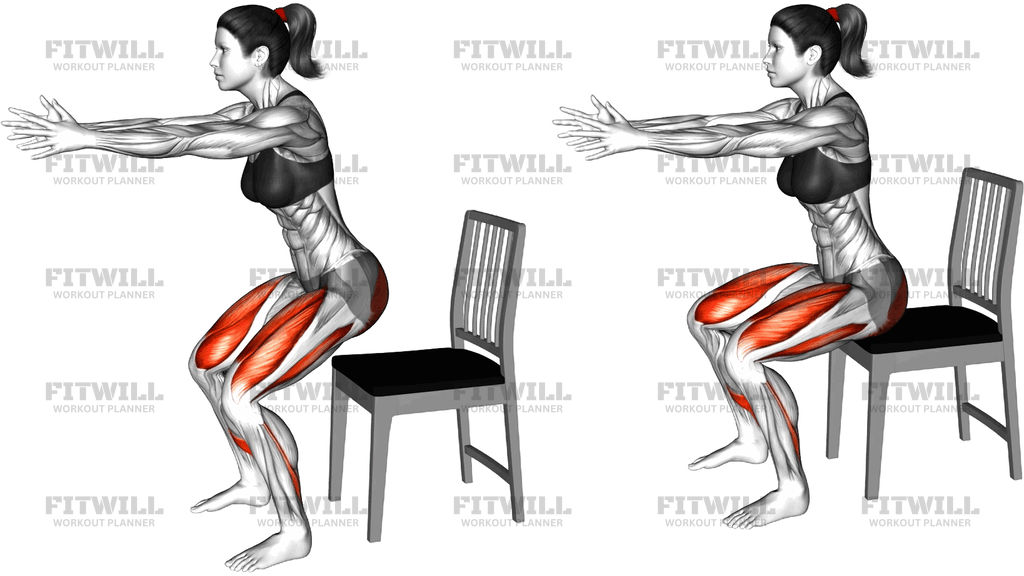
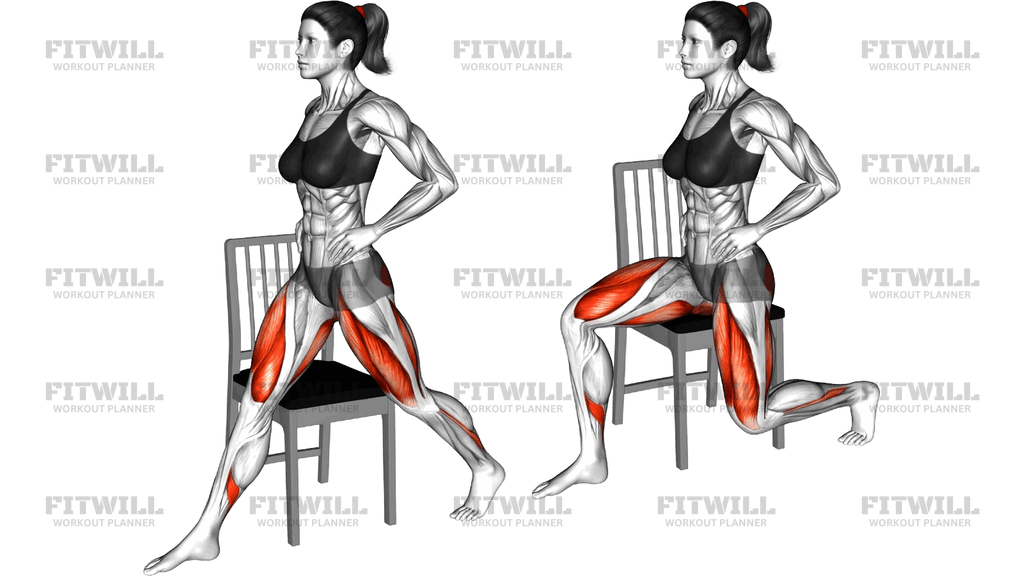
The Split Squat On A Chair is a single-leg squat variation where you rest the top of your rear foot on a sturdy chair seat behind you while lowering straight down through your front leg. It is essentially a Bulgarian split squat scaled to household equipment, making it one of the most effective ways to load the legs hard without a barbell, dumbbells, or a gym rack.
The front leg does most of the work here. As you sink down, the quadriceps of the front leg control the descent and drive you back up, while the glutes and hamstrings extend the hip at the top. The elevated rear foot shifts your weight forward onto the front leg, which increases knee flexion and places a strong, focused demand on the quads. The rear leg is there for balance and light support only, so each side has to earn its reps independently.
Setup matters more than most people expect. Stand roughly two feet in front of the chair, place the laces or top of one foot on the seat, and hop or shuffle the front foot forward until you can drop straight down without the front knee jamming past the toes or the back hip pinching. A chair seat is a bit lower than a dedicated gym bench, which actually shortens the range slightly and makes this version friendlier for beginners and for anyone working with limited hip mobility.
To execute it well, keep your torso tall or leaning slightly forward, brace your abdominal muscles, and lower until your front thigh is roughly parallel to the floor or your rear knee hovers just above the ground. Push through the whole front foot, especially the heel and midfoot, to stand back up. Avoid letting the front knee cave inward, and resist the urge to bounce out of the bottom.
This exercise suits home trainees, beginners learning split-stance mechanics, and intermediate lifters who want a focused quad and glute burner between heavier lifting days. Because each leg works alone, it also exposes and gradually corrects left-to-right strength differences that bilateral squats tend to hide.
The main safety point is control. Descend slowly, keep the chair stable against a wall if it slides, and stop the set as soon as your balance breaks down. Balance usually fails before strength does in this movement, so treat wobble as your signal to rest rather than pushing through sloppy reps.
Fitwill
Log Workouts, Track Progress & Build Strength.
Achieve more with Fitwill: explore over 9600 exercises with images and videos, access built-in and custom workouts, perfect for both gym and home sessions, and see real results.
Start your journey. Download today!




Instructions
- Place a sturdy chair behind you and stand facing away from it, about two feet in front of the seat.
- Reach back with one leg and rest the top of that foot and ankle flat on the chair seat, laces down.
- Position your front foot far enough forward that when you lower, your shin stays close to vertical and your front knee tracks over your toes.
- Place your hands on your hips or let them hang at your sides, then brace your core and lift tall through your chest.
- Bend your front knee and hip to lower your body straight down, letting your rear knee travel toward the floor.
- Stop when your front thigh is about parallel to the floor or your rear knee is just above the ground.
- Press through your front heel and midfoot to stand back up, squeezing the front-side glute at the top without locking the knee hard.
- Exhale as you push up and inhale as you lower, keeping a steady rhythm through the set.
- Complete all reps on one side, then step your rear foot down, reset your stance, and switch legs.
Tips & Tricks
- If your front knee drives well past your toes and feels compressed, shuffle the front foot a few inches farther from the chair before your next set.
- A common mistake is putting too much weight into the rear foot. Keep the chair foot relaxed and light; it is a kickstand, not a second working leg.
- Wobbling side to side usually means your stance is too narrow. Widen the distance between front foot and chair line until the movement feels like a straight up-and-down drop.
- Keep the top of the foot on the seat rather than curling your toes under, or your ankle will cramp and your balance will suffer.
- If the chair slides on a smooth floor, set it against a wall or place it on a mat so it cannot shift mid-rep.
- Leaning the torso slightly forward biases the glutes more; staying nearly upright keeps the emphasis on the front-leg quads. Pick one position and hold it for the whole set.
- Do not let the front knee collapse inward as you fatigue. Think about spreading the floor with your front foot to keep the knee stacked over the ankle.
- Slow the lowering phase to two or three seconds if you cannot feel your quads working; bouncing out of the bottom steals tension from the front leg.
- For more challenge once bodyweight feels easy, hold a dumbbell or a loaded backpack in front of your chest, or hold the bottom position for a two-count pause.
Frequently Asked Questions
What muscles does the Split Squat On A Chair work?
The front leg's quadriceps do most of the work, with strong support from the glutes and hamstrings as you stand back up. The calves and core work to keep you balanced throughout the set.
Is the Split Squat On A Chair good for beginners?
Yes, because the chair seat is lower than a standard gym bench, which shortens the range of motion and makes the balance demands easier to manage. Beginners can also limit depth until the movement feels stable.
How far should my front foot be from the chair?
Start about two feet out and adjust so that your front shin stays close to vertical at the bottom. If your knee travels far past your toes, move the front foot forward; if your rear hip pinches, bring it slightly closer.
Why is my back foot on the chair at all?
Elevating the rear foot shifts your weight onto the front leg, which increases quad involvement and turns a regular lunge into a focused single-leg squat. It also gives you a balance reference so you can load each side more evenly.
My chair moves when I step back into it. What should I do?
Place the chair against a wall or on an exercise mat so it cannot slide. A lightweight chair can also tip if you lean back into it, so keep your weight over the front leg.
How is this different from a regular lunge?
In a lunge you step and return, so the rear leg shares the load. With the rear foot fixed on the chair, the front leg handles nearly all the work and the quads work through a deeper range, which makes the set harder at the same bodyweight.
Should my torso stay upright or lean forward?
Either works, but stay consistent. A tall torso emphasizes the front-leg quads, while a slight forward lean with a braced core shifts a bit more work to the glutes and hamstrings.
What can I use instead of a chair?
A bench, ottoman, sturdy low step, or the edge of a couch all work, as long as the surface is around knee height and will not slide or tip. The setup and execution stay exactly the same.
How do I know when to switch legs?
Finish all planned reps on one side, step the rear foot down, shake it out, and then set the other foot on the chair. Doing sides back to back without resetting usually leads to a narrower, sloppier stance on the second leg.
Are Split Squats On A Chair safe for the knees?
For most people they are knee-friendly when the front shin stays roughly vertical and the knee tracks over the toes without caving inward. If you feel sharp pain rather than muscle effort, reduce the depth or the rear-foot height and rebuild the range gradually.