Cable Kneeling Single Arm Fly
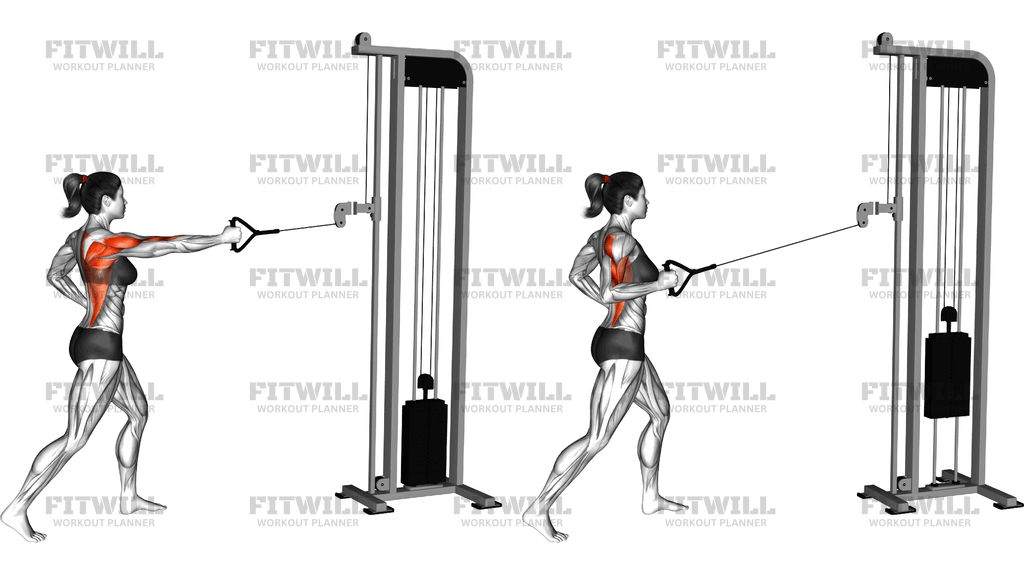
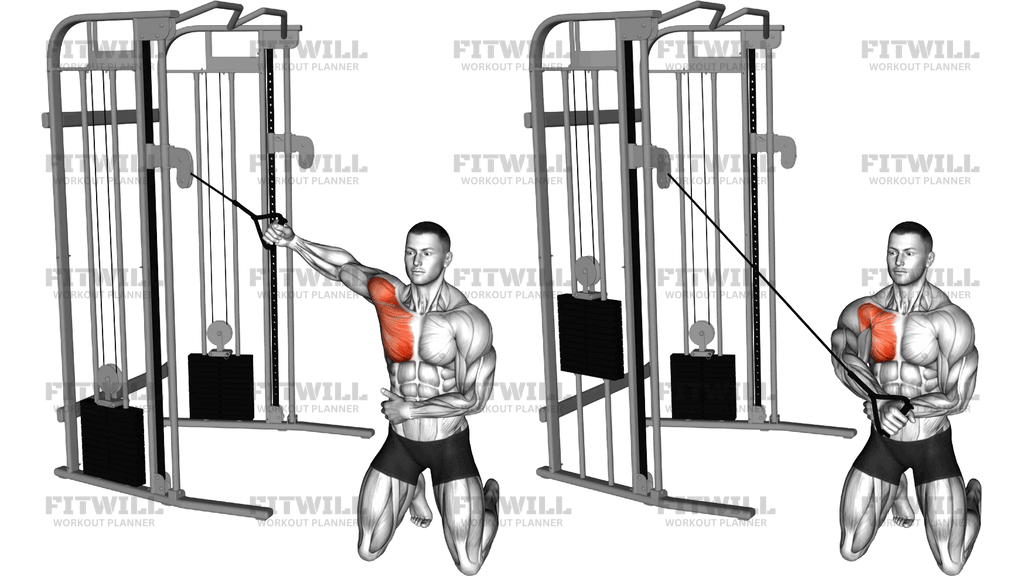
The Cable Kneeling Single Arm Fly is a unilateral chest isolation exercise performed from a tall kneeling position, with a single handle attached to a cable set above shoulder height. You kneel side-on relative to the pulley, hold the handle in one hand, and sweep it down and across your body toward the opposite hip while the working arm stays mostly straight with a soft elbow. The kneeling base removes leg drive from the equation, which forces the chest to do the work instead of letting momentum and body English carry the weight.
This movement trains the pectoralis major through its primary function: horizontal adduction of the arm across the midline. Because the cable pulls from a high point, the fibers of the lower and mid chest do most of the work, with the front of the shoulder assisting and the core working hard to keep your torso from twisting as the handle travels across your body. The off-side hand braced near your ribs or waist acts as a reminder to stay square.
The kneeling setup is what makes this version special. Standing single-arm cable flys make it easy to lean, rotate, or step into the rep, especially as the weight climbs. Kneeling cuts off those escape routes. Your hips, glutes, and trunk must stay stacked over your knees, so the movement doubles as a lesson in anti-rotation control while still giving your chest a focused, isolated stimulus.
It is a good fit for lifters who want to even out side-to-side chest development, since each arm works alone and the weaker side cannot hide behind the stronger one. It also suits people with shoulder discomfort from flat pressing, because the cable's line of resistance lets you adjust the angle and keep constant tension through a comfortable arc. Bodybuilders often use it as a finishing movement after presses, when the chest is pre-fatigued and lighter loads still produce a strong contraction.
To execute it well, think of the arm as a lever and the shoulder as a hinge. Set the pulley slightly above shoulder height, kneel tall with the target-side knee away from the machine, and let the handle start out wide with a slight stretch across the chest. Pull through an arc, not straight back, sweeping the handle down and across until it approaches your opposite hip or waist. Pause briefly, squeeze the chest, then let the arm travel back out under control until you feel a gentle stretch, keeping tension in the cable the whole time.
Watch two things as you practice: torso rotation and elbow bend. If your trunk starts winding up and unwinding with each rep, drop the weight until your shoulders stay level and square. If the elbow bends sharply, the movement drifts toward a press and the chest loses its stretch-driven role. Keep the arc wide, the elbow nearly fixed, and the range long but pain-free.
[ Workout Log & Planner ]
Put your next workout in Fitwill
Keep your plan and training log ready when you are.


Instructions
- Attach a single handle to one pulley of a cable machine and set the pulley slightly above shoulder height, then select a light starting weight.
- Grip the handle with one hand using a neutral palm and step out to a tall kneeling position, far enough from the machine that the cable stays taut with your arm extended out and up toward the pulley.
- Kneel with both knees on the floor, hips stacked over the knees, and place your non-working hand against your ribs or waist to keep your torso square to the front.
- Brace your core and glutes, pull your shoulders down and back, and keep your chest lifted without arching your lower back.
- From the stretched start position with the arm out wide and slightly up, sweep the handle down and across your body in a wide arc toward your opposite hip, keeping the elbow nearly straight with just a soft bend.
- At the end of the arc, hold for a beat and squeeze your chest as the handle nears your opposite waistline.
- Slowly let the handle travel back along the same arc to the start position, resisting the cable's pull until you feel a mild stretch across the working chest.
- Exhale as you pull the handle across, and inhale as you control it back out to the start.
- Complete all repetitions on one side, then switch hands and kneel facing the opposite direction to train the other arm.
- Reset your kneeling posture and brace before every set, and stand up carefully between sets while the weight stack is settled.
Tips & Tricks
- The most common mistake on this exercise is turning the fly into a press or pull-down by bending the elbow too much; keep the elbow angle nearly fixed so the shoulder, not the arm, travels through the arc.
- If your torso rotates toward the machine on the way out, the weight is too heavy. Your shoulders should stay level and square for every rep, with the off-side hand braced against your ribs as a cue.
- Do not let the cable stack slam down at the end of the return. If the weights touch and the tension drops, your chest loses the stretch portion of the rep, which is where much of the value lives.
- Kneel on a mat or pad if your knees are sensitive, and keep your shins relaxed rather than digging your toes in, which can tip you forward.
- Think about leading with your pinky finger toward the floor as you sweep across; this favors a natural chest contraction over a shoulder-dominant pull.
- Stop the arc at your opposite hip rather than chasing extra range by twisting. Any added distance past that point usually comes from trunk rotation, not the chest.
- Because the pulley sits high and you kneel, your torso height changes the angle of pull. Adjust the pulley so the start position gives a stretch across the upper chest, not a yank on the shoulder joint.
- Keep your neck relaxed and eyes forward. Craning to watch the working arm usually coincides with losing your square torso position.
- Start each set with your weaker or less coordinated side, and match the repetitions on the stronger side rather than working to different effort levels.
Frequently Asked Questions
Which muscles does the Cable Kneeling Single Arm Fly work?
The chest, particularly the mid and lower fibers of the pectoralis major, is the prime mover as the arm sweeps down and across the body. The front of the shoulder assists, and the obliques and deep core work to keep your torso from rotating during the pull.
Why is this exercise done kneeling instead of standing?
Kneeling removes the option of leaning, stepping, or twisting into the rep, which standing single-arm flys often invite. With your hips stacked over your knees, the chest has to produce the movement and your trunk has to resist rotation.
How high should I set the pulley for the Cable Kneeling Single Arm Fly?
Set it slightly above shoulder height so that, from your kneeling position, the handle starts out wide and level with or just above your chest. If the cable yanks downward on your shoulder at the start, lower the pulley or step further out.
Is the Cable Kneeling Single Arm Fly suitable for beginners?
Yes, provided you start with a light weight and prioritize a square torso over load. The kneeling position actually helps beginners because it limits the cheating patterns that make standing flys sloppy.
Should my working arm stay completely straight?
No, keep a small, fixed bend in the elbow to protect the joint. The key is that the bend stays constant; if the elbow opens and closes, you have turned the fly into a press and the chest stops being the focus.
What is the most common mistake with this movement?
Rotating the trunk to help the handle across the body. Your shoulders should stay level and square to the front for the whole set, with only the arm moving through the arc.
Can I substitute another exercise if my gym has no cable machine?
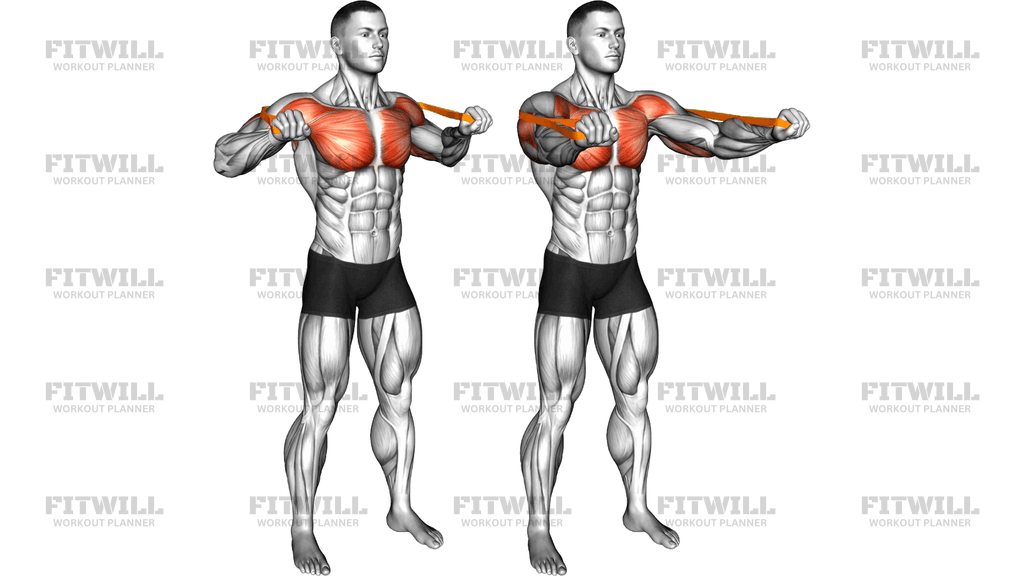
A single-arm standing fly with a resistance band anchored high, or a one-arm dumbbell fly lying on a bench, covers similar ground. You will lose some of the constant-tension and anti-rotation benefits, but the chest stimulus carries over.
How many sets and reps should I do?
Two to four sets of 10 to 15 reps per side works well as a chest finisher. Because the kneeling setup limits how much weight you can use, higher-rep sets with a hard squeeze tend to be more productive than low-rep grinding.
Is it safe for my knees to kneel for entire sets?
For most people, yes, especially with a mat or pad under the knees. If kneeling causes knee pain, discontinue the kneeling version and use a standing single-arm cable fly with a narrower stance and stricter attention to torso position.
Should I do both arms in the same set or one side at a time?
Finish all repetitions on one side before switching hands, so you can focus fully on the working chest. Match the rep count on the second side to the first to keep development even.