Dumbbell Standing Prone Y Raise
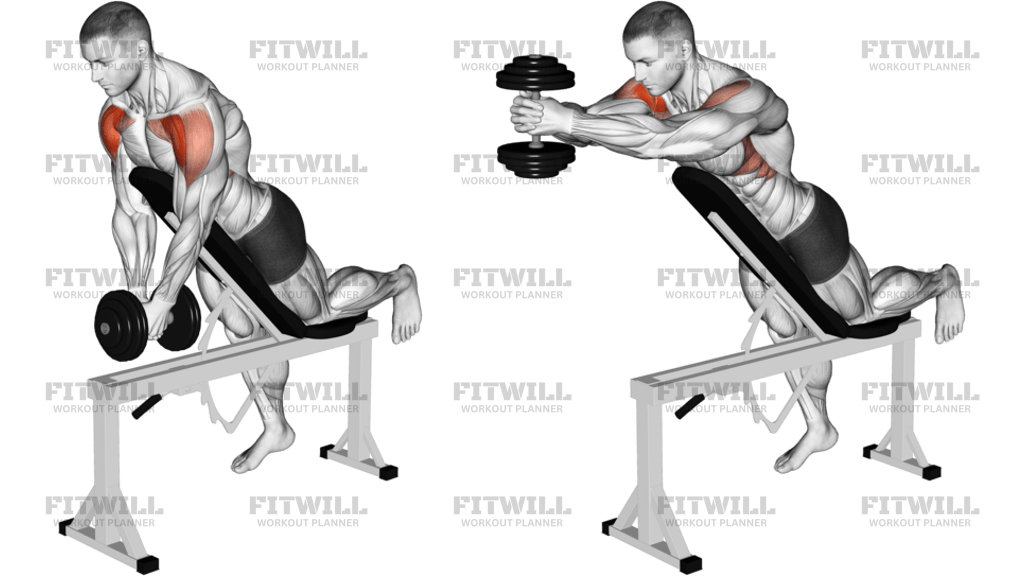
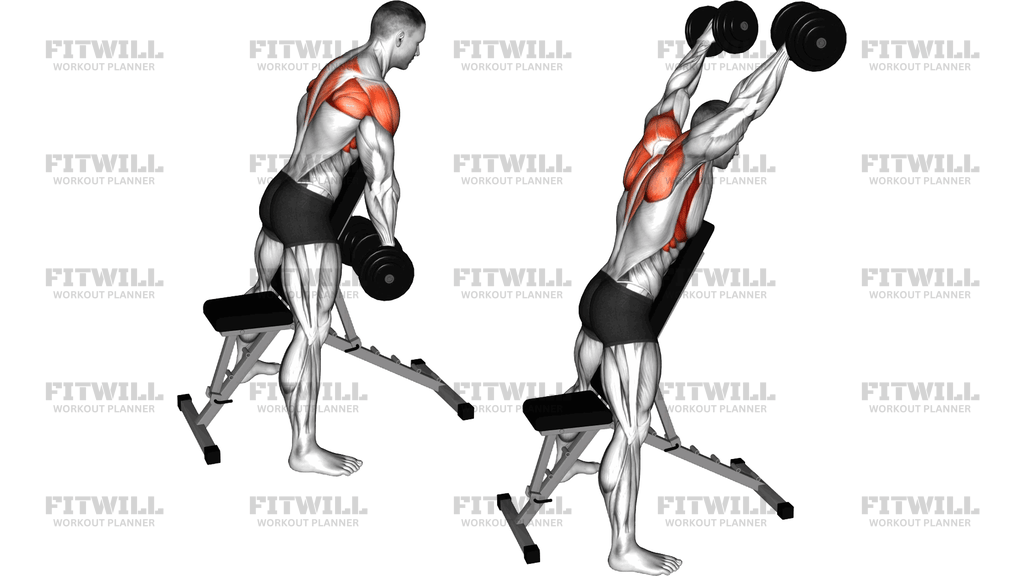
The Dumbbell Standing Prone Y Raise is a scapular and shoulder exercise performed while standing with your chest supported against an incline bench, holding a dumbbell in each hand. From that leaned-forward position, you raise both arms up and out into a wide Y shape above your head, thumbs angled upward, then lower them back down under control. The bench takes your lower back out of the equation, so the work has to come from your upper back and shoulders rather than from leaning and swinging.
The main target is the lower and middle trapezius, with strong support from the rhomboids and rear deltoids. Because the arms finish above shoulder height in a Y position with external rotation, the rotator cuff muscles also get meaningful work in a way that straight overhead raises don't provide. This combination makes it one of the better movements for building the mid-back detail that fills out the area between and below the shoulder blades.
This is a popular accessory lift for people who do a lot of pressing and end up with front-dominant shoulders, as well as lifters who struggle to feel their lower traps in rows or shrugs. It also shows up regularly in shoulder health and posture-focused programs, since the Y position trains upward rotation and scapular control — mechanics you need for healthy overhead movement.
The setup matters more here than in most raises. Chest contact with the bench should stay consistent from rep to rep; the moment your chest peels off the pad, momentum from your torso is doing the lifting. Light dumbbells are the honest choice — this is an exercise where five to ten pounds separate a clean rep from a sloppy one.
Execution is about intention, not effort. Lead with the elbows and shoulder blades, keep the arms mostly straight, and think about reaching long and slightly out rather than simply hoisting the weights up. Pause briefly at the top where the Y is complete, then lower slowly so the dumbbells travel back toward the floor without dropping. The return is where most people rush, and it costs them half the training effect.
You'll see this movement used as a warm-up activation before heavy pressing or pulling days, as a high-rep finisher for the upper back, and in rehabilitation-style programming where strict scapular control is the goal. In every case, the principle is the same: light load, full control, and a genuine squeeze at the top of the Y.
[ Workout Log & Planner ]
Put your next workout in Fitwill
Keep your plan and training log ready when you are.


Instructions
- Set an adjustable bench to a steep incline, roughly 45 to 60 degrees, and stand facing the pad with your feet about hip-width apart.
- Hold a dumbbell in each hand with a neutral grip, palms facing each other, and lean your chest firmly against the upper pad so your torso is angled forward and supported.
- Let your arms hang straight down toward the floor, keeping a soft, almost-straight elbow on each side.
- Brace your core lightly and press your chest into the pad so your torso stays locked in place for the whole set.
- Raise both dumbbells up and out to the sides at the same time, keeping the arms wide so your body forms a Y shape from the front.
- Rotate your thumbs slightly toward the ceiling as you lift, and continue until your hands are just above head height in line with your ears.
- Squeeze your shoulder blades down and together at the top and hold for a one-count.
- Lower the dumbbells slowly along the same wide path back to the hanging start position, taking two to three seconds on the way down.
- Exhale as you raise the weights and inhale as you lower them.
- Reset your chest position against the pad between reps if it shifts, then begin the next raise.
Tips & Tricks
- Keep the weight light enough that your chest never lifts off the bench — if the pad loses contact, the load is too heavy or you're using your torso to heave the dumbbells.
- Think 'reach out and up' instead of 'lift up'. Lengthening the arms into the Y recruits the lower traps far better than a short, cramped pull.
- If your neck tightens up at the top, you're shrugging into the movement. Cue the shoulder blades down the back rather than up toward your ears.
- A slight bend in the elbows is fine, but don't turn the Y raise into a rear-delt fly by bending the arms more as you fatigue — the wide arm path is the point.
- Stop the raise at or just above ear height. Forcing the hands higher usually comes from arching the lower back off the bench.
- Use a two-to-three second lowering phase. The eccentric is where the lower traps and rhomboids get most of their growth stimulus in this exercise.
- If your forehead or chin drops into the pad, raise your gaze slightly and keep the back of your neck long throughout the set.
- When your rear delts burn before your upper back does, reduce the weight and slow the tempo so the scapular muscles stay in charge.
- This drill works well as a first exercise on upper-body days with very light dumbbells to wake up the scapular muscles before heavier pressing or pulling.
Frequently Asked Questions
Which muscles does the Dumbbell Standing Prone Y Raise work?
The primary movers are the lower and middle trapezius, with the rhomboids and rear deltoids assisting. The rotator cuff also contributes because the Y position includes shoulder external rotation.
Why use an incline bench instead of just bending over for the Dumbbell Standing Prone Y Raise?
Chest support on the bench removes the ability to swing your torso or overarch your lower back, forcing the upper back and shoulders to do all the work. It makes the movement stricter and easier to repeat consistently rep after rep.
Can beginners do the Dumbbell Standing Prone Y Raise?
Yes, and it's actually a good early upper-back exercise when started with very light dumbbells, even two to five pounds. The bench support gives beginners feedback about whether they're cheating with their torso.
How high should my arms go at the top of the Dumbbell Standing Prone Y Raise?
Finish with your hands at or just above ear height, forming a wide Y. If you need to arch or lift your chest off the pad to get higher, stop at the height you can reach cleanly.
What's the most common mistake in the Dumbbell Standing Prone Y Raise?
Using too much weight and turning it into a swinging rear-delt fly, often with the chest lifting off the bench. Shrugging the shoulders toward the ears is another frequent fault — the cue is to pull the blades down and together.
Should my thumbs point up or forward during the Dumbbell Standing Prone Y Raise?
Angle your thumbs slightly toward the ceiling as you raise the dumbbells. This slight external rotation puts the shoulders in a more comfortable path and increases rotator cuff involvement.
What can I substitute for the Dumbbell Standing Prone Y Raise?
A chest-supported Y raise on a flat bench while lying face down, a floor-based prone Y raise, or a cable or band Y raise work similarly. The bench-supported dumbbell version is simply the most convenient with standard gym equipment.
How heavy should I go on the Dumbbell Standing Prone Y Raise?
Stay light — most lifters get the best results somewhere between five and fifteen pounds per hand. If you can't hold a one-second pause at the top without your chest leaving the pad, drop the weight.
Is the Dumbbell Standing Prone Y Raise safe for my shoulders?
For most people it's a shoulder-friendly exercise because the light load and Y path train scapular control. If you have a current shoulder injury or pain during the raise, shorten the range or check with a qualified professional before continuing.