Dumbbell Bent Over Y Raise
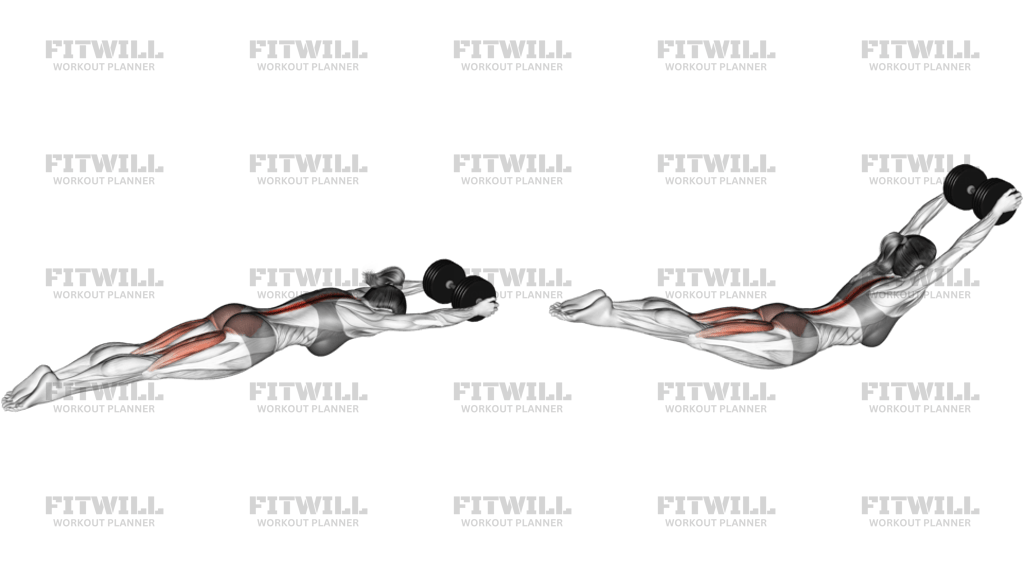
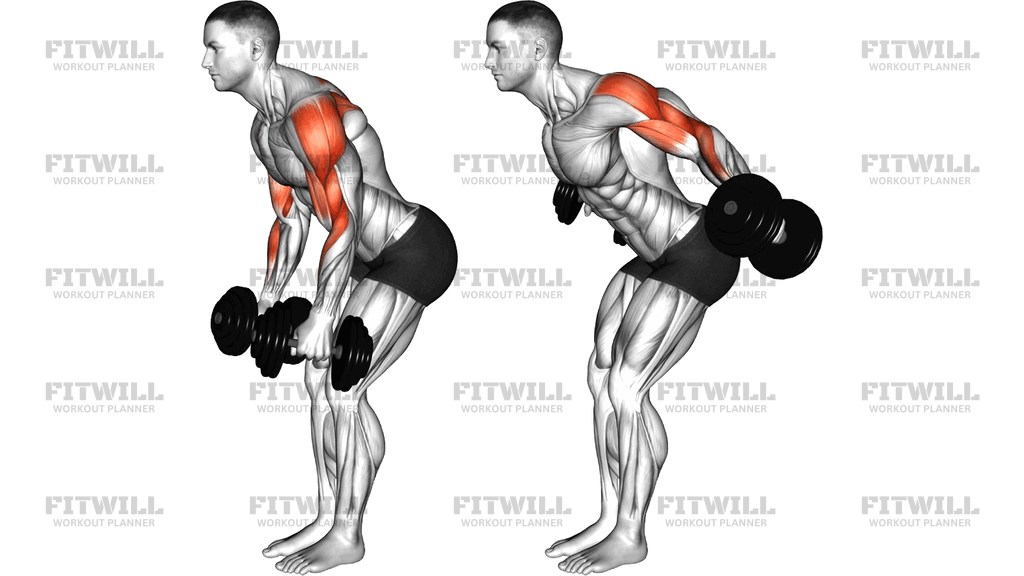
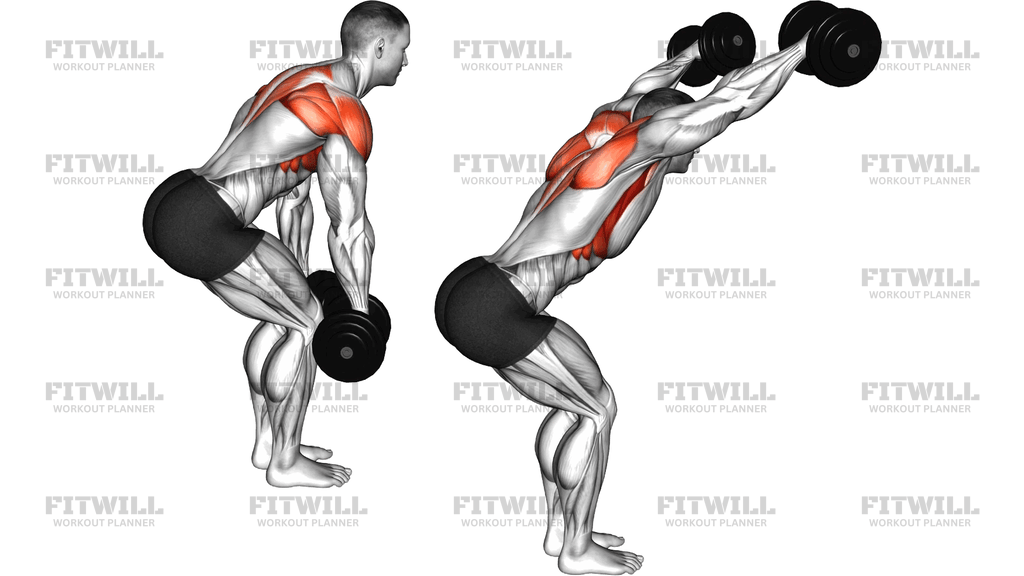
The Dumbbell Bent Over Y Raise is a hinged-position raise where you hold a dumbbell in each hand, fold forward at the hips until your torso is angled well past parallel to the floor, and lift both arms up and outward so they form a wide Y shape overhead. Because your arms travel diagonally rather than straight out to the sides, the resistance shifts toward the lower trapezius and rear deltoids, two areas that most pressing and pulling exercises leave undertrained.
This movement is especially useful for anyone whose shoulder work is dominated by presses and lateral raises. The Y-shaped path encourages upward rotation of the scapula, which is how your shoulder blades are meant to move when you reach overhead. Training that pattern with light dumbbells helps balance out the downward-pulling habits created by heavy rowing and pressing, and it gives the rear shoulders and mid-back a direct, low-stress stimulus.
Setup matters more here than in most raises. With your torso hinged forward and no bench behind you, your lower back and hamstrings are doing real isometric work for the entire set. A solid hip hinge — soft knees, hips pushed back, spine long rather than rounded — is what allows you to raise the dumbbells without your back taking over. If you cannot hold the hinge position comfortably, that is the first thing to fix before adding weight.
Execution comes down to leading with the arms and letting the shoulder blades move. Keep a slight bend in the elbows, raise the dumbbells on a wide diagonal until your arms are in line with your ears, and let your thumbs point up as you lift. The top position should feel like a long reach, not a shrug. Lower the weights under control so each rep starts from a dead stop rather than a bounce.
You will see this exercise in shoulder-health routines, warm-up sequences before overhead pressing, and as a light accessory on upper back days. It works best with modest loads — the muscles involved are small and the hinge position limits how much weight you can stabilize. Common use cases include improving overhead posture, adding detail to the upper back, and building endurance in the scapular muscles that support every press and pull you do.
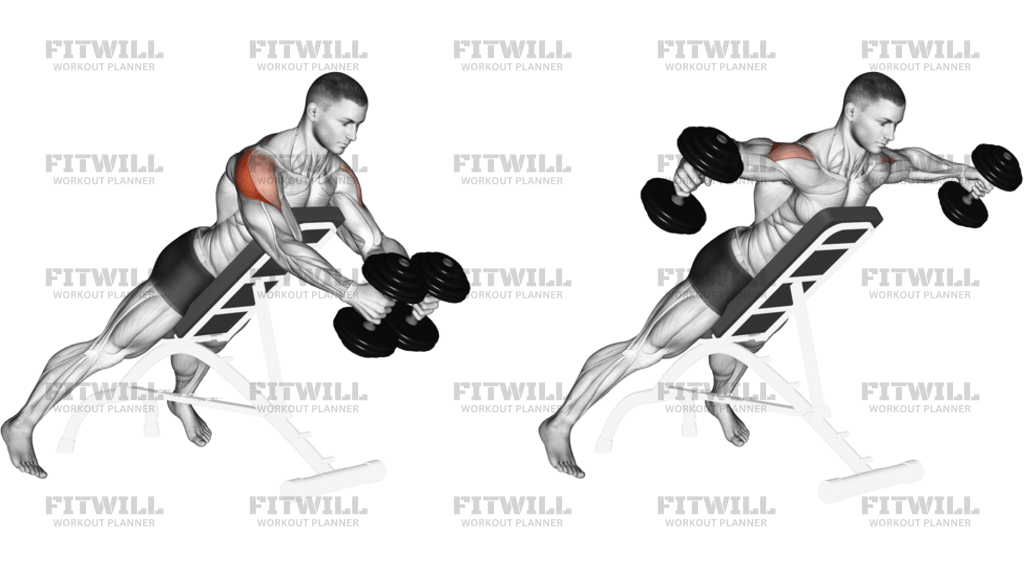
The main safety consideration is protecting the hinge. Use light dumbbells, keep the movement slow, and stop the set as soon as your torso position drifts or your lower back starts compensating. If bending forward is uncomfortable, a chest-supported version on an incline bench gives you the same arm path with the spine taken out of the equation.
[ Workout Log & Planner ]
Put your next workout in Fitwill
Keep your plan and training log ready when you are.


Instructions
- Stand with feet hip-width apart and hold a dumbbell in each hand with a neutral grip, palms facing each other.
- Push your hips back and hinge forward until your torso is angled toward the floor, roughly 45 degrees or lower, with knees softly bent.
- Let the dumbbells hang straight down beneath your shoulders, arms fully extended, and keep your neck in line with your spine.
- Brace your abdominal muscles and lock in the hinge position so your torso does not rise or rock during the set.
- Raise both dumbbells out to the sides and up on a diagonal path so your arms form a wide Y above your torso, keeping a slight elbow bend.
- Let your thumbs rotate upward as you lift and reach long through the arms at the top, so the dumbbells end up in line with your ears rather than behind your head.
- Pause briefly at the top and feel the work between your shoulder blades and along the back of your shoulders.
- Lower the dumbbells slowly along the same path until your arms hang fully straight and the weights come to a complete stop.
- Exhale as you raise the arms and inhale as you lower them, keeping your breathing steady throughout the set.
- Finish all reps, then stand up out of the hinge with a flat back before setting the dumbbells down.
Tips & Tricks
- The most common mistake is turning this into a shrug — if your shoulders creep up toward your ears, the upper traps are stealing the work. Reach long instead of lifting high.
- Do not straighten up as you lift. Because there is no bench supporting you, the natural cheat is to rock your torso backward on each raise; watch your torso angle in a mirror or film a set from the side.
- Keep the dumbbells light. If you cannot complete 10 reps without your lower back fatiguing before your shoulders do, drop the weight rather than shortening the hinge.
- Your palms should rotate from facing each other to facing forward as you rise, so the thumbs point up at the top. Letting the palms turn down turns the movement into a different raise and can pinch the shoulder.
- If your hamstrings limit how far you can hinge, bend the knees a little more and accept a slightly higher torso angle rather than rounding your lower back to get deeper.
- Move the arms on a diagonal in front of your body, not straight out to the sides — the Y path is what separates this from a bent over lateral raise.
- A slight elbow bend is fine, but if the arms are bending and straightening through the rep, the dumbbells are too heavy and it is becoming a half-row.
- Start each rep from a dead hang with the dumbbells stationary. Using the stretch at the bottom to swing the weights up removes tension from the target muscles.
- If holding the hinge is your limiting factor, set the same arm path up chest-down on an incline bench while you build the hinged endurance.
Frequently Asked Questions
What muscles does the Dumbbell Bent Over Y Raise work?
It primarily targets the lower trapezius and rear deltoids, with the middle traps, rhomboids, and rotator cuff assisting as the shoulder blades rotate upward. Your lower back, glutes, and hamstrings also work isometrically to hold the hinge position.
How is the Dumbbell Bent Over Y Raise different from a bent over lateral raise?
The lateral raise moves the arms straight out to the sides, while the Y raise brings them up on a forward diagonal so they finish overhead in a Y shape. That path shifts more of the work to the lower trapezius and changes how the shoulder blade rotates.
Is the Dumbbell Bent Over Y Raise good for beginners?
Yes, as long as the weight stays light and the hinge position is comfortable. Beginners often benefit more from learning the hip hinge and scapular control with very light dumbbells than from progressing the load.
How heavy should the dumbbells be for this exercise?
Much lighter than you would use for rows or lateral raises — usually a pair of dumbbells you could lift far more times than your target reps. The hinge position and the small muscles involved make heavy loads impractical and counterproductive.
Why do my lower back muscles fatigue before my shoulders?
Your erectors are holding your torso against gravity for the whole set, which is normal to a degree. If they give out first, shorten your sets, reduce the weight, or switch to a chest-supported version on an incline bench.
Should my thumbs point up or down at the top of the Dumbbell Bent Over Y Raise?
Thumbs up. Rotating the palms so the thumbs lead the lift keeps the shoulder in a friendlier position and matches the Y path, whereas turning the palms down changes the movement and can cause discomfort in the shoulder.
Where should I feel the Dumbbell Bent Over Y Raise?
Most of the sensation should be across the back of the shoulders and between the shoulder blades, especially toward the lower edge of each shoulder blade. A pulling feeling in the lower back means your hinge is working too hard, not that the exercise is wrong.
Can I do the Dumbbell Bent Over Y Raise as a warm-up before overhead pressing?
Yes, it works well for that because it practices upward rotation of the shoulder blades, which is central to a healthy overhead press. Use very light dumbbells for 8 to 12 controlled reps before pressing.
What can I use instead of dumbbells if I do not have any?
Light weight plates held by the edges work with the same grip logic, or a pair of small water bottles for warm-up sets. The key is keeping the load light enough that the arm path, not the weight, stays the focus.