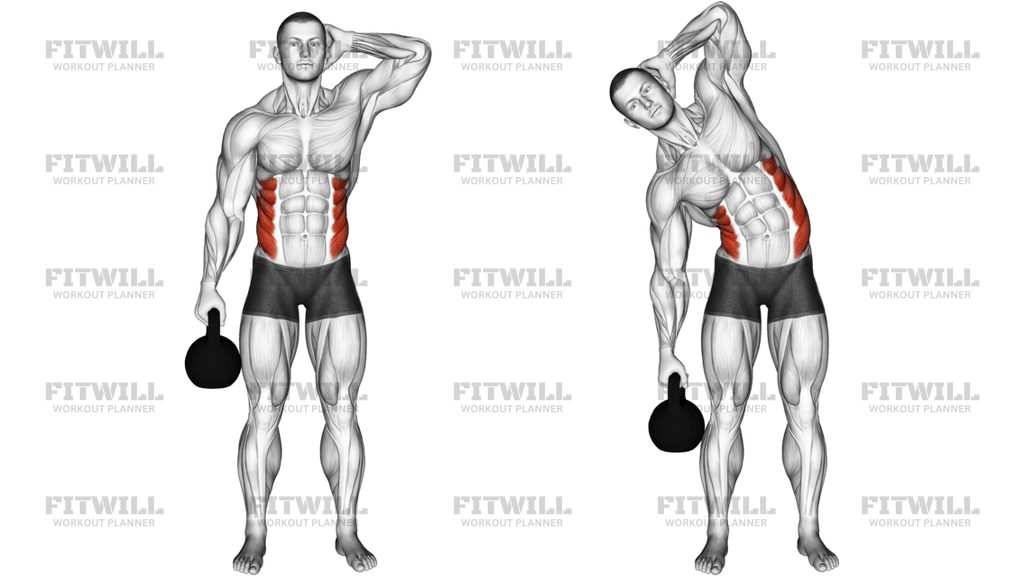
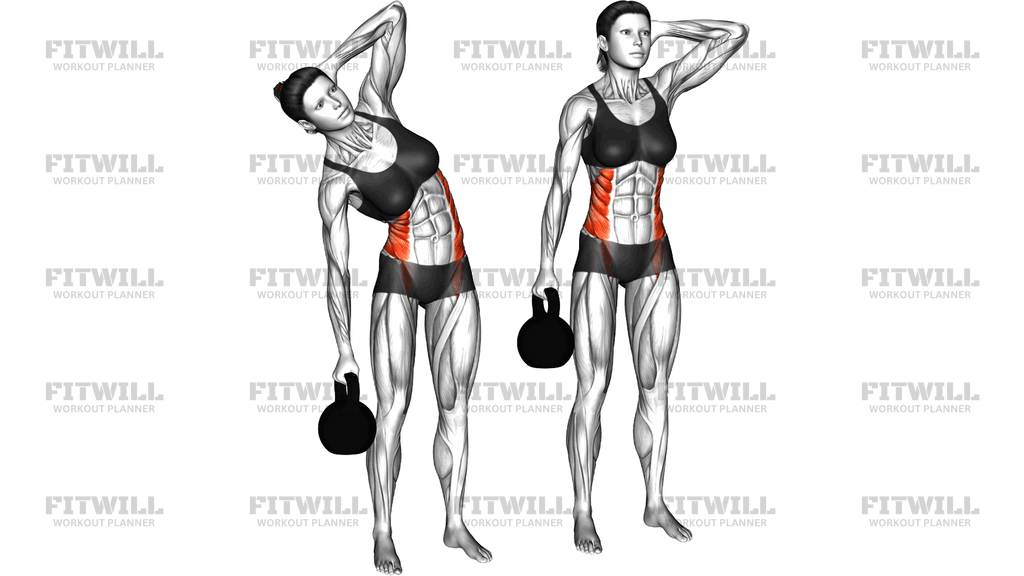
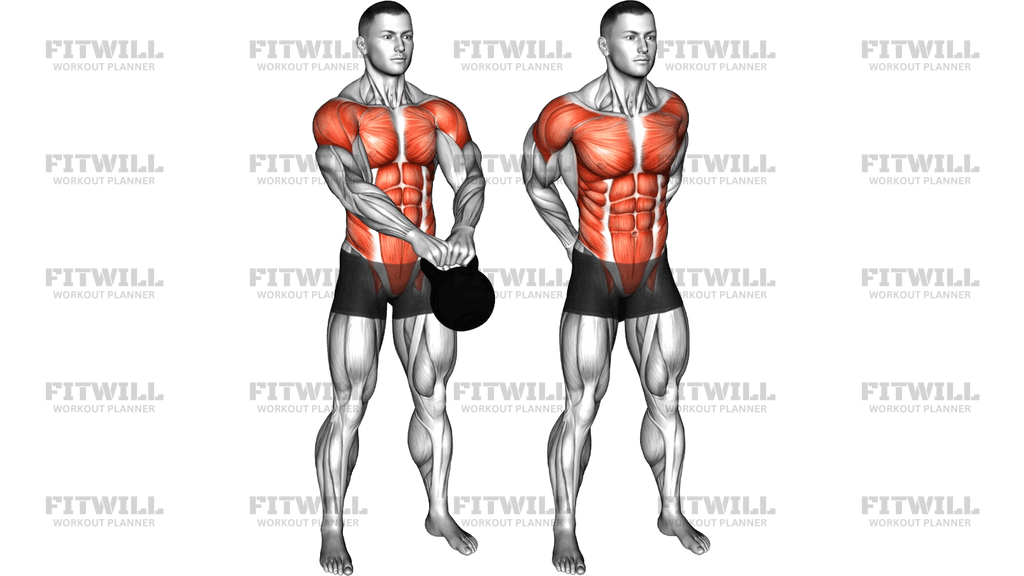
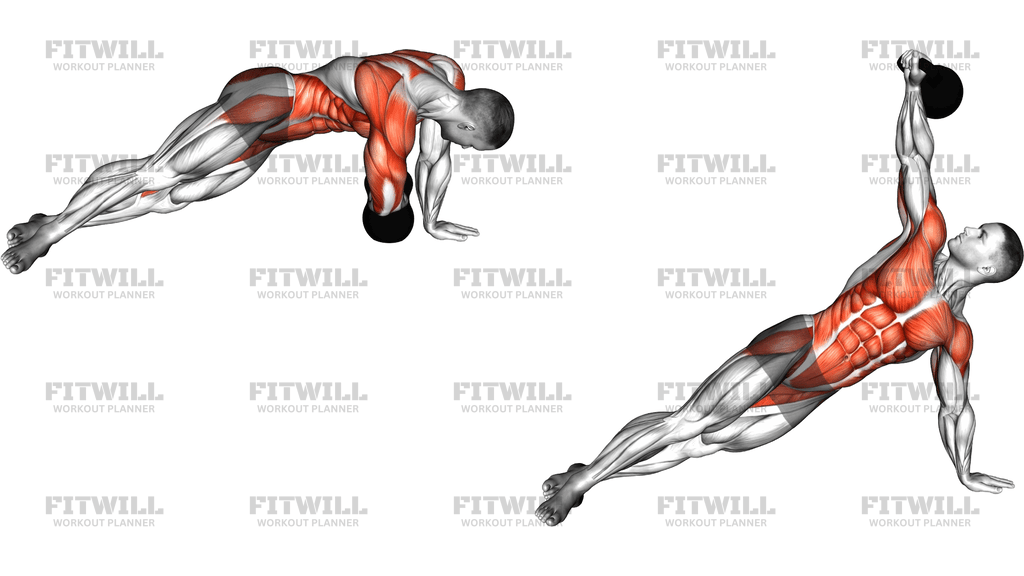
Kettlebell Side Swing
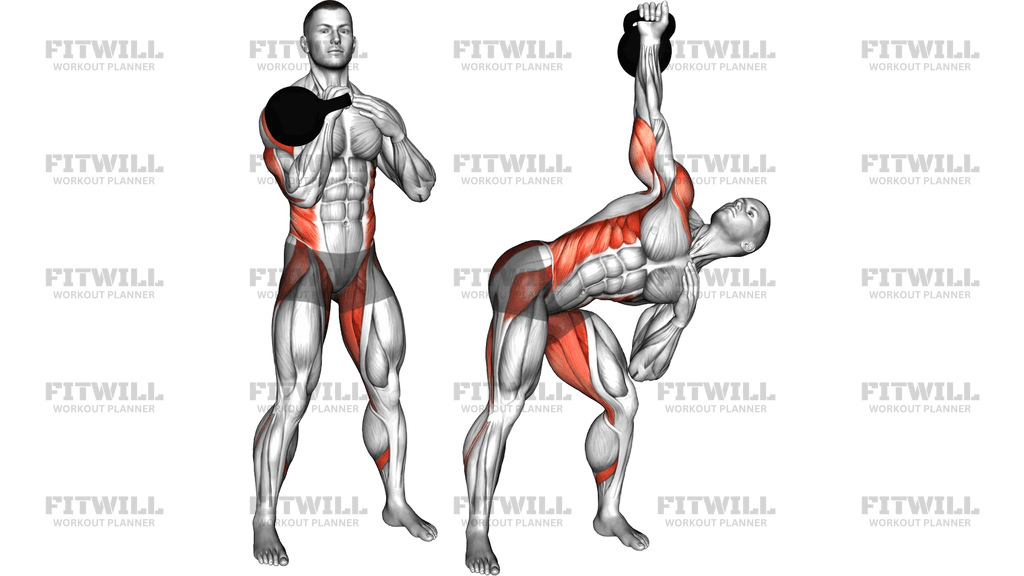
The Kettlebell Side Swing is a rotational variation of the standard kettlebell swing in which the bell travels diagonally across the body rather than straight up in front of you. Instead of the bell passing between your legs directly behind your midline, you guide it across to the opposite side of your body on the backswing, then drive it up along a slanted path toward the working side. The result is a swing that keeps all the hip-hinge power of the classic version while adding a strong demand on the obliques and the muscles that resist and control rotation.
This movement suits lifters who already own a basic two-hand or one-arm swing and want to challenge their midsection in a new plane. Rotational strength is often undertrained, yet it shows up in almost everything from throwing and swinging sports to carrying groceries on one side. Because the bell moves off-center, your trunk has to work harder to keep your ribs stacked over your pelvis, which is exactly what makes this variation worthwhile.
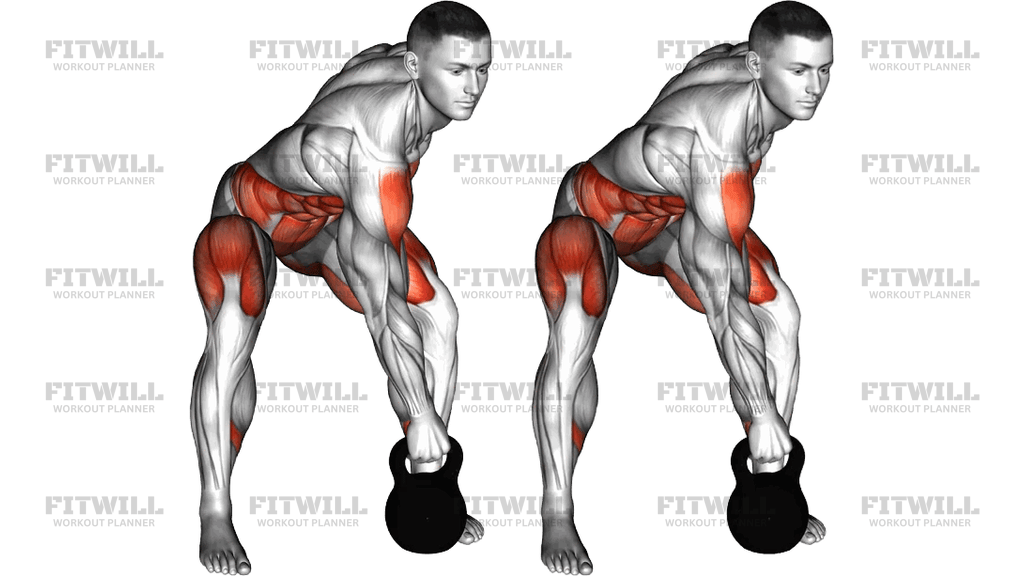
The main work comes from the glutes and hamstrings driving the hip hinge, but the obliques, deep core, and lower back handle the rotational braking on every rep. The shoulder on the working side stabilizes the arc, and the grip gets a workout simply from controlling a bell that wants to pull sideways. Compared to a standard swing, expect noticeably more oblique and hip involvement and slightly less pure posterior chain loading.
Setup matters more here than in a straight swing because the diagonal path adds shear and rotation to your spine. Your stance, hinge depth, and hand position determine whether the bell travels cleanly around your hip or drags across your body in an uncontrolled arc. Take a moment before the first rep to set your feet and establish the diagonal line you want the bell to follow.
To execute well, think of the bell as following a railroad track from the outside of one hip, across behind you, up to the outside of the working shoulder, and back down the same line. The hips provide the snap; the arm is just a rope connecting you to the bell. If you find yourself muscling the bell up with your shoulder or twisting from your waist to chase it, the weight is probably too heavy or your hinge is too shallow.
In practice, the Kettlebell Side Swing works well as a conditioning movement in circuit training, as a core-focused finisher after lower body work, or as a sport-specific tool for athletes in rotational sports like tennis, baseball, and golf. Start light, single set of ten to fifteen reps per side, and only progress the load once the bell tracks the same clean arc on every rep without your torso collapsing toward the swing side.
[ Workout Log & Planner ]
Put your next workout in Fitwill
Keep your plan and training log ready when you are.


Instructions
- Stand with your feet slightly wider than shoulder width, toes turned out a few degrees, and place one kettlebell on the floor about a foot in front of you, slightly toward the side you will swing toward.
- Hinge at the hips with a flat back and soft knees, then grip the handle with one hand, keeping your other arm relaxed at your side or reaching back for balance.
- Hike the bell back diagonally, letting it cross behind your body toward the opposite hip so it passes between your legs on an angled line rather than straight back.
- Brace your core as if about to take a light punch, and keep your ribs stacked over your pelvis before the drive begins.
- Snap your hips forward explosively, squeezing the glute on the working side to power the bell up along the diagonal path toward the outside of your working shoulder.
- Let the bell float at the top with your arm roughly extended but not locked, your torso tall and square, and avoid leaning away from the weight.
- Guide the bell back down the same diagonal line, absorbing the force by hinging your hips back and letting it cross behind you toward the opposite side again.
- Exhale sharply at the top of each swing and inhale through the nose as the bell drops into the backswing.
- Complete all reps on one side, set the bell down on the floor with a flat back, then switch hands and repeat on the other side.
Tips & Tricks
- The most common fault is turning this into a shoulder raise: if your arm is doing the lifting, drop to a lighter bell and refocus on an aggressive hip snap.
- Watch for the back foot rolling or lifting during the drive; press all three contact points of that foot into the floor so the rotational force goes through your hips, not your knee.
- If the bell smacks into your inner thigh on the backswing, your hinge is too shallow — push your hips back further and let the bell travel closer to your groin along the diagonal.
- Keep your chest pointing mostly forward rather than rotating open toward the bell; the swing path is diagonal but your torso stays square.
- Do not let your working shoulder creep up toward your ear; pack it down by keeping the lats engaged as the bell floats.
- A common mistake is swinging too heavy too soon — the off-center load multiplies the strain on your lower back, so master the path with a light bell first.
- If you feel it mostly in your lower back instead of your glutes and obliques, you are likely lifting with your spine; reset, hinge deeper, and re-drive from the hips.
- Chalk or a dry towel on your free hand helps if sweat makes the diagonal grip line slippery, since the bell pulls sideways more than in a standard swing.
- Practice the backswing path without swinging all the way up a few times before each set, hiking the bell across your body like a football snap to rehearse the line.
Frequently Asked Questions
Which muscles does the Kettlebell Side Swing work the most?
The glutes and hamstrings produce the hip power, while the obliques and deep core work hard to control the diagonal, rotational path. The shoulder and grip on the working side stabilize the bell throughout.
Is the Kettlebell Side Swing suitable for beginners?
Beginners should first learn the standard hip-hinge swing, since the diagonal path demands solid hinge mechanics and trunk control. Once your straight swing is consistent, start this variation with a light bell.
How is the Kettlebell Side Swing different from a regular one-arm swing?
In a regular swing the bell travels straight back between your legs and up in front of your midline. The side swing sends the bell diagonally across your body to the opposite hip on the backswing, adding rotation that targets the obliques.
Why does the kettlebell keep hitting my inner thigh?
The bell is drifting too far forward because your hinge is too shallow or your hips are not moving back far enough. Push your hips further behind you and let the bell pass closer to your groin on the diagonal line.
Should my torso twist toward the opposite side during the backswing?
A small natural rotation is fine, but your chest should stay mostly square and your spine long. Most of the angle change should come from the bell's path, not from cranking your lower back.
Can I substitute anything if I don't have a kettlebell?
A single dumbbell held by one end can mimic the offset load, though the handle placement makes the diagonal path less smooth. A medicine ball rotational scoop is another option, but it removes the swing's hinge-and-float character.
How heavy should the kettlebell be for this exercise?
Start noticeably lighter than your normal one-arm swing weight, because the sideways pull challenges your grip and core in a new way. A bell you can swing cleanly for twelve to fifteen controlled reps per side is a good starting point.
Is it safe for my lower back?
When performed with a hinged spine, braced core, and a weight you control, it is a demanding but well-tolerated posterior chain and core exercise. Stop if you feel sharp or shooting pain, and reduce the load or range if your back takes over from your hips.
How many reps and sets should I do?
For conditioning, two to four sets of ten to fifteen reps per side works well with moderate weight. For power focus, keep sets shorter, around six to eight explosive reps per side, and rest fully between sets.