Standing Quadriceps Stretch
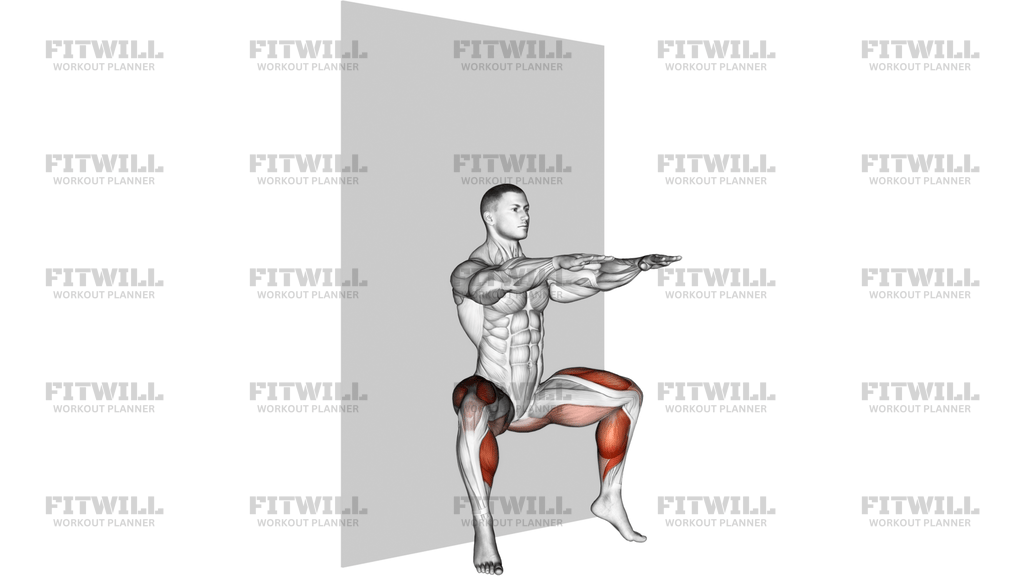
The Standing Quadriceps Stretch is a classic flexibility drill where you balance on one leg, bend the opposite knee, and draw your heel up toward your glutes by holding the ankle with your hand. One hand rests lightly against a wall for balance, which lets you focus on the stretch itself instead of wobbling. The quadriceps along the front of the thigh light up in the illustration of the movement because they are lengthened directly, especially the rectus femoris, which crosses both the hip and the knee.
This stretch earns its place in almost any routine. It is ideal after running, cycling, squats, lunges, or leg days, when the quads are pumped and shortened from repeated knee extension. It is also a practical daily reset for anyone who sits for long hours, since prolonged sitting keeps the hip flexors and rectus femoris in a shortened position and often contributes to that stiff, tight feeling across the front of the thigh and hip.
Setup matters more than most people realize. Your stance leg should be strong and tall, your pelvis neutral, and your knees close together. If the bent knee drifts forward or the low back arches, the stretch leaks into the knee joint and lower back instead of the quadriceps. Keeping the thighs aligned and tucking the pelvis slightly under is what turns a casual heel grab into a precise quad stretch.
To perform it well, hold the ankle rather than the toes or the shin, and pull the heel back and up toward the glutes in a straight line rather than wrenching it sideways. You should feel a smooth, even tension along the front of the thigh, not a sharp pull behind the knee or a strain in the kneecap. Breathe steadily and let the tension settle as the muscle releases.
The wall-supported version shown here makes the movement accessible for beginners, older adults, or anyone training on tired legs. Once you can hold it steadily, you can progress to the hands-free version by extending the free arm forward or reaching both arms overhead, which adds a balance challenge. Hold each side for twenty to thirty seconds and repeat two to three rounds, especially after lower body training.
A few safety points are worth respecting. Never force the heel toward the glutes if the knee complains, and skip or reduce the range if you have a recent knee injury or feel pinching at the kneecap. The goal is a comfortable, sustained lengthening of the muscle, not maximum-range heroics.
Fitwill
Log Workouts, Track Progress & Build Strength.
Achieve more with Fitwill: explore over 9600 exercises with images and videos, access built-in and custom workouts, perfect for both gym and home sessions, and see real results.
Start your journey. Download today!




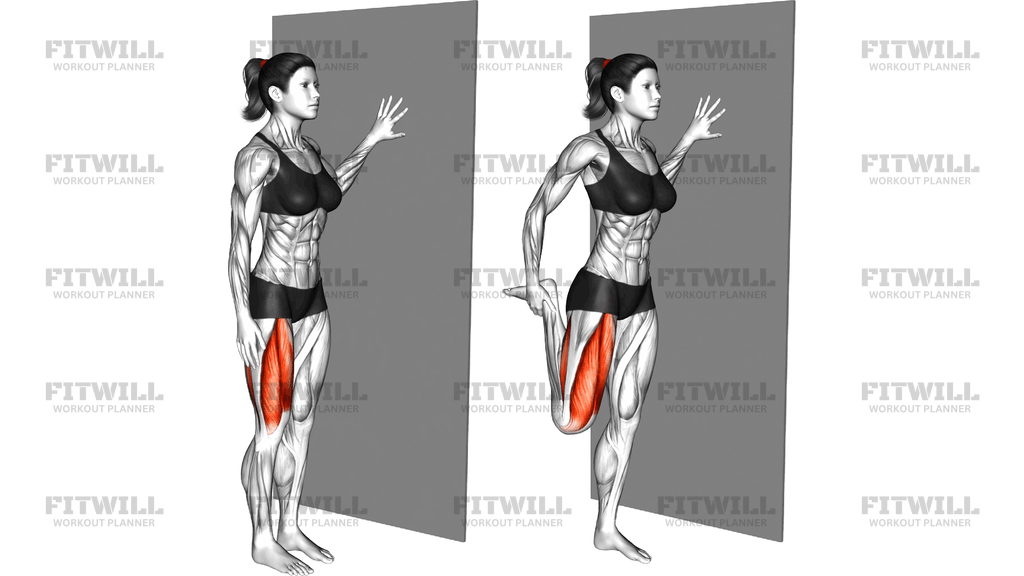
Instructions
- Stand tall next to a wall with your feet hip-width apart and place one hand flat against the wall at about shoulder height for support.
- Shift your weight onto the leg closest to the wall so the outside leg is free to move, and soften the standing knee slightly rather than locking it.
- Bend your free knee and lift your heel back toward your glutes, then reach down with the hand on the same side and grip the ankle, not the toes.
- Keep both knees side by side and pointing forward, with the standing leg's toes facing the wall.
- Gently pull the ankle back and up so the heel moves toward the glutes, keeping the pelvis tucked slightly under and the ribs down.
- Hold the end position for twenty to thirty seconds, breathing slowly and letting the front of the thigh release without bouncing.
- Exhale as you ease the tension off, lower the foot back to the floor with control, and re-establish your balance before switching sides.
- Turn around, place the opposite hand on the wall, and repeat the same sequence on the other leg.
- Perform two to three holds per side, resting briefly between rounds, ideally after training when the muscles are warm.
Tips & Tricks
- Grab the ankle itself, not the toes or the front of the shin; gripping the toes pulls the ankle into extra flexion and stresses the front of the knee.
- If your heel will not reach your glutes, do not crank it; hold wherever you feel moderate tension in the quad and let the range improve over weeks, not seconds.
- Watch for the bent knee drifting forward past the standing knee. Keep the thighs stacked vertically so the rectus femoris, not the knee joint, takes the stretch.
- Tuck the pelvis by gently engaging the glute of the stretching leg. This stops the low back from arching and deepens the stretch at the hip end of the quad.
- Avoid bouncing or pulsing the heel. Static holds work better here, and rhythmic yanking tends to make the muscle guard and tighten.
- If balance is shaky, stand a little closer to the wall and press lighter with the fingertips rather than leaning your weight into the hand.
- Do not let the standing knee lock out. A soft knee keeps the leg stable and protects the joint while the other side stretches.
- Keep your torso upright and your gaze forward. Leaning the chest forward or looking down shifts your center of gravity and makes the hold harder than it needs to be.
- If kneeling or bending the knee deeply bothers your kneecap, reduce the pull so the heel only rises partway, or switch to a side-lying quad stretch for a while.
Frequently Asked Questions
Which muscles does the Standing Quadriceps Stretch target?
It primarily lengthens the quadriceps on the front of the thigh, including the rectus femoris, which also crosses the hip. The hip flexors at the front of the hip get a secondary stretch when the pelvis stays tucked and the thigh stays vertical.
Why hold the ankle instead of the toes in this stretch?
Gripping the ankle lets the knee bend without forcing the ankle joint past a comfortable range. Pulling on the toes adds pressure to the front of the knee and can cause pinching at the kneecap.
Is the Standing Quadriceps Stretch suitable for beginners?
Yes, and the wall support makes it especially beginner friendly. New lifters can keep a light fingertip contact with the wall and a smaller range of knee bend while balance and flexibility develop.
How long should I hold the Standing Quadriceps Stretch?
Aim for twenty to thirty seconds per side, repeated two to three times. After heavy leg training or long runs, the longer end of that range feels best.
My knee hurts when I pull my heel to my glutes. What should I change?
Ease off the pull so the stretch stays comfortable, check that your knees stay together, and make sure you are tucking the pelvis rather than arching the lower back. If discomfort at the kneecap persists, stop and choose a low-load alternative like a side-lying or prone quad stretch.
Should I do the Standing Quadriceps Stretch before or after training?
It works best after training or as a standalone flexibility session, when the muscles are warm. Before training, keep holds short and pair them with dynamic movements like leg swings instead of long static holds.
What can I use instead of a wall for balance?
A sturdy chair, railing, or squat rack works just as well. Once you are stable, you can drop the support entirely and reach the free arm forward or overhead to add a balance challenge.
Why do my quads feel tighter on one side during the Standing Quadriceps Stretch?
Small side-to-side differences are common, especially if you favor one leg in sports or carry a child or bag on one hip. Always match your hold time to the tighter side rather than cutting it short.
Can this stretch help with tight hips from sitting all day?
It can, because the rectus femoris and hip flexors shorten with prolonged sitting. Keep the pelvis tucked and the thigh vertical so the stretch reaches the hip end of the muscle instead of only the knee end.