Step Out From Squat
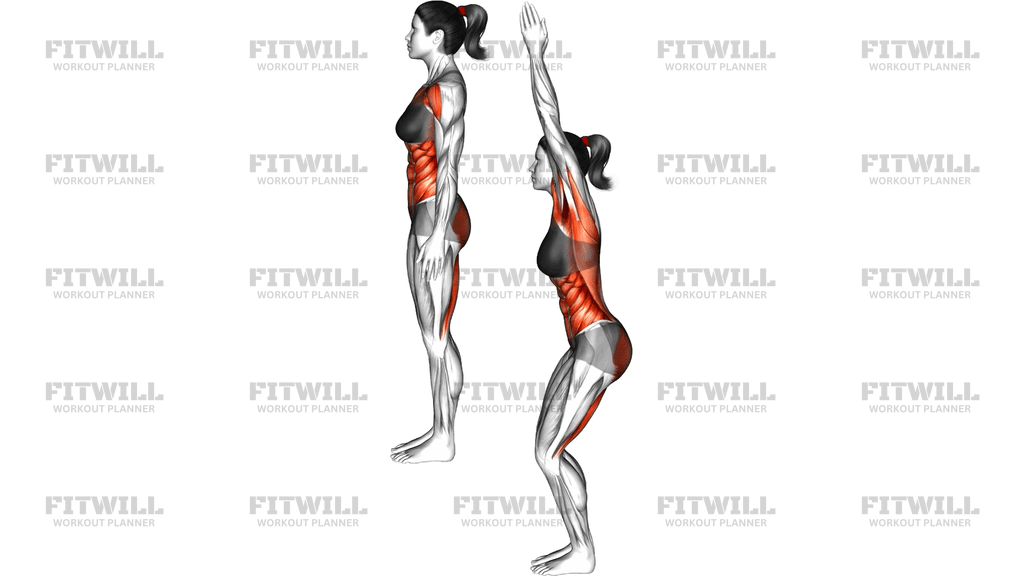
Step Out From Squat is a bodyweight lateral movement where you hold a partial squat position and step one leg out to the side, then bring it back or continue stepping, all while keeping your hips low and your torso upright. Instead of standing up between reps like you would in a side lunge, you stay down in the squat the entire time, which keeps continuous tension on the thighs and hips and turns a simple side step into a real strength and endurance drill.
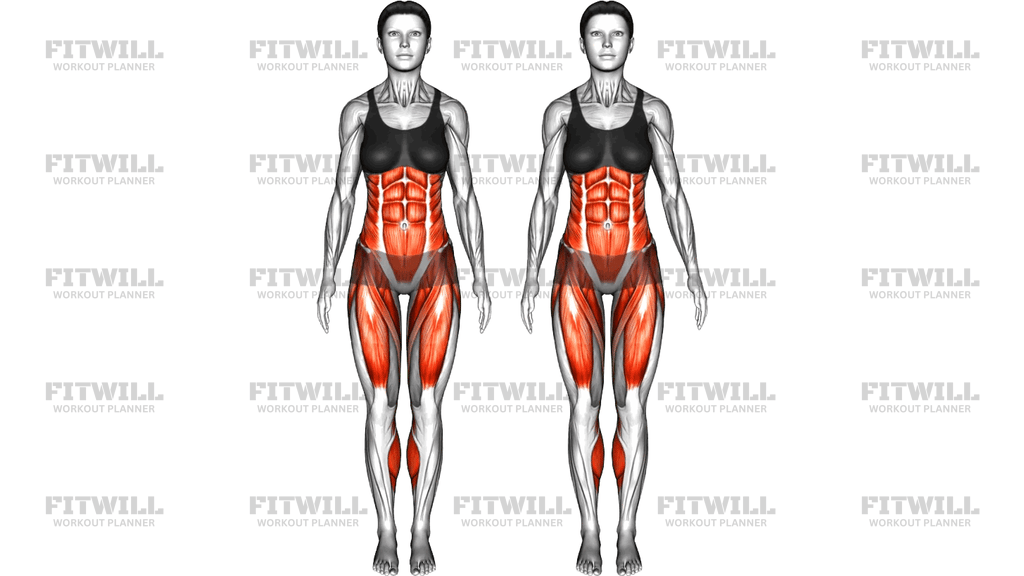
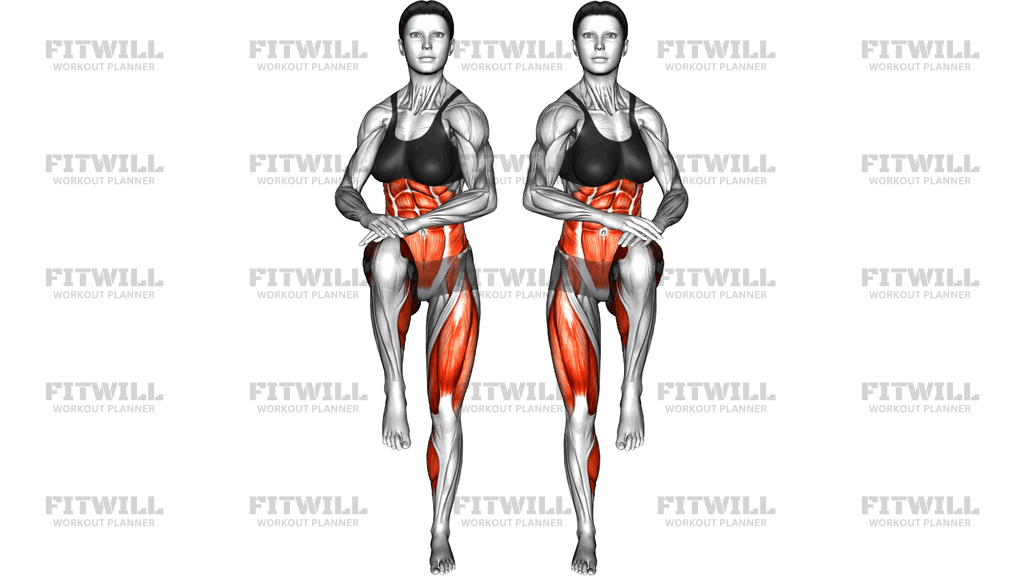
Because you never stand up, the working leg has to support your body weight through an extended isometric hold while the other leg reaches out and controls its own return. That combination trains the glutes and quads of the stance leg in a stabilizing role, while the stepping leg works through hip abduction and controlled adduction. The outer hip muscles that steady your pelvis on every stride get a lot of work here, which is exactly why this drill shows up in warm-ups, glute circuits, and knee-health programs.
Setup matters more than it looks. If you let your chest drop or your stance knee cave inward, the tension leaks out of the legs and the move becomes a shallow bounce instead of a loaded step. Sitting the hips back, keeping the shins fairly vertical, and clasping the hands in front of the chest for balance lets you stay low and move the stepping leg with control rather than momentum.
To perform it, lower into a comfortable quarter or half squat, brace your trunk, and step one foot out wide to the side with the toes still facing forward. Keep your weight mostly over the bent stance leg, tap or plant the stepping foot, then draw it back in to the starting width without rising up. Repeat on one side for your set or alternate legs, staying at the same squat depth throughout.
This exercise suits a wide range of people: beginners learning to own a squat position, lifters warming up their hips before squats or deadlifts, and anyone doing low-impact work at home. It needs no equipment and very little space, though a smooth floor helps the stepping foot travel cleanly. If balance is a challenge at first, a light fingertip touch on a wall or rack is a fair way to learn the pattern before going hands-free.
The main safety points are simple. Keep the stepping foot's toes pointing forward so the knee tracks in line with the foot, avoid forcing a depth that pulls your back into a rounded position, and stop the set when your stance leg starts to shake or your torso tips forward. Staying low with clean mechanics for fewer reps beats racking up sloppy steps.
[ Workout Log & Planner ]
Put your next workout in Fitwill
Keep your plan and training log ready when you are.


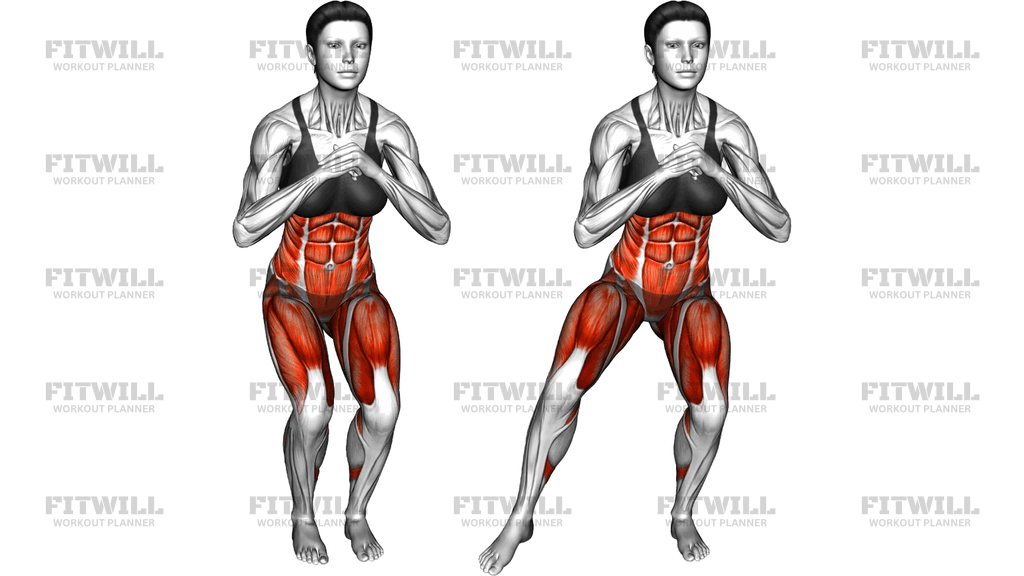
Instructions
- Stand with your feet roughly hip-width apart and clasp your hands together in front of your chest, elbows tucked slightly toward your ribs.
- Push your hips back and bend both knees to lower into a quarter to half squat, keeping your chest up, spine neutral, and weight spread across your whole foot.
- Brace your abdominal muscles as if bracing for a light push, and hold this squat height as your working position for the entire set.
- Shift your weight slightly onto one leg, then step the opposite foot out wide to the side, keeping both toes pointing forward.
- Plant the stepping foot with a soft knee, letting the outer hip and glute of that leg absorb the landing while your stance leg stays bent and loaded.
- Pause briefly with both feet wide, feeling the tension in the inner thighs and the glute of the stepping leg.
- Draw the stepping foot back in to the original hip-width stance, controlling the leg on the way in instead of letting it collapse back.
- Keep breathing steadily throughout - inhale on the step out, exhale as you pull the foot back in.
- Complete your reps on one side before switching, or alternate left and right, never letting your hips rise out of the squat between reps.
- At the end of the set, stand up out of the squat under control, take a few breaths, and reset your brace before the next set.
Tips & Tricks
- The most common mistake is standing taller with every step. Pick a squat depth at the start and hold your hips at that exact height for the whole set.
- If your stance knee drifts inward as you step, think about pressing that knee out over your little toe; this keeps the glute engaged and protects the knee.
- Keep the step wide but not forced. If you have to rock your torso sideways to reach the foot out, shorten the step until the movement is smooth.
- Keep the stepping foot light on contact. Slamming it down wide shifts the work into momentum rather than the hip muscles.
- Your hands clasped at chest height act as a counterbalance. If you lean forward, raise the hands slightly to help sit back into your hips.
- If the floor grips your foot as you step, wear smooth-soled shoes or slide the foot along a hard surface; carpet makes the return pull awkward.
- Slow the return phase down. Most people control the step out and then let the leg snap back, which wastes half the training effect.
- Use this as a warm-up before squats or lunges with 10 to 15 controlled steps per side, or as a finisher with longer sets to fatigue the hips.
- Shaking in the stance thigh near the end of a set is normal; form breakdown like a rounded lower back or a caving knee is the actual signal to stop.
Frequently Asked Questions
What muscles does the Step Out From Squat work?
The glutes and quads of the bent stance leg do the bulk of the supporting work, while the stepping leg trains the outer hip muscles and inner thighs through the wide step and controlled return. Your core stays active the whole time to keep your torso upright while you sit low.
How is the Step Out From Squat different from a side lunge?
In a side lunge you load the outstretched leg and stand back up between reps. In the Step Out From Squat you stay in the squat the entire time, so the stance leg works isometrically and the emphasis shifts to hip control rather than pushing off the floor.
Is the Step Out From Squat good for beginners?
Yes, it is a low-impact way to learn a squat position and lateral leg control without any equipment. Beginners can shorten the step width or place a fingertip on a wall for balance until the pattern feels steady.
How deep should my squat be during the Step Out From Squat?
A quarter to half squat works well - deep enough that your thighs are engaged, but shallow enough that you can hold a neutral lower back and keep your heels down for the whole set. Depth you cannot hold is depth you are not training.
Why do my stance leg and hip burn more than the leg that steps out?
The stance leg carries most of your body weight continuously without standing up, so it fatigues first. That is the intended effect, and it means the isometric hold in the glutes and quads is doing its job.
My knee caves in when I step out wide. How do I fix it?
Reduce the step width first, then consciously press both knees out over their toes and keep your weight in the midfoot. Weak outer hip muscles are usually the cause, and this exercise itself strengthens them over time.
Can I do the Step Out From Squat every day?
Because it is bodyweight and low impact, frequent practice is generally fine, especially as a warm-up. If you are taking sets close to failure, treat it like any strength work and give the legs a day of easier activity between hard sessions.
What can I use if I want more resistance than the Step Out From Squat provides?
A mini loop band around the thighs adds outward resistance to every step, or you can hold a light weight at your chest. Keep the squat depth and step width the same when you add load so the pattern does not change.
Should my toes point forward or turn out during the step?
Keep both feet pointing forward or only very slightly turned out, so the stepping knee tracks in line with the foot. A sharply turned-out stepping foot changes how the hip works and often encourages the knee to collapse inward.