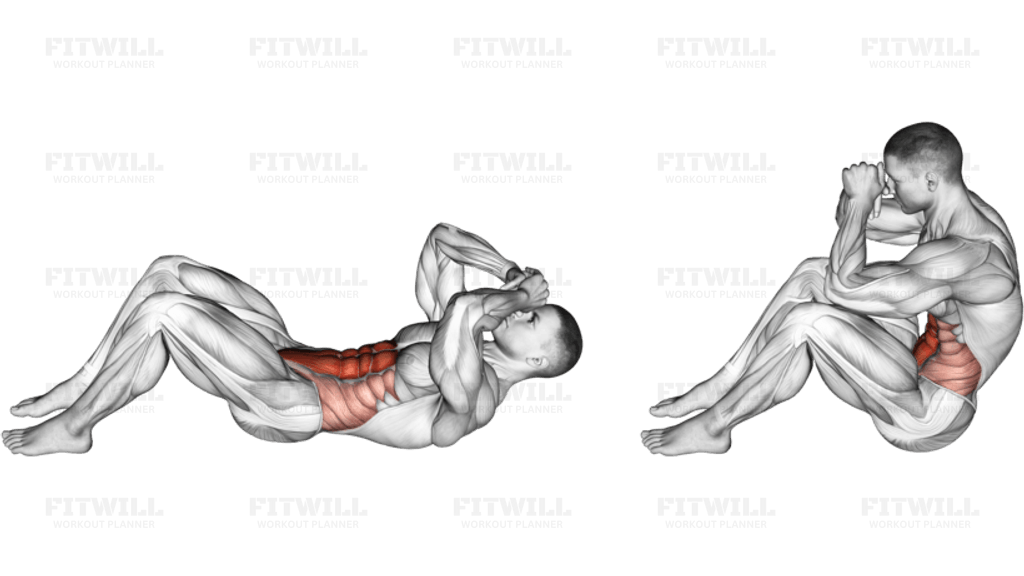
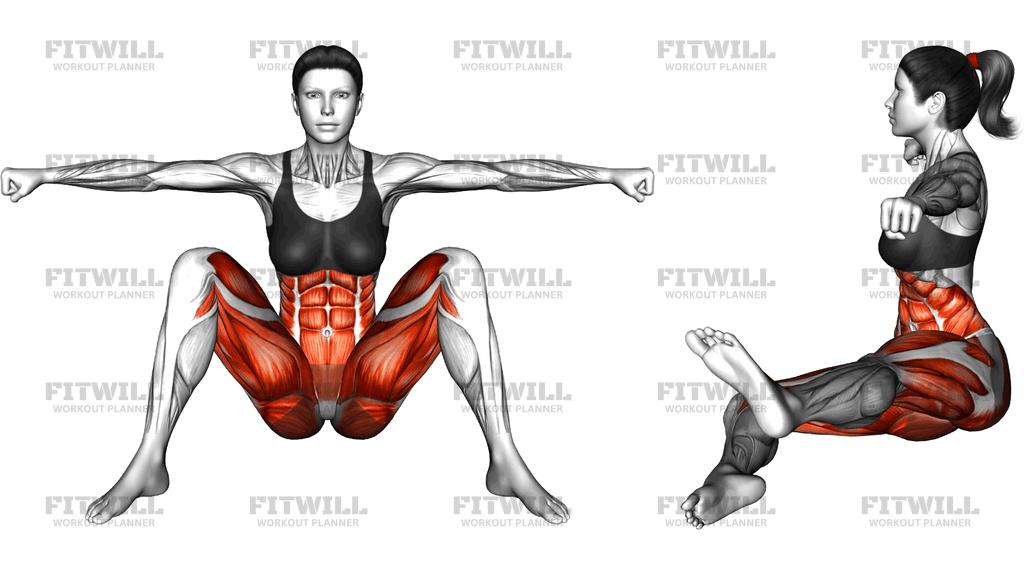
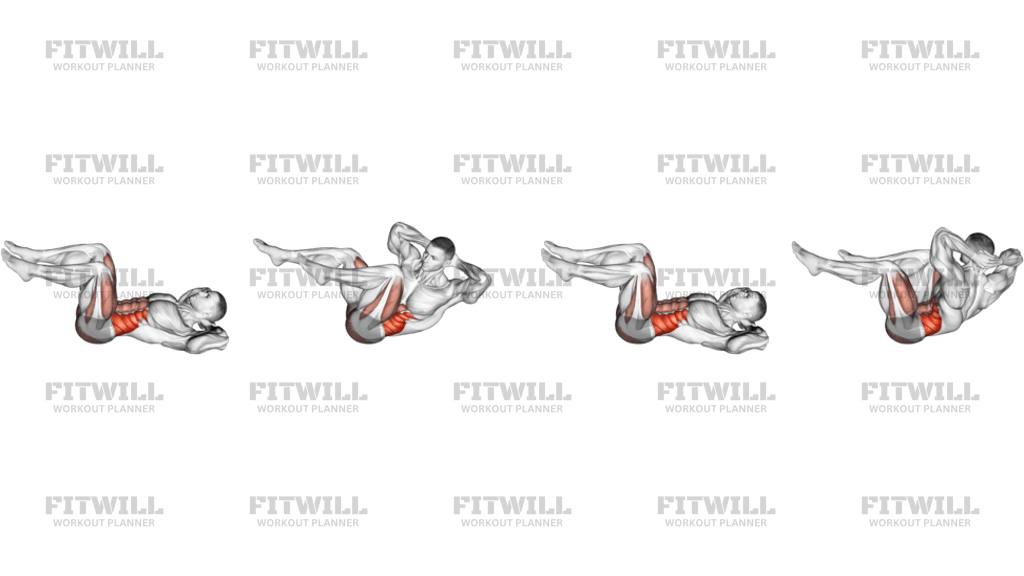
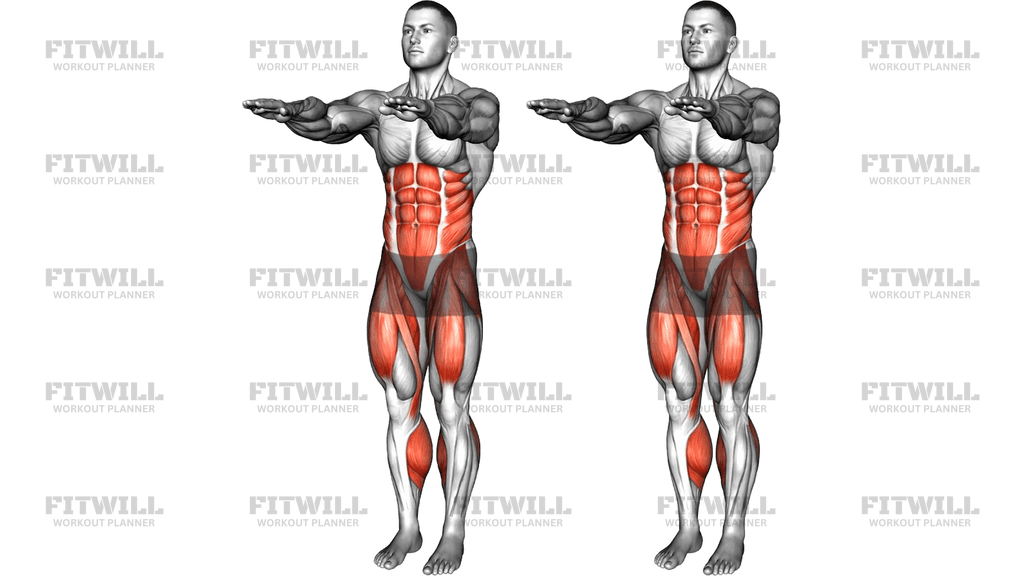
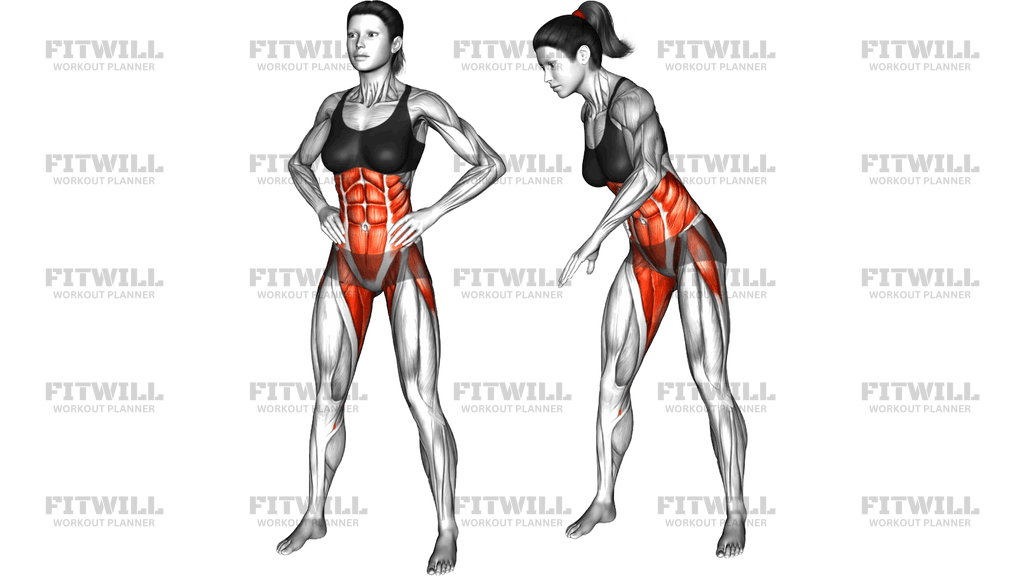
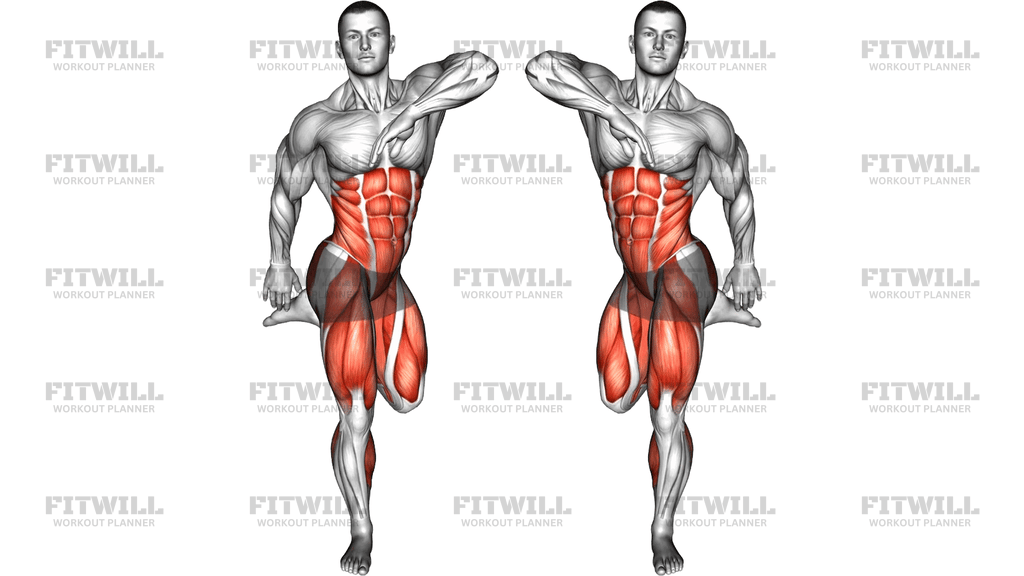
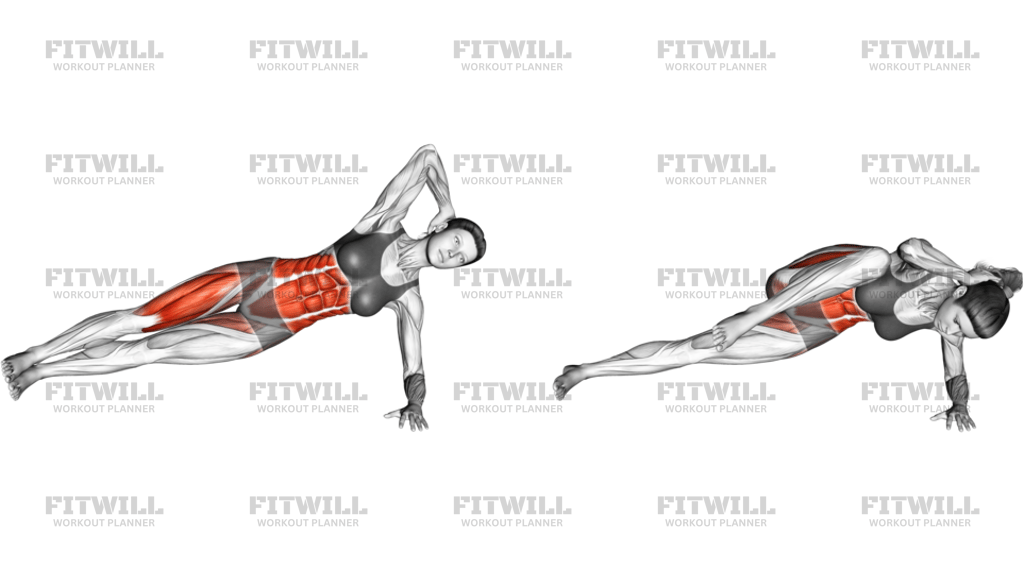
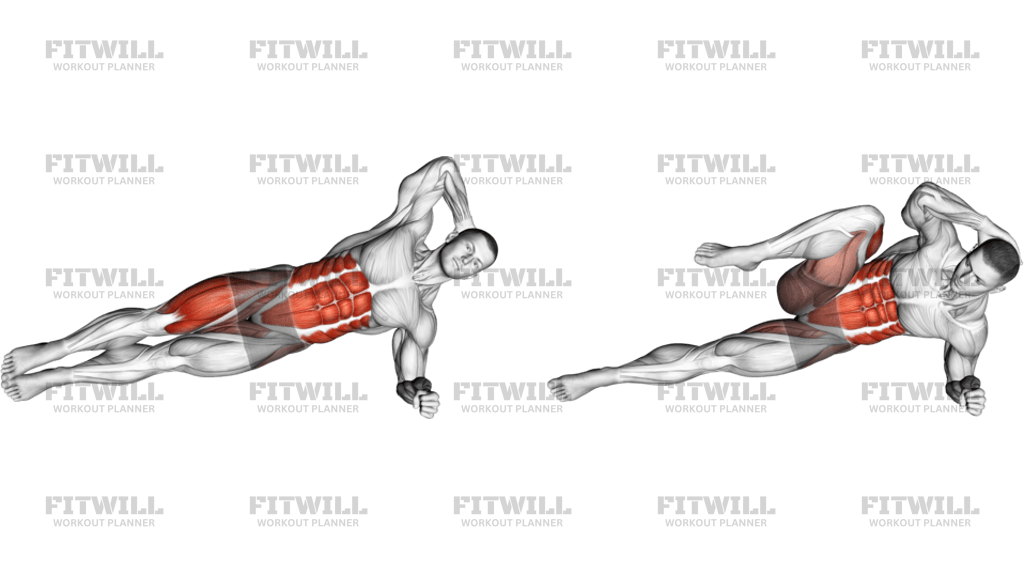
Standing Front Leg Lift Cross Toe Touches Side Ben
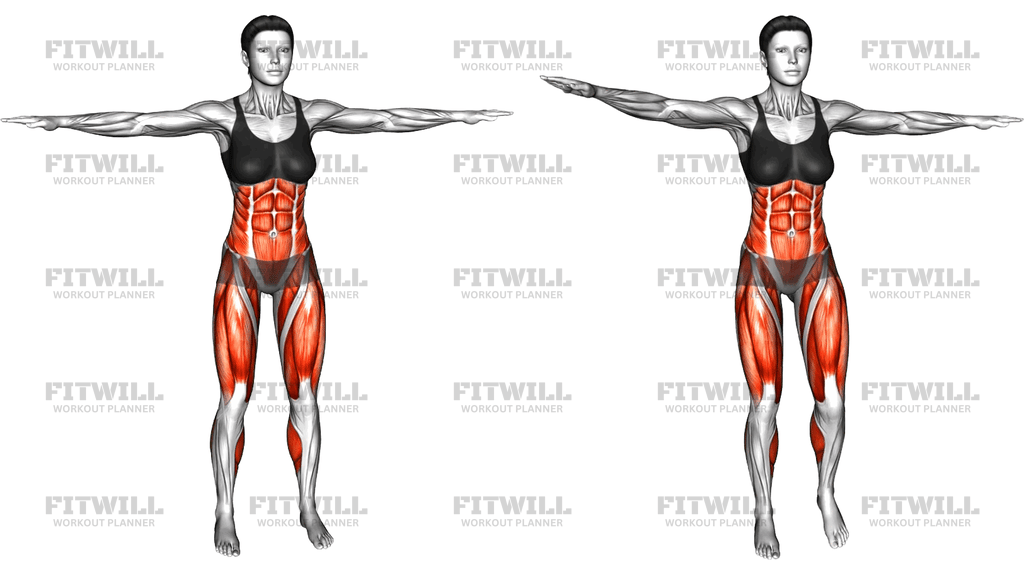
Standing Front Leg Lift Cross Toe Touches Side Ben is a body weight balance and core exercise performed from a tall standing position with both arms extended out to the sides. From there, you raise one leg straight in front of you and rotate your torso to reach the opposite hand toward the toes of the lifted leg, then return to the wide stance and repeat on the other side. Because you move through a cross-body pattern while balancing on one leg, it trains the abdominal wall, the obliques, and the hip flexors together with the stabilizing muscles of the standing leg.
This movement is especially useful for people who want core work that also challenges balance and coordination. Unlike floor crunches, it forces your trunk to control rotation while your base of support is constantly changing, which is closer to how the core works in walking, running, and sport. The standing leg's glutes and ankle stabilizers work quietly the whole time to keep you from wobbling or toppling sideways.
Setup matters more than it looks. A stance about shoulder-width or slightly wider with arms genuinely out to the sides gives you a stable T-shaped frame; if your arms drift down or your feet are too narrow, every rep turns into a struggle against falling rather than a controlled reach. Lifting the leg to roughly hip height keeps the hip flexors and quadriceps engaged and gives your opposite hand an honest target.
To execute it well, hinge slightly at the hips rather than rounding your spine, and think of rotating through the ribcage as your opposite hand travels toward the lifted toes. The reach should feel like a diagonal crunch across your midsection, not a desperate lunge to touch something. Move at a pace you can control on the way back out, because the return under tension is where most of the balance work happens.
You will see this exercise in warm-ups, general strength circuits, and balance-focused programs. It needs no equipment and very little space, which makes it a practical choice for home training or travel. If touching the toes is out of reach at first, work to knee height or shin height and let the range grow as your hamstring flexibility and single-leg control improve.
A few practical points will keep it productive. Keep the standing knee soft instead of locked, keep your chest tall enough that the reach comes from trunk rotation rather than spinal collapse, and switch sides evenly so you do not build a dominant pattern. Move deliberately, breathe steadily, and stop the set when your balance degrades rather than when your muscles are fully exhausted.
[ Workout Log & Planner ]
Put your next workout in Fitwill
Keep your plan and training log ready when you are.


Instructions
- Stand tall with your feet about hip-width apart and both arms raised straight out to the sides at shoulder height, palms facing forward or down.
- Shift your weight slightly and brace your abdominal wall so your torso feels supported before you start moving.
- Lift one leg straight out in front of you to about hip height, keeping that knee extended and the toes pulled back toward your shin.
- Keep the standing knee softly bent and your weight spread across the middle of the standing foot, not dumped onto the toes.
- Rotate your torso across your body and reach the hand on the opposite side toward the toes of the lifted leg, letting your ribcage turn as you reach.
- Pause briefly at the closest point of the reach, feeling the contraction across your abdominals and obliques.
- Untwist slowly and lower the leg back to the floor with control, bringing your arms back to the T position.
- Exhale as you reach and rotate, inhale as you return to the starting stance.
- Repeat on the same leg for your target reps, or alternate legs rep by rep, then switch the reaching arm accordingly.
- Reset your stance and brace between sets if you notice your balance drifting or your back starting to round.
Tips & Tricks
- If you keep losing balance sideways, widen your feet slightly before each set; a narrow base turns this into a stumble drill instead of a core exercise.
- Round your upper back slightly toward the lifted leg at the top of the reach rather than reaching only with the arm, or the obliques never actually load.
- Avoid locking the standing knee; a soft knee lets the glutes and ankle stabilizers do their job and protects the joint when you wobble.
- Do not swing the lifted leg for momentum; if the leg drops as you reach, hold it slightly lower so the hip flexors can keep it up for the whole rep.
- If touching the toes is impossible because of tight hamstrings, aim for the knee or shin; forcing the reach rounds your lower back and steals the work from your abs.
- Keep both arms in the T even as one hand crosses over; dropping the free arm is a common way to cheat the rotation.
- Slow the return down deliberately, since lowering the leg and untwisting with control is where the balance and deep core demand is highest.
- Train near a wall or sturdy object when learning the movement so a light fingertip touch can rescue you without taking over the work.
- If your lower back complains, reduce the rotation angle and focus on bracing harder before each reach rather than reaching farther.
Frequently Asked Questions
Which muscles do Standing Front Leg Lift Cross Toe Touches work the most?
The abdominals and obliques do the bulk of the trunk work, while the hip flexors and quadriceps hold the leg up. The glutes and ankle stabilizers of the standing leg work continuously to keep you balanced.
Is Standing Front Leg Lift Cross Toe Touches Side Ben suitable for beginners?
Yes, as long as the range is scaled. Beginners can lift the leg to knee height and reach toward the knee or shin instead of the toes, and can stand near a wall for light support while balance improves.
Why do I lose my balance when I rotate to touch my toes?
Rotation shifts your center of mass off your standing base, and a narrow stance or locked knee makes that harder to absorb. Widen your feet slightly, soften the standing knee, and slow the reach down until the wobble settles.
Should I alternate legs or complete all reps on one side first?
Both work, but alternating rep by rep keeps the workload even and gives each side a brief recovery. If one side is noticeably weaker, doing that side first helps you notice and close the gap.
Do I need any equipment for this exercise?
No, it is a pure body weight movement that only needs enough floor space to stand with your arms spread. A mat can add comfort but is not required.
How is this different from a standing toe touch with both hands?
The single-leg lift and opposite-hand cross reach add rotation and balance demands that a two-handed forward fold does not have. You train the obliques and standing-leg stabilizers instead of only stretching the hamstrings and lower back.
How many reps should I do?
Eight to twelve controlled reps per side is a solid starting point. Stop the set when your balance or trunk control slips, because sloppy late reps teach poor patterns.
Can this exercise help with lower back stiffness?
It can gently mobilize the trunk through rotation while the core stays engaged, which many people find helpful. Keep the reach within a pain-free range and avoid forcing the fold if your hamstrings are tight.
What can I use instead if standing balance is too difficult right now?
Perform the same cross-body reach seated on a bench, or stand with your back and hip lightly against a wall while you build coordination. You can also reduce the leg height so the lift itself is easier to hold.