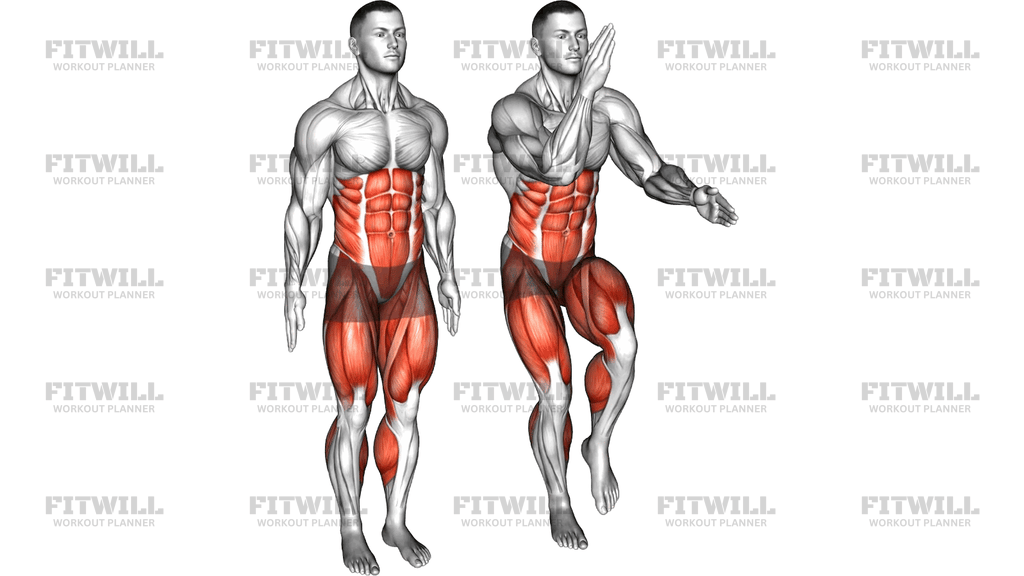
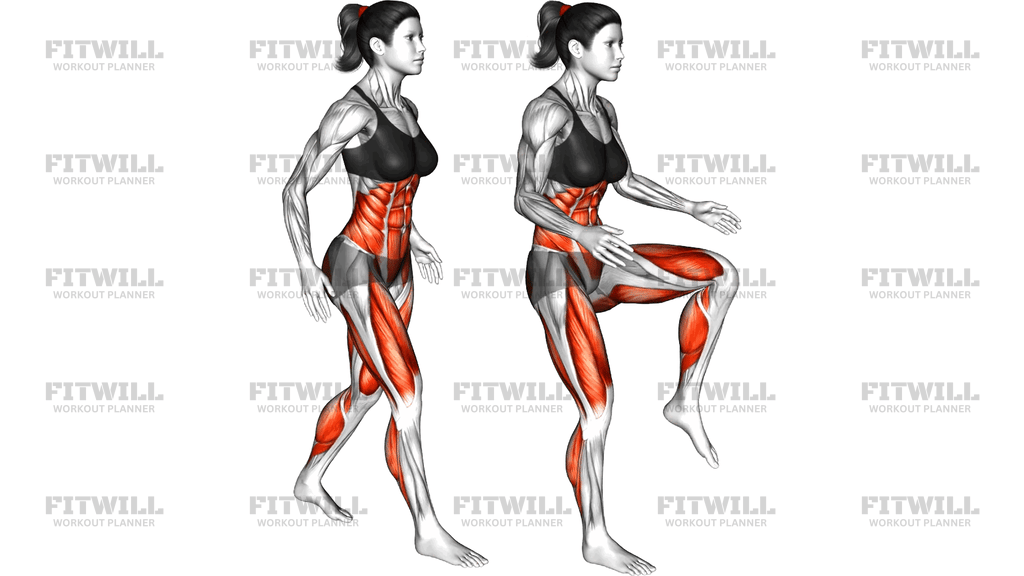
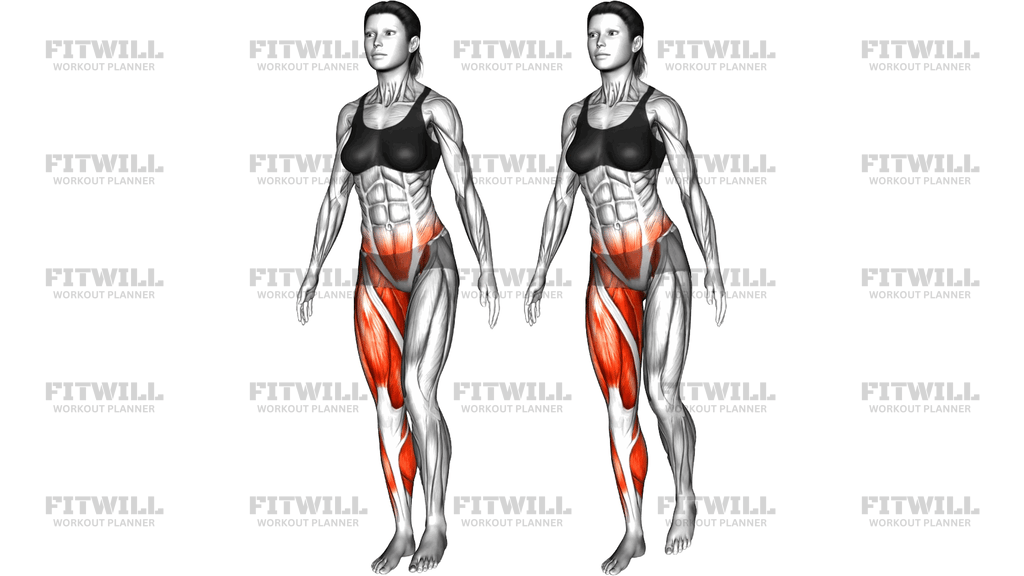
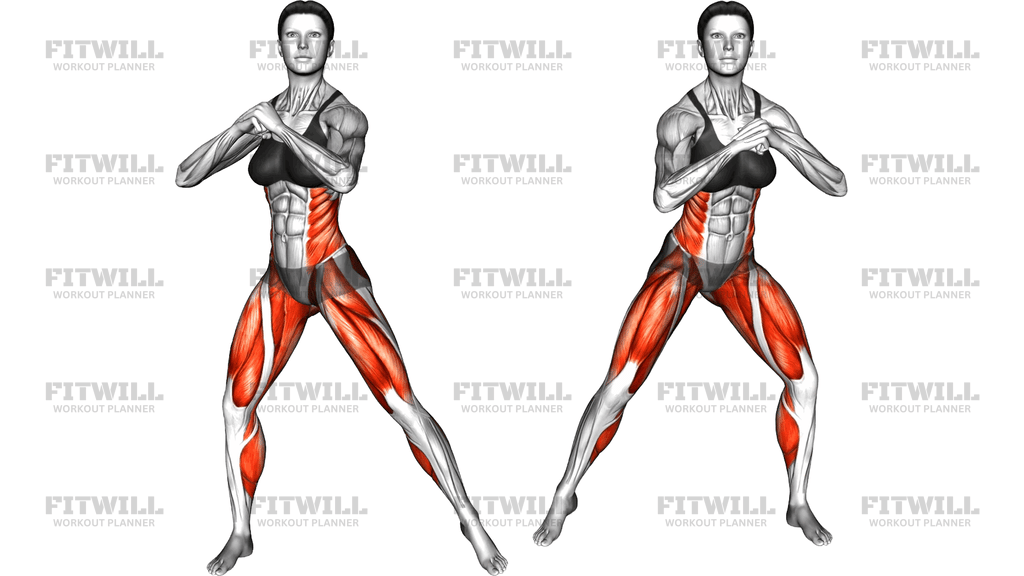
Plyo Squat Side Bend
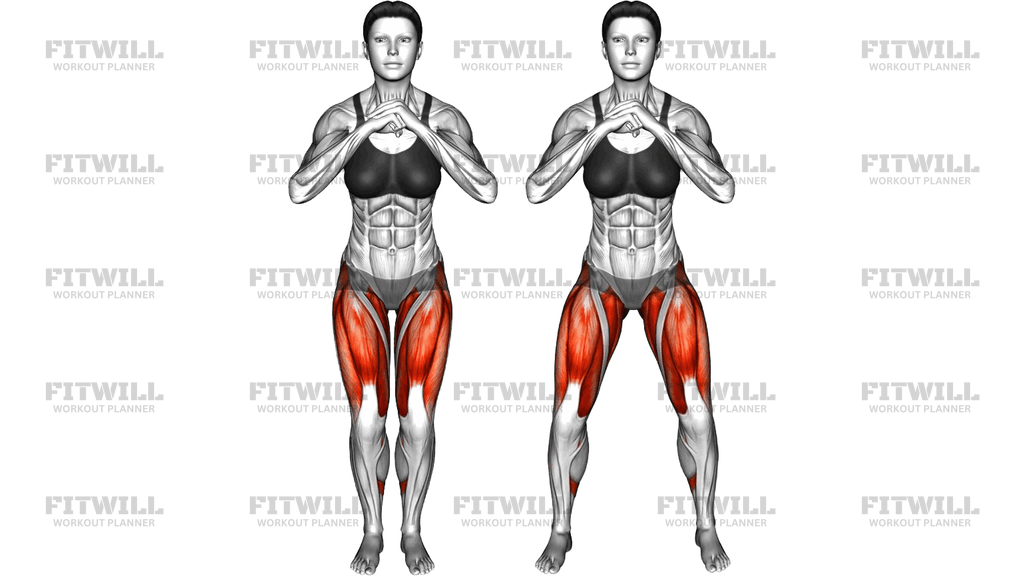
The Plyo Squat Side Bend combines a wide-stance sumo squat with an explosive return to standing and a lateral bend of the torso at the bottom of each rep. You set your feet well outside shoulder width, toes turned out, and place your hands lightly behind your head with elbows flared. From there you sink into a deep squat, lean your torso toward one side so the opposite elbow reaches up toward the ceiling, then drive hard through the floor to rise back to a full stand. The movement blends lower-body power work with rotational trunk control in a single flowing rep.
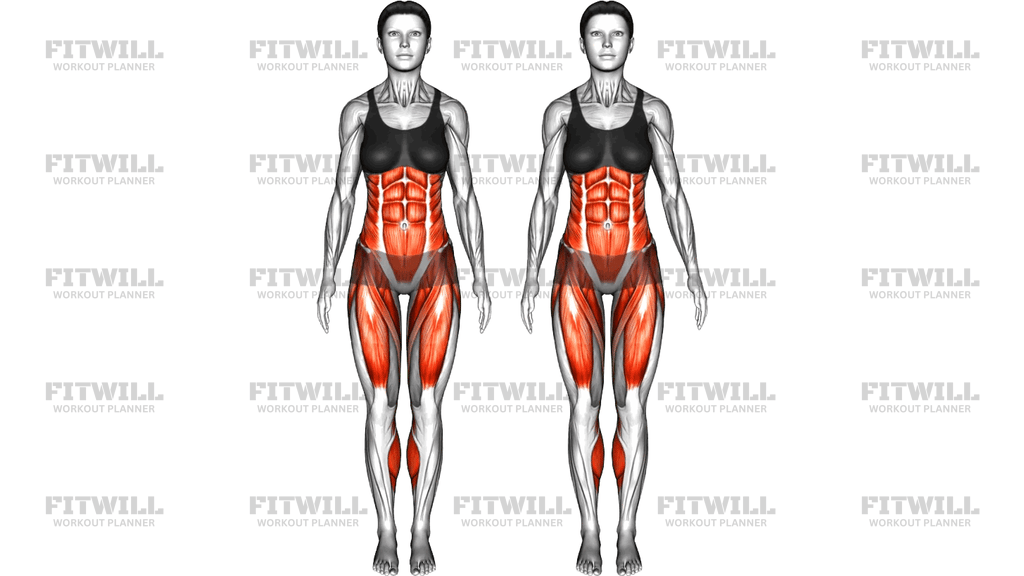
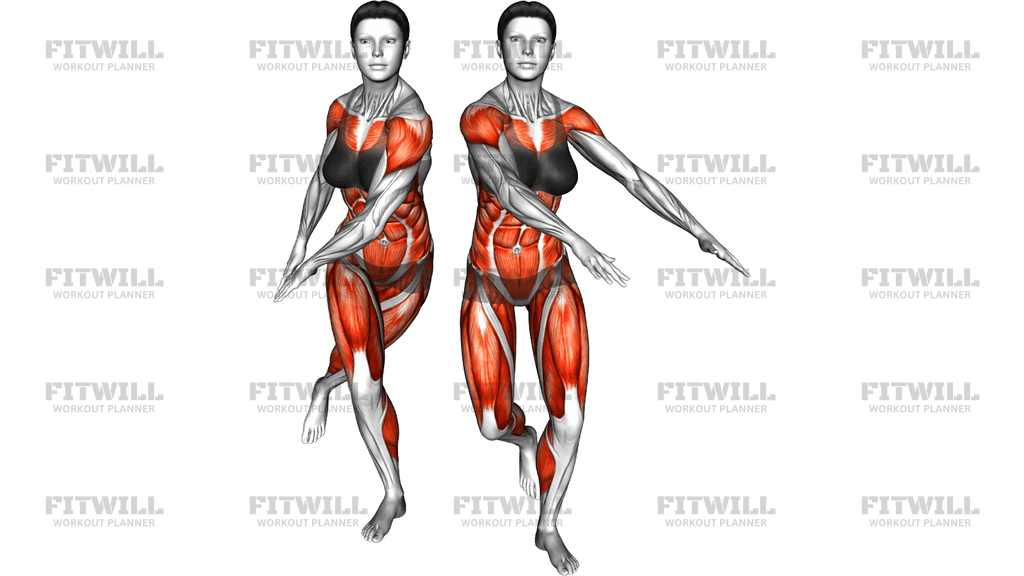
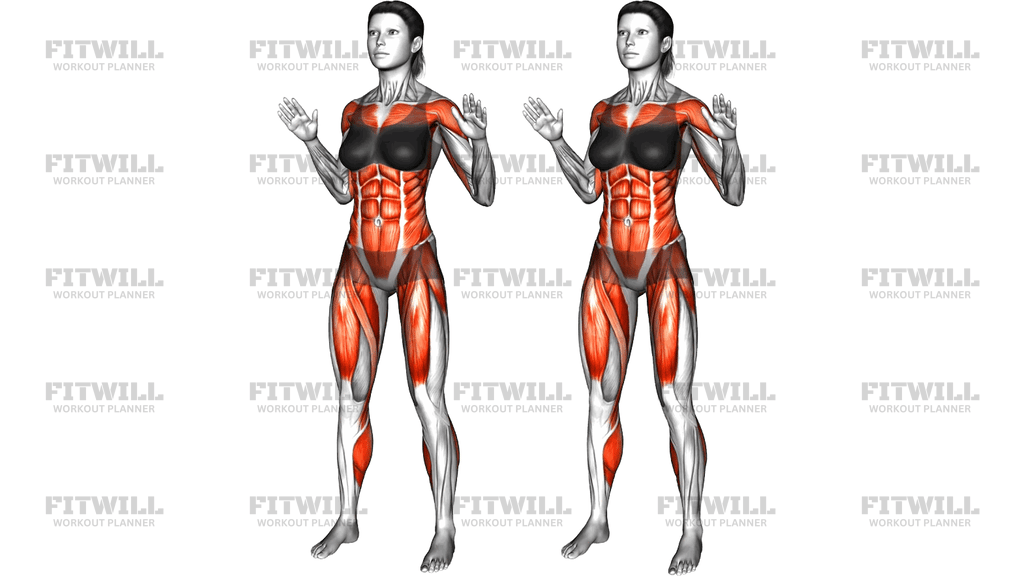
Because it asks the legs to produce force while the core stabilizes and then actively side-bends, this exercise trains several systems at once. The quads, glutes, and inner thighs handle the squat and the jump, while the obliques and deep core control the side bend and keep your spine from collapsing under the momentum of the landing. It is a demanding coordination challenge, which is exactly why it shows up in circuit training, conditioning classes, and athletic warm-ups that emphasize hip mobility.
The setup matters more than it looks. A genuinely wide stance with toes angled out gives your hips room to descend and lets your knees track over your feet instead of caving inward. Hands behind the head — rather than pulling on your neck or swinging your arms — keeps the side bend coming from your waist and not from yanking your shoulders. If your stance is too narrow, the side bend forces your weight onto the inside edge of one foot, which is where most people lose balance.
To execute it well, think of the squat and the bend as one piece: drop into the sumo position, bend toward one side while your hips stay low and level, then explode up as you straighten your torso. Alternate sides rep to rep, or complete all reps on one side before switching, depending on your goal. The upward phase should feel springy but controlled — you are driving the floor away, not simply standing up lazily.
This movement suits intermediate trainees who already own a solid bodyweight sumo squat and have no knee, hip, or lower-back irritation. Beginners can still use it by removing the jump and simply rising onto the balls of the feet or standing tall with intent. Because it elevates the heart rate quickly, it also works well as a finisher or as a station in a metabolic circuit where space and equipment are limited.
[ Workout Log & Planner ]
Put your next workout in Fitwill
Keep your plan and training log ready when you are.


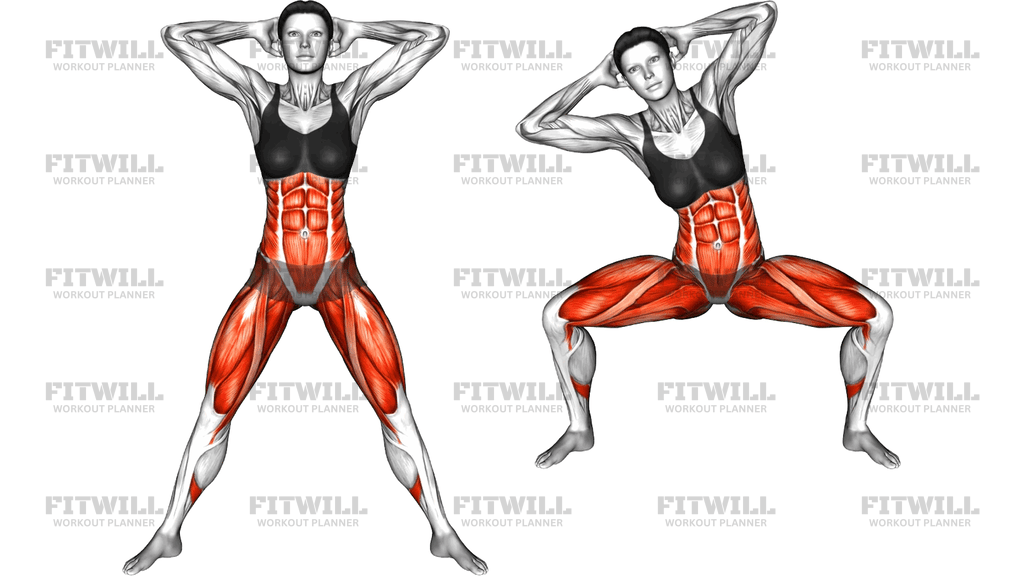
Instructions
- Stand with your feet roughly one and a half shoulder widths apart, toes turned out at about 30 to 45 degrees.
- Place your hands lightly behind your head with fingers at the base of the skull and elbows pointed out to the sides.
- Brace your core, lift your chest, and shift your weight evenly across both feet before you move.
- Push your hips back and bend your knees to lower into a deep sumo squat, letting your knees travel in the same direction as your toes.
- At the bottom, side bend your torso to the right, reaching your left elbow up and back while your hips stay low and square.
- Return your torso to upright, then drive forcefully through both heels to jump or explode back up to a full stand with legs extended.
- Land softly with knees bent and immediately lower into the next rep, bending to the left side this time.
- Exhale as you drive up out of the squat, and inhale as you lower into the next descent.
- Continue alternating sides for your target reps, keeping your landing quiet and your chest tall throughout.
- After the final rep, stand fully upright, shake out your legs, and reset your stance before the next set.
Tips & Tricks
- If your knees cave inward during the squat, imagine spreading the floor apart with your feet and let your knees follow your toes.
- Do not pull on your neck with your hands — the fingers are only resting behind your head, and pulling there turns the side bend into a neck strain.
- The side bend should happen at the bottom of the squat, not as you jump; bending while your feet are leaving the floor is the most common way people lose their landing.
- Keep your hips low and level during the bend. If your hips rise or shift sideways, you are leaning instead of side-bending through the waist.
- Land toe-ball-heel with soft knees. Loud, stiff landings mean the jump is too high for your current control — cut the height and rebuild it.
- If balance is shaky, widen your stance slightly rather than shortening the side bend; the wider base gives your hips more room.
- Warm up with a few plain sumo squats first so the hip and groin tissue is ready for the deep wide stance before speed is added.
- On a hard floor, do this on a mat or choose a lower-impact version without the jump to spare your knees and ankles during high-rep sets.
Frequently Asked Questions
What muscles does the Plyo Squat Side Bend work?
The quads, glutes, and inner thighs power the wide-stance squat and the explosive rise, while the obliques and abs handle the side bend and trunk stabilization. The calves and ankle stabilizers also contribute on every landing.
Is the Plyo Squat Side Bend suitable for beginners?
Beginners should start without the jump — sink into the sumo squat, perform the side bend, and stand up with control. Once the deep wide stance and side bend feel stable, add the explosive rise back in.
Where exactly should the side bend come from?
It should come from your waist, with the ribs tilting toward one hip and the opposite elbow reaching up. If your shoulders or neck are doing the bending, or your hips are shifting sideways, reset and move smaller.
Why does my stance keep feeling too tight during this exercise?
A narrow stance makes the deep sumo squat and the side bend compete for space in your hips, so your weight rolls to the inside of one foot. Widen your feet and turn your toes out a bit more until your knees can track over them.
Should I alternate sides or do all reps on one side?
Alternating sides each rep keeps the workload even and maintains the rhythm of the jump. Doing all reps on one side first can help if you are learning the bend and want to focus on one waist at a time.
What is a good substitution if jumping bothers my knees?
Replace the jump with a strong, quick stand onto the balls of your feet, or simply rise to a full stand with intent. You keep the squat-and-bend pattern while removing the landing impact.
Can I do the Plyo Squat Side Bend every day?
Because it includes explosive jumping and deep hip loading, treat it like a training exercise rather than a casual stretch, and give your legs a day of recovery between demanding sessions. Light, jump-free versions can be used more often as mobility work.
How deep should I squat before doing the side bend?
Lower until your thighs are at least close to parallel or as deep as your hips allow while your heels stay down and knees track over your toes. The side bend is designed to be performed from that low, wide position, so stopping too high changes the feel entirely.
Do I need any equipment for this exercise?
No — the Plyo Squat Side Bend is done entirely with body weight, though an exercise mat underfoot is helpful on hard surfaces for joint comfort and grip.