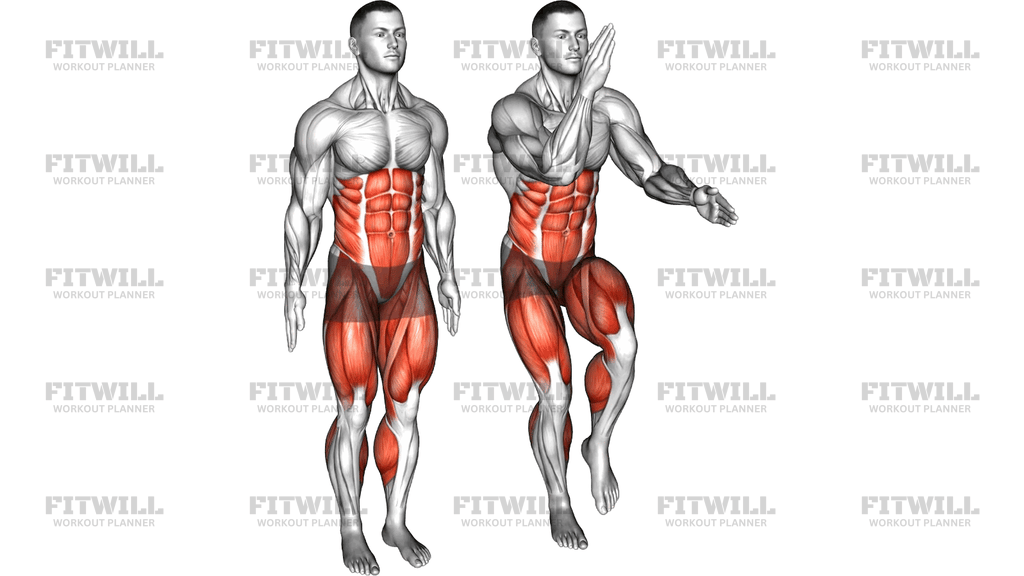
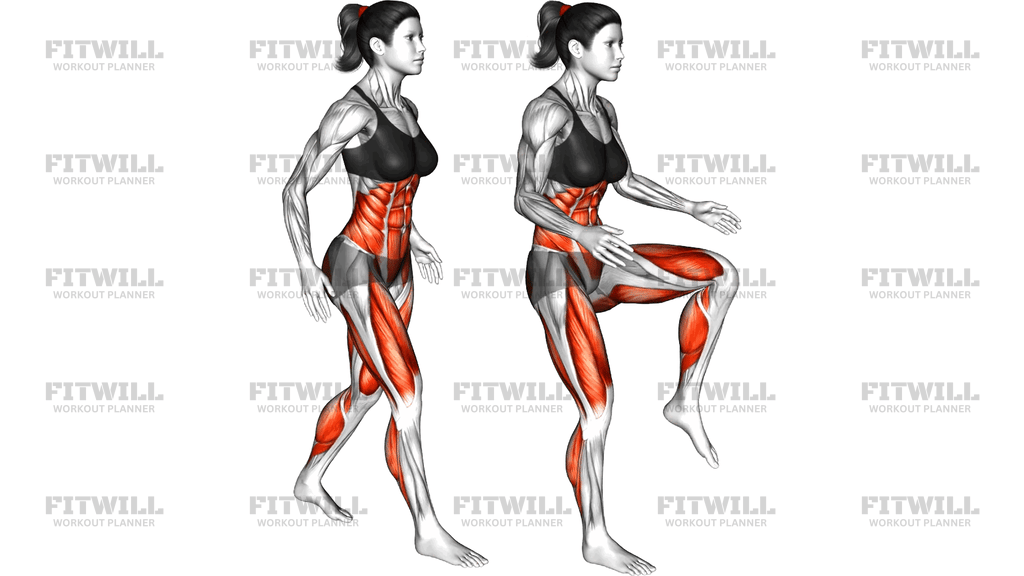
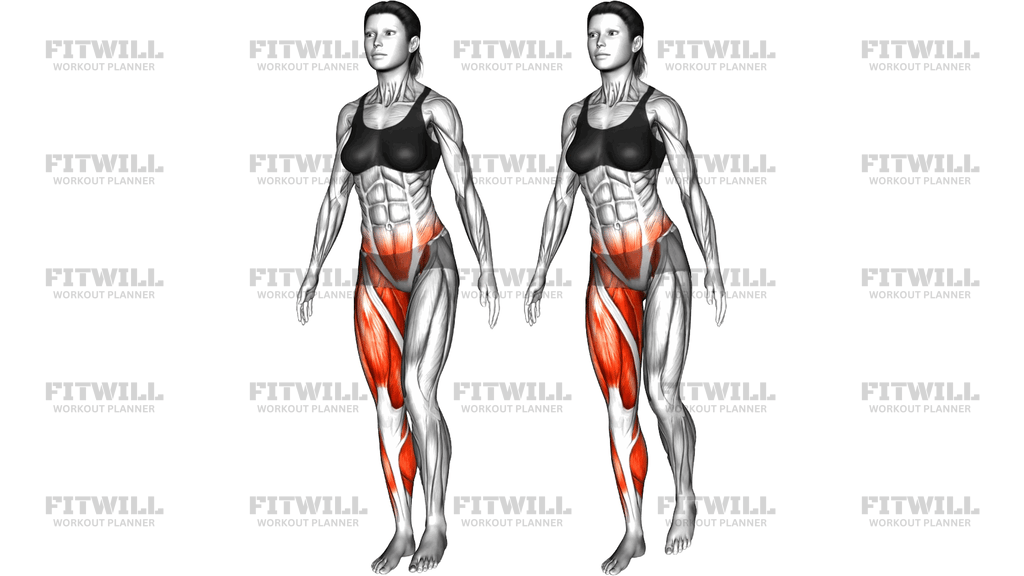
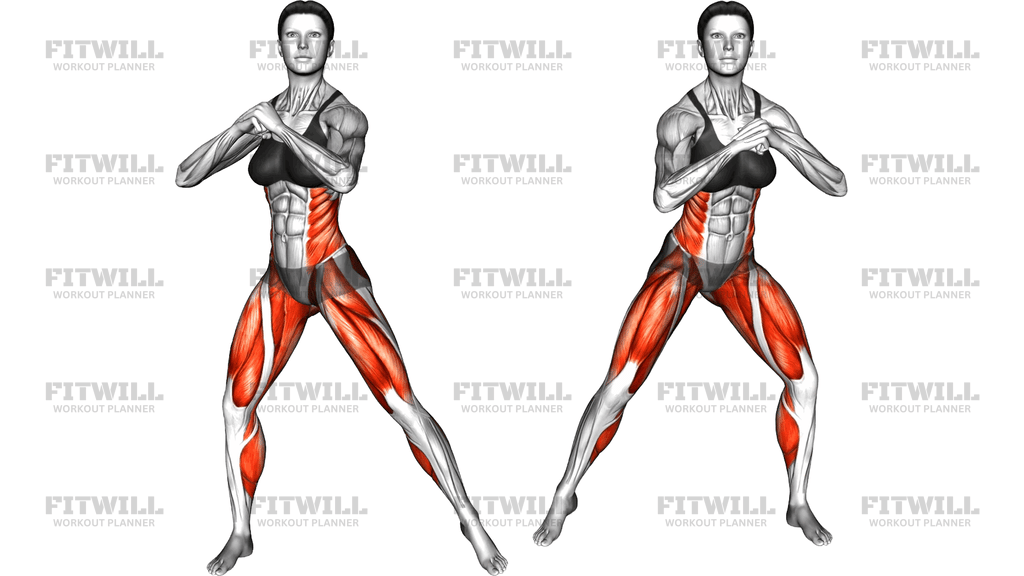
Duck Walk
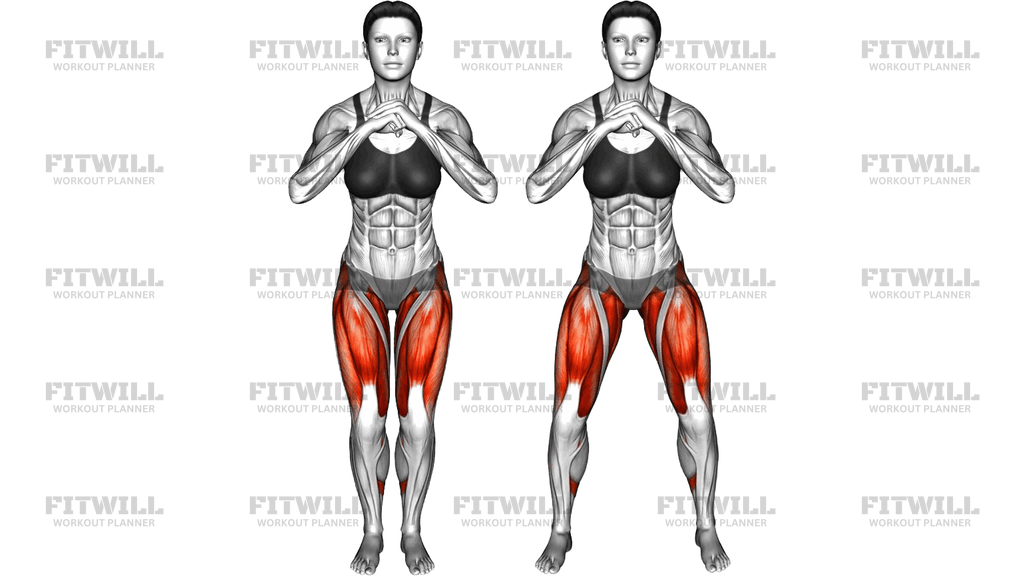
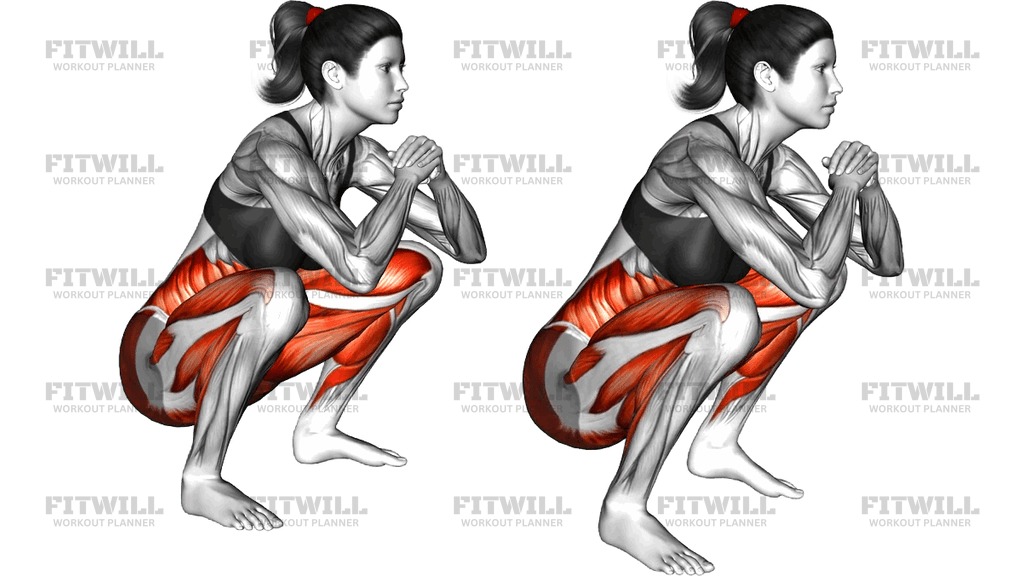
The Duck Walk is a body weight conditioning drill where you sink into a deep squat and walk forward (or backward) while staying low the entire time. Your hands stay clasped in front of your chest, your hips stay below knee height, and each step comes from planting one foot ahead of the other and rising just enough to shuffle it forward. It looks simple, and that is exactly why it humbles so many people — holding the bottom of a squat position while moving is far more demanding than sitting in it statically.
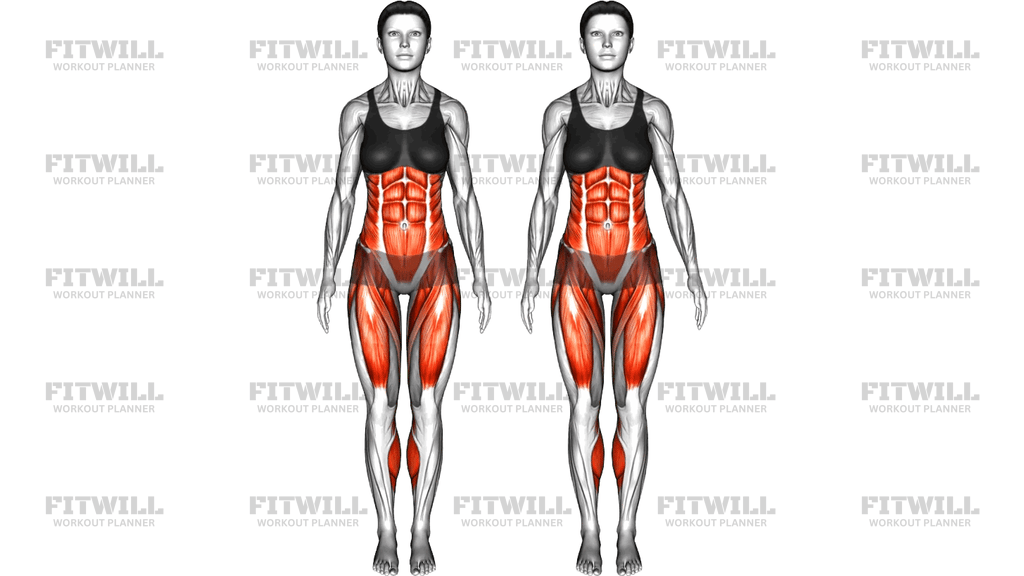
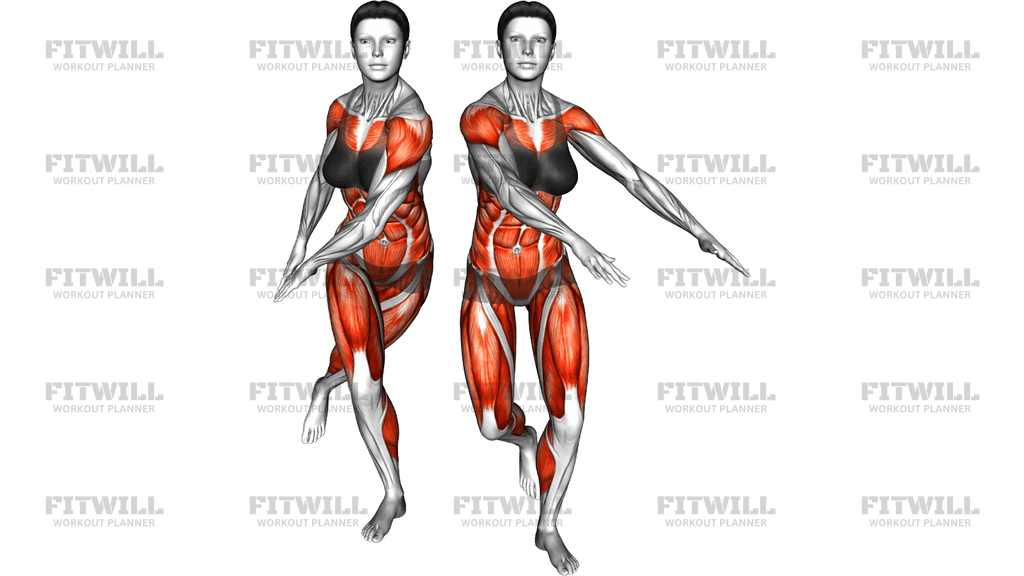
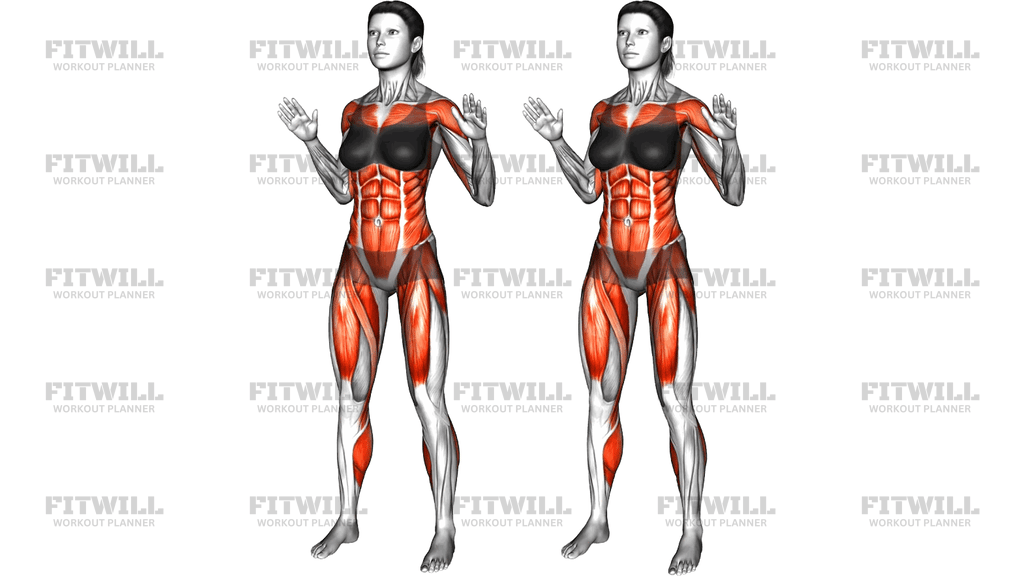
This movement primarily trains the quadriceps, which have to work hard in a deep knee bend the whole time, along with the glutes and calves, which drive each small step. Because you are balancing on one leg briefly with every step while your ankles are under deep flexion, the Duck Walk also builds ankle stability and hip control in a way that stationary squats do not. Your core stays engaged throughout to keep your torso upright while your hands are held at chest height.
The Duck Walk is useful for a wide range of people. Athletes use it to build the kind of leg endurance that transfers to sports requiring deep stances — wrestling, martial arts, football line play, and tennis all come to mind. Lifters use it as a finisher to flood the quads with work after squats or leg presses, and general trainees use it as a low-equipment conditioning drill that needs nothing more than a few meters of open floor.
Setup matters because depth is the whole point of the exercise. If you let your hips ride up and turn it into a bent-over shuffle, the quads stop doing the work and your lower back starts compensating. Sink fully into the squat before you take your first step, keep your chest up, and maintain that height for every step that follows. Your heels can lift slightly if your ankle mobility demands it, but aim to keep them down when you can.
To execute it well, take small steps rather than long lunging ones. Each step should feel like you are passing your weight from one planted foot to the other without ever standing up. Move at a steady, controlled pace — rushing turns the Duck Walk into a balance struggle and robs your legs of time under tension. Start with short distances of ten to twenty meters and add length or rounds as your legs adapt.
From a safety standpoint, the most common issue is letting the knees cave inward as fatigue sets in, so keep your knees tracking over your toes on every step. If deep knee flexion bothers you or you cannot reach the bottom position comfortably, work on your squat depth with supported holds first and use partial-range versions of this drill in the meantime.
[ Workout Log & Planner ]
Put your next workout in Fitwill
Keep your plan and training log ready when you are.


Instructions
- Stand with your feet about hip-width apart, then sit down into a full squat until your hips are close to your heels.
- Clasp your hands together in front of your chest with your elbows tucked between or just inside your knees, and keep your chest lifted and your gaze forward.
- Brace your core firmly and let your knees open outward so they track over or slightly outside your toes.
- Shift your weight onto one foot and step the other foot forward a short distance, roughly half a foot length, staying as low as possible.
- Plant that foot flat, transfer your weight onto it, and bring the trailing foot forward to meet it or step just past it.
- Continue alternating steps forward while keeping your hips below knee height the entire time — do not rise into a standing position between steps.
- Breathe steadily throughout, inhaling through your nose and exhaling with each step or every couple of steps rather than holding your breath.
- Walk for a set distance of ten to twenty meters, then stand up slowly by driving through your heels and extending your hips.
- Shake out your legs, reset your squat depth, and walk back in the opposite direction if you are doing multiple lengths.
Tips & Tricks
- The most common mistake is drifting upward into a half-squat shuffle as your legs tire — pick a fixed ceiling, like keeping your elbows inside your knees, and stop the set the moment you break it.
- Keep your weight mid-foot to slightly toward the heels; sitting too far onto the balls of your feet makes your calves burn early and throws off your balance.
- Take short, frequent steps instead of long strides — a long step forces you to rise out of the squat to complete it.
- If your heels lift off the floor, that usually points to tight ankles; widen your stance slightly and turn your toes out a few degrees to buy yourself depth.
- Actively push your knees out on every step so they keep tracking over your toes — letting them cave inward under fatigue is the fastest route to cranky knees.
- Look forward, not down at your feet; dropping your head rounds your upper back and makes staying upright in the deep squat much harder.
- Treat the first set as a rehearsal — move slowly, feel where your balance shifts, and only pick up the pace once you can stay at one consistent height.
- Use the Duck Walk as a finisher after your main leg work rather than a warm-up, since pre-fatiguing your legs makes it hard to hold solid positions during heavier lifts.
- If balance is your limiting factor, hold the bottom squat position for time first; once you can sit comfortably in a deep squat for thirty seconds, the walking version becomes much more manageable.
Frequently Asked Questions
What muscles does the Duck Work walk target?
The Duck Walk works the quadriceps hardest, since they hold a deep knee bend for the entire set. Your glutes and calves drive each step, while your hip flexors, ankles, and core stabilize you as your weight shifts from foot to foot.
Is the Duck Walk good for beginners?
Yes, as long as you can reach a reasonably deep squat without pain. Beginners should start with short distances of five to ten meters and move slowly, focusing on staying low rather than covering ground.
Why do my calves burn so much during the Duck Walk?
Your ankles are held in deep flexion and each small step loads the calves as your weight passes over the planted foot. If the burn overwhelms your legs early, widen your stance slightly and focus on keeping your heels lower.
Should my heels stay on the floor during the Duck Walk?
Ideally yes, but a slight heel lift is acceptable if your ankle mobility is limited. If your heels rise a lot, work on your squat depth separately and use a slightly wider, toes-turned-out stance in this drill.
How is the Duck Walk different from just holding a squat?
Holding a squat is static, while the Duck Walk forces you to shift weight between legs and balance on one foot at a time in deep flexion. That adds ankle stability, hip control, and single-leg demands you do not get from a static hold.
How far or how long should I walk?
Start with ten to twenty meters or about twenty to forty seconds per set, and rest a minute between rounds. Two to four sets is plenty when you are starting — your quads will tell you when that is enough.
My lower back aches when I do the Duck Walk — what am I doing wrong?
Your hips have probably drifted upward, turning the movement into a bent-over shuffle that loads your lower back instead of your legs. Sit back down into the squat, lift your chest, and stop the set if you cannot hold that position.
Can I substitute the Duck Walk with another exercise?
Static squat holds, walking lunges, and slow body weight squats cover parts of it, but none combine the deep held position with continuous footwork. If you need a lower-load option, try squat holds with your hands on a support and add small side steps.
Is it safe for my knees to walk in a deep squat position?
For healthy knees, controlled deep flexion under body weight is generally well tolerated and can build resilience. If you have a knee injury or pain during the drill, reduce your depth, slow down, and check with a qualified professional before continuing.
Can I add weight to the Duck Walk?
Yes, holding a light plate or kettlebell at your chest works once the body weight version feels easy. Keep the load modest at first, because added weight magnifies every balance and depth error.