Mini Squat With A Chair
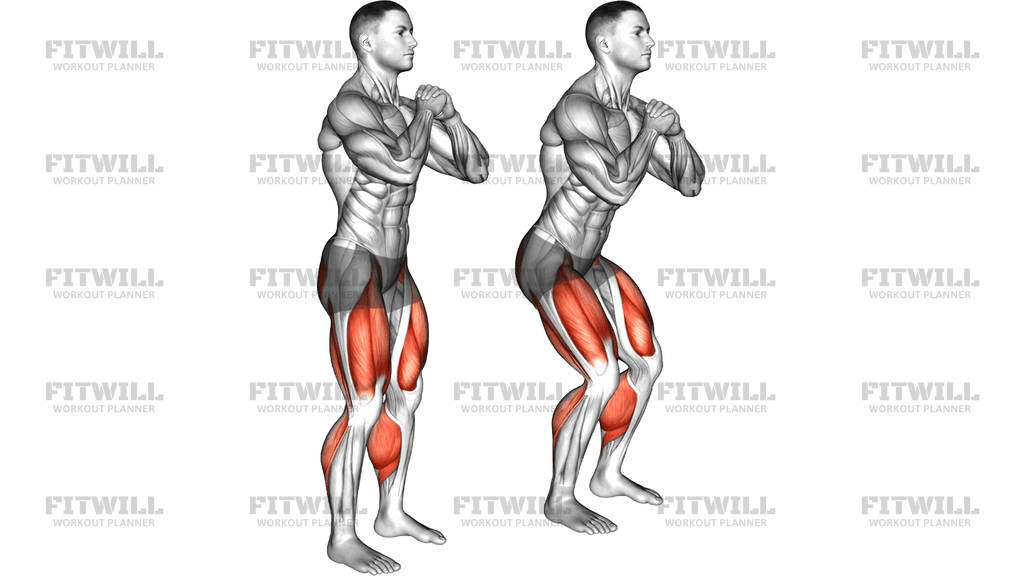
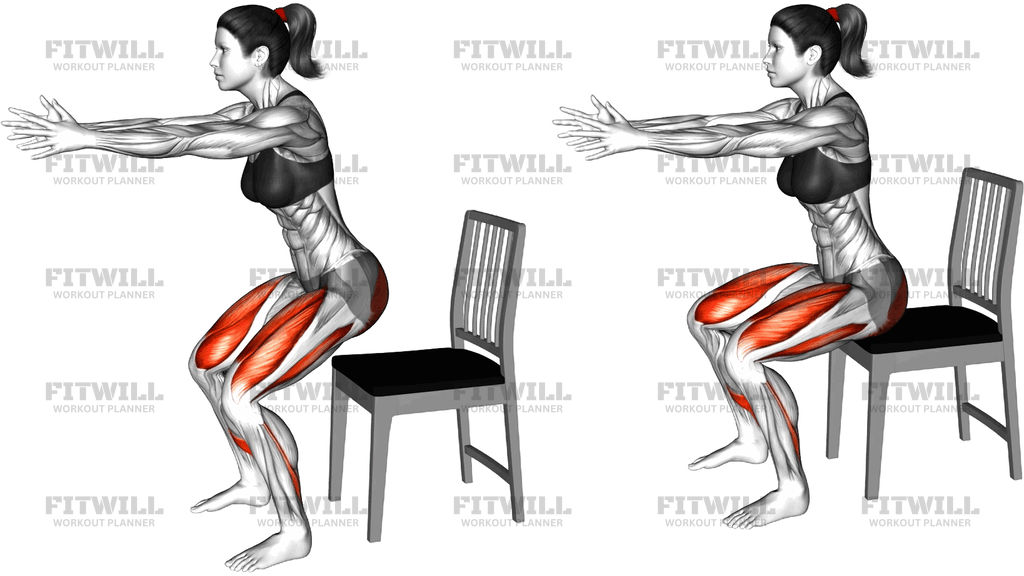
The Mini Squat With A Chair is a shallow, supported squat performed while standing behind a sturdy chair with your hands resting lightly on the chair back. Because the squat only goes down to a partial depth and the chair gives you something steady to touch, this is one of the most accessible squat variations you can do. It is commonly used by beginners learning the squat pattern, older adults who want to keep their legs strong without loading the joints, and people returning to training after a layoff who need a low-risk way to rebuild confidence and strength.
The movement primarily works the quadriceps at the front of the thighs, with the glutes contributing as you drive back up and the calves and stabilizers around the knees and hips helping you stay balanced. Because the range is short, the demand on the knees is modest, but the muscles still have to produce real force to lower and raise your body weight in a controlled way. Holding the chair back lightly adds just enough support to keep you steady without taking all the work away from your legs.
Setup matters more than it might seem. The chair needs to be heavy enough or positioned so it will not slide when you lean on it, and your grip should be light — the chair is a balance reference, not a pulling handle. Standing tall with feet about hip-width apart, bracing your trunk, and pushing your hips back slightly before bending the knees keeps the movement smooth and keeps pressure off the kneecaps.
To perform it well, bend at the hips and knees together and lower only a short distance, roughly a quarter to a third of the way down, so your thighs stay well above parallel. Keep your chest up and your weight spread across the whole foot, especially the heels, then press through the floor to stand back up tall. The descent and the ascent should both take a beat or two; bouncing quickly out of the bottom defeats the purpose of the exercise.
This exercise fits well into warm-ups, rehab-style progressions, and daily mobility routines. Many people use it as step one of a squat ladder: master the Mini Squat With A Chair, then reduce how much you lean on the chair, then progress to a full bodyweight squat once you can keep your balance and form without support.
The main safety points are simple. Use a stable chair on a non-slip surface, keep the movement pain-free, and stop at a depth where your knees track in line with your toes without caving inward. If you feel pinching at the front of the knee, shorten the range slightly and check that your weight is not shifting onto the toes.
[ Workout Log & Planner ]
Put your next workout in Fitwill
Keep your plan and training log ready when you are.


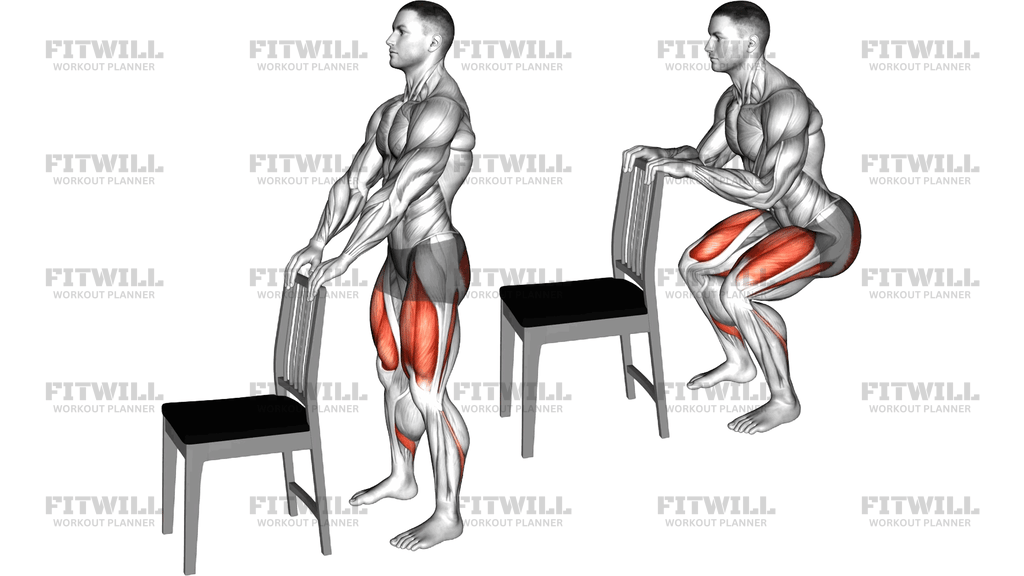
Instructions
- Place a sturdy, non-rolling chair on a flat, non-slip floor and stand behind it, facing the chair back.
- Set your feet about hip-width apart with toes pointing forward or turned out very slightly, and rest both hands lightly on the top of the chair back.
- Stand tall, look ahead, and gently brace your stomach muscles as if preparing for a light nudge.
- Shift your weight slightly into your heels and push your hips back a small amount to start the descent.
- Bend your hips and knees together and lower into a shallow squat, stopping when your knees are bent roughly 30 to 45 degrees, keeping your chest up and knees tracking over your toes.
- Pause for a moment at the bottom of the mini squat without locking or bouncing the knees.
- Press through your heels and the middle of your feet to push back up until you are standing fully upright again.
- Exhale as you lower into the squat and breathe in as you stand back up, keeping the breathing steady throughout the set.
- Complete your repetitions with a light grip on the chair, then step away from the chair to reset before the next set.
Tips & Tricks
- Grip the chair back with your fingertips rather than wrapping your whole hand — if you find yourself pulling on the chair, your legs are getting a discount on the work.
- If the chair slides forward when you lean on it, place it against a wall or choose a heavier chair; a moving support is the most common setup problem with this exercise.
- Keep the squat genuinely small. Dropping into a deep squat while holding a chair behind you changes the balance demands and can round your lower back.
- Watch that your knees do not snap together as you rise; think of gently spreading the floor with your feet so the knees stay over the middle of each foot.
- If your heels lift at the bottom, you are descending too far or shifting weight to the toes — shorten the range and reset your weight back.
- Move at a slow, even tempo, about two seconds down and two seconds up, so the muscles do the work instead of momentum.
- Keep your shoulders relaxed and elbows soft as your hands rest on the chair; shrugging or locking the arms creates unnecessary tension in the neck and upper back.
- Progress by lightening your grip over time, then resting one hand behind your back, until you no longer need the chair at all.
- Place a thin mat under the chair on hard floors to stop slipping and to dampen noise if the chair shifts during a set.
Frequently Asked Questions
What muscles does the Mini Squat With A Chair work?
The quadriceps at the front of the thighs do most of the work, with the glutes driving you back up to standing. The calves, hamstrings, and trunk muscles help with balance and control throughout the movement.
Why hold the back of the chair during a mini squat?
The chair provides a stable reference point for balance so you can focus on the squat pattern instead of worrying about falling. The grip should stay light so your legs still do the majority of the work.
How deep should I go in the Mini Squat With A Chair?
Lower only until your knees are bent about 30 to 45 degrees — well short of a parallel squat. This keeps the movement comfortable on the knees while still loading the thighs and glutes.
Is the Mini Squat With A Chair good for beginners?
Yes, it is one of the best first squat variations because the short range and chair support make it easy to stay balanced. Once you can perform it smoothly with a fingertip grip, you are ready to try a deeper bodyweight squat.
What kind of chair should I use?
Use a heavy, stable chair with a solid backrest that will not tip or roll, placed on a non-slip surface. Avoid chairs with wheels or lightweight chairs that slide when you lean on them.
Why do my knees ache at the front when I do this exercise?
Front-of-knee discomfort usually means you are descending too far, moving too fast, or letting your weight shift onto your toes. Shorten the range, slow the tempo, and keep your heels loaded.
Can I use a countertop or railing instead of a chair?
Yes, any stable surface at roughly waist height works the same way. The key is that the support cannot move when you place your hands on it.
How many repetitions should I do of the Mini Squat With A Chair?
Start with 1 to 3 sets of 10 to 15 slow repetitions, resting about a minute between sets. Because the range is short, higher repetitions with good control work better than trying to make it heavy.
How do I progress from the Mini Squat With A Chair?
Gradually use a lighter grip on the chair, then try the same mini squat with your hands hovering near the chair or crossed at your chest. From there you can deepen the range into a full bodyweight squat.
Should my knees go past my toes during this exercise?
A small amount of forward knee travel is normal and fine as long as your heels stay down and your knees track over your toes. What you want to avoid is the knees caving inward or the heels lifting.