Seated Calf Raise On A Chair
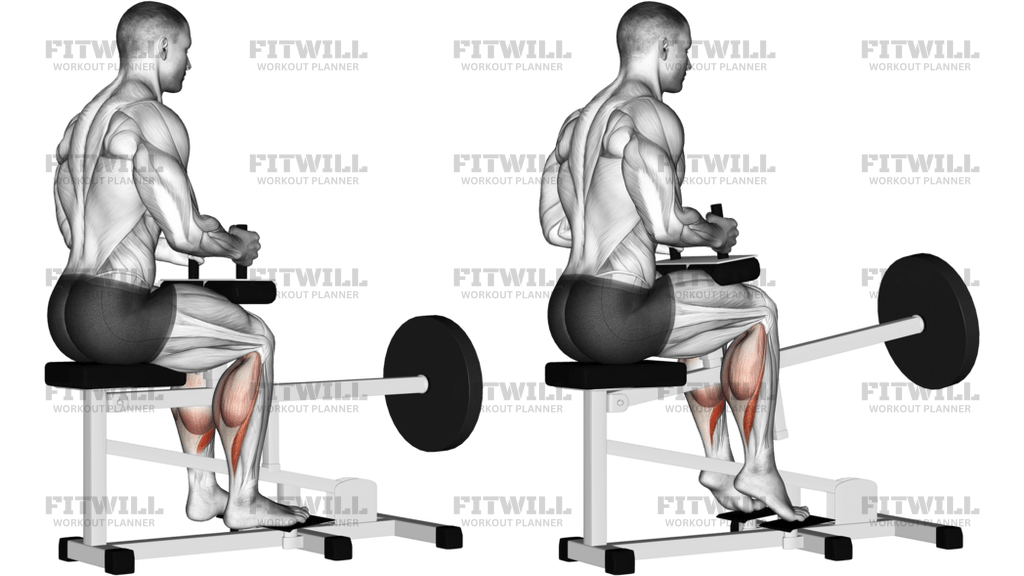
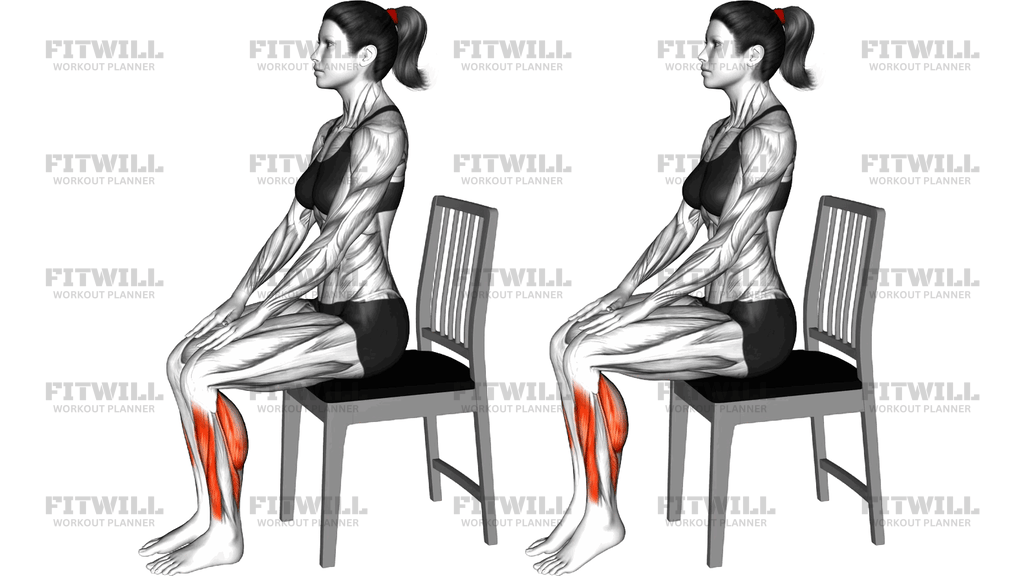
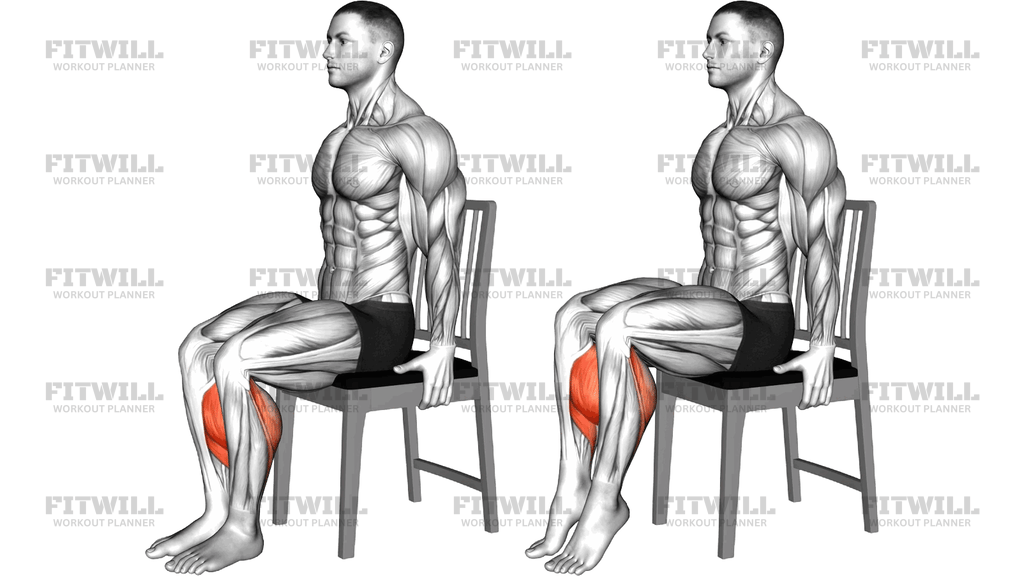
The Seated Calf Raise On A Chair is a simple bodyweight movement that targets the calf muscles from a seated position with the knees bent to roughly ninety degrees. You sit upright on a sturdy chair with your feet flat on the floor, then press through the balls of your feet to lift your heels as high as possible before lowering them back down under control. Because the knee is flexed, the gastrocnemius — the large two-headed muscle at the back of the lower leg — sits in a shortened position, which shifts most of the workload onto the soleus, the flatter muscle that lies underneath it.
This version is one of the most accessible calf exercises you can do. It requires nothing more than a stable chair, so it works well as a home workout option, a warm-up before heavier calf training, or a way to keep training during travel or recovery periods when you don't have access to a gym. It's also a good entry point for beginners who are learning what a proper calf contraction feels like before adding weight with a dumbbell or a plate across the thighs.
The bent-knee setup is what makes this exercise distinct from a standing calf raise. The soleus is a slow-twitch-dominant muscle that handles endurance tasks like walking and maintaining an upright posture, and it responds well to higher-rep work. Training it directly helps build lower-leg size and contributes to ankle stability, which matters for squats, running, climbing stairs, and everyday balance.
To execute it well, keep your torso upright and your hands resting lightly on the chair beside your hips for balance only — don't push down through the hands to force the movement. Raise your heels as high as your range allows, pause briefly at the top while squeezing the calves, and lower your heels slowly until you feel a mild stretch at the ankle. Rushing through reps or bouncing at the bottom are the two most common faults, and both rob the calves of tension.
A practical safety note: choose a chair that will not tip or slide, and keep your feet fully supported on the floor rather than letting your toes hang off an edge. If you want more resistance later, you can rest a weight on your knees, but master the bodyweight version first and aim for a full, deliberate range on every rep.
[ Workout Log & Planner ]
Put your next workout in Fitwill
Keep your plan and training log ready when you are.


Instructions
- Sit on a sturdy chair with your back upright, your hips fully on the seat, and your knees bent to about ninety degrees with your feet flat on the floor.
- Place your hands on the seat or the edge of the chair beside your hips, resting them lightly for balance without leaning on them.
- Set your feet hip-width apart with your weight distributed across the balls of your feet and your toes pointing forward.
- Brace your core lightly and keep your shoulders relaxed and stacked over your hips so your torso stays tall throughout the set.
- Press through the balls of your feet and lift your heels straight up as high as they will go, keeping your toes in contact with the floor.
- Pause for one to two seconds at the top and squeeze your calf muscles hard.
- Lower your heels slowly back to the floor until you feel a gentle stretch in your calves at the bottom of the movement.
- Exhale as you press the heels up, and inhale as you lower them back down.
- Complete your target reps at a steady tempo, then rest with both feet flat on the floor before starting the next set.
Tips & Tricks
- Do not push hard through your hands — if you find yourself pressing down to lift the heels, the calves are getting help they shouldn't, so lighten the effort or slow the tempo.
- Avoid bouncing at the bottom; the seated position makes it tempting to tap the heels and spring back up, which takes tension off the soleus.
- Lift the heels as high as they actually go each rep — partial reps at the top end are the most common reason this exercise stops producing results.
- Keep your toes pointed straight ahead; turning the feet outward or inward changes which part of the calf takes the load and can strain the ankle.
- If the chair slides, put it against a wall or choose one with rubber feet — a shifting seat breaks your balance and interrupts the rep.
- Because the soleus is endurance-oriented, use higher rep ranges, around fifteen to twenty-five per set, with a deliberate one-second squeeze at the top.
- Keep both feet working evenly; it's common for one side to lift higher than the other without you noticing, so check in a mirror occasionally.
- For added difficulty once bodyweight reps feel easy, rest a dumbbell or a weight plate flat across your thighs just above the knees.
Frequently Asked Questions
Which muscles does the Seated Calf Raise On A Chair work?
The primary muscle is the soleus, since the bent-knee position shortens the gastrocnemius and reduces its contribution. The gastrocnemius and the smaller ankle-stabilizing muscles assist throughout the movement.
Why is the Seated Calf Raise On A Chair done with bent knees instead of standing?
Bending the knee to about ninety degrees puts the gastrocnemius in a shortened state where it can't contribute much force, which isolates the soleus. Standing calf raises, by contrast, load both muscles more evenly.
Is this exercise suitable for beginners?
Yes, it's one of the best starting points for calf training because it requires no equipment beyond a chair and lets you learn the feeling of a full calf contraction. Beginners can build up rep quality here before adding load.
Can I do the Seated Calf Raise On A Chair every day?
Because the soleus is fatigue-resistant and the load is only your bodyweight, frequent practice is generally well tolerated. Still, treat it like any strength work — allow a day of recovery between harder sessions and skip it if your calves or ankles feel overly sore.
How many reps should I do for the Seated Calf Raise On A Chair?
Fifteen to twenty-five reps per set works well, since the soleus responds to sustained, moderate-effort work. Focus on a full range and a pause at the top rather than chasing very high numbers with sloppy reps.
My heels won't lift very high — is that a problem?
Range varies between people due to ankle mobility, and a limited range is common at first. Lift as high as you can each rep without pain, and consistent training plus gentle calf stretching usually improves it over time.
What can I use instead of a chair for this exercise?
Any stable seated surface works — a bench, a box, or even the edge of a sturdy bed or couch as long as your knees can bend to about ninety degrees with your feet flat on the floor. Avoid anything with wheels or a soft, unstable seat.
How do I make the Seated Calf Raise On A Chair harder?
Rest a dumbbell or weight plate flat on your thighs just above the knees, or slow the tempo and extend the pause at the top to three seconds. Adding reps past the point where the last few feel challenging also increases the training effect.
Should my hands help during the movement?
Your hands should only rest on the chair for balance. Pushing down through the arms turns it into a full-body press and takes work away from the calves, so keep the arm support light.